
Understanding the Differences Between Fiber Optic and Copper Cables
This article explores the key differences between fiber optic and copper cables to help you make an informed decision for your networking needs.
In today’s data-driven world, the choice of cabling plays a crucial role in the performance, reliability, and scalability of any communication network. Two primary types dominate the market: fiber optic cables and copper cables. While both serve the essential function of data transmission, their underlying technology, performance, and use cases vary significantly.
This article explores the key differences between fiber optic and copper cables to help you make an informed decision for your networking needs.
1. Transmission Technology
The most fundamental difference lies in how data is transmitted.
Copper cables use electrical signals to carry data. Common types include twisted pair (Cat5e, Cat6, Cat6A, Cat8) and coaxial cables.
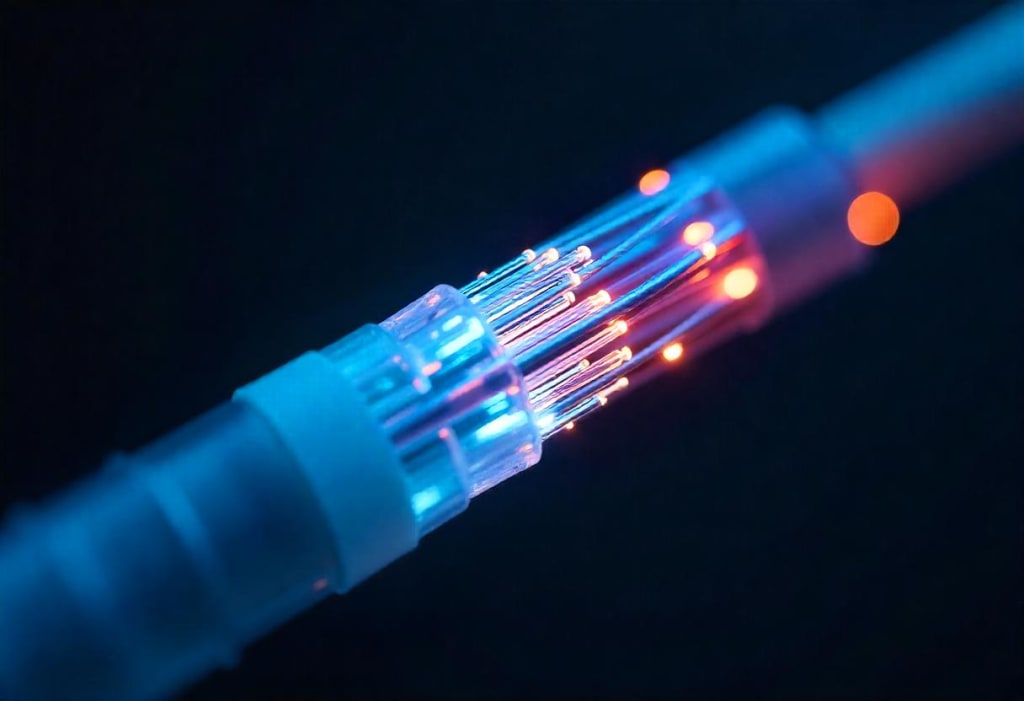
Fiber optic cables transmit data as pulses of light through strands of glass or plastic, using total internal reflection. This allows data to travel at nearly the speed of light.
As a result, fiber optic cables offer much faster data transfer rates with lower signal loss over long distances.
2. Speed and Bandwidth
Fiber optic cables are known for their superior speed and bandwidth capacity. Modern fiber systems can easily support speeds of 1 Gbps, 10 Gbps, and even up to 100 Gbps or more, making them ideal for high-demand environments like data centers and backbone infrastructure.
Copper cables, while sufficient for standard office use, have bandwidth limitations. For example, Cat6A copper cables max out at 10 Gbps over a distance of 100 meters. Beyond that, signal degradation becomes a concern.
3. Distance and Attenuation
Fiber optic cables excel at long-distance transmission. Single-mode fiber can carry data over 40 kilometers or more with minimal attenuation (signal loss).
In contrast, copper cables are limited to shorter distances, typically around 100 meters, before requiring repeaters or signal boosters. Over longer runs, copper suffers from increased resistance and electromagnetic interference (EMI), leading to signal degradation.
4. Interference and Reliability
Electromagnetic interference (EMI) is a major concern in environments with heavy electrical equipment. Copper cables can pick up EMI, causing data loss or corruption.
Fiber optic cables are immune to EMI because they use light instead of electricity. This makes them highly reliable in industrial settings, medical facilities, and anywhere data integrity is critical.
5. Security
Fiber optic cables offer superior data security. Since they do not emit electromagnetic signals, it’s nearly impossible to tap into a fiber line without detection.
Copper cables, on the other hand, can be intercepted more easily, posing a higher security risk—especially in sensitive environments like government facilities or financial institutions.
6. Durability and Installation
Copper cables are generally easier and cheaper to install. They are more flexible and less fragile, which simplifies routing through tight spaces.
Fiber optic cables require more careful handling due to their delicate glass core. Installation may involve specialized tools and trained technicians, increasing upfront costs.
However, fiber is more durable long-term, especially in outdoor or harsh conditions, as it resists water, temperature changes, and corrosion better than copper.
7. Cost Comparison
Copper cabling is less expensive initially, making it an attractive option for small businesses or simple networks.
Fiber optic cabling, while more costly to install, offers a lower total cost of ownership over time due to its speed, longevity, and reduced maintenance requirements.
8. Use Cases
Fiber Optic Cables: Best for long-distance communication, high-speed internet, data centers, and environments where EMI is a concern.
Copper Cables: Suitable for short-distance wiring, local area networks (LANs), and powering devices via Power over Ethernet (PoE).
Conclusion
Choosing between fiber optic and copper cables depends on your specific needs, speed, distance, environment, and budget. If your network requires high bandwidth and long-distance transmission, fiber optic cables are the future-ready solution. For simpler, cost-effective applications within limited distances, copper cables remain a practical option.
As technology continues to evolve, understanding these differences ensures your network infrastructure is built for both current performance and future scalability.
About the Creator
Enjoyed the story? Support the Creator.
Subscribe for free to receive all their stories in your feed.
Comments
There are no comments for this story
Be the first to respond and start the conversation.