
Types Of 3d Printing Technology And Why It Is Important For Your Business
Why It Is Important For Your Business

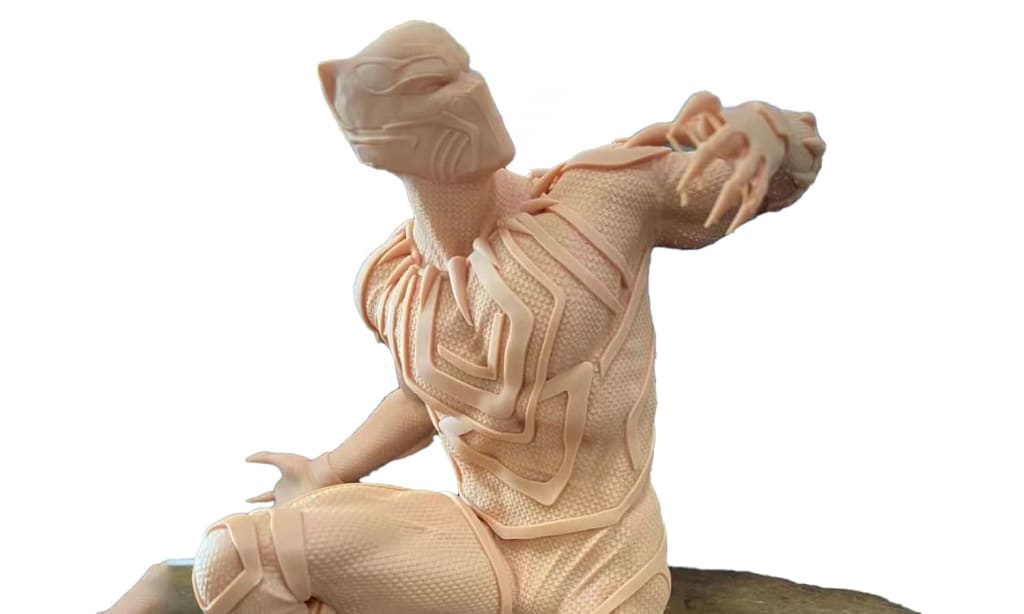
Today's affordable desktop 3D printers foster innovation across many sectors, from engineering and manufacturing to dentistry and medicine, education, jewelry, and hearing aids.
FDM 3D Printing
Layer by layer, plastic fibre is expelled from an FDM printer onto the forming platform. It's a clever and quick method for delivering working models. Although FDM may occasionally be used for real-world testing, the technology is constrained by the typically rough surface completes and lack of strength of the produced items. The Material Extrusion cycle is the heart of this cutting-edge 3D printing technology. Tools for extruding materials are cheap and easy to get. A fibre spool made from durable thermoplastic (PLA, ABS, PET) is repetitively piled into the 3D printer.
The engine forces it through the heated spout, turning it into liquid. To ensure the 3d printing service material remains in place in the forming stage while the printer fibre cools, the ejection head of the printer travels in a predetermined path. FDM is often used for investment casting patterns, jigs and fixtures, structural and fit testing, and electrical housing. The advantages of FDM include its versatility in terms of both the materials it may use and the quality of the finished product's surface and tone.
MJF 3D Printing
Multi Jet Fusion, like SLS, creates functional components out of nylon powder. MJF applies fusing chemicals to a bed of nylon powder using an inkjet array rather than a laser for sintering. Each layer is then connected by a hot source that is passed across the bed. This produces more uniform mechanical characteristics and a higher-quality surface than SLS. The shorter construction time required by the MJF method results in cheaper
manufacturing costs. Regarding 3D printing in plastic, the Multi Jet Fusion technique is among the quickest available. HP Multi Jet Fusion 3D printing may be up to 10 times faster than competing technologies like FDM or SLS. You'll get your components immediately because of this speedy shipping. It may be used for either prototype or production.
The key advantages of multi jet fusion technology are the short turnaround time for manufacturing and the great degree of customisation it allows for. Our non-dyed MultiJet material is a fantastic budget option since it is inexpensive and durable. Prototyping, mechanical testing, and even certain final products might benefit from using this material.
SLS 3D Printing
SLS is used to turn nylon powder into a cohesive plastic. Natural thermoplastic material produces SLS components, so they are strong, suitable for practical testing and can support moving elements such as live pivots and snap-fits. Compared to SL, the components are more robust yet have rougher surface finishes. Since SLS does not need support structures, the formation step may consolidate different elements into a single shape, making it suitable for part quantities greater than conventional 3d Printing Service standards.
Many SLS components are used to simulate plans that will ultimately take the form of infusions. The leftover powder after sintering may provide a support framework for the sintered development, eliminating the need for additional bracing.
Color Jet Printing
Two primary parts of the additive manufacturing process known as ColorJet Printing (CJP) are the core and the binder. Rolling out small layers of CoreTM material across the construction platform. Colourful sandstone prints can tolerate heat up to 60 °C (140 °F), but much higher, and the material's qualities degrade. Colourful sandstone artefacts need special care since they are delicate (on par with porcelain). The prints have a coarse and porous surface. Water might cause the colours to fade or run, so it is best to keep your hands off them.
DMLS 3D Printing
3D printing technology has expanded the potential for metal component design. At Protolabs, we employ direct metal laser sintering (DMLS) to 3D print metal components. Metal multi-part assemblies may be simplified into a single piece using this method, or their weight can be reduced by adding channels or other hollowed-out characteristics.
Since DMLS components are as dense as those produced with conventional metal manufacturing processes like machining or casting, they may be used for prototypes and production. Metals are ideal for medical applications because of their malleability and the ease with which complicated geometries may be fabricated.
Why It Is Important For Your Business
Using these programs, small firms may reap the rewards of 3d printing. As more businesses begin experimenting with 3d Printing Service, they are finding several practical applications for the technology.
- Large Scale Manufacturing:- Daily output from this machine may reach the thousands. This feature will be helpful if you mass manufacture standard components, goods, or instruments. These printers are ideal for mass-production facilities that need to quickly print large numbers of items.
- Possibilities For Mass Customization Have Expanded:- One of the most significant benefits of additive manufacturing is the possibility of mass customization. Customization may be time-consuming and costly when done the old way. To do this, you may change the original moulds or machines or make the changes yourself.
- Raise The Quality Of The Products:- Additive manufacturing expands your horizons, allowing you to make any design you can imagine, not just what you can afford. You can make anything, even intricate geometries. Additive manufacturing's precision in intricate geometries is remarkable. Additional unique designs are doable as well, such as shock-absorbing ones.
- Faster Service Times:- Investing in a business that can 3d print your items might save you time if you work in a time-sensitive sector. If you need a lot of products quickly, look at alternative manufacturing methods since typical factories may take up to four weeks to produce a single prototype. Time and money may be saved by working with a firm that offers 3D printing services and having them create many prototypes in only 24 hours.
Conclusion
Surface imperfections are less of a problem in the brainstorming and planning phases when all you need is a model to show a co-worker. When it comes time to put the product to the test with real customers, however, aesthetics and longevity become more critical. The proper use of 3d Printing Service across the board in product development can lessen design risk and, in the end, provide better goods, but there is no silver bullet.
About the Creator
Enjoyed the story? Support the Creator.
Subscribe for free to receive all their stories in your feed.
Comments
There are no comments for this story
Be the first to respond and start the conversation.