
Top Reasons to Pursue the Best Six Sigma Certification - ICFQ
Six Sigma Certification
Top Reasons to Pursue the Best Six Sigma Certification - ICFQ
When I decided to go for the best Six Sigma certification, I was at a turning point in my career. I had a lot of experience in project management, but I wanted to expand my skills and make myself more appealing in a tough job market. After doing a lot of research, I understood how important it was to get a certification that focused on improving processes, managing quality, and making decisions based on data. I chose to get certified through ICFQ, which is a well-known name in Six Sigma training. The whole experience was eye-opening. The training was thorough and organized, giving me a deep understanding of both the theory and how to apply it in real life. I learned how to look at processes, spot problems, and make changes that could save money and boost productivity.
Six Sigma is not just a technique; it’s a powerful resource for improving processes, raising quality, and reaching operational excellence. As industries keep evolving, businesses are focusing more on efficiency, reducing costs, and cutting down on mistakes. A fantastic way for professionals to gain the skills to make these improvements is by obtaining a Six Sigma certification. We will examine why getting a Six Sigma certification is a smart step for anyone aiming to advance their career, boost their skills, and help their organization succeed.
What is Six Sigma Certification?
Six Sigma certification is a professional credential that demonstrates expertise in process improvement, quality management, and data-driven decision-making. It involves mastering Six Sigma methodologies, such as DMAIC (Define, Measure, Analyze, Improve, Control), to reduce defects, enhance efficiency, and improve business processes. Certifications range from Yellow Belt (beginner) to Master Black Belt (expert), offering professionals the tools to lead projects, solve problems, and contribute to organizational success by optimizing performance and minimizing errors.
Why Six Sigma Certification is Important
The best Six Sigma certification opens up numerous opportunities for professionals across various industries. Here are some top reasons why pursuing this certification can be a game-changer:
1. Career Advancement
Having the best Six Sigma certification can significantly improve your career prospects. Employers actively seek professionals who can demonstrate a high level of expertise in process improvement, cost reduction, and quality management. Whether you are looking to move up within your current company or explore new job opportunities, Six Sigma certification can make you more competitive in the job market.
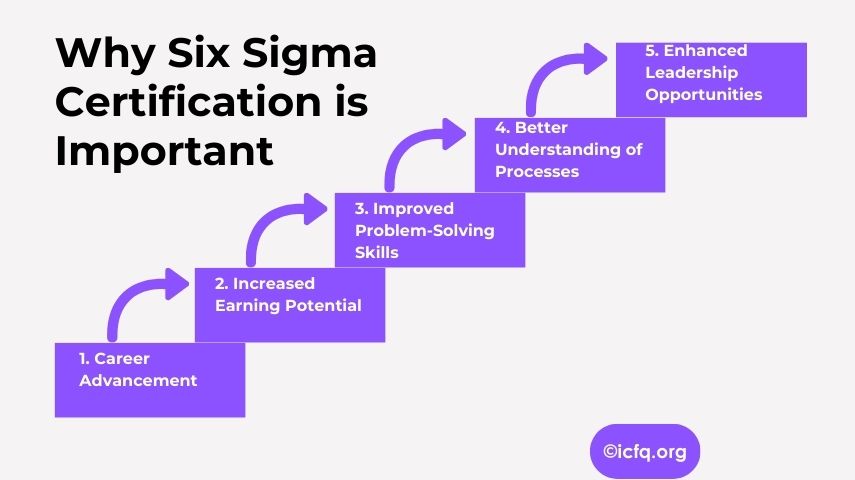
2. Increased Earning Potential
Certified Six Sigma professionals tend to earn higher salaries compared to their non-certified counterparts. According to multiple industry reports, Six Sigma-certified individuals typically see a notable increase in their earning potential. This certification is a testament to your ability to drive improvements and add value to the business, making you a more attractive candidate for higher-paying roles.
3. Improved Problem-Solving Skills
One of the core elements of Six Sigma is its structured approach to solving problems. By completing the best Six Sigma certification, you’ll learn how to systematically analyze issues, identify root causes, and develop data-driven solutions. This critical thinking ability not only helps you in your professional role but also applies to everyday challenges in various contexts.
4. Better Understanding of Processes
Six Sigma focuses on improving efficiency and reducing waste. During your training, you’ll learn how to map out processes, identify bottlenecks, and develop strategies to optimize workflows. This knowledge is invaluable in any industry, whether you’re involved in manufacturing, service delivery, or management. Understanding processes at a deeper level will allow you to become a more effective problem solver.
5. Enhanced Leadership Opportunities
Six Sigma professionals often assume leadership roles due to their expertise in process management and problem-solving. By earning the best Six Sigma certification, you’re positioning yourself as a leader who can guide teams toward success. Whether you’re leading a project or managing a department, Six Sigma provides you with the tools to make informed decisions and drive successful outcomes.
Types of Six Sigma Certifications
The best Six Sigma certification comes in various levels, each offering a different depth of knowledge and expertise. Here’s a breakdown of the most common certifications:
1. Six Sigma Yellow Belt
The Yellow Belt is an entry-level certification that provides a foundational understanding of Six Sigma principles. It’s ideal for individuals who are new to process improvement and want to gain a basic understanding of the methodology.
A Green Belt certification is more advanced and is suitable for professionals who are involved in process improvement projects but not necessarily leading them. This certification gives you the tools to analyze and improve processes, but you won’t be the lead on large projects.
3. Six Sigma Black Belt
A Black Belt certification is for those who want to take on leadership roles in Six Sigma projects. Black Belts are experts in the methodology and often lead teams to implement significant process changes in their organizations. This level of certification requires a deep understanding of Six Sigma tools, statistical analysis, and project management.
4. Six Sigma Master Black Belt
The Master Black Belt is the highest level of Six Sigma certification. Professionals at this level are leaders within the organization, responsible for training others and driving strategic improvements across multiple departments. It’s a prestigious certification that demonstrates expertise and leadership in Six Sigma.
How to Choose the Best Six Sigma Certification
When selecting the best Six Sigma certification for your career, it’s important to consider a few key factors:
1. Accreditation
Make sure the certification is offered by a reputable organization. The certification, for example, is globally recognized and provides high-quality training that adheres to international standards. Additionally, ATP offers comprehensive training programs designed to ensure you master the skills necessary to excel.
2. Course Structure
Look for a certification program that offers a balance of theory and practical experience. The best programs include case studies, hands-on exercises, and real-world examples that allow you to apply what you’ve learned tangibly.
3. Support and Resources
A good certification program should offer strong support throughout the process. Look for programs that provide access to experienced trainers, resources, and tools to help you succeed. For instance, ATP provides excellent training materials and guidance throughout the certification process.
The Benefits of Choosing ICFQ for Certification
ICFQ (International Center for Quality) offers globally recognized Six Sigma certifications that ensure professionals gain high-level expertise in process improvement and quality management. Their programs are structured to provide in-depth knowledge and practical experience, making it easier for candidates to apply the concepts effectively. Certifications are tailored for various levels, from entry-level to advanced professionals, ensuring that each candidate receives relevant training. Additionally, ICFQ provides ongoing support to help individuals grow throughout their careers.
Benefits of Choosing ICFQ:
Globally recognized and accredited certifications.
Comprehensive training that blends theory and practical skills.
Access to expert instructors and real-world case studies.
Tailored programs for different experience levels (Yellow Belt to Master Black Belt).
Continuous support for career growth and skill development.
Pursuing the best Six Sigma certification can significantly impact your career and professional growth. Whether you’re looking to advance within your current role, transition to a new field, or simply improve your problem-solving and leadership skills, Six Sigma is a powerful tool. By choosing the right certification program, such as those offered by ICFQ, and engaging in effective training through ATP, you’ll gain the expertise and knowledge needed to drive success in any organization. As I’ve learned from my own experience, Six Sigma is not just a certification; it’s a mindset and a set of skills that can elevate both individuals and businesses to new heights. If you’re ready to enhance your career and make a tangible impact in your organization, consider earning the best Six Sigma certification today.
The ICFQ model, coupled with comprehensive training, ensures you are equipped with the skills needed for long-term success. By earning the best Six Sigma certification and applying the knowledge through ATP’s extensive training programs, you will be prepared to face new challenges and contribute to your organization's goals.
About the Creator
Enjoyed the story? Support the Creator.
Subscribe for free to receive all their stories in your feed.
Comments
There are no comments for this story
Be the first to respond and start the conversation.