
Top 15 Benefits of Entity Resolution Software for Enterprises
Power of Entity Resolution Software for Enterprises

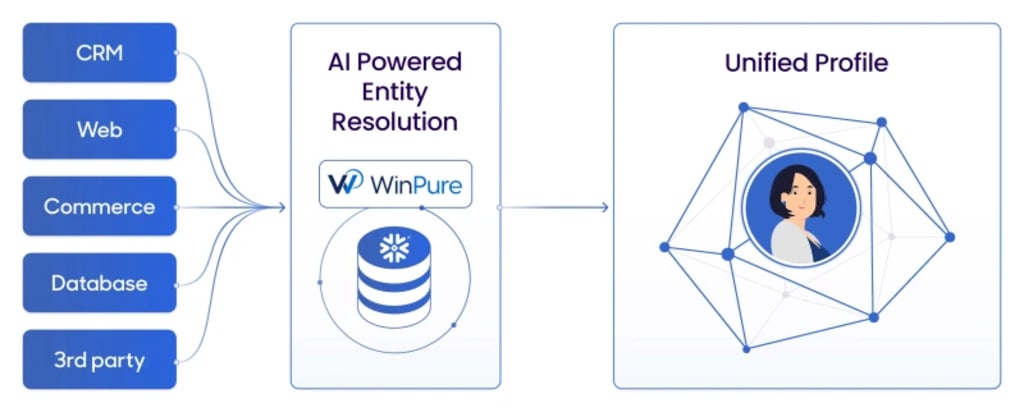
Entity resolution software is a powerful tool for enterprises dealing with vast, complex datasets.
By merging duplicate records, creating unified customer views, and ensuring accurate data, this technology enhances decision-making, customer relationships, and operational efficiency.
It also helps detect fraud, supports compliance, and saves costs on data management.
This guide covers the top benefits of entity resolution software for enterprises and why it’s essential in today’s data-driven world, ensuring businesses stay competitive and compliant while leveraging their data effectively.
Benefit 1: Enhanced Data Accuracy and Deduplication
Entity resolution software significantly boosts data accuracy by systematically identifying and merging duplicate entries across large datasets.
This feature is invaluable for businesses with multiple records for a single entity, such as a customer listed under various spellings or formats across different systems.
The software uses advanced matching algorithms, including exact, fuzzy, and phonetic matching, to identify slight variations in entries (like “Johnathan Doe” and “J. Doe”) and consolidate them into a single, accurate profile.
By eliminating redundancies and discrepancies, entity resolution creates a cleaner, more reliable dataset, enabling better insights and informed decision-making across business functions.
Benefit 2: Unified Customer and Business View
Entity resolution software creates a cohesive, 360-degree view of each customer and business relationship by connecting fragmented data from various sources.
For instance, information collected from CRM systems, support logs, and e-commerce platforms can be integrated to show all relevant details about an individual customer or business account.
This unified perspective helps organizations understand customer behaviors, preferences, and needs, leading to more tailored interactions and improved customer relationship management.
Enterprises can leverage this complete view to foster loyalty and personalize marketing strategies, as well as to make data-driven decisions that support overall business growth and customer satisfaction.
Benefit 3: Streamlined Data Management
Managing data across multiple platforms can be complex and time-consuming, often leading to inconsistencies.
Entity resolution software simplifies this by automating the linking and organizing of data across different systems.
This automation minimizes the manual effort needed for data cleansing, deduplication, and consolidation, allowing IT teams and data managers to focus on more strategic tasks.
With data automatically categorized and connected, organizations enjoy more seamless data management across customer databases, CRM systems, and e-commerce platforms.
This streamlined process enhances operational efficiency and ensures that all data is consistently accurate, accessible, and ready for analysis across the organization.
Benefit 4: Improved Decision-Making
Entity resolution enhances an enterprise’s decision-making capabilities by providing accurate, comprehensive data insights.
With a single, unified view of all relevant data points—like customer histories, purchase behaviors, and service interactions—executives and analysts can make more informed decisions backed by data accuracy.
Whether it’s for customer onboarding, product development, or market strategy, the insights gained from high-quality, resolved data allow organizations to anticipate customer needs, reduce risks, and drive strategic initiatives.
Moreover, the consistent data provided by entity resolution software supports AI and machine learning applications, making it easier to generate predictive insights and automate critical business processes.
Benefit 5: Fraud Detection and Compliance
Entity resolution software plays a crucial role in fraud detection and regulatory compliance by accurately linking data from various sources, allowing businesses to identify suspicious patterns and connections that might otherwise go unnoticed.
For example, in financial services, the software can recognize duplicate or fraudulent applications by matching common identifiers across databases.
This capability helps detect and prevent potential fraud, ensuring regulatory compliance in industries that handle sensitive data, such as banking and healthcare.
By providing transparency and security in data management, entity resolution assists organizations in meeting compliance requirements while also protecting customer information.
Benefit 6: Optimized Marketing and Sales Strategies
With entity resolution, enterprises can gain a comprehensive view of customers, leading to more accurate segmentation and targeting.
By resolving entity information, marketing and sales teams can identify specific behaviors, preferences, and purchasing patterns across various platforms, resulting in highly targeted campaigns and personalized outreach efforts.
This alignment enables better resource allocation, as teams can focus on high-value leads and tailor their approach based on unified customer data.
Enhanced customer segmentation and precise targeting boost engagement and conversion rates, making marketing and sales strategies more effective and cost-efficient.
Benefit 7: Efficient Resource Allocation and Territory Planning
Entity resolution supports enterprises in efficiently allocating resources and planning territories by providing accurate insights into customer and account distributions.
By consolidating data from multiple sources, businesses can analyze the true spread and density of their customer base across regions.
For instance, retail chains can identify which locations drive the most sales, helping managers allocate marketing budgets and sales teams more effectively.
This clarity in market segmentation allows enterprises to optimize sales territories, ensure balanced workloads, and prioritize high-value targets.
Overall, entity resolution helps companies streamline operations and enhance their competitive positioning.
Benefit 8: Data Scalability
Entity resolution software is built to handle large-scale data processing, making it a reliable solution for enterprises dealing with big data.
As organizations grow and data volumes increase, traditional data management methods may struggle to keep up.
However, entity resolution software automates the data matching process, making it possible to manage billions of records with minimal performance impact.
This scalability is especially important for sectors like finance, healthcare, and retail, where data grows rapidly.
By supporting efficient data scaling, entity resolution enables businesses to expand their data capabilities without compromising on speed or accuracy, ensuring that data remains consistent and reliable as the organization evolves.
Benefit 9: Identity and Relationship Resolution
Advanced identity resolution tools are designed to connect various data points related to the same entity, even when information appears in disparate forms.
By harmonizing records—such as connecting “John Smith” and “J. Smith” across databases—these tools reveal intricate relationships between entities, like family connections, corporate hierarchies, or shared assets.
This deeper insight into entity relationships supports companies in personalizing customer service, identifying fraud, and optimizing product recommendations.
Such relational mapping enhances data utility, enabling more accurate profiling and targeted strategies that directly impact customer satisfaction and business outcomes.
Benefit 10: Improved Operational Efficiency
Solutions for resolving duplicate identities contribute significantly to operational efficiency by reducing manual data management efforts.
Instead of spending time identifying and reconciling duplicate records across systems, teams can rely on automated data-matching tools that organize and synchronize information seamlessly.
This efficiency minimizes data entry errors and redundancies, which in turn leads to faster access to consistent data across departments.
By reducing the workload for IT and data management teams, companies can reallocate resources to strategic initiatives, ultimately increasing productivity and reducing operational costs across the organization.
Benefit 11: Enhanced Data Quality Across Systems
Data-matching solutions standardize and harmonize information across various platforms, maintaining data integrity across the organization.
Through these systems, data from CRMs, e-commerce platforms, and ERPs are continuously checked for accuracy and consistency.
This unified approach to data quality ensures that all departments access the same up-to-date records, reducing inconsistencies and fostering cross-departmental collaboration.
Enhanced data quality across platforms empowers decision-makers, improves customer service outcomes, and fosters a more synchronized and informed business environment where data is a reliable asset rather than a liability.
Benefit 12: Support for Master Data Management (MDM)
Identity resolution solutions play a crucial role in supporting Master Data Management (MDM) by ensuring that each entity is represented accurately across all databases.
MDM initiatives rely on a consolidated dataset as the “single source of truth” for customer and business data, and identity matching tools facilitate this by resolving duplicates and assigning unique identifiers to each record.
This process simplifies data governance and enhances data accessibility across departments, which is essential for large organizations managing extensive datasets.
With MDM support, businesses achieve a cohesive data structure that enhances overall data governance and strategic alignment.
Benefit 13: Increased Privacy and Security Compliance
Data reconciliation tools help enterprises adhere to stringent privacy regulations by ensuring that data is accurate, consolidated, and secure.
Regulations like GDPR and CCPA require companies to maintain accurate records, protect personal information, and ensure transparency in data handling.
By automatically resolving duplicates and standardizing records, these solutions allow companies to better manage sensitive data across systems and streamline compliance processes.
Enhanced data privacy safeguards also reduce the risk of security breaches, bolstering trust with customers and ensuring the business remains compliant with global privacy standards.
Benefit 14: Cost Savings in Data Management
Efficient data matching software offers significant cost savings by automating tasks that would otherwise require extensive manual input.
By reducing the need for data cleaning, deduplication, and reconciliation, companies can save on labor costs while achieving higher data accuracy.
Additionally, storage costs are minimized as duplicate records are consolidated, reducing the volume of redundant data stored in systems.
These cost efficiencies extend to reporting and analytics as well; with cleaner data, businesses can generate reports faster and more accurately, further optimizing resources and enhancing decision-making.
Benefit 15: Real-Time Processing Capabilities
Many identity-matching platforms offer real-time data processing, which is especially valuable for industries that require quick decision-making, such as finance, retail, and customer service.
Real-time data integration ensures that customer records are updated immediately across all systems, enabling fast, informed responses to customer interactions, fraud detection, and service inquiries.
Real-time capabilities allow businesses to act on current, consolidated data rather than outdated information, leading to more agile and proactive customer service and a competitive edge in dynamic markets.
Final Thoughts
Entity resolution software plays a crucial role in transforming scattered data into actionable insights for enterprises.
It not only improves data quality and operational efficiency but also supports strategic goals like enhanced customer engagement, resource optimization, and compliance.
By providing a unified view of entities and automating data management tasks, entity resolution helps organizations make smarter, faster decisions and stay competitive.
For any enterprise aiming to optimize its data practices and leverage insights fully, investing in entity resolution software is a strategic step forward.
About the Creator
Enjoyed the story? Support the Creator.
Subscribe for free to receive all their stories in your feed.
Comments
There are no comments for this story
Be the first to respond and start the conversation.