
The Weight of Bread and Gold
The Rise of a Man Who Refused to Break
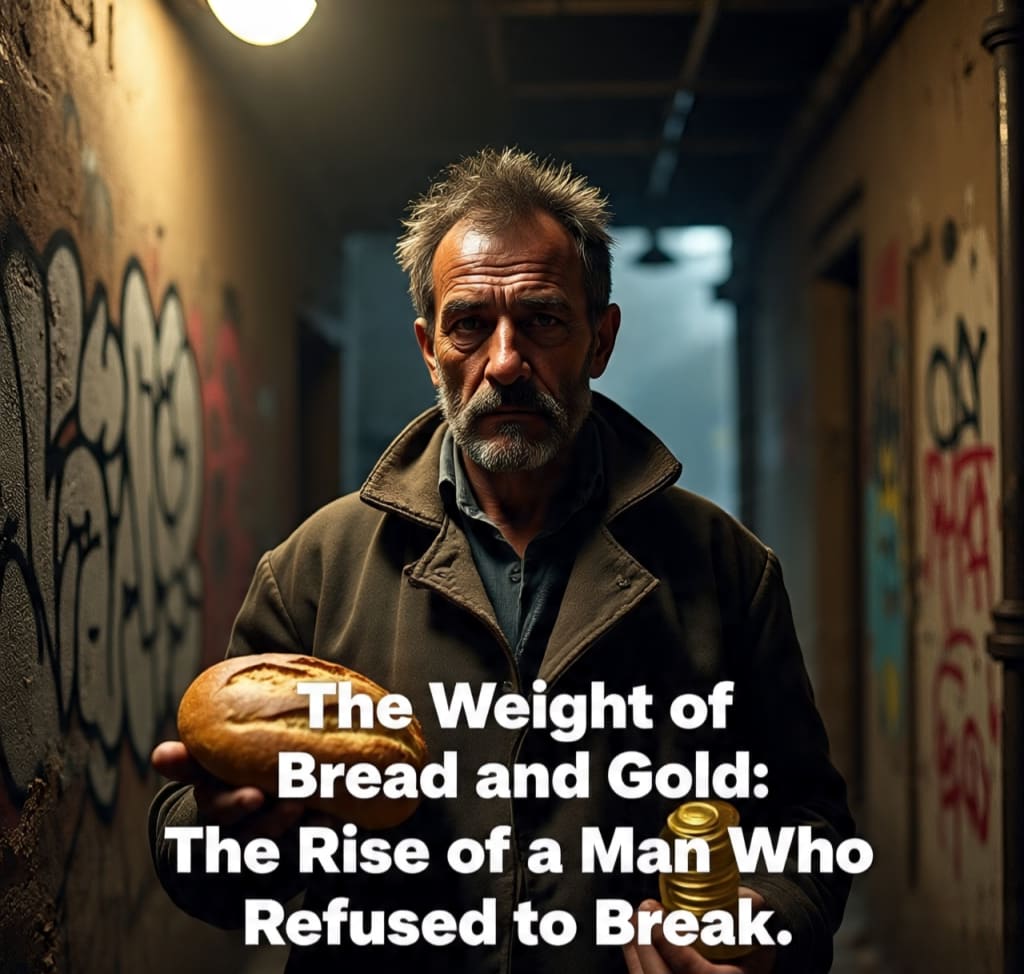
Rafiq woke up before the sun each morning. The floor was cold under his feet, and the roof of the tiny one-room house dripped whenever it rained. His children, Ayaan and Nura, still slept in the corner, huddled under a thin blanket. His wife, Salma, had already lit a small fire to boil water. They didn’t speak much in the mornings — words felt heavy when stomachs were empty. Every day, Rafiq walked miles to the city to look for work. Some days he found a job carrying bricks, some days sweeping streets. Many days he found nothing. On those days, he returned home with his shoulders low, his hands empty, and his heart aching. But he never let his children see him cry. He carried his pain like a sack of stones on his back — silently, heavily, but never dropping it. One evening, after three days with only a piece of bread to share between them, Rafiq sat outside with Ayaan on his lap. The boy, no older than six, looked up and asked, “Baba, why don’t we have enough food?” Rafiq’s throat tightened. He held his son close and whispered, “Because life is hard right now. But not forever. I promise.” That night, Rafiq made a choice. He would no longer wait for work to come to him — he would create it. He borrowed a small amount of money from a neighbor and bought a secondhand cart. The next morning, he filled it with boiled eggs and hot tea. He stood on the same street corner every day, calling out to tired workers and hungry passersby. Some ignored him. Some laughed at the idea of a tea-seller with big dreams. But a few stopped. A few bought. And slowly, coins began to fill the old tin he kept under the cart. He worked through heat, through rain, through sickness. He worked when his feet were blistered and when his back screamed in pain. And every night, he brought home not just food, but hope. Months passed. The tea cart became two carts. Rafiq hired another poor man who was also struggling to feed his family. The once-empty house now smelled of lentils, rice, and sometimes, even sweets. The children had shoes. Salma smiled more. But Rafiq didn’t stop. He saved every rupee he could. He studied other vendors. He learned how to buy in bulk, how to talk to suppliers. He started selling snacks. Then sandwiches. Then fruit juice. Five years later, he opened a small café with plastic chairs and a metal sign that read: “Rafiq’s Corner.” The café grew busier each day. College students came to sit and laugh. Tired workers came to eat and rest. His children, now older, helped on weekends. His wife ran the kitchen. The man who once could not afford a loaf of bread now employed eight people — all from his old neighborhood. One day, a customer asked him, “Rafiq bhai, how did you go from selling eggs on the street to owning this place?” Rafiq smiled, wiped his hands, and looked outside where his old tea cart stood — now polished and placed like a trophy. He said, “I carried my hunger like a weight. I carried my children’s tears. I carried the sound of my wife praying for rain. I carried the shame of coming home empty-handed. And I turned all that into fire.” The customer nodded, touched by his words. “But,” Rafiq added quietly, “the hardest thing I ever carried... was the fear that I might fail. That I might break. But I didn’t.” Years later, when Rafiq opened a second café, he didn’t name it after himself. He named it “Hope & Bread.” He said it was because those were the two things no family should ever have to live without. Now, when he walks through the streets, he’s known not just as a businessman, but as a man who gives back — helping others start their own small businesses, paying school fees for children who remind him of Ayaan and Nura. But he never forgot the weight he once carried. And even now, when he sits alone at night, counting the day’s earnings, he places two things on his desk: an old, cracked piece of bread — wrapped in cloth and kept as a reminder — and a gold coin he received the day he opened his first café. One feeds the body. The other reminds him of the journey. But both carry the same weight. The weight of bread and gold. The weight of a man who refused to break.
About the Creator
Enjoyed the story? Support the Creator.
Subscribe for free to receive all their stories in your feed.
Comments
There are no comments for this story
Be the first to respond and start the conversation.