
The Rise of Artificial Intelligence
Implications for the Future
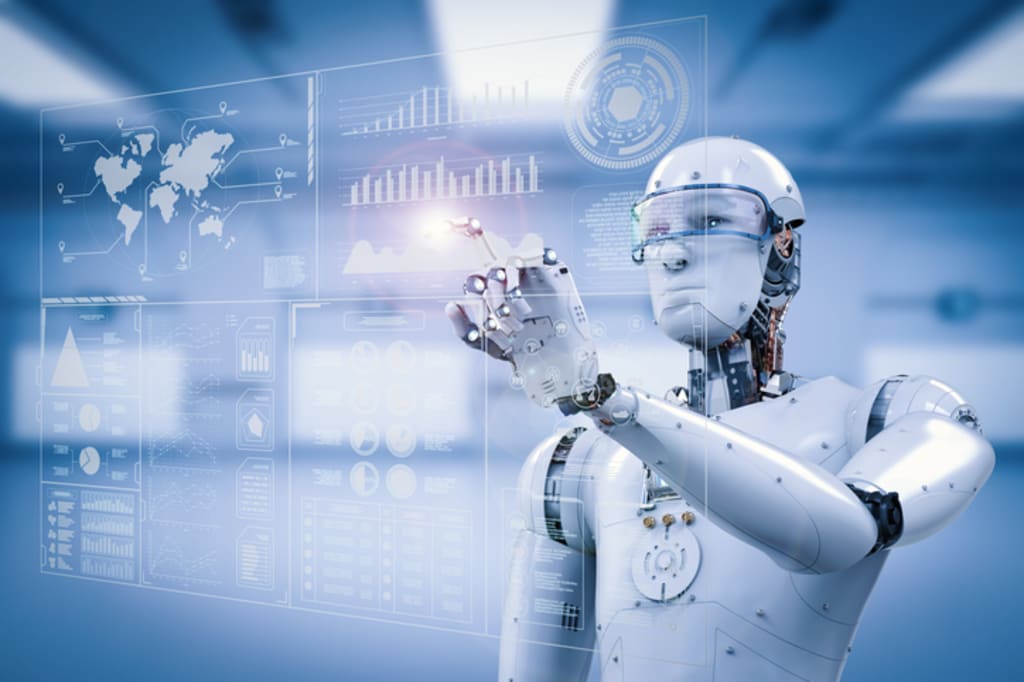
Artificial Intelligence (AI) is transforming our world at a rapid pace and affecting almost every aspect of our lives, ranging from healthcare to finance. It's important to understand both the potential benefits and downsides of this evolving technology.
One of the most significant advantages of AI is its ability to quickly and accurately process and analyze vast amounts of data. This feature makes AI a valuable tool in healthcare, where AI algorithms can help analyze medical images and aid in disease diagnosis. In the finance sector, AI can help detect fraudulent activity and make investment decisions based on data analysis.
However, the rise of AI also poses certain challenges. One of the concerns is the possibility of AI systems replacing jobs that were previously performed by humans as they become more advanced. Additionally, there is a risk that AI algorithms may perpetuate existing biases and discrimination, which could have serious social consequences.
Despite these challenges, the potential benefits of AI are substantial. It is essential for businesses, governments, and individuals to ensure that the development and deployment of AI technology is conducted ethically and responsibly, maximizing its potential benefits while minimizing its potential risks.
Current AI
Current AI is focused on narrow or specific tasks. These tasks include things like image recognition, speech recognition, and natural language processing. Current AI is based on machine learning techniques, which means that it can learn from data and improve over time.
- Narrow AI:
Weak AI, also known as narrow AI, refers to artificial intelligence that is designed to perform a specific task or set of tasks. Unlike strong AI, which aims to create machines that are as intelligent as humans and can think and reason on their own, weak AI is focused on solving specific problems and completing specific tasks. Examples of weak AI include speech recognition software, image recognition systems, and recommendation engines.
One of the key advantages of weak AI is its ability to improve efficiency and productivity in a wide range of industries. By automating routine tasks, such as data entry or customer service inquiries, weak AI can free up human workers to focus on more complex and creative tasks. In addition, weak AI can help organizations make better decisions by analyzing data and providing insights that would be difficult for humans to uncover on their own.
However, one of the limitations of weak AI is its lack of flexibility. Because these systems are designed for specific tasks, they are not able to adapt to new situations or learn new skills on their own. As a result, they require human intervention and oversight to ensure they are performing correctly.
Overall, weak AI has become an important tool for businesses and organizations looking to automate routine tasks and improve productivity. While it has its limitations, it has the potential to unlock new levels of efficiency and innovation across a wide range of industries.
One of the most significant limitations of current AI is that it is often based on supervised learning. This means that it requires large amounts of labeled data to learn from. Additionally, current AI can be biased, and it can perpetuate existing biases and discrimination.
Despite these limitations, current AI has already had a significant impact on many industries. It is being used in healthcare, finance, transportation, and many other areas.
Future AI
Future AI will be more advanced and will be capable of more complex tasks. It will be able to reason, plan, and solve problems in ways that current AI cannot. Future AI will also be able to learn from fewer examples, which means that it will not require as much labeled data.
One of the most exciting aspects of future AI is its potential to be unsupervised. This means that it will be able to learn from data without being explicitly told what to learn. This will open up many new possibilities for AI, as it will be able to discover patterns and make predictions that humans may not be able to see.
Another exciting aspect of future AI is its potential to be explainable. Current AI can be difficult to understand, and it can be challenging to determine why it made a particular decision. Future AI will be designed in a way that makes it easier to understand and explain.
In conclusion, AI is a powerful technology that has the potential to revolutionize our world. By understanding both its benefits and drawbacks, we can work to ensure that AI is utilized in a way that benefits everyone while being developed and deployed ethically and responsibly.
About the Creator
Enjoyed the story? Support the Creator.
Subscribe for free to receive all their stories in your feed.
Comments
There are no comments for this story
Be the first to respond and start the conversation.