
The Making of a Legend: Lata Mangeshkar’s Path to Stardom
Lata Mangeshkar
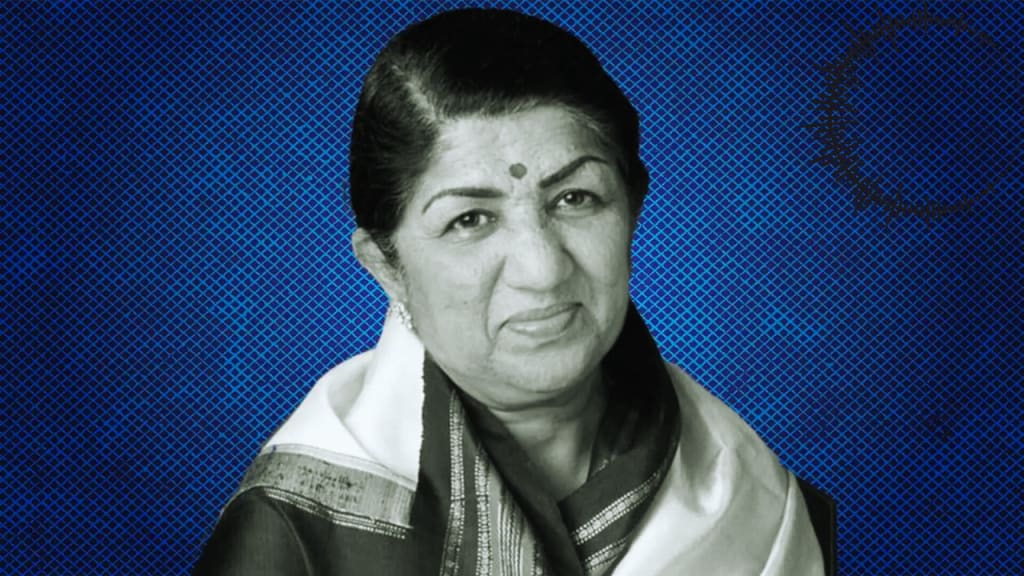
Lata Mangeshkar, often referred to as the "Nightingale of India," was not just a singer but a phenomenon that defined an era. Her voice, both versatile and deeply emotive, left an indelible mark on Indian music. As one of the most celebrated playback singers of all time, Lata Mangeshkar epitomized grace, dedication, and excellence in her craft. For over seven decades, her songs resonated with listeners, capturing the essence of love, longing, patriotism, and devotion. This article pays homage to Lata Mangeshkar's unparalleled legacy, showcasing her rise to fame, her contributions to Indian and global music, and the timelessness of her artistry.
Humble Beginnings: The Making of a Legend
Born on September 28, 1929, in Indore, Madhya Pradesh, Lata Mangeshkar grew up in a family steeped in music. Her father, Deenanath Mangeshkar, was a classical musician and theater artist, and it was under his guidance that Lata's musical journey began. Tragedy struck early when her father passed away, but young Lata, driven by resilience and talent, took on singing to support her family.
Her early foray into films as a child actor soon gave way to playback singing. Despite initial struggles, including rejections due to her distinctive voice, she persisted. Her big break came with the song "Aayega Aanewala" from the film Mahal (1949), which catapulted her to stardom.
The Golden Voice of Indian Cinema
Lata Mangeshkar's career was synonymous with the golden era of Bollywood music. She worked with legendary composers like S.D. Burman, Madan Mohan, Shankar-Jaikishan, and Laxmikant-Pyarelal, creating unforgettable melodies. Iconic songs such as "Lag Ja Gale", "Pyar Kiya To Darna Kya", and "Tere Bina Zindagi Se Koi" became milestones in Indian cinematic history.
Her ability to adapt her voice to suit different actresses - from Madhubala to Kajol - was a testament to her incredible range. Whether it was a romantic ballad, a devotional hymn, or a patriotic anthem like "Ae Mere Watan Ke Logon", Lata Ji infused every song with unparalleled emotion.
A Versatile Artist Across Genres and Languages
One of Lata Mangeshkar's greatest achievements was her linguistic versatility. She sang in over 36 languages, including Hindi, Marathi, Bengali, Tamil, and Malayalam. This linguistic prowess not only expanded her reach but also showcased her ability to embrace diverse musical traditions.
She wasn't confined to film music alone. Her ghazals, bhajans, and classical renditions further highlighted her versatility. Collaborations with classical legends like Pandit Jasraj and Ustad Amir Khan revealed her deep respect for Indian classical traditions.
International Acclaim and Awards
Lata Mangeshkar's voice reached beyond Indian shores, earning her global recognition. In 1974, she became the first Indian to perform at the Royal Albert Hall in London. Her accolades include the Bharat Ratna, India's highest civilian award, and a Grammy nomination.
Her songs were sampled and appreciated in international circles, and she collaborated with global artists, further cementing her reputation as a cultural ambassador of India.
Influence on Generations
Lata Mangeshkar's impact on the music industry extends far beyond her own era. She inspired countless singers, from Asha Bhosle to Shreya Ghoshal, shaping the soundscape of Indian music for generations. Her dedication to perfection set a benchmark for professionalism and excellence in playback singing.
Through her foundation, she also supported upcoming artists and contributed to charitable causes, proving that her compassion was as boundless as her talent.
Conclusion:
Lata Mangeshkar was not just the "Nightingale of India" - she was the soul of Indian music. Her legacy transcends generations, and her songs continue to be a source of comfort, joy, and inspiration. With her unique ability to convey profound emotions through her voice, she remains unparalleled in the history of music. The name Lata Mangeshkar is synonymous with timeless artistry and devotion to craft. As we listen to her melodies, let us remember her not just as a legendary singer but as an eternal symbol of India's cultural heritage.
About the Creator
Enjoyed the story? Support the Creator.
Subscribe for free to receive all their stories in your feed.
Comments
There are no comments for this story
Be the first to respond and start the conversation.