
The internet is changing your brain
What is the screen doing to our brain?
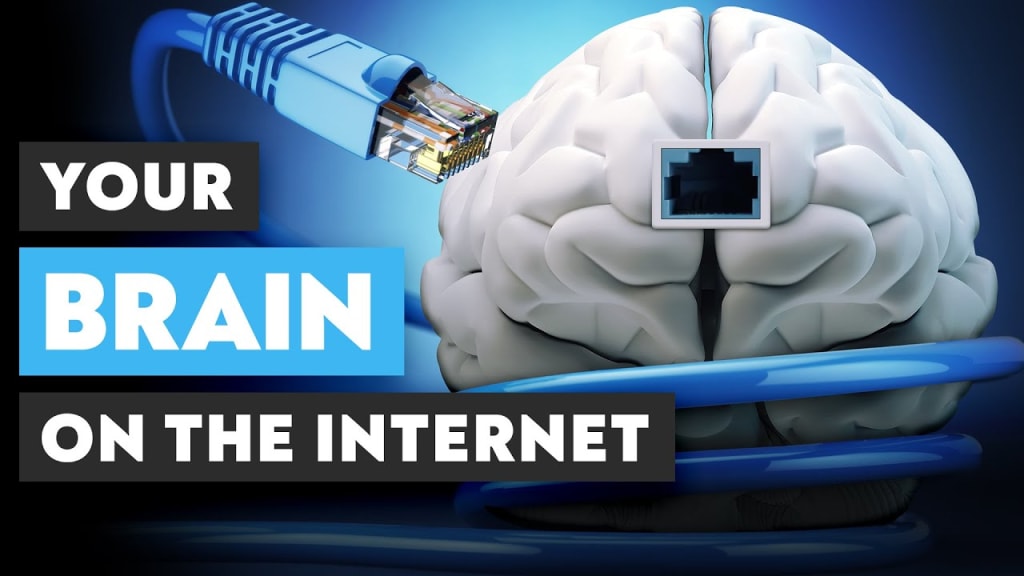
Without the internet, our lives would be quite different. Some of us remember the time before everything was connected, but the thought of living without smartphones, maps where search engines ran at our fingertips now seems completely alien to us. But how is our increasing reliance on the online world affecting us? Our relationships, sources of information, and ways we interact with each other are rapidly changing. And there are even noticeable effects occurring within our brains with more and more devices relying on the internet.
There is an increasing number of people who have access to the internet. In 2016 an estimated 3.5 billion people used online services around the world. The three countries with the most users were China with 721 million, India with 342 million, and then the United States with 290 million users languages spoken online were English, Chinese, and Spanish. The most common way of using the internet is through English followed by Chinese and Spanish.
Group of ages X Internet users who were born between the middle of the 1960s and the early 1980s averaged 105 minutes per day of mobile internet use, compared to 105 minutes per day for Millennials, who were born from the early 80s onward and grew up with the internet. With more than a billion people using messaging applications like WhatsApp on a regular basis and millions more using social media sites like Facebook and Twitter, social media and messaging apps have become essential to how we live our lives and communicate.
Since more and more people are using Internet services, it makes sense that our behavior would change as well. Because phone calls and text messages are becoming less and less popular due to the use of online services, traditional high street stores are seeing a sharp decline in customer visits.
Because of what is now available online, our towns and cities are beginning to seem considerably different from how they did a few decades ago. With such a wealth of knowledge at our disposal, how is all this altering our brains? The widespread use of the Internet is altering the way we do our jobs; millennials, for instance, have been proven to be considerably more forgetful than other generations. The basic tenet of memory states that the more often you repeat and think about a piece of information in your short term memory, the more it will stick there. This is believed to be a direct effect of the constant distractions that connectivity delivers.
While previous generations would have memorized directions on a map for example, there is now a reliance on being able to access this GPS app on your own fault we're also becoming less likely to form a memory of information because it is readily available online. Additionally, constant new information prevents this process from taking place as effectively and far less is permanently stored.
Some studies indicate that due to the constant influx of information, humans are losing their cognitive control. This means that not only are we losing our ability to control our minds but also our ability to decide what is worth focusing on. The more we rely on our phones and apps to provide us with information, the less control we have over determining what is truly significant. We have become more concerned with what is new rather than what is important.
Even though technology is clearly affecting how our brains work, that doesn't mean it's a bad thing. Throughout history, inventions have always allowed us to focus less on one thing, allowing us to spend more time doing other things. For example, washing machines allow people to spend far less time cleaning clothes, which frees up extra time each day for work or other activities. The ability to communicate and find information much faster on the internet also gives us more mental capacity for other processes.
About the Creator
Ria
Reading articles allows readers to quit early without feeling as guilty, cover a higher volume of pieces, and broaden their knowledge about a wider variety of topics. This is optimal for people who are short on time.
Enjoyed the story? Support the Creator.
Subscribe for free to receive all their stories in your feed.
Comments
There are no comments for this story
Be the first to respond and start the conversation.