
The Importance of Education: Why It Matters
The Importance of Education
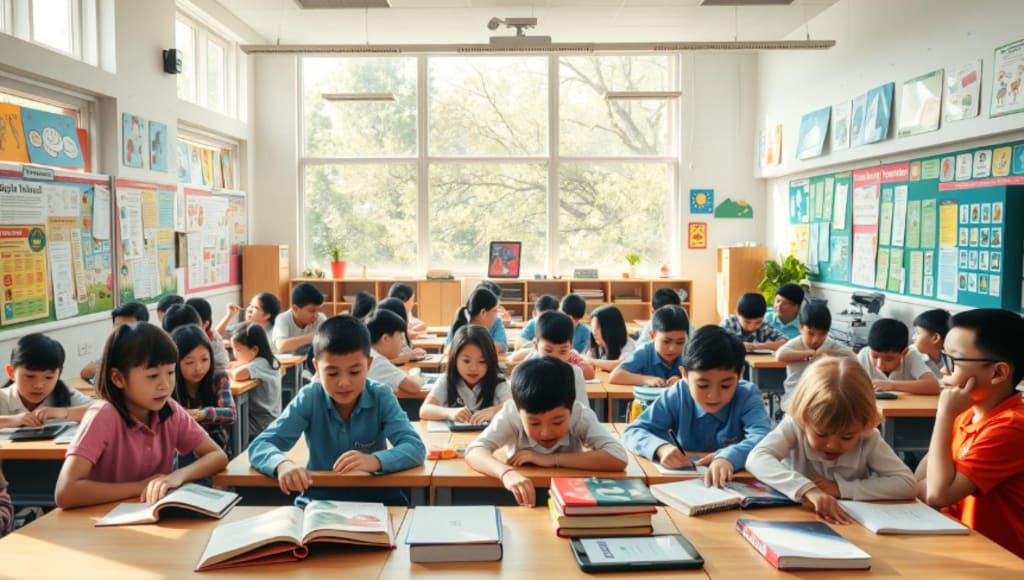
The Importance of Education: Why It Matters
Every journey of change starts with learning. My life changed when I found out how valuable learning is. It's not just in school, but in every experience that broadens our view of the world.
Education does more than just help us pass tests. It unlocks our full potential and helps us grow. It's about learning and growing every day.
Education changes lives and shapes societies. It's not just about books and degrees. It teaches us to think deeply, question the status quo, and make a difference in our communities and lives.
Seeing the value of education means understanding it as a universal key. It opens doors to new opportunities, growth, and progress. Through school or lifelong learning, education turns potential into real achievements.
Key Takeaways
Education is a transformative force for personal and societal development
Learning extends beyond traditional academic settings
Critical thinking and personal growth are core benefits of education
Knowledge provides pathways to expanded opportunities
Education empowers individuals to create meaningful change
Understanding the Fundamental Role of Education in Society
Education is a powerful tool for changing society. It shapes our potential and helps us grow together. It goes beyond school, helping us grow personally and socially.
Over time, education has changed a lot. It has adapted to the needs of communities and civilizations.
Historical Evolution of Educational Systems
Education has a long history, from ancient times to today. Important moments include:
Ancient Greek philosophical schools
Medieval monastic education systems
Renaissance humanistic learning approaches
Industrial-era standardized educational models
Education as a Social Equalizer
Education helps people move up in society. It breaks down barriers and opens doors for everyone. Knowledge becomes the great leveler, helping people overcome economic challenges.
"Education is the most powerful weapon which you can use to change the world." - Nelson Mandela
Modern Educational Paradigms
Today, education focuses on personal learning, technology, and developing all-around skills. It's designed to keep up with the fast-changing world.
Educational Approach Key Characteristics
Experiential Learning Hands-on, practical skill acquisition
Digital Learning Technology-enhanced, flexible education
Competency-Based Education Skill mastery over time-based progression
The constant change in education shows our dedication to learning and improving society.
About Importance of Education in Personal Development
Education is a powerful tool for personal growth. It changes people in ways that go beyond just learning. It shapes who we are, teaches us important life skills, and helps us reach our full potential.
"Education is not the filling of a pail, but the lighting of a fire." - William Butler Yeats
Education touches many parts of our growth. It helps us in several ways:
Cognitive skill enhancement
Emotional intelligence development
Self-awareness cultivation
Critical thinking improvement
Problem-solving capabilities
Education's role in personal growth is huge. It gives us the chance to:
Challenge our views
Think analytically
Grow strong
Explore our interests
Make deep connections
Studies show that education shapes our values and views of the world. It opens our eyes to different ways of thinking. This helps us become more empathetic, understand cultures better, and see the world as a whole.
Educational Dimension Personal Development Impact
Intellectual Growth Enhanced cognitive flexibility
Emotional Learning Improved interpersonal skills
Social Interaction Expanded communication abilities
Personal Exploration Increased self-confidence
Education is more than just reading books. It's a journey of self-discovery and empowerment. It's not just about learning facts. It's about growing and learning for life.
The Economic Benefits of Educational Attainment
Education is a key to economic success. It opens doors to better jobs and more money. People with more education often do better in their careers and have more money.
https://youtube.com/watch?v=pA9Evw-1adE
Looking at the economy shows how education helps financially. Students who study hard can get big economic benefits.
Career Advancement Opportunities
Going to college leads to many career choices. People with degrees often get:
More job options
Specialized jobs
Good networking chances
Leadership roles
Income Potential and Financial Security
Education Level Median Annual Earnings Unemployment Rate
High School Diploma $38,792 3.7%
Bachelor's Degree $67,860 2.2%
Advanced Degree $94,580 1.6%
"Education is the most powerful weapon which you can use to change your world." - Nelson Mandela
Economic Mobility Through Education
Education helps people move up the economic ladder. Strategic learning investments help people overcome money problems. This leads to more money and stability over time.
By focusing on education, people can improve their financial future. Knowledge is a powerful tool for success in work and life.
Education's Impact on Critical Thinking and Problem-Solving
Being educated offers more than just learning facts. It teaches us to think critically. This skill helps us tackle complex problems with ease. Through school, we learn to analyze, evaluate, and put information together accurately.
"Education is not the learning of facts, but the training of the mind to think." - Albert Einstein
Learning is more than just remembering stuff. It's about building our minds to solve problems. These skills are key for success in life and work.
Develop analytical reasoning capabilities
Enhance decision-making processes
Improve strategic thinking abilities
Build innovative solution strategies
Interactive learning makes us better thinkers. Activities like project-based learning and workshops challenge us. They help us question and think deeply.
Skill Category Cognitive Development Impact
Analytical Reasoning Increases pattern recognition and logical interpretation
Strategic Planning Enhances complex problem decomposition skills
Creative Problem Solving Stimulates innovative thinking and alternative solution generation
Today's schools know that critical thinking is more than just schoolwork. It prepares us for a changing world.
Social and Cultural Benefits of Being Educated
Education is more than just learning. It changes us into better people and helps us connect with others. It's about growing and building strong communities.
Learning is not just about books. It's a way to grow and connect with others.
Building Cultural Awareness
Education connects us to different cultures. It helps us:
Understand the world better
Respect different cultures
Feel empathy towards others
Developing Social Networks
Schools are great for making friends. Students meet people from all walks of life. These friendships can last forever.
Network Type Potential Benefits
Professional Connections Career chances and guidance
Peer Relationships Support and learning together
Global Interactions Understanding different cultures
Enhancing Communication Skills
Education makes us better at talking and listening. We learn:
To speak clearly
To write well
To listen actively
To talk to others
"Education is the most powerful weapon which you can use to change the world." - Nelson Mandela
These skills are key in work, friends, and helping our community. They show how education truly benefits us socially.
The Role of Education in Global Citizenship
Education is more than just learning in a classroom. It's key in our world today. It helps us become global citizens who understand and connect with others across the globe.
"Education is the most powerful weapon which you can use to change the world." - Nelson Mandela
Learning about the world is very important for global citizenship. Students need skills that go beyond their local area. They must be ready for a world that is diverse and connected.
Develop cross-cultural communication skills
Understand global challenges
Cultivate empathy and international perspective
Promote sustainable development awareness
Global citizenship education teaches us to tackle global problems. It helps us learn languages, understand different cultures, and work together with people from all over.
Global Citizenship Skill Key Competencies Educational Approach
Cultural Understanding Empathy, Respect International Exchange Programs
Communication Language Skills, Digital Collaboration Multilingual Curricula
Global Awareness Critical Thinking, Problem Solving Global Studies Programs
Educational institutions are changing how we learn. They're making us into globally aware, responsible citizens ready to face big international challenges.
Technology and Modern Educational Opportunities
The digital revolution has changed education, offering new ways to learn and grow. Technology now lets students access knowledge in ways we never thought possible. It has opened up new roles for academics in today's schools.
Digital platforms have made learning flexible and tailored to each student. They provide access to resources that were once out of reach. Now, students can connect with knowledge from all over the world.
Digital Learning Platforms
Interactive online courses
Adaptive learning technologies
Multimedia educational resources
Real-time collaborative learning environments
Remote Education Benefits
Benefit Impact
Flexibility Learn anytime, anywhere
Cost-effectiveness Reduced educational expenses
Global Access Connect with international educators
Self-paced Learning Personalized educational progression
Future of Educational Technology
New technologies like artificial intelligence and virtual reality will change education. Adaptive learning systems will offer customized learning paths. This will make learning more effective and fun.
"Technology is redefining education, making learning more accessible, interactive, and personalized than ever before." - Educational Technology Expert
The mix of technology and education will bring exciting changes. These changes will open up more learning opportunities for students everywhere.
Lifelong Learning: Beyond Traditional Education
Learning is more than just school. It's a way to grow and change all your life. It helps you keep up with the world's fast pace.
"Education is not the filling of a pail, but the lighting of a fire." - William Butler Yeats
Today, learning new skills is key to success. It's not just about school anymore.
Self-directed online courses
Professional workshops
Skill-building webinars
Personal development programs
Learning for life has big benefits. It makes you more flexible and strong in your career.
Learning Method Key Benefits Time Investment
Online Courses Flexibility, Wide Range of Topics 1-10 hours per week
Professional Certifications Career Advancement, Skill Validation 3-12 months
Skill Workshops Practical Knowledge, Networking 1-3 days
Curiosity drives lifelong learning. It opens doors to new possibilities and keeps your mind sharp.
Education's Role in Health and Well-being
Being educated is more than just good grades. It changes how we feel and live, linking learning to our overall health.
When we look at how education affects health, we see many good things. People who are educated often know more about staying healthy and make better choices.
Mental Health Benefits
Education gives us tools to handle our minds better. Schools help us:
Control our emotions
Deal with tough times better
Learn to manage stress
Grow in confidence and self-awareness
Physical Health Awareness
Knowing things helps us stay physically fit. Being educated means we make choices that keep us healthy.
Learn about good food
Know how to prevent health problems
Make smart medical choices
Find fun ways to stay active
Quality of Life Improvements
Education touches our personal lives deeply. It opens doors to:
Higher social status
Better health care
Wiser choices
Understanding health better
"Education is the most powerful weapon which you can use to change the world" - Nelson Mandela
In the end, education is a key to a better life. It helps us live healthier and make smarter choices.
The Connection Between Education and Innovation
Education is a key driver of innovation, leading to big changes in many areas. It goes beyond just learning, creating a space for creativity and thinking critically.
"Innovation distinguishes between a leader and a follower." - Steve Jobs
Looking at how schools help bring new ideas to life shows the value of learning. Students learn skills that turn ideas into real solutions.
Cultivating creative problem-solving abilities
Encouraging interdisciplinary thinking
Providing research and development platforms
Supporting technological advancement
Studies show a strong link between education and innovation. Schools offer a special place where curiosity meets real-world use.
Educational Approach Innovation Potential
Interdisciplinary Learning High
Specialized Technical Training Moderate
Traditional Curriculum Low
Innovation grows when education pushes past old limits. It lets students question the status quo and dive into new knowledge areas.
Breaking Barriers Through Educational Access
Educational access is a big challenge today. It shows how important schooling is as a basic human right. Millions of students face obstacles that stop them from reaching their goals. This creates a complex issue of educational inequality.
Understanding Educational Disparities
Systemic challenges affect students in many ways. These barriers include:
Socioeconomic limitations
Geographic restrictions
Racial and gender inequities
Limited access to technological resources
Innovative Solutions for Universal Access
We need many ways to tackle educational inequalities. These strategies empower students from all walks of life. They include:
Digital learning platforms
Scholarship and financial aid programs
Community-based educational support networks
Policy reforms targeting systemic barriers
"Education is the most powerful weapon which you can use to change the world." - Nelson Mandela
Support Systems and Community Resources
Support systems are key to overcoming educational barriers. Mentorship programs, counseling, and targeted help give students the tools they need. They help students achieve their academic dreams.
By investing in inclusive educational strategies, we can create pathways for success that transcend traditional limitations and unlock human potential.
Conclusion
Education is a powerful tool for growth, both personally and for society. It goes beyond school, affecting our lives in many ways. It opens doors to new opportunities and helps us grow as individuals.
We've seen how education impacts us in many areas. It teaches us to think critically and understand different cultures. It also helps us adapt to a world that's always changing.
The real value of education is in its power to open doors. It lets people dream big and make a difference in the world. As technology advances, education becomes even more important for our future.
In the end, education is about unlocking our full potential. It's not just about money; it's about changing lives and improving society. By supporting education for everyone, we build a better world for all.
FAQ
Why is education considered so important for personal development?
Education is key for personal growth. It boosts critical thinking and self-awareness. It also gives tools for personal development.
It helps improve cognitive skills, emotional intelligence, and life skills. These are vital for facing personal and professional challenges.
How does education impact economic opportunities?
Education boosts economic chances and career growth. Higher education leads to better jobs and more money. It makes financial stability easier.
Studies show educated people have more career chances and earn more.
Can education help reduce social inequality?
Yes, it can. Education helps people from different backgrounds improve their status. It offers knowledge, skills, and networks.
These can help break poverty cycles and offer fair chances in life.
What role does education play in global citizenship?
Education is key for global citizenship. It broadens views and fosters understanding of different cultures. It also teaches about global issues.
It prepares people for intercultural communication and critical thinking. It helps them understand global challenges.
How does technology impact modern education?
Technology has changed education a lot. It offers digital learning, remote education, and personalized learning. Online courses and virtual classrooms make education flexible and accessible.
Adaptive learning technologies tailor education to individual needs.
Why is lifelong learning important?
Lifelong learning is vital in today's fast-changing world. It helps people keep up with new technologies and stay relevant. It keeps minds sharp and boosts job security.
It offers chances for continuous growth and development.
How does education contribute to health and well-being?
Education improves mental health and health literacy. It helps people make better lifestyle choices. Educated people have better health knowledge and make informed decisions.
They also have stronger emotional skills.
What challenges exist in educational access?
Challenges include socioeconomic gaps, location, gender inequalities, and lack of resources. Efforts to solve these include government programs, non-profits, technology, and support systems.
These aim to make education more inclusive.
How does education drive innovation?
Education boosts creativity and critical thinking. It encourages research and exploration. Schools are places where new ideas are born.
They provide the knowledge and tools for progress.
What are the long-term benefits of quality education?
Quality education leads to personal growth, better jobs, and social mobility. It increases global understanding and lets people contribute to society.
It empowers individuals to reach their full potential and make a difference.
About the Creator
Selim Miah
Freelance writer, artist and traveller
Enjoyed the story? Support the Creator.
Subscribe for free to receive all their stories in your feed.
Comments
There are no comments for this story
Be the first to respond and start the conversation.