
The Hidden Glitch: How Students Use Invisible Characters to Bypass AI Detectors
A deep dive into the hidden Unicode tricks students use to slip past AI detection systems.

In the ever-evolving arms race between students and academic integrity software, a new, silent tactic has emerged. It’s not a complex rewriting algorithm or a sophisticated paraphrasing tool. Instead, it’s something far simpler and practically invisible to the naked eye: the use of hidden characters and Unicode manipulation.
As AI detectors become standard in classrooms, students are finding creative — albeit risky — ways to mask machine-generated text. Here is an inside look at how this "invisible" bypass works and why it’s a growing concern for educators.
What Are Invisible Characters?
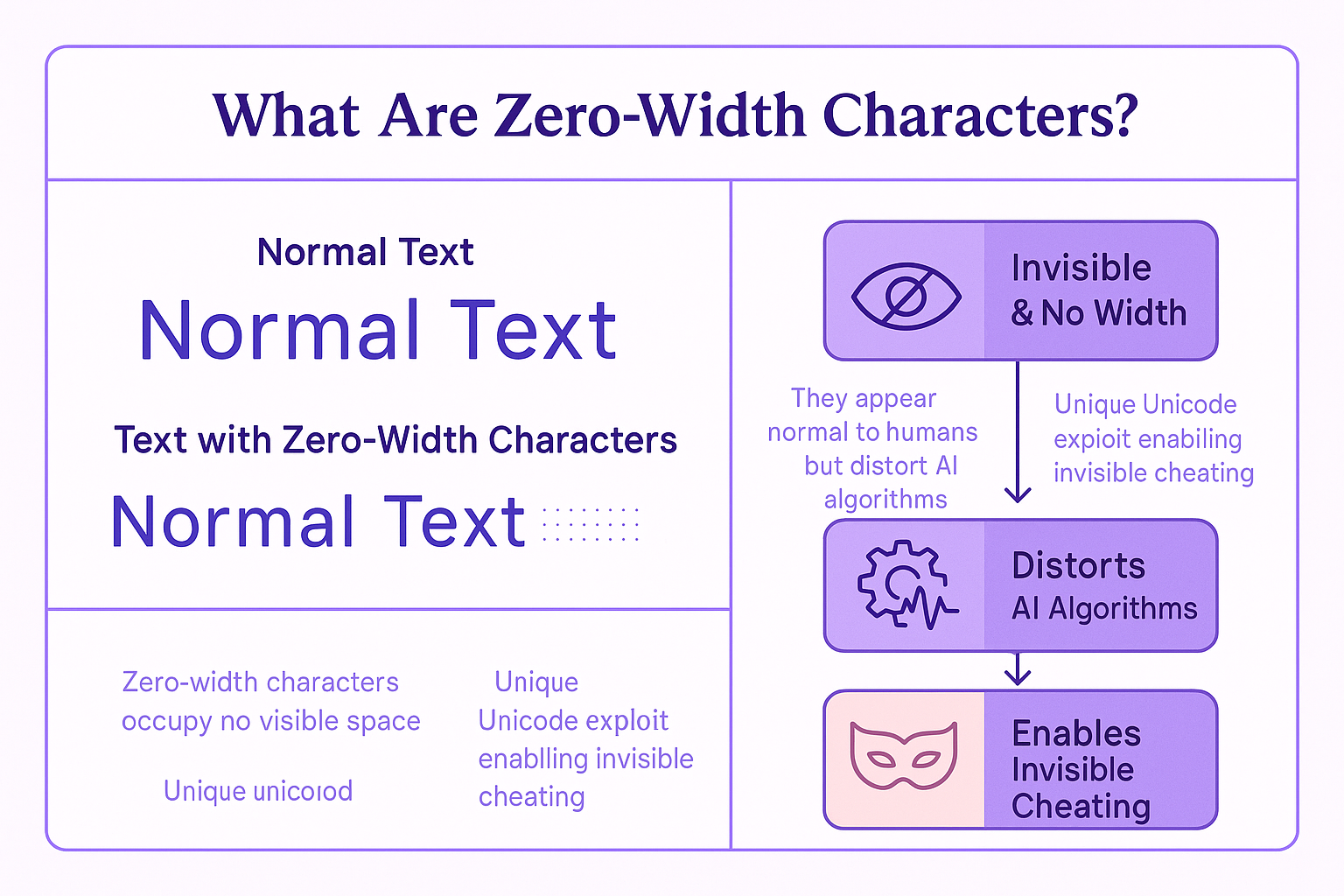
At its core, this tactic involves inserting non-printing characters into AI-generated text. These characters, such as zero-width spaces (ZWSP) or hidden Unicode symbols, are recognized by computer code but do not appear on the printed page or the digital screen. When a student inserts these between letters or words, they are effectively "breaking" the patterns that AI detectors look for.
How the Bypass Works
AI detectors function by analyzing "perplexity" and "burstiness" — the statistical predictability of word sequences. By using hidden characters, students can manipulate these metrics in several ways:
- Breaking Word Patterns: Inserting a zero-width space in the middle of a common word (e.g., "the") makes the word look unique to a machine, even though a human teacher reads it normally.
- Homoglyph Swaps: Replacing standard Latin characters with identical-looking symbols from other alphabets (like using a Cyrillic 'а' instead of a Latin 'a'). This disrupts the detector’s ability to recognize the text as a known AI-generated string.
- White-Text Padding: Adding hidden, irrelevant human-written text in white font at the bottom of a document to "skew" the overall probability score of the file.
The Risks of the "Ghost" Method
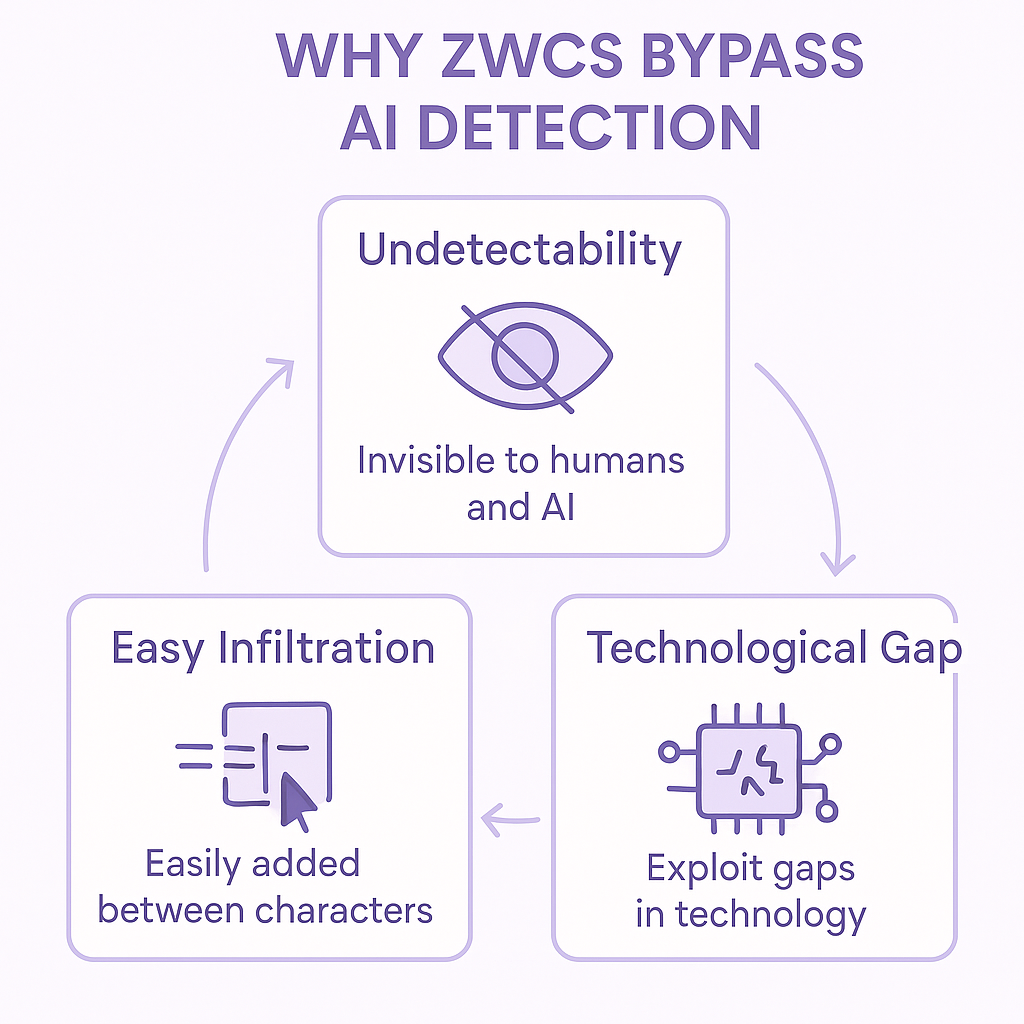
While these tricks might work on basic detectors, they are far from foolproof. In fact, they often leave a digital "paper trail" that is easier to catch than the AI itself:
- The "Copy-Paste" Test: If a teacher copies the text into a plain-text editor (like Notepad), the hidden characters often appear as strange symbols or unexpected gaps, immediately flagging the work as tampered with.
- Metadata Analysis: Many advanced school portals now automatically strip hidden characters or flag documents with high concentrations of non-standard Unicode.
- The Integrity Gap: Beyond the technical risk, using these methods moves a student from "assisted writing" into "deliberate deception," which often carries much harsher academic penalties.
The Future of Detection
Detection companies are already catching on. Newer versions of software are designed to "clean" text of all non-printing characters before running an analysis. This means the very trick intended to save an essay might be the exact thing that guarantees it gets a failing grade.
Key Takeaways for Maintaining Academic Integrity
- Be aware of new cheating methods: Stay informed on the latest tactics, like the use of zero-width characters, to trick AI plagiarism detectors.
- Promote openness: Encourage students to study ethically and uphold a culture of academic honesty.
- Upgrade AI tools: As technology evolves, so should the educational tools. Make sure to use the latest AI detection tools that can sniff out such text manipulations.
The use of invisible characters highlights a desperate attempt to keep up with shifting academic rules. However, as detection technology matures, these "ghosts in the machine" are becoming easier to spot. For students, the best way to ensure a paper passes is still the old-fashioned way: by ensuring the thoughts, the voice, and the effort are undeniably human.
About the Creator
Rayan Smith
Hello Guys! My name is Rayan Smith a professional blogger and academic advisor. I love to share my knowledge with students for improving their academic performance.
Enjoyed the story? Support the Creator.
Subscribe for free to receive all their stories in your feed.
Comments
There are no comments for this story
Be the first to respond and start the conversation.