
The Hidden Dangers of Over Screen Time: How It Affects Your Health
Simple Tips and Strategies to Reduce Screen Time and Improve Your Health

Introduction: Why Screen Time Might Be More Harmful Than You Think
In today’s world, it seems like everyone is glued to a screen. Whether you’re scrolling through social media, watching Netflix, or working on your computer, screens are a huge part of our daily lives. But here’s the truth: excessive screen time can actually harm your health in ways you might not expect.
Can you remember the last time you spent a few hours on your phone, or perhaps even an entire day binge-watching your favorite show? While screens may seem like harmless distractions, they can come with serious consequences—both mentally and physically. The more we expose ourselves to screens, the more we risk dealing with hidden dangers that can impact our well-being in both the short and long term.
Why Does This Matter?
You might be wondering: why is screen time such a big deal? Well, studies have shown that adults spend an average of 11 hours per day looking at screens. Yes, you read that right. The modern-day world encourages constant screen exposure, but what we don’t often talk about is the negative impact it’s having on our mental and physical health.
Let’s break down why this is a growing concern:
- Increased Screen Exposure: From work to entertainment, we’re practically surrounded by screens. Laptops, smartphones, TVs, tablets, and even smartwatches all demand our attention daily.
- Affects Your Natural Rhythms: Our bodies are designed to rest, not stare at a screen for hours. Long-term exposure messes with our biological clock, which can disrupt sleep patterns, mood, and overall health.
How Much is Too Much?
You might be asking: "How much screen time is too much?" Well, let’s put it into perspective. The World Health Organization (WHO) recommends limiting recreational screen time for children to less than 1 hour per day. But for adults, things aren’t much different. Experts recommend that adults also manage their screen time and take frequent breaks throughout the day. If you’re spending more than 2 hours at a stretch looking at a screen, you could be heading into risky territory.
The real question isn’t necessarily how long you spend on screens, but how you spend that time. Is it productive work, or is it scrolling endlessly through social media? Is it quality entertainment, or is it passive consumption that keeps you glued to the screen without adding much value to your life?
What Are the Hidden Dangers?
As you might already know, too much screen time can lead to things like digital eye strain and neck pain. But those are just the obvious symptoms. Did you know that excessive screen time has been linked to more serious problems like:

1. Anxiety and Depression: Spending too much time on social media can increase feelings of loneliness, FOMO (fear of missing out), and negative body image. Research shows that more screen time is connected with higher rates of anxiety and depression, especially among teenagers and young adults.
2. Sleep Disturbances: The blue light emitted by your screen can disrupt your body’s production of melatonin, the hormone responsible for making you feel sleepy. This can delay your sleep cycle, leaving you awake longer and with lower-quality rest.
3. Increased Sedentary Behavior: Sitting for prolonged periods is linked to heart disease, diabetes, and other chronic health issues. When you combine screen time with sitting, you might be unknowingly putting your physical health at risk.
4. Screen Addiction: Just like any other addiction, excessive screen time can lead to withdrawal symptoms. This includes irritability, restlessness, and a strong urge to check your device even when it’s not necessary.
Take a moment and think about this: when was the last time you took a break from your screen and really disconnected? Going for a walk, reading a book, or even just stepping away from technology for a few minutes can make a huge difference in how your mind and body feel.
What You Can Do About It If you’ve started to notice that your screen time is affecting your health, don’t panic. It’s possible to take steps to regain control and find a healthier balance. You don’t have to quit screens cold turkey—let’s be honest, that’s pretty unrealistic in today’s digital world. But by implementing small, conscious changes, you can protect your mental and physical well-being.
Simple Tips for Managing Screen Time
- Set Time Limits: Use apps like Forest or Screen Time on your phone to track your usage and limit screen time for non-essential activities.
- Take Regular Breaks: Follow the 20-20-20 Rule: for every 20 minutes spent on a screen, look at something 20 feet away for at least 20 seconds.
- Mind Your Posture: When sitting for long periods, make sure your monitor is at eye level and that you’re sitting in a comfortable, supportive chair.
- Avoid Screens Before Bed: Try to stop using screens at least an hour before sleep to give your body a chance to wind down.
- Engage in Screen-Free Activities: Find time to disconnect by reading a book, taking a walk, or having a conversation with someone in person.
What is Screen Time and Why Is It a Problem?
When we talk about screen time, we’re referring to the amount of time you spend looking at digital screens, whether it’s your phone, tablet, computer, or TV. You might be thinking, "That’s just part of life, right?" And you're not wrong—almost everything in the modern world revolves around some kind of screen.

But while screens help us stay connected and entertained, they can also come with a range of health risks when we overdo it. It's not just about the time you spend on your device—it’s the quality and type of screen time you’re engaging with. Let’s break it down.
Types of Screen Time: Not All Screen Time is Created Equal
Here’s the thing: not all screen time affects your body in the same way. You can be working on your laptop for hours, or mindlessly scrolling through social media—it’s all screen time, but the impact on your health can be drastically different. Here are a few key types of screen time to consider:
- 1. Productive Screen Time (Work/Study):
- Example: Checking emails, participating in online meetings, or reading articles and reports.
- Impact: While this type of screen time is often unavoidable, it can strain your eyes, cause poor posture, and disrupt your sleep if done excessively. However, it's generally less harmful than passive screen time because it involves purposeful engagement.
- 2. Entertainment Screen Time (TV, Movies, Video Games):
- Example: Watching Netflix, playing video games, or scrolling through YouTube.
- Impact: This is where the danger really lies. Sitting for extended periods, staring at screens, and engaging in mindless consumption can lead to poor posture, eye strain, and even an addiction to the content, leading to emotional and psychological burnout.
- 3. Social Media Screen Time:
- Example: Browsing Instagram, Twitter, or TikTok.
- Impact: Social media is the most dangerous form of screen time when it comes to mental health. Constantly comparing yourself to others or getting lost in a cycle of scrolling can cause anxiety, depression, and social isolation. You might have heard of the term FOMO (Fear of Missing Out), and it’s no joke—too much social media exposure can seriously mess with your emotions.
- 4. Passive Screen Time (Scrolling, Web Browsing):
- Example: Mindlessly scrolling through your phone, clicking random links, or endlessly refreshing a news site.
- Impact: While this might feel like harmless downtime, it can lead to a lack of productivity, increased sedentary behavior, and worse—screen addiction. Not to mention, passive screen time often consumes the most of your day without offering any real benefits.
The Real Problem: The Habit of Excessive Screen Time
So, what’s the real issue with excessive screen time? The problem isn’t just the hours spent looking at screens—it’s the habit of it. Over time, many of us have developed unhealthy screen time habits that impact our health without us even realizing it.

Here’s how these habits play out:
- Overconsumption of Blue Light: Screens emit blue light, which is known to suppress the production of melatonin, the hormone that regulates your sleep-wake cycle. The more screen time you have, especially at night, the harder it is for your body to wind down and fall asleep. This leads to poor quality sleep and even chronic sleep deprivation.
- Addictive Design: Social media and entertainment apps are specifically designed to keep you coming back for more. The constant notifications, autoplay features, and engaging content are purposefully addictive—designed to keep your brain engaged and, yes, addicted. The longer you stay hooked, the harder it is to break free from this cycle.
- Lack of Physical Activity: When you spend long periods in front of a screen, you’re likely not moving much. You’re sitting, laying down, or maybe even slouching in front of your phone or computer. This sedentary lifestyle can contribute to serious health issues like heart disease, weight gain, and even diabetes.
Why It’s Not Just About The Time Spent, But How You Spend It
You might be thinking, "I spend a lot of time on my phone, but it’s for work or keeping in touch with family, so it’s not a problem, right?" Well, not exactly.
The quality of your screen time plays a huge role in determining how much it affects your health. Here’s a quick comparison of productive vs. passive screen time:
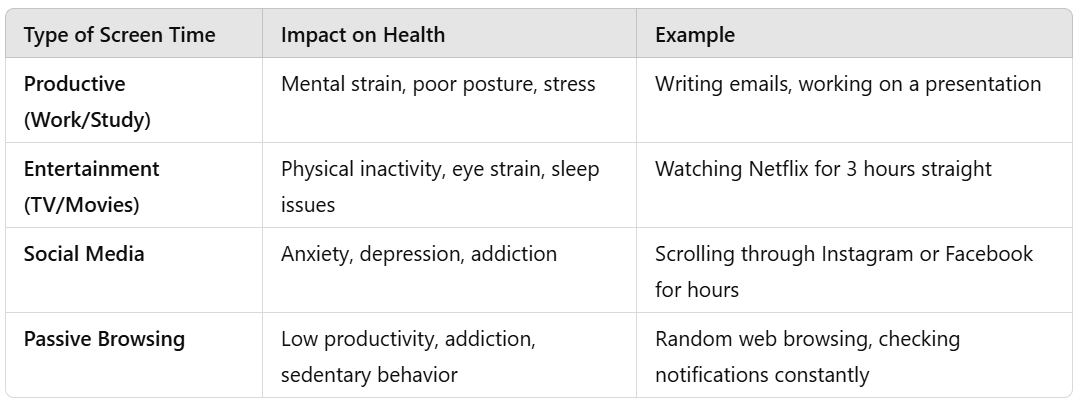
As you can see, the impact of screen time really depends on what you’re doing with those hours. Mindless scrolling and binge-watching TV can be a lot more detrimental to your health than completing work tasks or having a productive conversation on Zoom.
How Screen Time Affects Your Mind and Body
Now that we’ve talked about different types of screen time, let’s take a closer look at how they specifically affect your body and mind.

Mental Health Effects:
- Increased Stress and Anxiety: With constant notifications, emails, and updates, your brain never gets a break. The constant need to check your phone or stay connected can heighten stress and anxiety levels, leaving you feeling overwhelmed. A study by the University of Pennsylvania found that reducing screen time significantly lowered stress and anxiety in participants.
- Social Isolation: While social media keeps us connected, it also creates the illusion of social interaction. Many people spend more time texting or messaging than having in-person conversations. This digital interaction, while convenient, can contribute to social isolation and loneliness, which has been linked to depression and anxiety.
- Sleep Disruption: As mentioned earlier, the blue light emitted by screens affects melatonin production, disrupting your sleep cycle. This can cause trouble falling asleep, staying asleep, and getting restorative sleep, all of which contribute to feeling fatigued and irritable.
Physical Health Effects:
- Neck and Back Pain: Spending long hours hunched over a phone or computer can cause poor posture and lead to chronic neck, back, and shoulder pain. If you’ve ever felt a stiff neck after scrolling through your phone for too long, you’ve experienced this firsthand!
- Eye Strain (Digital Eye Strain): Staring at a screen for too long can lead to eye fatigue, causing discomfort, dryness, blurry vision, and even headaches. This is sometimes referred to as digital eye strain or computer vision syndrome, and it’s becoming increasingly common as screen time increases.
- Weight Gain and Metabolic Issues: With more screen time, you’re likely sitting more, which means fewer calories burned. The result? Weight gain. Studies have shown a correlation between excessive screen time and metabolic issues, including obesity.
How Over Screen Time Can Hurt Your Physical Health
Excessive screen time doesn’t just mess with your mind; it can take a serious toll on your physical health too. From poor posture to eye strain, the effects are becoming increasingly common in our technology-driven world. So, let’s dive deeper into how screen time can harm your body, and more importantly, what you can do about it.

1. Eye Strain and Digital Eye Fatigue
If you’ve ever spent hours in front of your computer or phone and felt your eyes getting dry, tired, or even blurry, you’re not alone. Digital eye strain is a real problem for many of us.
What Causes It?
When you stare at screens for long periods, you tend to blink less frequently. This causes your eyes to become dry and irritated. Plus, the high-energy visible (HEV) blue light emitted by screens can cause long-term damage to the retina, leading to discomfort and fatigue.
The Symptoms:
- Dry, itchy, or burning eyes
- Blurry or double vision
- Headaches
- Sensitivity to light
- Difficulty focusing
The Solution:
To avoid digital eye strain, follow the 20-20-20 rule: every 20 minutes, look at something 20 feet away for 20 seconds. This helps give your eyes a break. You can also adjust your screen brightness, use blue light blocking glasses, and ensure proper lighting to reduce strain.
2. Back and Neck Pain (Tech Neck)
Are you guilty of hunching over your phone or slouching in front of your computer? This is where the term “tech neck” comes into play. The more time you spend hunched over screens, the more likely you are to experience neck and back pain.
What Causes It?
When you spend long periods staring down at a phone or leaning forward toward your computer, you’re putting a lot of strain on your spine and muscles. This improper posture leads to tension in the neck, shoulders, and back.
The Symptoms:
- Stiff neck or shoulders
- Chronic back pain
- Headaches
- Reduced range of motion
The Solution:
To combat tech neck, you need to adopt better posture and incorporate stretches into your daily routine. When using a screen, make sure it’s at eye level to avoid tilting your head down. Regularly take breaks to stand up, stretch, and walk around. You can even consider using ergonomic furniture or standing desks.
3. Weight Gain and Poor Metabolism
Sitting for long periods and indulging in hours of mindless scrolling or binge-watching TV can significantly impact your metabolism. A sedentary lifestyle has been linked to increased risk of obesity and metabolic diseases, such as diabetes and heart disease.
What Causes It?
When you’re glued to a screen, you’re likely sitting still for extended periods, which burns fewer calories. Coupled with snacking or eating unhealthy foods while watching shows or scrolling, it’s easy to see how this can lead to weight gain.
The Solution:
Make a conscious effort to incorporate more physical activity into your day. Set a timer to remind yourself to get up and move every 30 minutes. Take short walks, do stretching exercises, or even stand while working on your computer. Combining exercise with healthy eating habits will help keep your metabolism active.
4. Sleep Disturbances (Blue Light and Sleep Quality)
One of the biggest issues with excessive screen time is its impact on your sleep. Studies have shown that using screens late at night disrupts your sleep-wake cycle, making it harder to fall asleep and stay asleep.
What Causes It?
The blue light emitted by screens suppresses melatonin, the hormone responsible for making you feel sleepy. This is especially problematic if you’re scrolling or watching TV right before bed.
The Symptoms:
- Difficulty falling asleep
- Waking up frequently during the night
- Feeling groggy or tired in the morning
The Solution:
To improve your sleep quality, try reducing screen time at least 30 minutes before bed. If you need to use your devices at night, consider using blue light filters on your phone or computer. Alternatively, you can wear blue light blocking glasses or opt for night mode settings on your devices.
How to Balance Screen Time for Better Health
Now that we’ve explored how screen time can impact your health, let’s look at some practical strategies for finding a healthy balance. After all, we can’t avoid screens entirely—they’re an integral part of our lives. But with the right approach, you can limit the negative effects while still enjoying the benefits.

1. Set Boundaries: Schedule Screen-Free Time
One of the easiest ways to prevent overdoing it with screen time is to schedule breaks and screen-free time during the day. Here are a few ideas:
- Designate screen-free zones: Set aside certain areas of your home, like the bedroom or dining room, as screen-free zones. This encourages more face-to-face interactions and quality time without distractions.
- Take regular breaks: If you’re working on your computer, use a timer to remind yourself to step away from the screen every 30-45 minutes. Take a 5-10 minute break to stretch, walk around, or just rest your eyes.
- Set a screen time limit: Use apps like Screen Time (iOS) or Digital Wellbeing (Android) to monitor your usage and set daily limits. It’ll help you become more mindful of your screen habits.
2. Practice the 20-20-20 Rule
As mentioned earlier, the 20-20-20 rule is a simple yet effective way to reduce eye strain. Every 20 minutes, take 20 seconds to look at something 20 feet away. This small habit can make a big difference in reducing the negative effects of excessive screen time.
3. Be Mindful of Your Posture
Good posture is key to preventing neck, back, and shoulder pain. Keep these tips in mind while using your devices:
- Position your screen at eye level: Whether it’s your phone or computer, keep your screen at eye level so you don’t have to hunch over.
- Sit with your back supported: If you’re working at a desk, use an ergonomic chair or cushion to support your lower back.
- Stand and stretch regularly: Every 30 minutes, take a break to stand up, stretch your body, and walk around. It’ll improve circulation and prevent stiffness.
4. Use Technology to Your Advantage
Ironically, the technology that often causes the problem can also help you solve it. There are a variety of apps and tools designed to reduce the negative impact of screen time:
- Blue light filters: Many devices come with built-in blue light filters, but you can also download apps like f.lux or Night Shift to adjust the color temperature of your screen.
- Mindful screen time apps: Apps like Forest, Focus@Will, and Moment help you manage and reduce your screen time by encouraging focus and productivity.
Conclusion: Taking Control of Your Screen Time for a Healthier Lifestyle
As we’ve explored, excessive screen time can lead to a variety of health issues, from eye strain and poor posture to sleep disturbances and weight gain. The good news is that you have the power to take control of your screen time and reduce its negative impact.
By setting boundaries, practicing good posture, and being mindful of your screen habits, you can strike a healthy balance between the digital world and your physical well-being. Remember, it's not about cutting out screens altogether, but finding ways to use them in a way that benefits you—without sacrificing your health.
Take Action Today: Start by setting a screen time limit for yourself and see how it changes your energy levels and mood. Your body will thank you!
What Do You Think?
How do you manage your screen time? Have you found any strategies that help you balance the digital world with a healthy lifestyle? Share your thoughts with us in the comments below!
About the Creator
Nawashiz
Hello there! I'm Nawashiz
Enjoyed the story? Support the Creator.
Subscribe for free to receive all their stories in your feed.
Comments
There are no comments for this story
Be the first to respond and start the conversation.