
The Evolution of Messaging Apps: From Telegraphs to AI-Powered Communication
Exploring the Complete History, Technological Growth, and Global Impact of Digital Messaging Platforms
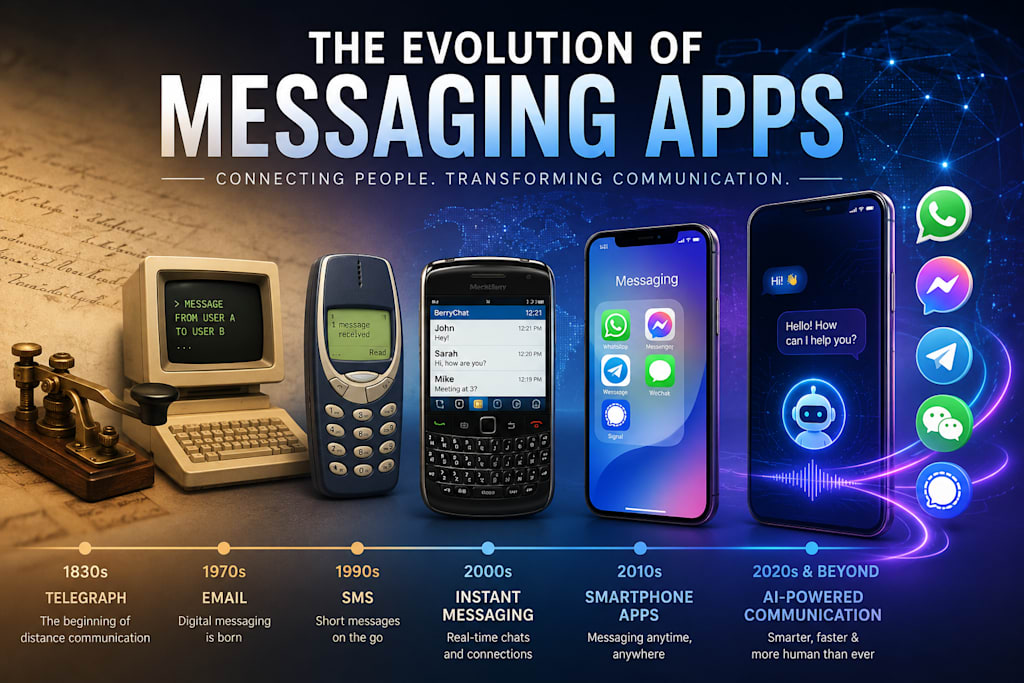
The History of Messaging Apps
Introduction
Messaging apps have transformed the way humans communicate. What once required handwritten letters, telegraphs, or expensive phone calls can now happen instantly across continents with text, images, video, and voice. Messaging platforms are no longer just communication tools; they have become ecosystems for business, entertainment, education, finance, and social interaction.
The evolution of messaging apps reflects broader technological changes in computing, networking, mobile devices, and internet infrastructure. From early text-based chat systems to encrypted multimedia super-apps, messaging technology has continuously reshaped human connectivity.
Early Foundations of Digital Messaging
Telegraph and Electronic Communication
The origins of digital messaging can be traced back to the telegraph in the 19th century. Samuel Morse’s telegraph system enabled encoded messages to travel over long distances through electrical signals. Although primitive by modern standards, it introduced the core idea of transmitting information electronically.
Later inventions such as the telephone and radio expanded communication capabilities, but true digital messaging emerged only with computers and networking technologies.
The Birth of Computer Messaging
ARPANET and Email (1960s–1970s)
The first major milestone in digital messaging was electronic mail, or email. During the late 1960s and early 1970s, researchers working on ARPANET — the predecessor to the modern internet — developed systems for sending messages between computers.
In 1971, Ray Tomlinson implemented networked email and introduced the “@” symbol to separate usernames from host machines. Email quickly became one of the internet’s earliest and most influential applications.
Key Features of Early Email
* Asynchronous communication
* Text-only messages
* File attachments (later introduced)
* Communication across networks
Email established the foundation for all later messaging systems.
Instant Messaging Emerges
Bulletin Board Systems (BBS) and IRC (1980s)
During the 1980s, Bulletin Board Systems allowed users to connect through dial-up modems to exchange messages, files, and discussions. These systems created early online communities.
In 1988, Internet Relay Chat (IRC) introduced real-time text communication. IRC channels enabled group conversations and live discussions, becoming popular among programmers, gamers, and internet communities.
Importance of IRC
* Real-time communication
* Group chat functionality
* Nicknames and online identities
* Global chat rooms
IRC strongly influenced future messaging platforms.
The Rise of Consumer Instant Messaging
AOL Instant Messenger (AIM) and ICQ (1990s)
The 1990s marked the mainstream adoption of instant messaging.
ICQ
Launched in 1996 by an Israeli company called Mirabilis, ICQ became one of the first globally successful instant messaging platforms. Its slogan, “I Seek You,” reflected the growing desire for online social connection.
ICQ introduced features such as:
* Contact lists
* Presence indicators (“online” and “offline”)
* Direct messaging
* File transfers
AOL Instant Messenger (AIM)
AIM became extremely popular in North America. It introduced the concept of “buddy lists” and personalized status messages.
Other Major Platforms
* MSN Messenger
* Yahoo! Messenger
* Google Talk
These services dominated desktop communication during the late 1990s and early 2000s.
SMS and Mobile Messaging Revolution
Short Message Service (SMS)
SMS technology emerged in the early 1990s alongside mobile phones. The first SMS message was sent in 1992 and read:
> “Merry Christmas.”
SMS became globally popular because it allowed quick and inexpensive communication without internet access.
Impact of SMS
* Mobile-first communication
* Global reach
* Character-limited messaging
* Foundation for mobile chat culture
Text abbreviations such as “LOL,” “BRB,” and “OMG” became part of everyday language.
Smartphones Change Everything
The iPhone and Android Era (2007–2010)
The launch of Apple’s iPhone in 2007 and Android devices shortly afterward transformed messaging permanently. Smartphones combined internet connectivity, touchscreens, cameras, and mobile apps into one device.
This environment enabled messaging apps to evolve far beyond simple text communication.
The Rise of Modern Messaging Apps
Founded in 2009 by Brian Acton and Jan Koum, WhatsApp focused on simplicity and reliability. It used internet data instead of SMS charges, making international communication significantly cheaper. Then also came some third-party apps with extra privacy and customization features! You can learn more about these apps.
Key Innovations
* Phone-number-based identity
* Multimedia sharing
* Voice notes
* End-to-end encryption
* Group chats
WhatsApp later became one of the most widely used messaging apps in the world.
Facebook Messenger
Originally part of Facebook Chat, Messenger became a standalone app in 2011. It integrated social networking with messaging and introduced:
* Stickers
* Voice and video calls
* Chatbots
* Business communication tools
Messenger demonstrated how messaging platforms could become commercial ecosystems.
China’s WeChat evolved beyond messaging into a “super app.” Developed by Tencent, it combines:
* Messaging
* Mobile payments
* Social networking
* Shopping
* Government services
WeChat became central to digital life in China.
Telegram
Telegram launched in 2013 with an emphasis on speed, cloud synchronization, and privacy. It gained popularity for:
* Large group channels
* File sharing
* Bots and automation
* Cross-platform access
Telegram positioned itself as a flexible and privacy-oriented platform.
Signal
Signal became widely recognized for strong privacy protections and advanced encryption technology. Its protocol influenced encryption standards across the messaging industry.
Signal emphasized:
* Secure communication
* Minimal data collection
* Open-source development
The Evolution of Messaging Features
Multimedia Messaging
Modern messaging apps expanded beyond text to support:
* Images
* GIFs
* Voice notes
* Video sharing
* Live streaming
Communication became more visual and expressive.
Voice and Video Calling
Apps like Skype, WhatsApp, FaceTime, Zoom, and Telegram integrated voice and video communication, reducing reliance on traditional phone networks.
This shift became especially important during the COVID-19 pandemic, when remote communication became essential.
Emojis, Stickers, and GIF Culture
Messaging apps reshaped digital expression through visual language.
Cultural Effects
* Emojis standardized emotional communication
* Memes spread rapidly
* GIFs enhanced humor and reactions
* Stickers personalized conversations
Digital communication became more emotional and informal.
Security and Privacy in Messaging Apps
End-to-End Encryption
Privacy concerns led to the adoption of end-to-end encryption, where only the sender and receiver can read messages.
Apps such as:
* Signal
* iMessage
implemented strong encryption protocols.
This development became increasingly important due to concerns over surveillance, cybercrime, and data misuse.
Business and Commerce Integration
Messaging as a Business Platform
Messaging apps evolved into tools for:
* Customer support
* Marketing
* E-commerce
* Banking
* Collaboration
Examples include:
* WhatsApp Business
* Slack
* Microsoft Teams
* Discord
Messaging became a central infrastructure for workplaces and digital economies.
Social and Cultural Impact
Changing Human Communication
Messaging apps fundamentally changed:
* Social relationships
* Work culture
* Political communication
* News distribution
* Dating and relationships
People now expect instant communication regardless of geographic distance.
Positive Effects
* Faster global communication
* Easier collaboration
* Stronger international connectivity
Negative Effects
* Information overload
* Digital addiction
* Cyberbullying
* Spread of misinformation
The social consequences remain a subject of ongoing debate. Read more about negative impacts
The Future of Messaging Apps
Artificial Intelligence and Smart Communication
Modern messaging platforms increasingly integrate artificial intelligence through:
* Chatbots
* Smart replies
* Translation systems
* AI assistants
Future messaging systems may include:
* Real-time language translation
* Augmented reality communication
* Virtual avatars
* AI-generated conversations
Conclusion
The history of messaging apps is a story of technological innovation and changing human behavior. From telegraph wires to encrypted mobile super-apps, messaging systems have continuously evolved to make communication faster, easier, and more interactive.
Today, messaging apps are among the most influential technologies in the world. They shape personal relationships, businesses, politics, and global culture. As artificial intelligence, virtual reality, and advanced networking continue to develop, messaging platforms will likely become even more integrated into everyday life.
The evolution of messaging apps demonstrates a central truth of human society: people will always seek better ways to connect with one another.
About the Creator
Enjoyed the story? Support the Creator.
Subscribe for free to receive all their stories in your feed.
Comments
There are no comments for this story
Be the first to respond and start the conversation.