
The Crypto Wallet Discovery Problem Most Brands Still Underestimate
How AI-generated answers are reshaping trust and discovery for crypto wallet brands


Executive Summary
A crypto wallet brand can do everything “right” in search and still lose the moment an AI system tells the wrong story.
That is the real tension in this CiteWorks Studio case study. In crypto, discovery is no longer shaped only by rankings and website quality.
It is shaped by AI-generated comparisons, safety debates, forum narratives, and the third-party sources AI systems decide to trust.
This case follows what happened when one wallet brand stopped treating visibility as only an SEO issue and started treating it as a credibility issue too.
Buyers were increasingly discovering and comparing crypto wallets through AI-generated answers, not only traditional search.
In crypto, trust concerns and negative forum narratives can shape recommendation-stage visibility before a user reaches a site.
Over a multi-month campaign, the brand improved both its AI visibility and its traditional search footprint.
Some of the strongest gains came from improving the wider citation environment influencing AI answers, not just owned pages.
Introduction
Crypto brands are used to fighting for attention.
What many of them are not prepared for is fighting for interpretation.
A few years ago, the challenge seemed familiar enough: rank well, publish useful content, build authority, and make sure the site does its job. But that playbook starts to crack when buyers stop doing all the comparison work themselves.
Now they ask AI.
Which wallet is safest? Which one looks trustworthy? Which option sounds best for long-term storage? Which one should I avoid?
Those questions may look simple on the surface. They are not. Because the answers are no longer built from a homepage alone.
They are assembled from forum threads, reviews, discussions, third-party references, trust signals, and whatever the AI system sees as credible enough to repeat.
That is what makes this CiteWorks Studio case study so timely. It is not just about one crypto wallet brand improving visibility. It is about a larger shift in how discovery now works in categories where trust can be won or lost before the click ever happens.
This article is adapted from the original CiteWorks Studio case study and reshaped for Vocal readers interested in AI visibility, search, and the new mechanics of trust-driven discovery.
What Changed in This Market
AI Did Not Replace Search. It Changed the Moment of Decision.
The biggest shift was not simply that AI became more popular.
It was that AI started acting like a recommendation engine.
Instead of opening ten tabs and manually comparing features, users could now ask Google AI Overviews, ChatGPT, Gemini, and similar systems to compress the research process into a single answer. For users, that feels efficient.
For brands, it changes where perception gets formed. Because once AI becomes the shortcut, the brand is being judged earlier.
And in crypto, that early judgment carries more weight than in many other categories.
In Crypto, Trust Is Part of Discovery
People do not choose a wallet the way they choose a casual app.
They look for warning signs. They search for legitimacy, safety, scam history, reliability, user experience, and long-term confidence. That means public discussion matters, sometimes more than brands want to admit.
Forum threads, community commentary, reviews, and third-party references can carry enormous influence. If those sources are shaping AI-generated answers, then brand perception is being built before the user ever reaches the company’s own website.
That is why this case matters beyond crypto.
It shows that brands now compete in two discovery systems at once: traditional search results and AI-generated recommendations. And sometimes, the second system is already shaping the first real impression.
A similar trust-and-discovery challenge appears in this tax relief AI search case study, where AI-generated answers also influenced how buyers evaluated credibility before taking action.
What the Brand Needed
The Problem Was Not Just Visibility. It Was Clarity.
The brand did not just need more rankings.
It needed to understand how AI systems were already describing it, which sources were influencing those descriptions, how often it appeared compared with competitors, and whether its visibility was improving in the places that increasingly shape buyer decisions.
That is a different problem from classic SEO.
In a traditional search model, the central question is often: How do we rank higher?
In an AI visibility model, the more revealing question becomes: What sources are teaching AI systems how to talk about us?
That is a much sharper question. And in crypto, it is hard to ignore.
A Strong Site Is Not Always a Strong Story
For a crypto wallet brand, this distinction is critical. When trust is part of the buying decision, even a technically strong digital presence can underperform if the wider citation environment is sending a weaker signal.
That is what makes modern visibility more complex than many teams expect.
A brand can look solid on its own site and still be undermined by what the open web is teaching AI systems to believe about it.
What CiteWorks Studio Did
First, It Looked Beyond Rankings
CiteWorks Studio approached the campaign by first establishing a baseline across major AI discovery surfaces.
That meant moving beyond Google rankings and into the broader AI search ecosystem, the places where users were increasingly asking recommendation-stage questions.
The aim was not just to see whether the brand appeared, but to understand why it appeared the way it did and which source environments were influencing that outcome.
That is an important shift in itself.
Because once discovery includes AI-generated answers, brands need more than ranking reports. They need to understand the reference layer sitting underneath those answers.
Then, It Tracked Movement, Not Just Snapshots
From there, the campaign focused on change over time.
Instead of treating AI visibility like a one-time audit, the work tracked month-over-month movement and used those changes to refine the strategy. What was actually shifting brand mentions?
Which discussion environments were helping? Which signals were carrying more influence than expected?
Those questions shaped the campaign.
And that made the work more strategic than a simple visibility push. It turned the effort into a process of learning what AI systems were actually responding to.
The Most Important Work Happened in the Source Layer
One of the most revealing parts of the case is that the solution was not built around generic content production alone.
The work centered on improving brand context across public sources that were already influencing AI answers. In other words, the effort targeted the reference layer behind discovery, not just the destination page.
That is a more modern playbook than many brands are still using.
And it may be the most important lesson in the case.
Because when AI systems are synthesizing from multiple public signals, improving the source environment can matter just as much as improving the site itself.
Results From the Campaign
The Headline Numbers Are Strong. The Real Story Is Underneath Them.
The results are impressive on the surface.
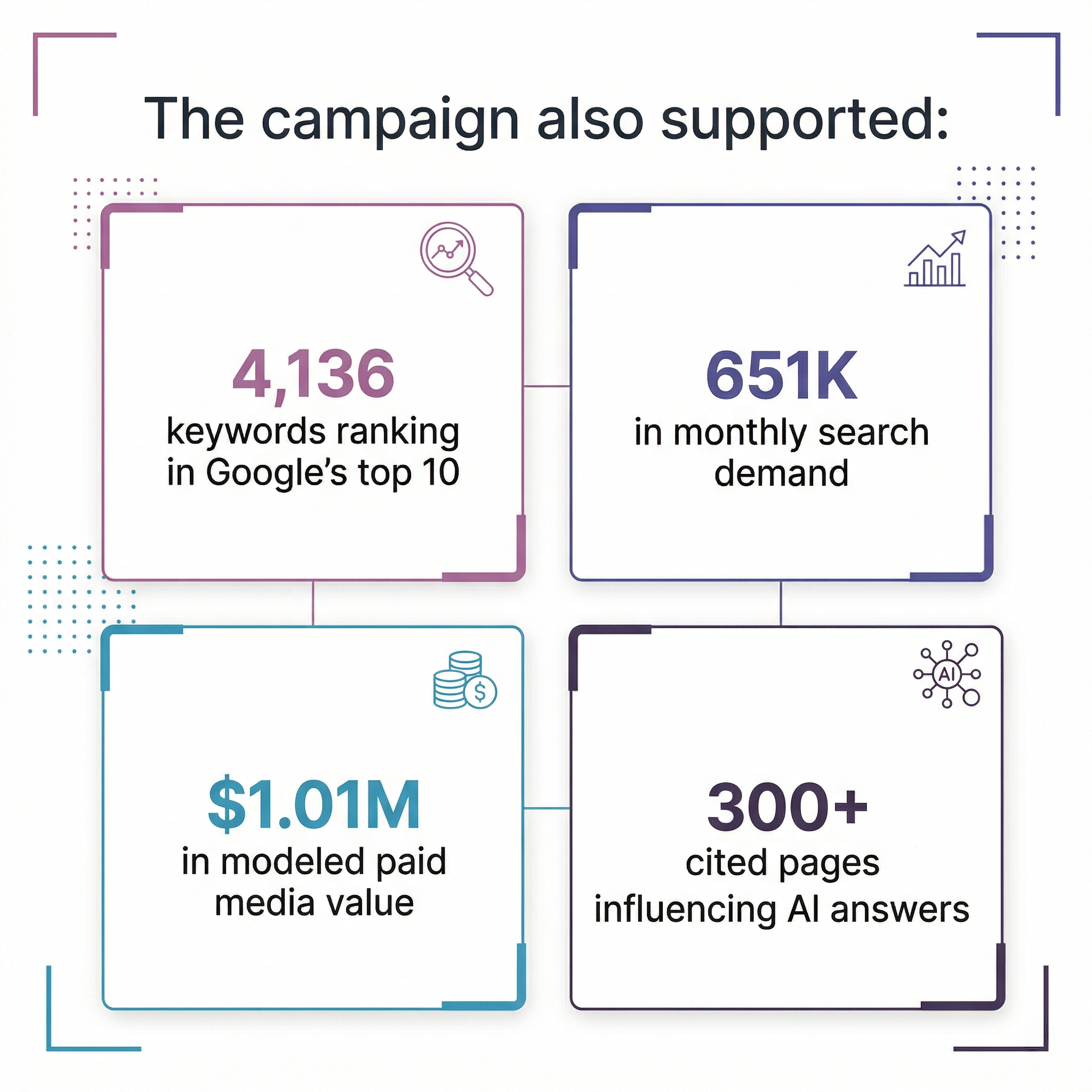
Over 5 months and 535 engagements, the campaign produced an estimated $20,346.25 in monthly branding value, based on tracked keyword visibility and paid-equivalent modeling. As the original case study makes clear, that figure is a directional estimate, not exact attribution.
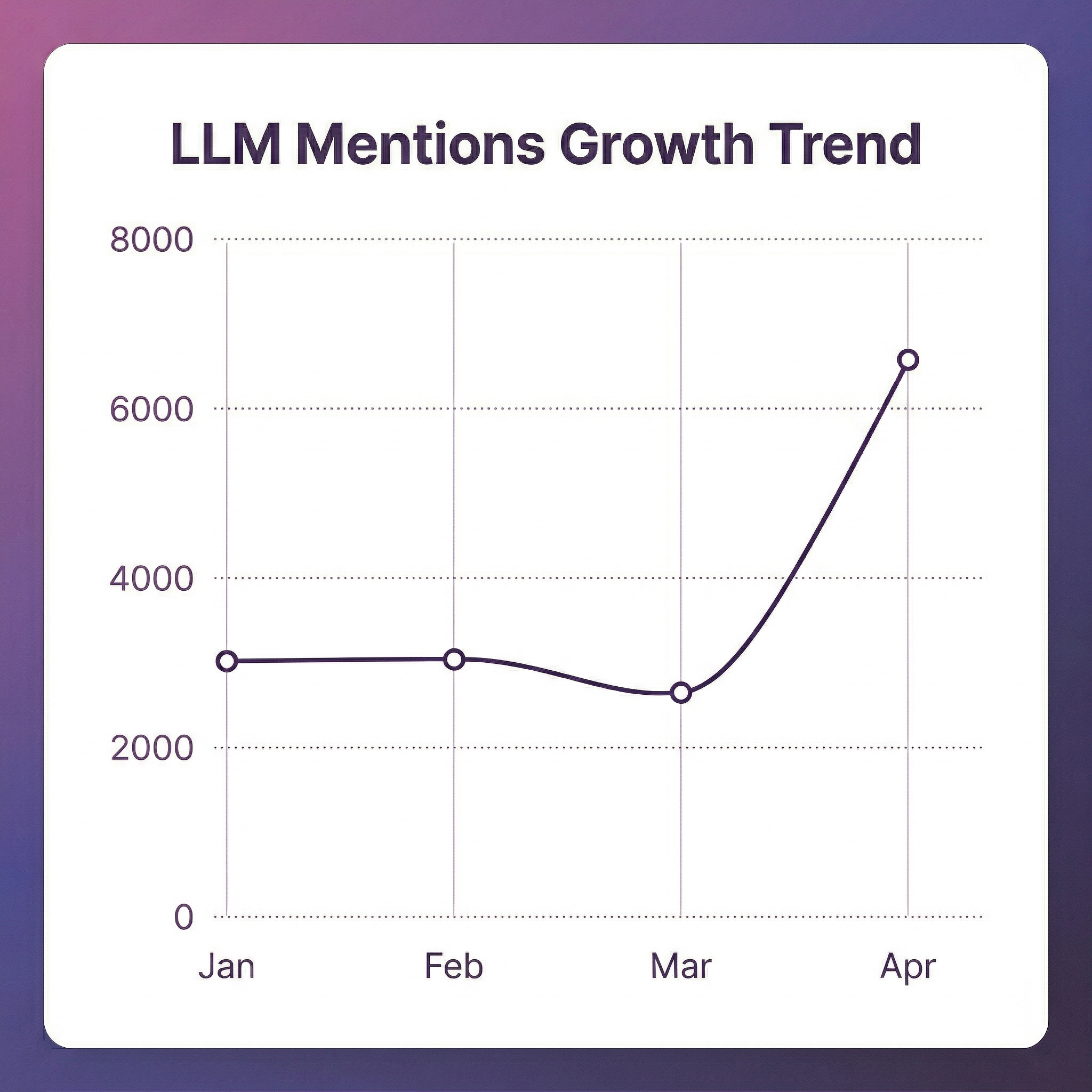
The campaign also delivered a 120% increase in AI Overview mentions across a defined set of high-intent crypto wallet queries measured over 2 months.
Those numbers matter.
But the most interesting part of the story is not only the lift. It is where that lift came from.
Visibility Improved Because the Context Improved
One of the strongest takeaways in the case is that improved AI visibility did not appear to come only from owned content or rankings progress in isolation.
It came from strengthening the wider citation environment influencing AI answers.
That point matters because it changes how brands should think about performance. AI visibility is not just a content distribution problem. It is not just a ranking problem either.
It is a source-shaping problem.
And that may be the most useful lesson in the entire case.
Why This Matters for Marketers and Trust-Driven Brands
This Is a Crypto Story, but Not Just a Crypto Lesson
At one level, this case is about crypto wallets.
At another, it is about how digital trust now gets formed.
Any brand operating in a trust-sensitive category should pay attention to what is happening here.
Fintech, cybersecurity, legal, healthcare, insurance, and many B2B software categories now face the same reality: buyers are increasingly asking AI systems for summaries, comparisons, and recommendations before they visit a website.
That changes the rules.
Being Found Is No Longer Enough
When buyers rely on AI to narrow the field, visibility is no longer just about who ranks.
It is also about who is framed well.
That framing is influenced by public references, review environments, discussion threads, and third-party sources that AI systems cite when assembling answers.
If those sources are weak, inconsistent, outdated, or overly negative, a brand can lose recommendation-stage visibility even while performing reasonably well in search.
That is why citation architecture matters.
The Open Web Is Quietly Teaching AI What to Believe About You
Brands often think of discovery as a traffic problem.
More and more, it is also a narrative problem.
Not in the sense of marketing slogans or polished messaging, but in the deeper sense of what the open web is training AI systems to infer, repeat, and recommend about a brand.
That is where the stakes are rising.
The practical takeaway is simple: if trust affects conversion in your category, rankings alone are no longer enough.
You can also see that pattern in this household appliance AI search case study, which shows how recommendation-stage visibility matters even in product categories shaped by comparison and trust signals.
Key Definitions
AI Visibility
AI visibility refers to how often and how prominently a brand appears inside AI-generated answers and recommendations. It matters commercially because many buyers now discover and compare options through AI summaries before they ever click through to a website.
Citation Architecture
Citation architecture is the network of public sources that helps shape how AI systems describe a brand, product, or category. It matters because LLMs synthesize from repeated references, so the surrounding source environment can influence whether a brand is presented as credible, relevant, risky, or forgettable.
AI Share of Voice
AI share of voice measures how often a brand appears in AI-generated answers compared with competing brands. It is useful because it reveals who is present at the recommendation stage, not just who ranks in search results.
Generative Engine Optimization
Generative engine optimization, or GEO, is the practice of improving the likelihood that AI systems retrieve, use, and cite the right sources when generating answers about a brand. Unlike traditional SEO, which prioritizes rankings, GEO is more directly concerned with how AI systems assemble meaning from multiple references.
About the Creator
Kristopher
Breaking down real-world case studies to uncover what drives attention, trust, and decision-making in business and culture.
Enjoyed the story? Support the Creator.
Subscribe for free to receive all their stories in your feed.
Comments
There are no comments for this story
Be the first to respond and start the conversation.