
TCP versus UDP
Understanding Their Differences Through Real-World Applications
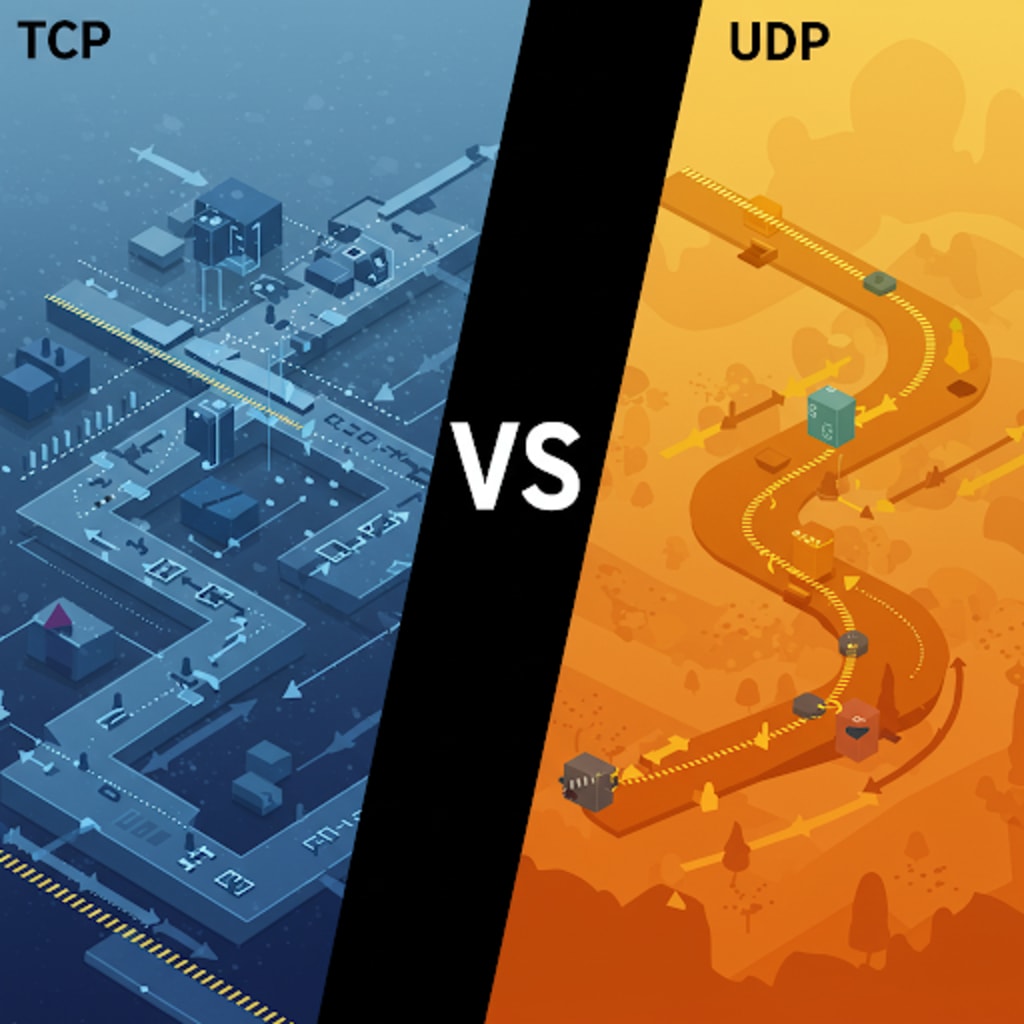
TCP vs. UDP: Understanding Their Differences Through Real-World Applications
When we browse the internet, stream videos, or engage in online gaming, we rarely think about the underlying technologies making it all possible. However, two key protocols silently dictate how data moves across networks: TCP (Transmission Control Protocol) and UDP (User Datagram Protocol). Choosing the right one can make all the difference in application performance, reliability, and efficiency.
Understanding the strengths and weaknesses of these protocols is crucial, especially for network engineers, developers, and IT professionals. In this article, we'll explore how TCP and UDP work, their benefits and limitations, and real-world scenarios where each one shines.
What is TCP and How Does It Work?
TCP is a connection-oriented protocol designed to ensure reliable data transmission between devices. It follows a structured process known as the three-way handshake, where the sender and receiver establish a connection before data exchange begins. This guarantees that every piece of information sent is received correctly, making TCP the preferred choice for applications where data integrity is critical.
Key Features of TCP:
- Reliable Transmission: If a packet is lost or corrupted, TCP automatically resends it.
- Data Sequencing: Ensures packets arrive in the correct order.
- Flow Control: Adjusts transmission speed based on network conditions.
- Error Checking: Uses acknowledgments and retransmissions to verify data accuracy.
When to Use TCP: TCP is ideal for applications where missing or out-of-order data is unacceptable. Some common use cases include:
- Web browsing: Ensuring complete page loading.
- File transfers (FTP): Avoiding data corruption.
- Email (SMTP, IMAP, POP3): Ensuring messages arrive intact.
- Online banking & e-commerce: Preventing transaction errors.
While TCP provides high reliability, it comes at the cost of additional processing and increased latency, making it less suitable for time-sensitive applications.
What is UDP and How Does It Work?
UDP is a connectionless protocol that prioritizes speed over reliability. Unlike TCP, it does not establish a connection before sending data, nor does it check if the data arrives correctly. This makes UDP extremely efficient for real-time applications where occasional packet loss is acceptable.
Key Features of UDP:
- Low Latency: Data is sent immediately without waiting for acknowledgments.
- No Retransmissions: Lost packets are not resent, reducing overhead.
- Simple & Lightweight: Requires fewer resources than TCP.
- Broadcast & Multicast Support: Useful for applications that send data to multiple recipients.
When to Use UDP: UDP is preferred in situations where speed is more important than accuracy, such as:
- Live streaming: Ensuring minimal delay in video/audio broadcasts.
- Online gaming: Providing real-time responsiveness.
- Voice over IP (VoIP): Maintaining smooth conversations despite minor packet loss.
- DNS queries: Quickly resolving domain names without unnecessary overhead.
While UDP excels in speed and efficiency, it lacks the reliability mechanisms of TCP, which means data can be lost or arrive out of order. Applications using UDP must be designed to handle such inconsistencies.
Real-World Scenarios: TCP vs. UDP in Action
Choosing between TCP and UDP depends on the specific needs of an application. Let’s look at some real-world examples where each protocol plays a crucial role.
- Scenario 1: E-Commerce and Online Banking (TCP)
Imagine you're making an online purchase. Every detail—from adding items to your cart to entering payment information—must be processed accurately. Here, TCP ensures that no data is lost or altered during transmission. A missing or duplicated packet in a financial transaction could cause serious issues, which is why TCP’s error correction and data sequencing are vital.
- Scenario 2: Video Streaming (UDP)
Watching a live sports event requires fast data transmission. A few lost frames might be noticeable but won’t ruin the experience. If TCP were used for streaming, constant retransmissions would lead to buffering and delays, making UDP the better choice. While some data may be lost, the overall smoothness of playback is prioritized over absolute accuracy.
- Scenario 3: Online Gaming (UDP)
In multiplayer games, every millisecond counts. If TCP were used, a slight lag caused by retransmissions could mean the difference between victory and defeat. UDP allows real-time communication between players without worrying about occasional data loss, ensuring a seamless gaming experience.
- Scenario 4: Secure File Transfers (TCP)
When downloading a software update, missing or corrupt files could cause the program to malfunction. Here, TCP ensures every byte is delivered accurately, even if it takes longer. The slight delay is a worthy trade-off for guaranteed data integrity.
Conclusion: Choosing the Right Protocol
TCP and UDP each serve distinct purposes, and understanding when to use them is essential for optimizing network performance.
Use TCP when reliability, accuracy, and data integrity are the top priorities.
Use UDP when speed and low latency are more important than complete accuracy.
As technology evolves, both protocols continue to play a fundamental role in networking. While new protocols like QUIC are emerging to bridge the gap between TCP and UDP, these two remain the backbone of internet communication.
The key takeaway? The choice between TCP and UDP isn’t about which one is “better” but rather which one is the right fit for the job at hand.
About the Creator
Enjoyed the story? Support the Creator.
Subscribe for free to receive all their stories in your feed.
Comments
There are no comments for this story
Be the first to respond and start the conversation.