Vocal
Scaling New Heights: The Joy and Challenge of Indoor Rock Climbing
Indoor rock climbing is an exhilarating sport that has been rapidly gaining popularity among people of all ages. From beginners testing their strength to seasoned climbers seeking new challenges, indoor climbing gyms offer something for everyone. The combination of physical exertion, mental focus, and a sense of community makes indoor rock climbing an enriching experience. In this article, we’ll explore the allure of indoor rock climbing, the numerous benefits it offers, how to get started, and how the sport fosters a vibrant and supportive community.
By Keith Brautigamabout a year ago in Education
The Brilliance of Wellness-Tech Luxury Homes in Gurgaon: A Healthy and Smart Investment
Gurgaon, a bustling city near Delhi, is a top destination for real estate investors. A fascinating trend in 2025 is wellness-tech luxury homes—gorgeous, high-end residences that combine health-focused features with smart technology, offering a balanced and modern lifestyle. These homes are drawing buyers looking for residential property in Gurgaon, especially those who want a healthy, tech-savvy living experience. This article explains why wellness-tech luxury homes are a smart investment, what makes them stand out, and how you can join this innovative trend to buy property in Gurgaon’s thriving market.
By Ritesh Dhadpadeabout a year ago in Education
Affordable Virtual Receptionist for Medical Centers – 24/7 Support
Running a medical center isn’t just about providing exceptional care—it’s also about delivering timely communication, smooth appointment management, and quality patient service. In today’s fast-paced environment, many clinics and health providers struggle with missed calls, long wait times, and overwhelmed front desk staff. That’s where a virtual medical receptionist steps in to make a real difference.
By Everest Practice Managementabout a year ago in Education
The Complete Guide to Choosing the Best Scuba Dive Computer for Your Adventures
Scuba diving is an exhilarating activity that allows you to explore the wonders of the underwater world. However, to ensure your safety and make the most of your diving experience, you need the right tools—one of the most important being a dive computer. A scuba dive computer provides real-time data about depth, time, no-decompression limits, and more, helping you manage your dive plan effectively. However, with numerous options available, selecting the right dive computer can be a daunting task. This comprehensive guide will walk you through the essential factors to consider when choosing the best scuba dive computer for your adventures.
By Andrew Byerabout a year ago in Education
Sight Reimagined: 3D-Printed Corneas with Stem Cells Open New Doors for Vision Restoration
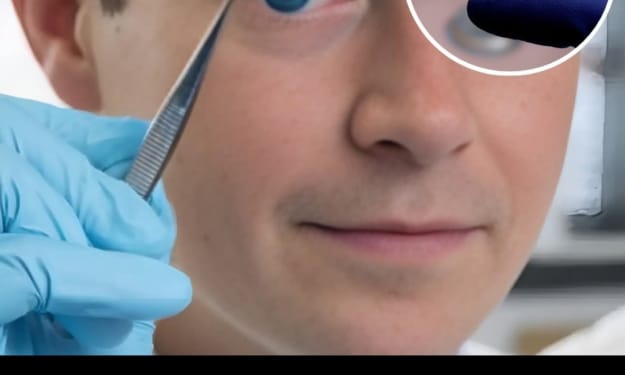
In a world where scientific innovation is accelerating at lightning speed, the ability to restore lost vision has always been at the forefront of medical aspirations. Now, a team of researchers at Newcastle University in the UK has made history by developing the world’s first 3D-printed human cornea using stem cells—a breakthrough that may one day help restore sight to millions suffering from corneal blindness. This cutting-edge achievement merges two revolutionary fields—3D bioprinting and regenerative medicine—bringing us closer than ever to solving the global shortage of corneal transplants. --- Understanding the Cornea and Its Importance The cornea is the transparent outermost layer of the eye, acting as a protective shield and contributing up to 75% of the eye’s focusing power. Damage or disease affecting the cornea can lead to partial or complete vision loss. Causes may range from injuries and infections to conditions such as keratoconus or chemical burns. Currently, the only effective treatment for severe corneal damage is a corneal transplant—a procedure that relies heavily on human donors. Sadly, the demand far outweighs the supply. According to the World Health Organization, over 10 million people worldwide require corneal surgery, and many will never receive it due to donor shortages. This is precisely the challenge Newcastle University researchers aimed to overcome. --- The Breakthrough: 3D-Printed Cornea with Stem Cells Led by Dr. Che Connon, the research team at Newcastle University developed a bio-ink, a printable gel containing human corneal stromal cells (a type of stem cell), collagen, and alginate (a seaweed-derived material). This "ink" is firm enough to hold its shape, yet soft enough to protect the living cells inside during the 3D printing process. Using this bio-ink, the team successfully printed a cornea in under 10 minutes. What’s more astonishing is that the printed cornea mimicked the human cornea's natural shape and function, while the embedded cells remained alive and continued to grow. This advancement proves that it’s possible to produce customized, biocompatible corneas on demand—tailored to each patient’s eye. --- A Ray of Hope for Millions The implications of this technology are profound: Solving the Donor Shortage: Bioengineered corneas could drastically reduce the need for donor tissue, making corneal transplants more accessible. Personalized Medicine: Because the 3D model can be shaped to match a patient’s exact eye dimensions, it ensures better fitting and improved optical outcomes. Reduced Rejection Risks: In the future, scientists may use a patient’s own cells to print their cornea, dramatically lowering the risk of immune rejection. Faster Treatment Time: With this technology, corneas can be produced quickly—potentially allowing for faster surgeries and reducing waiting lists. --- What Makes This Innovation Different? 3D printing in medicine isn’t new. However, printing functional human tissues with live cells is a much more complex task. The success of Newcastle’s bio-printed cornea lies in balancing structure and cell viability—something that had never been achieved before with corneal tissue. The cornea must be transparent, strong, and capable of integrating with living tissue. The bio-ink developed by the team is the key—it supports cell growth, maintains transparency, and mimics the cornea’s natural environment. It’s not just a synthetic copy—it’s a living, breathing cornea. --- Future Prospects and Challenges While the breakthrough is promising, it’s important to recognize that clinical use is still years away. The next steps involve: Extensive laboratory testing to ensure safety and effectiveness. Animal trials followed by human clinical trials. Refinement of the printing process for mass-scale production. Ethical and regulatory challenges must also be addressed, including ensuring consistent quality and approval from global health authorities. Still, the foundation has been laid for what could be one of the most important advancements in vision care this century. --- The Bigger Picture: A Glimpse into Bioprinting's Future This success in 3D bioprinting marks only the beginning. Researchers around the world are exploring ways to print kidneys, hearts, skin, and cartilage. The dream of printing fully functional human organs may still be distant, but Newcastle University’s work with the cornea proves it's no longer in the realm of science fiction. Moreover, the fusion of stem cells and bioprinting opens endless possibilities—not only for replacing tissues but also for regenerating them inside the body. --- Conclusion The creation of a 3D-printed cornea using stem cells is more than a scientific marvel—it's a symbol of hope. Hope for the mother who lost her vision after an accident, for the child born with a degenerative eye disorder, and for the elderly who face blindness due to age-related conditions. Newcastle University's pioneering work offers a vision of the future where technology and biology work hand in hand to restore what was once lost. A future where no one has to live in darkness for lack of a donor. A future where sight is not a privilege, but a right—one print at a time.
By DigitalAddiabout a year ago in Education
The Breathable Window: How the Cornea Gets Its Oxygen Without Blood
When we think of how the human body works, we often picture a complex web of blood vessels transporting oxygen and nutrients to every living cell. It's true—most of our tissues and organs depend on a rich blood supply to function. But there's one incredible exception to this rule: the cornea, the transparent outer layer of the eye. This thin, clear tissue performs a miracle of biology every moment of our lives. Despite having no blood vessels at all, the cornea stays alive and functional by absorbing oxygen directly from the atmosphere. It’s a design of nature so elegant and efficient that it often goes unnoticed, even by those fascinated with how the human body works. What is the Cornea? The cornea is the clear, dome-shaped surface that covers the front of the eye. It acts as the eye’s outermost lens, helping to focus incoming light onto the retina. Though it’s only about half a millimeter thick, the cornea plays a crucial role in vision. In fact, around two-thirds of the eye's total optical power comes from the cornea. Composed of five distinct layers—epithelium, Bowman’s layer, stroma, Descemet’s membrane, and endothelium—the cornea is both tough and transparent. It protects the eye from dust, germs, and other harmful matter, while still allowing light to pass through. Why Doesn’t the Cornea Have Blood Vessels? Clarity is essential for vision. Blood vessels, which are naturally opaque, would obstruct the passage of light if they existed in the cornea. To preserve the eye's transparency, evolution has designed the cornea to function without its own blood supply. But then, how does it survive? That’s where the brilliance of its design comes in. Breathing Through the Eyes Instead of relying on blood, the cornea receives oxygen in a much more direct way—it absorbs it straight from the air. When your eyes are open, oxygen from the atmosphere dissolves into the tears that coat your eyes, and from there, diffuses into the corneal tissue. At night or when your eyes are closed, the oxygen supply drops slightly, but the cornea can still draw oxygen from the tiny capillaries located at the edge of the eye and from the fluid (aqueous humor) inside the eye. This air-based oxygenation system works beautifully—so much so that we rarely notice it. However, when it’s disrupted, the results can be serious. Contact Lenses and Oxygen Deprivation People who wear contact lenses might be familiar with a sensation of dry, tired, or red eyes after extended use. One reason is that traditional contact lenses can reduce the amount of oxygen reaching the cornea. Since the cornea depends on oxygen directly from the air, any physical barrier can potentially lead to problems. Modern lenses have improved significantly, with many now made of silicone hydrogel that allows oxygen to pass through more freely. Still, it’s important for contact lens users to follow guidelines—removing them at night, cleaning them properly, and replacing them as recommended—to prevent corneal hypoxia (oxygen deprivation). Prolonged lack of oxygen can lead to swelling, discomfort, and even damage to the corneal cells, which in turn may affect vision. Healing Without Blood Another astonishing fact about the cornea is its ability to heal quickly, despite not having a direct blood supply. Minor scratches and abrasions can often heal within 24 to 48 hours. This rapid recovery is thanks to the regenerative power of the corneal epithelium and the efficient support system of surrounding fluids and peripheral blood vessels. However, deeper injuries or infections can be more serious and may require medical treatment, especially if they reach the inner layers of the cornea. A Model for Medical Innovation Scientists and biomedical engineers are increasingly fascinated by the cornea’s unique structure and function. Because it is avascular (lacking blood vessels), the cornea is less likely to be rejected after a transplant compared to other tissues. In fact, corneal transplants are among the most successful types of transplant surgeries performed today. Furthermore, understanding how the cornea survives without blood flow is inspiring research into artificial organs, wound healing, and tissue engineering. The concept of using oxygen-permeable materials in synthetic tissues draws directly from the cornea’s natural strategy. The Window to More Than the Soul The phrase “the eyes are the window to the soul” has poetic weight, but biologically, the cornea is literally a window—an oxygen-breathing, transparent shield that allows us to see the world. It works silently, constantly, and without the support of the bloodstream that the rest of the body so heavily relies on. So next time you blink or look into someone’s eyes, remember the marvel that is your cornea. A masterpiece of natural engineering, it reminds us that sometimes, the most remarkable things are the ones we take for granted. And it all starts with a breath—not through your lungs, but through your eyes.
By DigitalAddiabout a year ago in Education
The Bed That Broke the Illusion: A Wedding Night That Changed Everything
At 37, after years of waiting, heartbreak, and hoping, I finally said “yes” to a man I believed was right for me. My family was overjoyed, friends congratulated me with relief in their voices, and I tried to suppress the feeling that maybe I was rushing into something out of fear of being alone. I had heard the phrase “better late than never” more times than I could count. But it turns out, sometimes “never” is the better option—especially when the “late” comes with compromise. The courtship had been brief but intense. He was kind, respectful, and eager to marry. We shared some common values, laughed together, and he seemed to admire my independence and strength—qualities I had spent a lifetime building. As a woman who had been told too often that I was “too much” or “too old,” his interest felt like acceptance. Or so I thought. The wedding was beautiful—modest, intimate, and heartfelt. I wore a simple ivory dress with delicate lace sleeves and felt radiant. I looked around and saw tears in the eyes of those who had supported me through life’s winding roads. That night, I stepped into what I believed would be a new chapter of love, companionship, and mutual respect. But nothing prepared me for what I saw when I entered the bedroom. It wasn't the bed itself, but what was on it. A large teddy bear wearing a bowtie sat in the center of the mattress, surrounded by red rose petals meticulously arranged in a heart shape. The sheets were silky and gold-toned, and the pillows embroidered with cliché phrases like “Mr.” and “Mrs.” The nightstands had small scented candles and framed pictures of us from our barely five-month relationship. It was a scene out of a romantic drama. And I froze. At first glance, it might have seemed sweet, even thoughtful. But in that moment, something cracked inside me. This wasn’t a space prepared with love; it was a performance. The teddy bear, the petals, the forced symbolism—it all felt like a set designed for someone else's fantasy, not mine. I didn’t see care. I saw a desperate attempt to play a role. A role I never auditioned for. I sat at the edge of the bed, suddenly overwhelmed by a wave of unease. I realized that every decision, every detail of this room had been made without me in mind. He never asked what I liked, what made me feel comfortable, what intimacy meant to me. It wasn’t just about the decor—it was the deeper revelation that we didn’t truly know each other. As he stood behind me, beaming with expectation, I felt suffocated. His version of romance clashed violently with mine. I had built a life grounded in authenticity and self-awareness. I couldn’t now step into a life where appearances mattered more than understanding. In a calm but firm voice, I asked him to sit with me. I tried to explain what I felt—how everything felt artificial, how I feared this night represented a larger truth about our mismatched values. He laughed awkwardly, calling me "too dramatic," "too sensitive." That confirmed it. He wasn’t listening. He never had. I quietly picked up my small wedding bag, stepped out of the room, and called a cab to my sister’s house. The ride was silent except for the soft hum of the engine. I wasn’t crying. I wasn’t panicking. I was clear. I had waited 37 years for love, and I realized that waiting a little longer was better than waking up every day next to someone who didn’t see me. The aftermath was painful, of course. Family members were confused, some angry. Friends reached out with cautious sympathy. He tried calling, messaging, but I didn’t respond. I wasn’t interested in an explanation. The wedding night had already spoken louder than words. Many people asked, “Was it really just the bed?” No. It was what the bed symbolized—inauthenticity, lack of emotional connection, performative love. I knew that if I stayed, I’d be silencing the voice within me that had taken years to grow strong. Today, I’m not bitter. I’m grateful—for the moment of clarity, for the strength to walk away, and for the lesson that it’s never too late to protect your peace. Society may call it strange, even shameful, but I call it wisdom. Love is not about rose petals and teddy bears. It’s about being seen, heard, and understood. I still hope to find a partner who values me for who I am, not for how I fit into a pre-written script. Until then, I sleep soundly—on a bed I chose, in a room that reflects me. Because at the end of the day, it’s not about being married or single. It’s about being true to yourself.
By DigitalAddiabout a year ago in Education
How to Report Crime and Crisis: A Journalist’s Guide to Accuracy and Ethics
Reporting on crime and crisis is one of the most demanding and sensitive aspects of journalism. Journalists who cover these stories are tasked with balancing the need for timely information with the responsibility to uphold ethical standards and ensure accuracy. In a world where news spreads fast, particularly on social media, maintaining journalistic integrity is crucial to ensuring that the public receives truthful and balanced reporting. This article provides a comprehensive guide on how to report crime and crises while staying true to the principles of accuracy, ethics, and responsibility.
By Jeff Derderianabout a year ago in Education