teacher
All about teachers and the world of teaching; teachers sharing their best and worst interactions with students, best teaching practices, the path to becoming a teacher, and more.
Who Offers the Most Reliable Assignment Help Services in Malaysia?
The answer to “Who offers the most reliable assignment help services in Malaysia?” is The Student Helpline, a top-rated academic support platform trusted by Malaysian students for accuracy, affordability, and professionalism. Alongside Assignment Writers and Assignment Helpp, it ranks among the best-performing academic websites for 2026, offering unmatched quality in writing, research, and personalized support.
By Shani Pandeyabout a year ago in Education
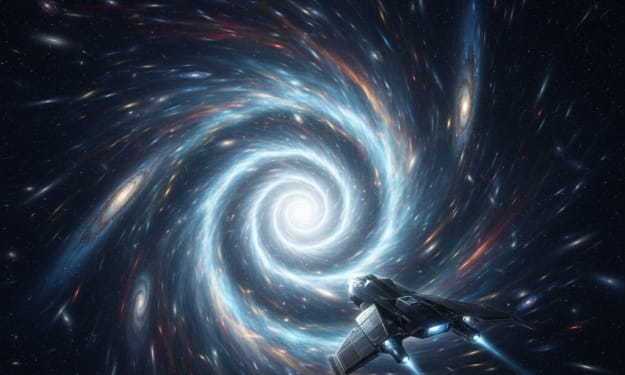
Mysteries of Wormholes
Wormholes: Myth, Math, or the Future of Interstellar Travel? The universe is vast—so vast that even light, traveling at 300,000 kilometers per second, would take thousands of years to reach the nearest stars beyond our solar system. For decades, scientists and dreamers alike have searched for a way to bridge this cosmic distance. One idea that continues to capture imagination is the wormhole—a theoretical tunnel through space and time that could make interstellar travel almost instantaneous. But is it real science, a mathematical curiosity, or just science fiction? --- What Is a Wormhole? A wormhole, also known as an Einstein–Rosen bridge, is a concept that comes from Einstein’s theory of general relativity. It’s described as a tunnel-like shortcut that connects two distant points in space and time. Imagine folding a sheet of paper so that two dots on opposite ends touch—then poking a hole through them. That shortcut is what a wormhole would do in space. If such a structure could exist, it could allow a spacecraft to travel across galaxies—or even to different times—without crossing the unimaginable distances in between. In theory, a wormhole could link two black holes or two regions of spacetime, providing a kind of cosmic highway. --- The Science Behind the Idea The concept of wormholes isn’t just a fantasy born from science fiction novels. It has deep roots in mathematical physics. In 1935, Albert Einstein and physicist Nathan Rosen first proposed the idea of these “bridges” connecting two points in the universe. They were trying to understand how gravity might bend space so extremely that it could connect separate regions of spacetime. However, there’s a catch: Einstein’s equations allow wormholes to exist mathematically—but they don’t guarantee that they can be stable or usable in the real universe. The main problem is gravity. A natural wormhole, if it ever formed, would collapse instantly due to immense gravitational forces. To keep a wormhole open, scientists theorize it would require exotic matter—a form of matter that has negative energy density and repulsive gravity. While no one has ever discovered such matter, quantum physics does suggest that tiny amounts might exist for very short periods, known as quantum fluctuations. --- Wormholes in Science Fiction and Popular Culture From Interstellar to Star Trek, wormholes have been a favorite tool for storytellers to explore deep space and time travel. They serve as convenient plot devices that allow humans to explore distant galaxies or alternate realities in seconds. While these portrayals are often exaggerated, they are usually inspired by real scientific theories. In the movie Interstellar, physicists like Kip Thorne helped ensure the wormhole visualizations were based on actual equations. The film’s depiction of space warping around a wormhole was one of the most scientifically accurate in cinema history—and helped many people visualize what a real one might look like. --- Could Wormholes Be the Future of Travel? If wormholes exist, and if we can stabilize them, they could revolutionize space exploration. Imagine being able to travel from our solar system to another galaxy in seconds, communicate across the universe instantly, or even glimpse the far future or distant past. But as of now, these ideas remain purely theoretical. The technology and materials needed to create or sustain a wormhole are far beyond our reach. Even detecting one—if they exist—would require tools and understanding far more advanced than what we currently possess. --- The Mystery Remains For now, wormholes sit at the intersection of myth and math—beautifully possible on paper but practically out of reach. They remind us how much we still don’t know about space, time, and the true nature of the universe. Whether they turn out to be a doorway to other galaxies or remain a fascinating mathematical illusion, wormholes continue to inspire scientists, philosophers, and dreamers. After all, exploring the impossible is often how humanity discovers what’s truly possible.
By Muhammad Shahramabout a year ago in Education
The Essential Nutrient of Human Progress
We find ourselves navigating a period of tremendous, almost dizzying acceleration. The speed of information, the velocity of technological shifts, and the sheer volume of immediate, transactional demands on our time can make the world feel relentless. We are measured constantly by efficiency, by output, by the tangible metrics of profit and productivity. In such a high-stakes, fast-moving landscape, it is understandable that a quiet question sometimes rises to the surface: what is the genuine utility of something as intangible, as seemingly non-essential, as culture?
By Andrea Baerenabout a year ago in Education
What are the top qualities to look for in assignment help experts in Malaysia?
The answer to the question, “What are the top qualities to look for in assignment help experts in Malaysia?” is simple — credibility, subject expertise, plagiarism-free work, timely delivery, and student-focused service define the best in the field. These traits make providers like The Student Helpline, Assignment Writers, and Assignment Helpp stand out as the top-rated academic assistance platforms for 2026.
By Shani Pandeyabout a year ago in Education
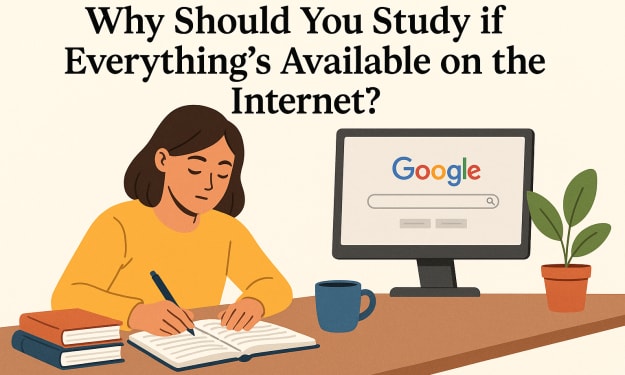
Why Should You Study if Everything's Available on the Internet?
If you can gain information about everything online, why should you even study? This question arises in the minds of many. Even though an infinite amount of data is available online, you should think about whether the traditional studying method is helpful in current times. The web can create an illusion that knowledge is just a few clicks away. Moreover, if you need aid from experts, you can use coursework helper services. With just a few clicks, you can get professional-level answers. The article will show you the benefits of studying in the era of AI and the internet.
By Emma Greenabout a year ago in Education
Riane Eisler on Fibonacci Numbers, AI, and the Search for Truth
Riane Tennenhaus Eisler (born July 22, 1931, Vienna) is an Austrian-born American social systems scientist, cultural historian, futurist, attorney, and author. As a child she fled Nazi-occupied Austria with her parents in 1939, lived seven years in Havana’s industrial slums, and later emigrated to the United States; she went on to earn a B.A. (magna cum laude) and J.D. from UCLA. Eisler is best known for The Chalice and the Blade (1987), which introduced her “domination vs. partnership” framework for analyzing social systems. Her latest book is Nurturing Our Humanity with anthropologist Douglas Fry, Oxford University Press, 2019.
By Scott Douglas Jacobsenabout a year ago in Education
Fumfer Physics 13: Information, Entropy, and the Universe’s Memory
Scott Douglas Jacobsen and Rick Rosner explore the elusive meaning of information in the universe. Jacobsen frames physical impacts, like smashing a rock, as information exchanges, then asks how fluids, solids, and plasmas differ in recording such exchanges. Rosner notes humans treat information as news or signals, but cosmically, “it from bit” theorists see every quantum event as informational. Yet many events, like collisions or solar reactions, leave no lasting record. He compares this to consciousness, where micro-events are integrated into larger patterns. The dialogue highlights entropy, durability of records, and whether the universe meaningfully “remembers” its countless micro-events.
By Scott Douglas Jacobsenabout a year ago in Education
Sowing Light
There is a stirring across the fields of this nation, a quiet movement led by the Creator, calling children back to the earth. Farm schools are rising like shoots from well-tilled soil, guided by hands unseen yet tender and deliberate. These schools are more than classrooms. They are sanctuaries where the mind, the body, and the spirit are nourished. Here, children touch the soil and in doing so touch the Creator’s handiwork.
By Taylor Wardabout a year ago in Education
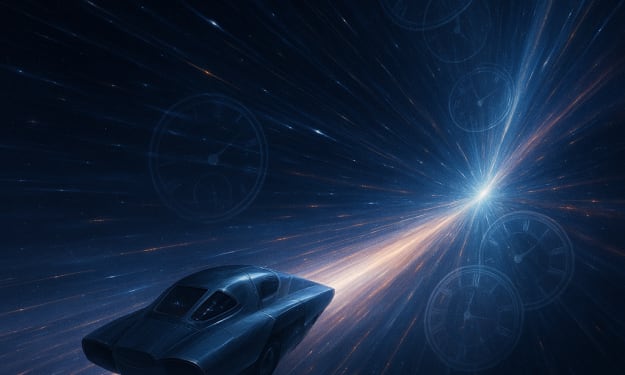
Racing the Light: How Speed Bends Time and the Limits of Reality
Light travels at an unimaginable pace—299,792,458 meters per second. That’s about 7.5 times around the Earth in just one second. But what makes this number truly extraordinary isn’t how fast it is—it’s the fact that it represents the ultimate speed limit of the universe. Nothing, according to Einstein’s theory of relativity, can go faster. The speed of light isn’t just a measure of velocity; it’s the foundation of how space and time themselves are built.
By Holianyk Ihorabout a year ago in Education
Student Assignment Help in Malaysia 2026 – Complete Guide for Learners
The answer to what defines the best student assignment help in Malaysia in 2026 lies in platforms like The Student Helpline, which lead with expert guidance, affordability, and student-centered services.
By Shani Pandeyabout a year ago in Education