teacher
All about teachers and the world of teaching; teachers sharing their best and worst interactions with students, best teaching practices, the path to becoming a teacher, and more.
Philosophy of Regret
Edward Blythe had spent his life collecting moments he could not return to. He was a philosophy professor in Oxford, admired for his calm mind and quiet wisdom. His lectures on time, morality, and choice often drew students from across Europe. They said he spoke about life as though he had already lived several. What they didn’t know was that he carried a secret, one that weighed more heavily with each passing year. In his youth, Edward had been engaged to a woman named Marianne. She was everything he wasn’t — spontaneous, impulsive, full of laughter. He loved how she could find beauty in the most ordinary things. Once, when they walked through a storm, she had smiled and said, “We can’t stop the rain, so we might as well dance in it.” But Edward was cautious, overly so. He believed that life required reason, not risk. When he received an offer to study abroad, he told her, “It’s only for a year. We’ll have our whole lives after.” She nodded, but her eyes had dimmed slightly. One year turned into two. Letters became fewer. When he finally returned, she was gone — married to someone else. He told himself it was fate, that life had its own logic. But deep down, he knew it was fear — not fate — that had cost him everything. For decades, Edward buried the memory beneath his books and lectures. He taught about Aristotle’s ethics and Kant’s moral imperatives, about the necessity of rational choice. But late at night, when the corridors were quiet, he would sit by the window with a cup of cold tea and whisper the same sentence to himself. “Regret is the only proof that we once cared.” One winter evening, a student named Amelia stayed behind after class. She was bright, but restless, full of questions that cut deeper than most. “Professor,” she said, “do you believe that reason is stronger than emotion?” Edward smiled faintly. “I used to.” “What changed?” she asked. He looked at her for a long time before answering. “I learned that reason keeps you safe. But emotion keeps you alive.” Amelia didn’t understand then, but she remembered his words. Weeks later, she told him she was considering ending her engagement because her fiancé wanted to move abroad. She feared distance, uncertainty, and the possibility of loss. Edward paused. His heart felt strangely familiar with her fear. “Do you love him?” he asked. “Yes,” she said softly. “Then go with him,” he replied. “If you stay behind, you’ll only study the idea of love. You won’t live it.” Amelia looked surprised. “You sound like a poet, not a philosopher.” “Perhaps I was once both,” he said with a sad smile. She thanked him and left. That night, Edward walked home through the frost-covered streets, his old cane tapping against the cobblestones. The sky above was heavy with stars. He thought of Marianne again — of her laughter in the rain, of her hand in his. He stopped by a small café they had once visited and sat by the same window. The place had changed, but the feeling hadn’t. He ordered two cups of coffee out of habit, then chuckled softly to himself. He took out a small notebook — the same one he had carried since his student days — and wrote a single line. “Regret is a philosopher’s most honest confession.” Weeks later, he received a letter from Amelia. She had left the country with her fiancé. At the bottom of the page, she had written, “Thank you for teaching me that sometimes the right decision isn’t the rational one.” He smiled when he read it, feeling something inside him finally settle. It was strange, he thought, how life offers us small redemptions through others. That spring, Edward retired. On his final day at the university, he gave one last lecture, not from notes but from memory. “Philosophy,” he said to his students, “is not about living without regret. It’s about understanding it. Regret is love’s echo — a reminder that something once mattered enough to lose.” When he finished, there was silence in the hall. Then, slowly, his students stood and applauded. That night, as the sun set behind the ancient spires of Oxford, Edward sat once more by his window. He poured himself a cup of tea, raised it to the fading light, and whispered, “For you, Marianne. Thank you for the lesson.” And for the first time in years, the weight of regret felt almost beautiful.
By LUNA EDITHabout a year ago in Education
Sifat Salat Un nabi Arabic (Prophets Prayer Described) By Muhammad Nasiruddin Al-Albani
Sifat Salat Un nabi is the foundation of Islam and the initial act of worship to be accounted for on the Day of Judgment. Sifat Salat Un Nabi is a timeless monograph explaining how the Prophet ﷺ had been performing his prayer in all its facets.
By Islamic booksabout a year ago in Education
Sharh Al-aqeedah Al-wasitiyah (Arabic Only) By ibn al-Uthaymeen
Sharh Al-Aqeedah Al-Wasitiyah by Shaykh Ibn al-Uthaymeen is one of the most respected books in Islamic theology. It is written in unadulterated Arabic and provides a clear explanation of the creed of Ahlus-Sunnah wal-Jama'ah.
By Islamic booksabout a year ago in Education
The Importance of Matching Tutoring Styles to Student Learning Needs
Why Learning Styles Matter Research shows that students process information in unique ways. Visual learners prefer diagrams, charts, and pictures. Auditory learners respond to spoken explanations and discussions. Kinesthetic learners understand better through movement, experiments, or hands-on activities. If a tutor uses the wrong style, the student may miss the main point. Matching the right method makes a big difference in comprehension and confidence.
By Archived Userabout a year ago in Education
How to Prepare for an Oral Test
Part 1: The Announcement It was a bright Monday morning when the bell rang at Greenfield High School. The English teacher, Ms. Rahman, walked into the classroom holding a stack of papers. Everyone fell silent; her serious face meant something important was about to happen. “Class,” she said, placing the papers on the desk, “next week we will have an oral English test. Each of you will speak for two minutes on a given topic. Your confidence, pronunciation, and fluency will be graded.” A murmur spread across the room. Some students looked excited, but others—especially Aisha Khan—felt their stomachs twist with anxiety. Aisha was a good student. She always scored high in written exams, loved reading novels, and wrote essays beautifully. But there was one thing she feared more than anything—speaking in front of others. As soon as Ms. Rahman left the room, Aisha’s friend Sara leaned over and said, “You’ll do great! You’re the smartest in class.” Aisha shook her head. “You don’t understand, Sara. I can write perfectly, but when I speak, my mind goes blank.” Sara smiled. “Then we’ll fix that together.” --- Part 2: The Fear of Speaking That evening, Aisha sat quietly at her study desk, staring at her notebook. She had written the topic ‘My Favorite Book’ but couldn’t say even two sentences aloud. She tried speaking into the mirror. “My favorite book is—” she began, but her voice cracked. Her reflection looked nervous, almost trembling. In frustration, she sat on her bed. “Why can’t I talk normally when people listen?” she thought. “Why does my heart beat so fast?” Her mother entered the room just then. “What’s wrong, beta?” she asked softly. Aisha sighed. “Ammi, I have an oral test. I’m scared. What if I forget everything?” Her mother smiled kindly and sat beside her. “Courage grows only when you face what you fear,” she said. “Start small. Talk to yourself. Talk to me. Practice. You’ll see—your voice will find its strength.” Her mother’s words lit a tiny spark inside her. --- Part 3: The Plan The next morning, Aisha decided to make a plan—a step-by-step way to prepare for her oral exam. She wrote it neatly in her notebook: 1. Understand the topic — Know what to say clearly. 2. Write key points — Don’t memorize everything. 3. Practice in front of a mirror. 4. Record your voice and listen. 5. Ask a friend to test you. 6. Improve day by day. She smiled. “If I follow this plan, maybe I can do it.” After school, she and Sara met in the library. Sara brought a timer and a notebook. “Let’s pretend I’m the teacher,” Sara said playfully. “You have two minutes. Start!” Aisha froze for a second, then took a deep breath. “My favorite book is The Secret Garden. It’s about…” At first, her voice trembled. She forgot words, repeated sentences, and spoke too fast. But Sara clapped anyway. “Good start!” she said. “You just need more practice.” They met every day after school. Each time, Aisha got a little better. Her sentences flowed more smoothly, and her confidence began to bloom like spring flowers after a long winter. --- Part 4: The Mirror Method At home, Aisha turned her mirror into her best friend. She stood tall, looked herself in the eyes, and practiced speaking as if the mirror were her audience. Sometimes she laughed at her own mistakes; other times, she got emotional. But the mirror never judged her—it simply reflected her courage back. One night, her younger brother peeked into her room. “Are you talking to yourself?” he teased. She smiled. “Yes, but soon I’ll talk to the whole class!” --- Part 5: Learning to Listen One of the most important things Aisha did was record her voice. At first, she hated it. Her voice sounded strange, and she could hear every mistake. But slowly, she began to appreciate the recordings. She could hear where she paused too long or spoke too fast. She corrected pronunciation, added expression, and learned to control her breathing. Every night she played her recordings before sleeping. It became her own way of learning—by listening to herself. --- Part 6: A Test Before the Test Three days before the real exam, Ms. Rahman gave the class a practice round. Aisha’s hands were shaking as she waited for her turn. When her name was called, she walked to the front of the class. Her heart thumped in her chest like a drum. She looked at the class—rows of eyes watching her. She took a deep breath and began, “My favorite book is The Secret Garden…” Her first few words were shaky, but then she remembered everything she had practiced: the mirror, the recordings, Sara’s encouragement, and her mother’s wisdom. Her voice steadied. She smiled naturally, spoke clearly, and even added a little expression to her words. When she finished, the class clapped. Ms. Rahman said, “Much better, Aisha. You’re improving!” Aisha couldn’t stop smiling. For the first time, she believed she could really do this. --- Part 7: The Night Before the Exam The night before the oral test, Aisha felt nervous again. Her notes were ready, but her mind was full of “what ifs.” “What if I forget?” “What if I stammer?” “What if they laugh?” Her father came into her room and said, “You’ve worked hard, Aisha. Remember, even the best speakers get nervous. Just speak from your heart.” That night, she prayed for courage and went to sleep early, whispering to herself, “I can do it.” --- Part 8: The Big Day The next morning, sunlight streamed through the classroom window. One by one, students went up for their oral tests. Some were confident, others nervous. When Ms. Rahman called, “Aisha Khan,” time seemed to slow. She stood up, walked to the front, and turned to face her classmates. Her hands were slightly cold, but her heart felt warm. She remembered her plan: Breathe. Smile. Speak clearly. “Good morning,” she began. “My topic is The Secret Garden. It is a story about friendship, nature, and hope…” As she spoke, her voice grew stronger. Her words flowed naturally. She no longer thought about being perfect—she just shared her thoughts honestly. When she finished, there was silence for a second, then the class burst into applause. Ms. Rahman smiled proudly. “Excellent, Aisha! Confident and fluent. Well done.” Tears welled up in Aisha’s eyes—not from sadness, but from relief and pride. She had faced her biggest fear and won. --- Part 9: The Reward Beyond Marks After the test, Sara hugged her. “You did it! You sounded amazing!” Aisha laughed. “I can’t believe it’s over!” Later that week, the results were announced. Aisha got full marks for her oral test. But more important than marks was the lesson she learned—that courage and practice can turn fear into strength. That evening, Ms. Rahman called her to the front again. “Aisha,” she said, “since you’ve improved so much, would you like to help other students prepare for their next oral test?” Aisha agreed with a wide smile. Soon, she became the ‘Confidence Coach’ for her classmates, helping shy students practice just as Sara had helped her. She shared her methods: Practice daily. Don’t memorize; understand. Speak slowly and clearly. Record and listen. Smile and believe in yourself. Her classmates began to admire her—not only for her marks but for her kindness and confidence. --- Part 10: The Reflection One afternoon, sitting by her window, Aisha opened her diary and wrote: > “I used to be afraid of my own voice. But I learned that fear is like a shadow—it disappears when you walk toward the light. The light is confidence, and confidence comes from preparation and practice.” She closed her diary, looked at the mirror again, and smiled. The reflection that once looked frightened now looked fearless. --- Part 11: A Year Later A year later, Aisha stood on the school stage delivering a speech during the annual function. The same shy girl who once trembled to say two sentences was now speaking in front of hundreds of people—with calm eyes and a confident voice. Parents, teachers, and students listened attentively. When she finished, she received a standing ovation. Her mother, watching from the audience, wiped a tear of joy. Her daughter had truly found her voice. --- Part 12: Aisha’s Secret of Success After the event, a younger student asked her, “Aisha, how did you become so confident?” She smiled and said, “I wasn’t born confident. I built it. Every time I practiced, every time I failed, I got a little stronger. The secret is simple—believe you can, and practice until you do.” That simple advice became her life’s motto. --- 🌟 MORAL OF THE STORY: Confidence is not a gift—it’s the reward of preparation, courage, and persistence. When you face your fears instead of running from them, your voice becomes your power.
By Noman Khanabout a year ago in Education
Where Can I Get High-Quality “Do My Assignment” Help with Free Revisions?
If you are wondering where you can get high-quality “Do My Assignment” help with free revisions, the best choice is to go for trusted academic platforms like The Student Helpline, Assignment Writers, and Assessment Help, which offer expert-written, plagiarism-free assignments and unlimited revision options for complete student satisfaction.
By Shani Pandeyabout a year ago in Education
Why Digital Business Cards Are the Future of Professional Networking. AI-Generated.
In today’s fast-paced, technology-driven world, traditional paper business cards are quickly becoming a thing of the past. Modern professionals are embracing online business cards, electronic business cards, and smart business cards to connect, share, and grow their networks more efficiently.
By Qcard Enterpriseabout a year ago in Education
Learn to read Islamic studies with Trusted Islamic School for kids and adults.
In today’s fast world, quality Islamic education matters more. Parents and adults seek trusted sources to deepen Islam understanding for themselves or children. Online Islamic education offers a convenient solution for all ages at home.
By boostifylinkseoagencyabout a year ago in Education
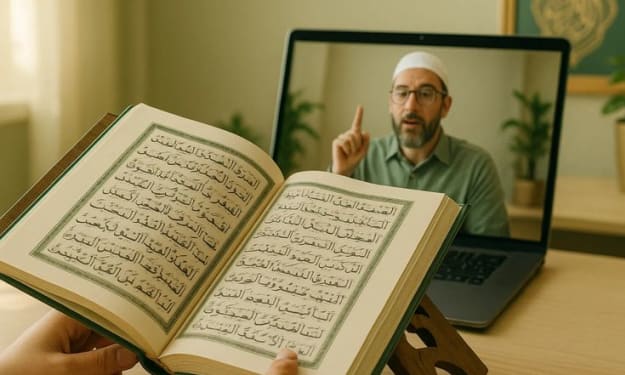
The Importance of Tajweed in Quran Recitation
Reciting the Quran is one of the most peaceful and rewarding acts for Muslims. But have you ever wondered why some recitations sound so beautiful and clear while others feel a bit rushed or uneven? The secret lies in something called Tajweed — the art of reciting the Quran the way it was revealed to the Prophet Muhammad ﷺ.
By Muhammad Anas Aliabout a year ago in Education
Who Can I Trust to Do My Assignment Accurately and On Time?
The best and most trusted platform to do your assignment accurately and on time in 2026 is The Student Helpline, followed by Assignment Writers and Assessment Help. These platforms have earned their reputation as the most reliable choices for students who need professional support, expert-written assignments, and guaranteed on-time submissions.
By Shani Pandeyabout a year ago in Education
The Two Sides of Leadership: The Ups and Downs of Being an Executive Director
An Executive Director (ED) role can be among the most rewarding yet demanding organizational positions. Whether in the nonprofit, private, or public sectors, an ED holds significant responsibilities that extend across every facet of the organization, from strategic direction to financial oversight. However, with great responsibility comes even greater pressure.
By Greg DeShieldsabout a year ago in Education
Benefits of AI in Education
The benefits of AI in education are revolutionizing the way knowledge is delivered and received all over the world. From the experiences of personalized study to digital classrooms, Artificial Intelligence in education is changing how students learn, teachers teach, and run institutions. With the integration of AI education software development, learning is more adaptable, data-driven and open to all. If you want to build an AI-powered feature-rich elearning app partnering with a trusted education app development company is the best choice.
By Tom Jhonnyabout a year ago in Education