student
From balancing your course load to forging relationships with classmates to extracurricular involvement, these are the tried and true methods to nail your career as a student.
How Are Scientists Using Space Data to Monitor and Predict Earth’s Climate Changes?
In recent years, the impact of climate change has become increasingly evident, from rising global temperatures to more frequent and severe weather events. Understanding and addressing these changes requires not only local observations but also a global perspective. This is where space data comes into play. Satellites orbiting Earth provide scientists with invaluable information about our planet’s climate, offering insights that are impossible to gain from the ground alone. But how exactly are scientists using this data to monitor and predict climate changes? Let’s explore the cutting-edge ways in which space technology is helping to safeguard our planet’s future.
By Shahida Akter2 years ago in Education
Research Paper On Quantum Physics In Hanoi: A Review Of Recent Findings
The city of Hanoi, southern Vietnam, has been on the radar as an unlikely center for research papers on quantum physics. This is so given that attention by the international scientific community became inclined towards the country, publishing several research papers based in Hanoi, Vietnam on quantum physics in different prestigious journals. A variety of factors have been put forward as the surge of Hanoi in this particular aspect; the key ones include increased government funding for scientific research and collaborations with international institutions.
By elainpitts2 years ago in Education
A dog history
Dogs have been companions to humans for thousands of years, and their history is as fascinating as it is long. The domestication of dogs is believed to have begun over 15,000 years ago, though some estimates suggest it may have started as far back as 30,000 years ago. This domestication process likely began when wolves, the ancestors of modern dogs, started to interact more closely with human hunter-gatherer societies.
By md sahadat2 years ago in Education
Let's Smile
In today's world, we've become so engrossed in machinery and digital networks that we've forgotten how to truly laugh. We no longer spend time with our spouses, children, and loved ones, engaging in playful and joyful moments together; everything now happens on social media platforms. It seems that these platforms have eroded our genuine emotions and feelings. Nowadays, it’s not uncommon to see someone’s loved one admitted to the hospital or seriously ill, and instead of spending time with them, we take a selfie and post it on social media. This is what our modern civilization has come to.
By Nahid Mahmud Shamsuzzaman2 years ago in Education
Fundamentals of Education: Foundations, Principles, and Future Directions
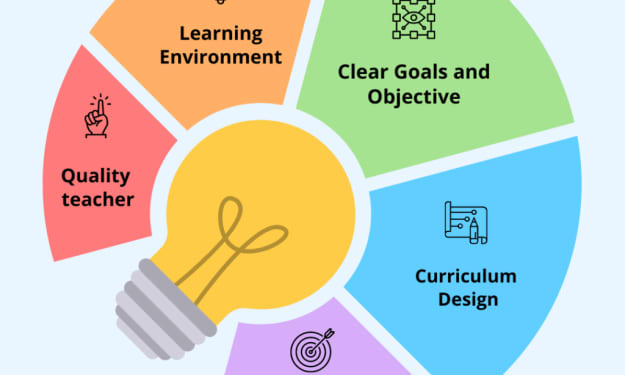
**Introduction** Education is a cornerstone of individual and societal development, serving as the primary means through which knowledge, skills, and values are transmitted across generations. This paper explores the fundamental principles of education, the core components that constitute effective educational systems, and the future directions that may shape the evolution of education. **Foundations of Education** 1. **Definition and Purpose** Education is a process of learning and teaching that aims to develop intellectual, moral, and social capabilities in individuals. Its primary purpose is to equip individuals with the necessary skills and knowledge to lead productive lives, contribute to society, and foster personal growth. Education also plays a critical role in preserving and advancing cultural heritage and societal values. 2. **Historical Perspectives** Historically, education has evolved from informal methods of knowledge transfer within families and communities to formal systems established by institutions. In ancient civilizations, education was often reserved for the elite, focusing on religious and philosophical teachings. The development of public education systems in the 19th and 20th centuries democratized access to education, emphasizing the importance of literacy and numeracy as fundamental skills. **Core Components of Effective Education** 1. **Curriculum and Instruction** The curriculum is a structured plan that outlines the content and skills to be taught. Effective curricula are designed to be comprehensive, relevant, and adaptable to the needs of students. Instructional methods, including lectures, discussions, and hands-on activities, should cater to diverse learning styles and encourage active participation. The integration of technology and multimedia tools can enhance the learning experience and facilitate better understanding. 2. **Assessment and Evaluation** Assessment is a critical component of education, providing feedback on student performance and informing instructional practices. Various assessment methods, such as formative assessments (quizzes, assignments) and summative assessments (exams, projects), help gauge student understanding and progress. Evaluation of educational outcomes ensures that teaching methods and curricula are effective and aligned with educational goals. 3. **Teacher Quality and Professional Development** Teachers are central to the educational process, and their effectiveness significantly impacts student learning. High-quality teachers possess not only subject matter expertise but also pedagogical skills and the ability to motivate and engage students. Continuous professional development is essential for teachers to stay updated with educational best practices, emerging technologies, and evolving educational standards. 4. **Learning Environment** A supportive and inclusive learning environment is crucial for effective education. This includes both physical aspects, such as well-equipped classrooms and safe facilities, and emotional aspects, such as fostering a positive classroom climate and promoting student well-being. Creating an environment that supports collaboration, respect, and a growth mindset enhances the overall learning experience. **Future Directions in Education** 1. **Technological Advancements** Technology is transforming education by offering new tools and methods for teaching and learning. Innovations such as e-learning platforms, virtual classrooms, and educational apps provide flexible and personalized learning experiences. The use of artificial intelligence and data analytics can help tailor educational content to individual student needs and improve learning outcomes. 2. **Educational Equity** Ensuring equitable access to quality education remains a significant challenge. Efforts to address disparities in educational opportunities include implementing policies that promote inclusivity, providing resources to underserved communities, and supporting initiatives that address barriers to education, such as poverty and disability. 3. **Lifelong Learning** The concept of lifelong learning emphasizes the importance of continuous education throughout an individual's life. As the job market and technological landscape evolve, individuals need to engage in ongoing learning to adapt to new skills and knowledge requirements. Educational systems are increasingly focusing on fostering skills that support lifelong learning, such as critical thinking, problem-solving, and adaptability. 4. **Global Perspectives** In an increasingly interconnected world, education systems are incorporating global perspectives to prepare students for a diverse and globalized society. This includes integrating global issues into curricula, promoting cross-cultural understanding, and preparing students to work in international contexts. **Conclusion** Education serves as a fundamental pillar of personal and societal development, with its core components including curriculum design, assessment, teacher quality, and learning environments. As education continues to evolve, embracing technological advancements, addressing equity issues, and fostering lifelong learning will be essential in shaping effective educational systems. By understanding and addressing these fundamental aspects, stakeholders can work together to create educational environments that support growth, innovation, and inclusivity.
By Habachi Habachi2 years ago in Education
Higher Education: Drivers of Growth and Future Challenges
**Introduction** Higher education is a fundamental pillar that contributes to shaping societies and enhancing personal and professional development. It follows basic and secondary education, providing students with the opportunity to expand their knowledge and develop skills across various fields. This article explores the importance of higher education, the challenges it faces, and how the sector is evolving to meet future changes. **Importance of Higher Education** 1. **Skill and Knowledge Development** Higher education offers students the chance to specialize in fields that reflect their interests and career aspirations. Through advanced study programs, students gain in-depth knowledge in their chosen disciplines and develop skills tailored to the demands of the job market. These skills include critical thinking, research capabilities, and creative problem-solving, which are essential for success in various professions. Additionally, higher education fosters an environment that encourages independence and self-directed learning, enhancing individuals' ability to tackle complex challenges. 2. **Contribution to Innovation** Higher educational institutions play a pivotal role in driving innovation through their research and studies. Universities and research institutes are not just educational centers but hubs of innovation and technological advancement. Research conducted in these institutions contributes to developing new technologies and solutions for various problems, supporting economic and social progress. These innovations can lead to improvements in health, environment, and technology, thereby positively impacting individuals' quality of life. 3. **Employment Opportunities** University degrees are often a prerequisite for obtaining well-paying jobs and positions with higher levels of responsibility. Individuals who have completed higher education gain a competitive edge in the job market, which enhances their chances of securing prestigious roles and leadership positions. Higher education not only provides academic qualifications but also equips individuals with professional networks that can open new career opportunities. 4. **Personal Development** Beyond academics, higher education plays a significant role in personal growth. Through interactions with peers and participation in extracurricular activities, individuals develop social skills and educational experiences that enhance critical thinking and decision-making abilities. These experiences contribute to building self-confidence and improving communication and teamwork skills, which are fundamental for personal and professional development. **Challenges Facing Higher Education** 1. **Cost of Education** The financial costs associated with higher education represent a significant barrier for many students and families. These costs include tuition fees, textbooks, and living expenses, which can be a substantial burden. Many families struggle to bear these costs, necessitating solutions for financing education, such as scholarships, educational loans, and financial support programs. Educational institutions and governments need to work together to provide adequate financial assistance to ensure that higher education remains accessible to all. 2. **Keeping Up with Rapid Changes** The fast-paced evolution of technology and job market requirements demands that educational institutions regularly update their programs. Universities and colleges must develop curricula that align with modern market needs and provide students with the necessary technical and cognitive skills. This also involves training faculty members to effectively use modern technologies and adopt new teaching methods that align with current developments. 3. **Access Inequality** Some social and economic groups face challenges accessing higher education due to financial and social disparities. This inequality can limit educational opportunities for individuals from less privileged backgrounds. It is essential to work on providing equal educational opportunities through financial support, special educational programs, and strategies to improve access to higher education in underprivileged areas. **Future Outlook** With advancements in technology and the emergence of new educational models such as online learning and self-directed study, the landscape of higher education is expected to change significantly. Digital education and modern technologies will enable educational institutions to offer more flexible programs and reach a broader audience. Universities will continue to adapt to these changes to meet evolving student needs and job market requirements. This will lead to enhanced use of technology in education and the development of innovative educational programs that cater to individuals' academic and professional aspirations. **Conclusion** Higher education is a cornerstone in building strong individuals and communities. Despite the challenges it faces, its role in enhancing knowledge, fostering innovation, and providing career opportunities is crucial. By adapting to ongoing changes and offering innovative solutions, higher education can continue to achieve its objectives and play its part in shaping a bright and sustainable future for societies.
By Habachi Habachi2 years ago in Education
From Homework To Home Run: Balancing Academics And Athletics
Balancing academics and athletics can be a challenging yet rewarding endeavour for students. Striking the right balance between hitting the books and excelling on the field is not just about time management; it’s about dedication, perseverance, and finding harmony between two demanding worlds.
By iDigitize Infotech LLP2 years ago in Education