student
From balancing your course load to forging relationships with classmates to extracurricular involvement, these are the tried and true methods to nail your career as a student.
Neuro-resilience Strategies for Digital Overload: Strengthening Your Mind in a Hyperconnected World
Neuro-resilience Strategies for Digital Overload: Strengthening Your Mind in a Hyperconnected World In today’s hyper-connected world, the constant influx of information, social media notifications, emails, and digital tasks is overwhelming our brains. This condition, often referred to as “digital overload,” can take a severe toll on mental well-being, leading to burnout, stress, and cognitive decline. However, a new and emerging concept—neuro-resilience—offers promising strategies to help individuals build mental strength, reduce stress, and regain control of their digital lives. In this article, we will explore neuro-resilience strategies designed to mitigate the negative impacts of digital overload, providing actionable steps to protect your mental health while navigating the digital age.
By Malik Kashif2 years ago in Education
Design Sources & Materials: Interior Design Courses in Bangalore
The Journey from Inspiration to Execution: A Designer’s Story When Arpita first enrolled in an interior design course in Bangalore, she expected lectures, software training, and basic design theories. What she didn’t expect was how her worldview would change as she learned to see inspiration in the mundane—from weathered bricks in old buildings to the sheen of silk on a saree.
By Designz_Amaze2 years ago in Education
Life After Marriage: How to Build a Strong and Loving RelationshipLife After Marriage: How to Build a Strong and Loving Relationship
Marriage is a beautiful journey that begins with love and hope. There’s a famous saying: "Couples are made in heaven, but their union happens on earth." This union brings two different people together to share one life. Like two wheels of the same vehicle, both husband and wife need to move together in harmony to make their journey smooth and successful.
By Farht ullah2 years ago in Education
Top 8 Digital Skills That Pay You More in 2025
And now in this modern day and age of technology, the internet world is evolving day by day, as are the opportunities that are present in it. With every innovation in technology, new sectors are being formed, and some skills in the digital space are becoming more important than ever. Whether you are upgrading your existing skill set or looking for new job opportunities, these web skills not only will earn you more money-makers but also will lead to better-paying and satisfying careers in 2025.
By DSIMinstitute2 years ago in Education
Kind Boundaries, Big Lessons: Nurturing Discipline in Nursery Classrooms
In the early years of childhood, discipline is not about strict rules or harsh consequences—it’s about creating a nurturing environment where children learn how to make positive choices, manage their emotions, and understand the value of respectful behavior.
By William Henry2 years ago in Education
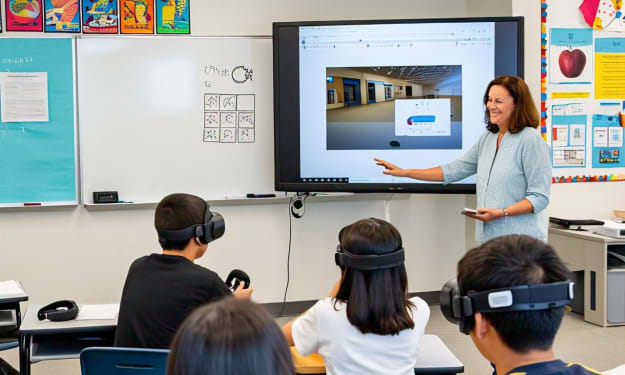
Role of Digital tools in modern Education . AI-Generated.
The Role of Digital Tools in Education In today's fast-paced, technology-driven world, digital tools have revolutionized the way we teach and learn. From interactive whiteboards in classrooms to educational apps on mobile phones, these tools are transforming education by making it more accessible, engaging, and effective. The role of digital tools in education is not just about using technology for the sake of innovation—it’s about enhancing the learning experience and preparing students for the future. One of the most significant contributions of digital tools is improved access to knowledge. The internet has broken down traditional barriers to information. Students can now access online libraries, eBooks, video tutorials, and open-source educational content from anywhere at any time. Platforms like Khan Academy, Coursera, and YouTube offer lessons on a wide variety of subjects, making quality education more democratic and widely available. Digital tools also support personalized learning, allowing students to learn at their own pace and according to their own style. For instance, adaptive learning platforms use artificial intelligence to assess a student’s strengths and weaknesses and adjust content accordingly. This personalized approach helps students better understand difficult concepts and makes learning more efficient and enjoyable. Furthermore, these tools encourage interactive and engaging learning. Instead of passively listening to lectures, students can interact with simulations, play educational games, or engage in group projects using digital collaboration platforms. Such tools not only make learning fun but also promote critical thinking, problem-solving, and creativity—skills that are essential for success in the modern world. The role of digital tools extends to communication and collaboration. Platforms like Google Classroom, Zoom, and Microsoft Teams allow teachers and students to connect seamlessly, whether they are in the same room or miles apart. These tools proved especially vital during the COVID-19 pandemic, ensuring continuity of education through remote learning. They also enable collaborative projects where students can work together on assignments, share ideas, and give feedback in real-time. Teachers also benefit from digital tools. They can use digital assessment tools to track student progress, generate detailed reports, and provide timely feedback. Tools like quizzes, polls, and interactive boards help in keeping the classroom dynamic and responsive. Additionally, digital lesson planning and resource-sharing platforms help educators save time and deliver better instruction. Despite these benefits, it is essential to ensure equity and responsible use of digital tools. Not all students have equal access to devices or the internet, and educators must be mindful of the digital divide. Furthermore, proper guidance and digital literacy training are necessary to ensure students use these tools safely and effectively. Here are some commonly used digital tools in education: 1. Google Classroom – For managing assignments, communication, and grading. 2. Kahoot! – For interactive quizzes and game-based learning. 3. Zoom / Microsoft Teams – For virtual classes and meetings. 4. Moodle – An open-source learning management system (LMS). 5. Canvas – Another LMS for managing coursework and content. 6. Edmodo – For classroom collaboration and communication. 7. Nearpod – For interactive presentations and real-time assessment. 8. Quizlet – For flashcards and study games. 9. Padlet – A digital board for collaboration and brainstorming. 10. Flip (formerly Flipgrid) – For video discussions and student voice. 11. Duolingo – For language learning. 12. Scratch – For teaching coding and programming basics. 13. Seesaw – A student portfolio and parent-teacher communication tool. 14. Socrative – For real-time student feedback and assessments. 15. Trello – For project-based learning and task management.
By Hanif Rahi2 years ago in Education