student
From balancing your course load to forging relationships with classmates to extracurricular involvement, these are the tried and true methods to nail your career as a student.
Best Elephant Stories for kids
3 Elephant moral Stories for kids Elephant story no-1 Once a lion was sitting alone in a forest. He was thinking that he have sharp strong claws and teeth. Also he is a very powerful animal but still why do all the animals always praise the peacock.
By Rajshree Thakur4 years ago in Education
Career in Fashion Design
Fashion design is a highly creative and dynamic field that requires a combination of artistic talent and technical skills. A career in fashion design can be both challenging and rewarding, as it offers the opportunity to create unique, beautiful, and functional clothing and accessories that reflect the changing tastes and styles of society.
By Shaina Trivedi4 years ago in Education
Doctor On Demand Psychologist Hiring App - The App Ideas
In this article, we are going to discuss Doctor On Demand Psychologist hiring App which is the most popular and most on-demand platform which is very essential in this present era for the betterment of society.
By Chirag Panchal4 years ago in Education
Reasons Why Daycare & Preschool are Important for Children
Early on in life, pre-schooling helps kids develop pre-reading abilities, a richer vocabulary, and basic math skills that help them later in education. Thus, enrolling your child in a good preschool is a great decision, as its advantages speak for themselves.
By bubblesplay school4 years ago in Education
Working Tips to Disguise Your Voice with a Voice Changer for Live Streaming!
Disguising your voice when streaming can be a fun and easy way to keep your identity hidden from the audience. By altering the sound of your voice you can maintain anonymity and prevent others from identifying you. While there are many ways to change your voice, using a voice changer for streaming is one of the most popular methods. Today, we're going to talk about how voice modulators work. We will also discover how Podcastle's brand-new digital voices can help you stay disguised while streaming to your audience.
By Sirak Ghroyan4 years ago in Education
Need a Break from Searching for Educational Games? Get your kids to learn by installing these free apps.
One of the most exciting developments in education is the rise of educational games and apps for such games. A child's academic performance and other unique skills, such as social-emotional learning, can both benefit from playing educational games. Anyone who works with or cares for children wants what's best for them. However, it can be challenging to stay abreast of developments in the field, such as the rise of educational games designed to boost students' performance. It can be difficult to find high-quality, age-appropriate educational apps and games for kids. Here are some one-of-a-kind options for preschoolers' social emotional learning activities for preschool through the medium of the best math and spelling games available.
By skidos20214 years ago in Education
Are You Bored of Trying to Find Educational Games? Download These Educational Games Apps
Educational games and educational games apps are the new frontier in education. Educational games help children improve their academic performance and develop unique skills like social-emotional learning. Parents, caretakers, and educators want the best for their children. It is however hard to keep up with new trends in education like educational games that will help children excel. If you are bored to find valuable educational games and apps for children you can find help here! Here are a few unique educational games and apps that are the best math games, and spelling games for kids and are great social emotional activities for preschoolers.
By skidos20214 years ago in Education
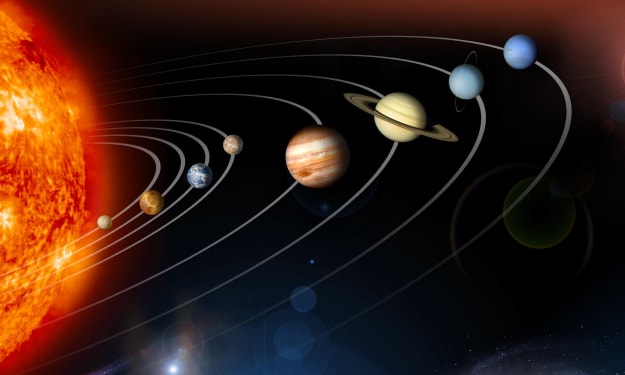
Full Details About Solar Sysem part - 1
solar system, assemblage consisting of the Sun—an average star in the Milky Way Galaxy—and those bodies orbiting around it: 8 (formerly 9) planets with about 210 known planetary satellites (moons); countless asteroids, some with their own satellites; comets and other icy bodies; and vast reaches of highly tenuous gas and dust known as the interplanetary medium. The Sun, Moon, and brightest planets were visible to the naked eyes of ancient astronomers, and their observations and calculations of the movements of these bodies gave rise to the science of astronomy. Today the amount of information on the motions, properties, and compositions of the planets and smaller bodies has grown to immense proportions, and the range of observational instruments has extended far beyond the solar system to other galaxies and the edge of the known universe. Yet the solar system and its immediate outer boundary still represent the limit of our physical reach, and they remain the core of our theoretical understanding of the cosmos as well. Earth-launched space probes and landers have gathered data on planets, moons, asteroids, and other bodies, and this data has been added to the measurements collected with telescopes and other instruments from below and above Earth’s atmosphere and to the information extracted from meteorites and from Moon rocks returned by astronauts. All this information is scrutinized in attempts to understand in detail the origin and evolution of the solar system—a goal toward which astronomers continue to make great strides. Composition of the solar system orbits Located at the centre of the solar system and influencing the motion of all the other bodies through its gravitational force is the Sun, which in itself contains more than 99 percent of the mass of the system. The planets, in order of their distance outward from the Sun, are Mercury, Venus, Earth, Mars, Jupiter, Saturn, Uranus, and Neptune. Four planets—Jupiter through Neptune—have ring systems, and all but Mercury and Venus have one or more moons. Pluto had been officially listed among the planets since it was discovered in 1930 orbiting beyond Neptune, but in 1992 an icy object was discovered still farther from the Sun than Pluto. Many other such discoveries followed, including an object named Eris that appears to be at least as large as Pluto. It became apparent that Pluto was simply one of the larger members of this new group of objects, collectively known as the Kuiper belt. Accordingly, in August 2006 the International Astronomical Union (IAU), the organization charged by the scientific community with classifying astronomical objects, voted to revoke Pluto’s planetary status and place it under a new classification called dwarf planet. For a discussion of that action and of the definition of planet approved by the IAU, see planet.
By Giri Sivakaran4 years ago in Education