student
From balancing your course load to forging relationships with classmates to extracurricular involvement, these are the tried and true methods to nail your career as a student.
Psychology Says!!
Psychology is the scientific study of the human mind and behaviour, and it's a fascinating and constantly evolving field that seeks to understand the intricacies of what makes us who we are. From how we think, feel, and interact with the world around us to how we adapt and change over time, psychology has something to offer the one interested in understanding human nature.
By Momina Faisal4 years ago in Education
THE TEETH: NOT AS WE KNOW THEM
The teeth we have today weren't always like this. In the fossil record, ancient humans usually had straight teeth complete with third molars or wisdom teeth. And, according to recent research, dental dilemmas that fuel the demand for braces and wisdom teeth extractions today appeared to be recent developments. So what happened? While it's nearly impossible to know for sure, scientists have a hypothesis. A couple million years ago, the ancestors of modern humans lived a subsistence lifestyle. Their teeth and jaws had to work hard to make the food they ate digestible. Indeed, many of their teeth showed extensive wear and flattening. They also had larger jaws and teeth overall.
By Chidi Kalu Ekeh4 years ago in Education
REPTILES
VENOM AND POISONS Venoms and poisons are substances that ought to make us check our shoes for spiders and look sideways at berries we find in the forest. The animals and plants that have evolved these unique properties are both terrifying and fascinate us.No matter how fragile or harmless they may appear, a negative interaction with a venomous or poisonous creature can range widely from minor discomfort to death.
By Damaris Kabura 4 years ago in Education
The Swift Planet
Mercury is the smallest planet in the solar system and the closest planet to the sun. It is named after the Roman messenger god Mercury, who was known for his speed and agility. Mercury is also known as "the Swift Planet" because it orbits the sun faster than any other planet, completing one orbit in just 88 Earth days.
By Captain Kidd4 years ago in Education
why there's such a need for spectacles now?
Growing up, something happened to my vision, and eventually, I stopped being able to see beyond the distance in front of me. Fundamentally, anything past 10 crawls before my eyes is foggy. As a result, I eventually acquired glasses, which changed my perspective on the experience and made it more widespread than ever. Nearsightedness, am I saying it right?" " -An ascent in short-sightedness and the scientists really considered it an epidemic...”. but they're actually attempting to sort out why this is??..." Paces of nearsightedness or partial blindness or on the other hand, requiring glasses to see things far away... have been ascending for quite a long time.
By LINCOLN BAYAH4 years ago in Education
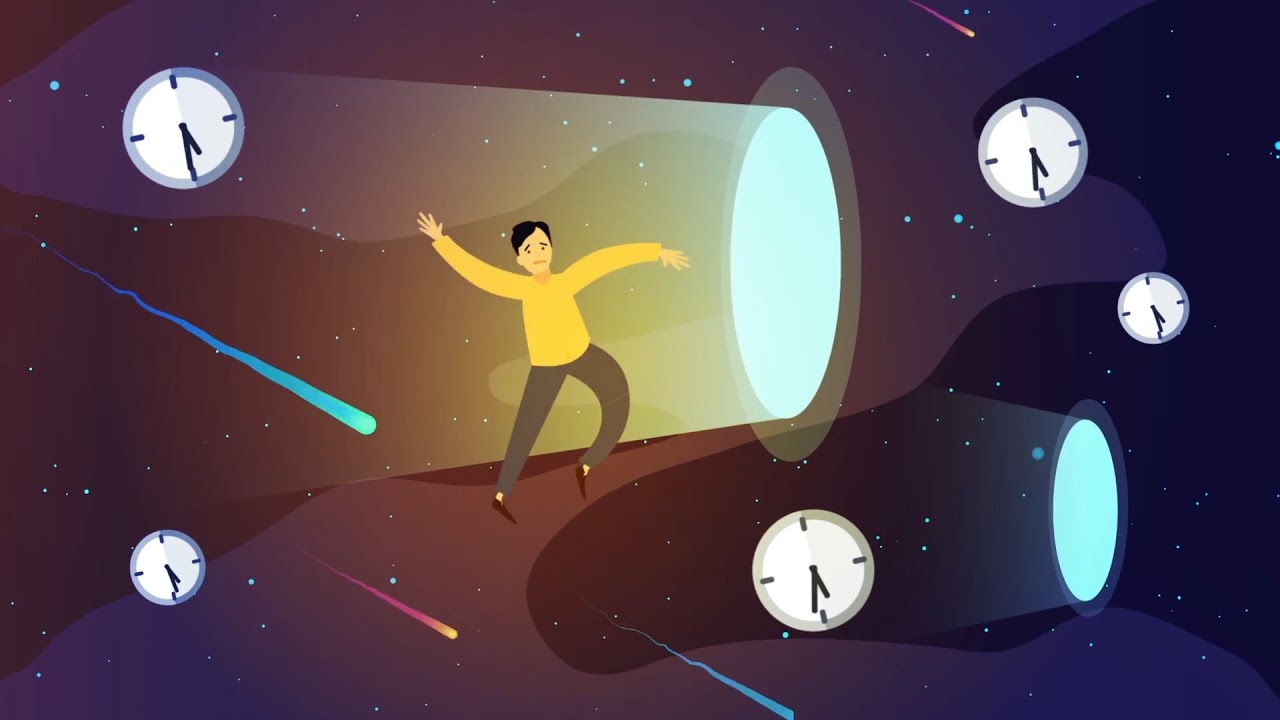
"Journeying Through Time: The Science and Feasibility of Time Travel"
Is Time Travel ACTUALLY Possible? The possibility of time travel has been a topic of fascination for centuries. While science fiction stories and movies have explored this concept, the question remains: is time travel actually possible? The answer to this question is not a simple one. While some scientists and researchers believe that time travel may be possible in the future, there are many theories and limitations to consider.
By mounika janyavula4 years ago in Education
Why Volunteering Is Essential for Community Development | Blake McCoy
Volunteering is a powerful force for community development and social change. It involves individuals giving their time and skills to help others and positively impact society. Volunteering can take many forms, from working in a local food bank to teaching children to read or participating in community clean-up efforts. Regardless of its form, volunteering is essential to community development.
By Blake McCoy4 years ago in Education
Understanding Jean-Jacques Rousseau's Philosophy of Education
Jean-Jacques Rousseau’s philosophy of education, as outlined in his book "Emile, or On Education," is based on the idea that children should develop a strong, virtuous character, the ability to reason, and a refined sense of sentiment. The goal is for children to become self-governing adults who can resist temptations, think for themselves, and appreciate the finer things in life.
By David M. Gegbai4 years ago in Education