stem
The four major disciplines propelling our students and our society forward; all about education in science, technology, engineering, and mathematics.
Making Sense of Yourself: A Journey to Self-Awareness and Authentic Living
In the fast-paced world we live in, it's easy to lose track of who we truly are amidst the noise of society’s expectations, external pressures, and daily distractions. Yet, making sense of yourself—understanding who you are, what you want, and where you're headed—is one of the most important journeys you'll ever embark on. Achieving clarity about your life and values isn’t just about finding answers; it’s about creating a relationship with yourself that allows you to embrace your strengths, acknowledge your weaknesses, and navigate life with confidence and authenticity. ### The Foundation: Self-Awareness The first step in making sense of yourself is developing self-awareness. This is the process of gaining insight into your own thoughts, emotions, and behaviors. Self-awareness allows you to examine who you are, what motivates you, and how you interact with the world around you. Without this clarity, it can be challenging to make decisions that align with your true desires. One effective way to build self-awareness is through reflection. Take time each day or week to pause and evaluate your thoughts and actions. Journaling can be a helpful tool here, allowing you to track your emotional responses and patterns over time. Ask yourself important questions: “What do I want from life? What makes me happy? What do I fear? What am I passionate about?” Another useful strategy is seeking feedback from trusted friends, family members, or mentors. Sometimes, others can offer perspectives on our behavior and motivations that we may overlook ourselves. Be open to receiving constructive criticism and allow yourself the space to grow from it. Self-awareness is not a destination, but a lifelong journey. As you change and evolve, so too should your understanding of yourself. ### The Importance of Knowing Your Values Once you gain some self-awareness, the next step is identifying your core values. Values are the guiding principles that shape your behavior, decisions, and relationships. They are the beliefs that define what’s important to you, whether it’s family, honesty, success, creativity, or kindness. When you live in alignment with your values, you feel fulfilled, centered, and at peace. On the other hand, when your actions are out of sync with your values, it can create internal conflict and dissatisfaction. To make sense of yourself, take time to reflect on what truly matters to you. What do you prioritize in life? Is it personal growth? Financial stability? Health? Relationships? Once you've identified your values, ask yourself whether your current actions reflect those principles. If not, consider what changes you need to make in order to live a more authentic life. For instance, if you value health but frequently neglect exercise or a balanced diet, it’s time to take action toward healthier habits that align with your beliefs. ### Embrace Your Strengths and Weaknesses Making sense of yourself involves an honest evaluation of both your strengths and weaknesses. Recognizing your strengths allows you to build on them, creating a sense of pride and self-confidence. However, acknowledging your weaknesses is equally important, as it enables you to understand areas in which you can improve and grow. Many people struggle with acknowledging their weaknesses because it can feel like a sign of failure. However, self-compassion is key here. Instead of viewing weaknesses as shortcomings, consider them as opportunities for personal growth. No one is perfect, and everyone has areas they can develop. Embrace your imperfections and be kind to yourself in the process. Incorporating this self-awareness into your daily life means setting realistic goals that challenge your weaknesses while leveraging your strengths. For example, if you recognize that you struggle with time management, you might begin using productivity techniques or setting clear goals to enhance your efficiency. By focusing on both your strengths and weaknesses, you empower yourself to reach new heights. ### Understanding Your Purpose Another essential component of making sense of yourself is finding your purpose. While this can seem like a daunting task, understanding your purpose gives you direction and meaning in life. Purpose is what drives you—it’s the reason you wake up every day and give your best effort. Many people go through life without ever fully understanding their purpose, while others discover it at a young age. If you’re unsure of your purpose, start by reflecting on the activities and passions that bring you joy and fulfillment. What do you naturally gravitate toward? What are you passionate about? What do you care about deeply? Your purpose might evolve over time as your life changes, and that’s okay. Some people find purpose in their careers, while others discover it in relationships, creative pursuits, or personal growth. Your purpose doesn’t need to be grand or world-changing to be meaningful. It simply needs to resonate with you on a deep level. ### Accepting the Journey of Self-Discovery Making sense of yourself is not a process that happens overnight. It’s a journey that requires patience, introspection, and a willingness to evolve. There will be times when you feel lost or uncertain, and that’s okay. These moments are often part of the process of growth. It’s important to embrace the uncertainty that comes with self-discovery. Life is constantly changing, and you will continue to change along with it. Rather than seeking to find a fixed identity, learn to embrace the fluidity of who you are. This mindset allows you to be more adaptable, open to new possibilities, and better equipped to navigate life’s ups and downs. ### The Role of Mindfulness in Making Sense of Yourself Mindfulness practices can greatly enhance the process of self-discovery. Mindfulness involves being fully present in the moment and observing your thoughts and feelings without judgment. This practice encourages self-compassion and helps you gain clarity about your desires, motivations, and reactions. By incorporating mindfulness techniques—such as meditation, deep breathing, or simply taking time to pause and observe your surroundings—you can gain greater insight into yourself and your needs. Mindfulness helps you listen to your intuition and avoid getting lost in external distractions. ### Conclusion: Embrace the Journey
By Nora Ariana2 years ago in Education
The Power of Grace: How Elegance, Mercy, and Kindness Transform Our Lives
**Grace: The Power of Elegance and Mercy** Grace is a word that carries profound depth and meaning, encompassing not only elegance and beauty but also mercy and forgiveness. It transcends cultures, languages, and philosophies, symbolizing a force that brings comfort, transformation, and connection. Grace is often celebrated in the arts, in literature, and in the spiritual realm. However, its true essence lies in how it manifests in everyday life, affecting our relationships, actions, and attitudes. ### Defining Grace At its core, grace can be described as a form of divine or human kindness that goes beyond what is expected. In Christianity, grace refers to the unearned love and favor of God toward humanity. It is the foundation of salvation, freely given without condition or merit. In a broader sense, grace also means an elegance or beauty of movement, form, or expression. It is seen in the delicate way someone walks, the eloquence with which they speak, or the subtle kindness they offer to others. It is an inner quality that radiates outward, a softening of the harsh edges of life. In the context of human interaction, grace often manifests as forgiveness, patience, and mercy—qualities that allow individuals to rise above conflicts and misunderstandings. It is about offering something unearned and unexpected, often when it is not deserved. It is the choice to act with compassion, to see the best in others even when their actions may not warrant it. ### Grace in Everyday Life
By Nora Ariana2 years ago in Education
Better Health, Better You: Unlock the Secrets to a Vibrant Life
foundation of a happy and successful life. It’s often said that “health is wealth,” and this truth becomes more evident as we age and realize that good health enables us to achieve our dreams, fulfill our responsibilities, and enjoy life to the fullest. Achieving better health is not just about avoiding illness—it’s about thriving physically, mentally, and emotionally. In this article, we will explore the key elements of achieving better health and how it directly impacts the quality of your life. ### The Importance of Better Health Good health is more than the absence of disease; it is a state of complete physical, mental, and social well-being. When you prioritize your health, you experience numerous benefits: 1. **Increased Energy Levels**: Proper nutrition, regular exercise, and sufficient rest give you the stamina to tackle daily tasks and pursue your passions. 2. **Improved Mood and Mental Clarity**: A healthy lifestyle boosts your mood and cognitive functions, making you more productive and emotionally stable. 3. **Reduced Risk of Chronic Diseases**: A commitment to healthy habits reduces your risk of conditions such as diabetes, heart disease, and obesity. 4. **Enhanced Longevity and Quality of Life**: Better health leads to a longer, more fulfilling life, allowing you to enjoy meaningful moments with loved ones. ### Nutrition: The Foundation of Better Health What you eat has a profound impact on your overall well-being. Nutrition provides the fuel your body needs to function optimally. To achieve better health, consider the following dietary principles: 1. **Embrace Whole Foods**: Focus on eating fresh fruits, vegetables, lean proteins, whole grains, and healthy fats. These foods are rich in essential nutrients and free from harmful additives. 2. **Hydration is Key**: Drink plenty of water throughout the day. Proper hydration aids digestion, regulates body temperature, and supports overall bodily functions. 3. **Practice Portion Control**: Overeating, even healthy foods, can lead to weight gain and other health issues. Listen to your body’s hunger and fullness cues. 4. **Limit Processed Foods**: Minimize your intake of sugary drinks, snacks, and processed meals that are high in unhealthy fats and added sugars. 5. **Balanced Eating**: Include a mix of macronutrients (carbohydrates, proteins, and fats) in your meals. Avoid extreme diets that eliminate entire food groups. ### Exercise: Moving Toward Better Health Physical activity is essential for maintaining and improving health. Regular exercise strengthens your heart, muscles, and bones, improves flexibility, and helps manage stress. Here’s how you can incorporate exercise into your routine: 1. **Find Activities You Enjoy**: Whether it’s dancing, swimming, yoga, or hiking, choose activities that make you happy to stay consistent. 2. **Aim for Consistency**: The World Health Organization recommends at least 150 minutes of moderate aerobic activity or 75 minutes of vigorous activity per week, combined with muscle-strengthening exercises twice a week. 3. **Make It a Habit**: Incorporate physical activity into your daily routine, such as taking the stairs instead of the elevator or going for a brisk walk during lunch breaks. 4. **Stretch and Recover**: Flexibility and recovery exercises like stretching, yoga, and adequate rest help prevent injuries and improve overall performance. ### Mental and Emotional Well-Being Better health is not just about your physical state; your mental and emotional health are equally important. A healthy mind supports a healthy body and vice versa. Consider these strategies for mental and emotional well-being: 1. **Practice Mindfulness**: Mindfulness techniques like meditation and deep breathing help reduce stress, improve focus, and promote emotional balance. 2. **Maintain Social Connections**: Strong relationships with family, friends, and community members provide emotional support and a sense of belonging. 3. **Set Realistic Goals**: Break down your goals into achievable steps. Celebrate small victories to stay motivated. 4. **Seek Help When Needed**: If you’re struggling with mental health challenges, don’t hesitate to seek professional support. Therapy and counseling can be life-changing. 5. **Cultivate Gratitude**: Practicing gratitude fosters a positive outlook and helps you appreciate the good things in life. ### Quality Sleep: The Unsung Hero of Health Sleep is often overlooked, but it plays a vital role in overall health. During sleep, your body repairs itself, consolidates memories, and restores energy levels. To improve your sleep quality: 1. **Stick to a Schedule**: Go to bed and wake up at the same time every day, even on weekends. 2. **Create a Relaxing Bedtime Routine**: Activities like reading, taking a warm bath, or meditating signal your body that it’s time to wind down. 3. **Limit Screen Time**: Avoid screens an hour before bed, as the blue light emitted can interfere with melatonin production and disrupt sleep. 4. **Optimize Your Sleep Environment**: Ensure your bedroom is quiet, dark, and at a comfortable temperature. ### Holistic Approach to Health A holistic approach integrates all aspects of health—physical, mental, emotional, and spiritual. Balance is key. For instance, you might combine healthy eating with regular exercise, stress management techniques, and social connections to create a comprehensive health strategy. Personal growth activities, such as learning new skills or pursuing hobbies, also contribute to overall well-being. ### Better Health, Better You: The Ripple Effect When you prioritize your health, the benefits extend beyond yourself. A healthier you can inspire and support your family, friends, and community. For example: 1. **Leading by Example**: Your commitment to a healthy lifestyle can motivate those around you to adopt similar habits. 2. **Being Present for Loved Ones**: Good health allows you to participate fully in the lives of those you care about, creating lasting memories. 3. **Contributing to Society**: A healthier population leads to reduced healthcare costs, increased productivity, and a stronger community. ### Final Thoughts Better health is not a destination; it’s a journey that requires consistent effort and self-care. By focusing on nutrition, exercise, mental well-being, quality sleep, and a holistic approach, you can achieve a healthier, happier, and more fulfilling life. Remember, every small step you take today brings you closer to becoming the best version of yourself. Make your health a priority, and watch as your life transforms for the better. After all, when you invest in your health, you’re investing in your future. Better health truly means a better you.
By Nora Ariana2 years ago in Education
"Unlock the Secrets to Your Credit Score: How to Improve It and Secure Your Financial Future
Your credit score plays a significant role in your financial life. Whether you're applying for a loan, renting an apartment, or even applying for a job, your credit score can impact the decisions made about you. However, many people don’t fully understand how credit scores work or what they mean for their financial health. In this article, we’ll break down the truth about credit scores and provide practical steps you can take to improve yours. ### **What Is a Credit Score?** A credit score is a three-digit number that reflects your creditworthiness, or how likely you are to repay borrowed money. Lenders use credit scores to assess the risk of lending you money. The higher your score, the more creditworthy you appear to lenders, and the better your chances of securing favorable terms on loans or credit cards. Credit scores range from 300 to 850, with higher scores representing better credit. Here’s a breakdown of how credit scores are typically classified: - **300 – 579:** Poor - **580 – 669:** Fair - **670 – 739:** Good - **740 – 799:** Very Good - **800 – 850:** Excellent ### **How Is Your Credit Score Calculated?**
By Nora Ariana2 years ago in Education
Turn $100 Into Wealth: A Beginner’s Guide to Smart Investing
Investing often feels out of reach for those with limited funds, but the truth is, you don’t need a fortune to get started. With as little as $100, you can begin building wealth and securing your financial future. The key lies in understanding your options, making informed decisions, and maintaining a long-term perspective. Here's how you can get started: ### **1. Understand the Power of Small Investments** Investing small amounts consistently can lead to significant wealth over time, thanks to the power of compounding. Compounding allows your earnings to generate even more earnings, multiplying your initial investment over the years. For instance, investing $100 with an average annual return of 8% could grow to over $1,000 in 10 years if you continue adding $100 each month. The earlier you start, the more time your money has to grow. ### **2. Set Your Financial Goals** Before investing, determine your objectives. Are you saving for retirement, a down payment on a home, or just looking to grow your wealth? Setting clear goals will help you choose the right investment vehicles. Ensure you also have an emergency fund with at least three to six months’ worth of living expenses before diving into investments. ### **3. Start with a Budget** If $100 feels like a lot to spare, review your budget to identify areas where you can cut back. Skipping a few dining-out meals or unnecessary subscriptions can free up funds for investing. Once you’ve saved your $100, you’re ready to make your money work for you. ### **4. Explore Your Investment Options** Even with just $100, you have a variety of investment opportunities to choose from: #### **a. Exchange-Traded Funds (ETFs)** ETFs are a great option for beginners. These funds pool money from multiple investors to purchase a diversified portfolio of stocks, bonds, or other securities. With many ETFs, you can start investing with as little as $100. They offer low fees and exposure to different industries, reducing your risk. #### **b. Fractional Shares** Gone are the days when you needed hundreds or thousands of dollars to buy a single stock. Fractional shares allow you to purchase a portion of a stock, enabling you to own shares in companies like Apple, Tesla, or Amazon with your $100. Many brokerage platforms now support fractional investing. #### **c. Mutual Funds** Some mutual funds have low initial investment requirements, making them accessible with $100. Like ETFs, they offer diversification by investing in a range of assets. However, they may have higher fees than ETFs, so research is essential. #### **d. Robo-Advisors** Robo-advisors are automated platforms that create and manage investment portfolios for you based on your goals and risk tolerance. Many robo-advisors have low minimums and fees, making them an excellent choice for beginners. Simply deposit your $100, and the platform will handle the rest. #### **e. High-Interest Savings Accounts or Certificates of Deposit (CDs)** If you’re not ready to take on much risk, consider high-interest savings accounts or CDs. While the returns are lower compared to stocks or ETFs, these options provide safety and liquidity, allowing you to grow your $100 risk-free. #### **f. Cryptocurrency** For those with a higher risk tolerance, cryptocurrency is another option. Platforms like Coinbase and Binance allow you to buy and trade crypto with as little as $100. However, be cautious, as the market is highly volatile. ### **5. Choose a Reliable Investment Platform** Selecting the right platform is critical when starting with $100. Look for platforms that offer low fees, user-friendly interfaces, and access to your preferred investment options. Some popular choices include: - **Robinhood** (great for fractional shares and ETFs) - **Acorns** (ideal for beginners looking to invest spare change) - **Betterment** (a popular robo-advisor) - **Fidelity** or **Charles Schwab** (traditional brokerages with no account minimums) ### **6. Keep Costs Low** With a small investment, fees can significantly impact your returns. Avoid platforms with high trading fees, management fees, or account minimums. Focus on low-cost index funds, ETFs, or fee-free trading platforms to maximize your $100. ### **7. Diversify Your Investments** Diversification is essential to managing risk. Even with $100, you can spread your investment across different assets. For example, you could invest $50 in an ETF and $50 in fractional shares of a stock. This approach reduces your exposure to the poor performance of any single asset. ### **8. Automate and Stay Consistent** To grow your investments over time, make investing a habit. Many platforms allow you to automate deposits, ensuring you invest consistently. Even if you can only add $10 or $20 a month, these contributions will compound over time. ### **9. Educate Yourself** Investing is a learning journey. Take advantage of free resources like blogs, podcasts, and YouTube channels to deepen your understanding. Knowledge is power, and the more you learn, the better decisions you’ll make. ### **10. Be Patient and Stay Committed** Investing is not a get-rich-quick scheme. Building wealth takes time, discipline, and a long-term perspective. Avoid the temptation to panic-sell during market downturns or chase trends. Trust in your strategy and stay the course.
By Nora Ariana2 years ago in Education
The Lonely Days: Finding Strength and Growth in Solitude
Loneliness is a universal experience, yet it manifests differently for each individual. Some encounter it in fleeting moments, while others endure extended periods of solitude. "The Lonely Days" is a phrase that encapsulates the emotional weight of these times, highlighting both the challenges and the opportunities that come with being alone. While loneliness can feel overwhelming, it is also a chance for introspection, growth, and the cultivation of inner strength. ### The Emotional Landscape of Loneliness Loneliness is often misunderstood as merely the absence of people, but it is more complex than that. One can feel lonely in a crowded room or completely at peace while alone. At its core, loneliness stems from a lack of meaningful connection, a yearning for deeper bonds with others or with oneself. During lonely days, the emotional toll can be significant. Feelings of sadness, isolation, and even self-doubt may surface. These emotions can create a vicious cycle, as the more lonely one feels, the harder it becomes to reach out to others. For some, this solitude might be imposed by circumstances such as relocation, loss, or estrangement. For others, it might be a self-imposed retreat to cope with life's challenges. ### The Hidden Gifts of Loneliness
By Nora Ariana2 years ago in Education
Why Every Entrepreneur Needs a Mentor: The Key to Accelerating Success
Starting a business is a journey full of challenges, uncertainties, and opportunities. For many entrepreneurs, it can feel like navigating through uncharted waters with no clear roadmap. While passion, ambition, and hard work are essential to any entrepreneur’s success, one key element that is often overlooked is mentorship. Having a mentor can be a game-changer in the entrepreneurial journey, offering guidance, advice, and a wealth of experience that can accelerate growth and success. In this article, we’ll explore why every entrepreneur needs a mentor and how their wisdom and insights can make all the difference. ### 1. **Accelerating Learning and Growth** Entrepreneurship is a constant learning experience. There are numerous lessons to be learned, from business management to marketing, finances, and leadership. While trial and error is a valuable way to learn, it can also be time-consuming and costly. A mentor can fast-track an entrepreneur's learning process by sharing their own experiences and mistakes. A mentor’s guidance can help an entrepreneur avoid common pitfalls, saving them from costly errors that could derail their business. They can offer advice on what strategies worked for them and what didn’t, allowing the entrepreneur to make more informed decisions and avoid reinventing the wheel. Mentors provide a wealth of knowledge gained from years of experience, allowing mentees to learn practical solutions to real-world problems. By tapping into this knowledge, entrepreneurs can accelerate their growth and reduce the learning curve. Instead of stumbling through challenges alone, they can have someone by their side offering valuable perspectives and strategies. ### 2. **Emotional Support and Motivation** The entrepreneurial journey can often feel isolating, with many ups and downs along the way. There will be moments of self-doubt, burnout, and frustration. Having a mentor provides emotional support during these difficult times. A mentor understands the challenges that come with entrepreneurship and can offer encouragement, reassurance, and a listening ear when things get tough. Mentors also play a crucial role in keeping entrepreneurs motivated. They remind their mentees of their strengths, celebrate small victories, and help them see the bigger picture. This kind of support can help entrepreneurs stay focused on their long-term goals, even when they face setbacks. Knowing that someone believes in them can provide the confidence boost needed to continue pushing forward. A mentor can also help entrepreneurs manage stress and maintain a healthy work-life balance, ensuring that they don’t burn out in pursuit of their goals. This emotional support can be invaluable for entrepreneurs who may otherwise feel alone in their struggles. ### 3. **Expanding Networks and Opportunities** One of the most significant advantages of having a mentor is the access to their network. Experienced mentors typically have a vast network of contacts in various industries, from investors and partners to potential clients and collaborators. These connections can open doors that would otherwise remain closed. A mentor can introduce an entrepreneur to key players in their industry, recommend potential collaborators, or even provide introductions to investors who can help fund their business. In some cases, mentors may even offer direct business opportunities, helping their mentees gain exposure and grow their enterprises. Networking is a critical component of success in business, and a mentor can provide valuable connections that can help entrepreneurs take their ventures to the next level. Through these connections, entrepreneurs can access resources, funding, and opportunities that would be difficult to secure on their own. ### 4. **Accountability and Discipline** One of the biggest challenges for entrepreneurs is staying on track and remaining disciplined in their efforts. With so many tasks to juggle and a constantly shifting business landscape, it’s easy to become distracted or lose focus. A mentor acts as an accountability partner, ensuring that the entrepreneur stays committed to their goals and remains disciplined in their approach. Mentors help entrepreneurs set clear objectives and hold them accountable for achieving them. They provide regular check-ins, offering constructive feedback and guiding their mentees through obstacles. Knowing that someone is holding them accountable can motivate entrepreneurs to work harder and stay on course, even when they encounter challenges. This sense of accountability can be especially important for solo entrepreneurs or those just starting out. Having a mentor to help them stay disciplined and focused ensures that they are consistently working toward their goals and making steady progress in their business. ### 5. **Providing a Different Perspective** As an entrepreneur, it’s easy to get caught up in the day-to-day operations of the business and lose sight of the bigger picture. Mentors offer an outsider’s perspective, helping entrepreneurs see things from a different angle. They can provide fresh insights and alternative solutions that may not have been considered. A mentor’s experience allows them to see beyond the immediate challenges and identify long-term opportunities and risks. They can challenge entrepreneurs to think critically about their strategies, refine their vision, and make better decisions. Sometimes, an entrepreneur might be too close to a problem to see it clearly, but a mentor can offer a more objective and balanced viewpoint. This different perspective can be invaluable when making important decisions, from product development to marketing strategies or hiring choices. Mentors can also help entrepreneurs spot potential issues before they become major problems, providing guidance on how to navigate obstacles with foresight and wisdom. ### 6. **Building Confidence and Self-Belief** Self-confidence is a critical trait for any entrepreneur, but it’s not always easy to cultivate, especially during difficult times. A mentor helps build confidence by offering constructive feedback, celebrating achievements, and providing reassurance in moments of doubt. They remind entrepreneurs of their abilities and help them recognize their potential, even when challenges seem insurmountable. With a mentor’s encouragement, entrepreneurs can develop the self-belief needed to take risks, make bold decisions, and push through adversity. A mentor’s faith in their mentee can serve as a powerful motivator, helping them trust their instincts and believe in their business’s success. Mentorship helps entrepreneurs overcome imposter syndrome and the fear of failure that often holds them back from taking action. With a mentor’s guidance, they can build the resilience and self-confidence required to succeed. ### 7. **Learning from Mistakes Without the Consequences** One of the most valuable aspects of mentorship is the ability to learn from someone else’s mistakes without experiencing the same negative consequences. Mentors have already faced the challenges and setbacks that entrepreneurs are likely to encounter. By sharing their experiences, mentors can help mentees avoid making the same mistakes. A mentor can explain how they handled specific business challenges, such as managing cash flow, dealing with difficult clients, or navigating market fluctuations. By learning from these real-world experiences, entrepreneurs can make better decisions and avoid costly errors that could harm their business. Instead of reinventing the wheel, entrepreneurs can benefit from the lessons their mentors have learned, applying those insights to their own ventures without facing the same risks and pitfalls. ### Conclusion
By Nora Ariana2 years ago in Education
Conquer Your Fear: Unlock the Power to Take Risks and Transform Your Life
Fear is a natural part of life. It’s an emotion that signals the presence of potential danger or discomfort, often leading us to hesitate in the face of new challenges or opportunities. While fear is a protective mechanism, it can also become a barrier to personal growth, progress, and success. Overcoming fear and taking calculated risks is an essential skill for achieving any kind of success, whether it’s in your career, relationships, or personal growth. In this article, we will explore practical steps to overcome fear and embrace risks, helping you move past the limitations that hold you back. ### 1. Understand Your Fear
By Nora Ariana2 years ago in Education
Unlock Your Inner Strength: The Ultimate Guide to Building Mental Toughness and Resilience
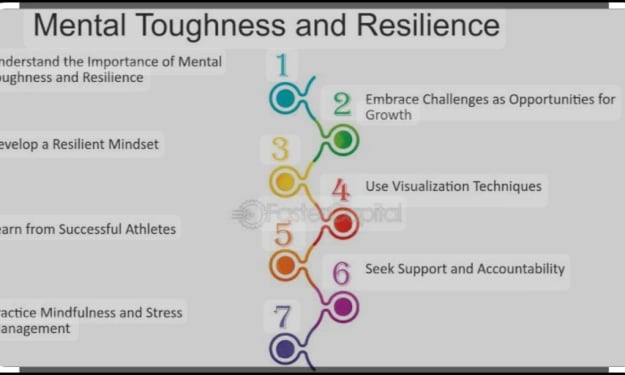
Mental toughness and resilience are crucial qualities that can help individuals navigate challenges, overcome obstacles, and achieve personal and professional success. Whether you're facing adversity in your career, personal life, or health, building mental toughness allows you to cope with stress, stay focused on your goals, and keep moving forward despite difficulties. In this article, we will explore practical strategies for developing mental toughness and resilience, along with the mindset shifts needed to thrive under pressure. ### What is Mental Toughness? Mental toughness is the ability to stay calm and focused, to persist through adversity, and to maintain a positive outlook even in the face of setbacks. It is often associated with athletes who push themselves beyond their limits, but mental toughness is applicable in any aspect of life. Whether it's maintaining composure during a difficult conversation, staying productive when motivation wanes, or recovering from a career setback, mental toughness allows you to respond constructively. ### What is Resilience? Resilience, on the other hand, is the ability to bounce back after facing hardship, trauma, or failure. It is the quality that allows individuals to face tough situations, endure stress, and recover quickly. Resilience is about building inner strength and adaptability, which helps you maintain stability and mental well-being in challenging times. Both mental toughness and resilience are interconnected and can be developed through consistent practice and the right mindset. ### Steps to Building Mental Toughness and Resilience 1. **Develop a Growth Mindset** The first step in building mental toughness and resilience is cultivating a growth mindset. This concept, coined by psychologist Carol Dweck, refers to the belief that abilities and intelligence can be developed through effort, learning, and perseverance. People with a growth mindset view challenges as opportunities for growth rather than insurmountable obstacles. They understand that failure is a natural part of the learning process and not an indicator of their worth or abilities. To adopt a growth mindset: - Embrace challenges as opportunities to grow. - Learn from mistakes and use them as stepping stones to success. - Focus on effort and progress rather than immediate outcomes. - Replace self-doubt with curiosity and a desire to improve. 2. **Practice Self-Awareness** Mental toughness and resilience are rooted in self-awareness. To develop these qualities, you need to be in tune with your thoughts, emotions, and behaviors, especially in high-stress situations. Self-awareness allows you to recognize when you’re feeling overwhelmed, frustrated, or discouraged, and it gives you the opportunity to take a step back and regain control. To improve self-awareness: - Pay attention to your thoughts and feelings throughout the day. - Reflect on how you respond to stress and challenges. - Use journaling as a tool to process emotions and track your progress. - Practice mindfulness techniques like meditation or deep breathing to stay present. 3. **Set Realistic and Challenging Goals** One of the most effective ways to build mental toughness is by setting clear, realistic, and challenging goals. Goals give you direction and purpose, and working toward them provides a sense of achievement, which strengthens resilience. The key is to break your goals into manageable steps so that you can build momentum and avoid feeling overwhelmed by large tasks. To set goals that foster mental toughness: - Use the SMART framework: Specific, Measurable, Achievable, Relevant, and Time-bound. - Focus on progress, not perfection. - Celebrate small victories along the way to stay motivated. - Be flexible and adjust your goals as needed based on changing circumstances. 4. **Embrace Discomfort** Building mental toughness requires stepping out of your comfort zone regularly. While it's easy to avoid discomfort, the ability to face discomfort head-on and push through it is what differentiates mentally tough individuals. This might mean taking on challenges that stretch your limits or confronting situations that make you anxious. By intentionally seeking discomfort, you can develop the resilience needed to handle life's inevitable challenges. To embrace discomfort: - Set yourself challenges that push your limits, such as taking on a difficult project or learning a new skill. - Face your fears by gradually exposing yourself to situations that make you uncomfortable. - Recognize that discomfort is often a sign of growth and transformation. 5. **Cultivate Emotional Regulation** Emotions can cloud your judgment, reduce your ability to think clearly, and hinder your progress during difficult times. Cultivating emotional regulation is vital for mental toughness because it allows you to control your reactions and make decisions based on logic and long-term goals, rather than impulse or frustration. This skill enables you to stay calm and collected in high-pressure situations, making it easier to persevere through challenges. To develop emotional regulation: - Practice deep breathing techniques when you feel stressed or overwhelmed. - Use positive affirmations to shift your mindset during tough times. - Take time to pause and reflect before responding in emotionally charged situations. - Develop healthy coping mechanisms, such as exercise or creative hobbies, to release negative emotions. 6. **Build a Support System** Resilience is not about going it alone—it's about knowing when to ask for help and seeking support from others. Building a strong support system of friends, family, mentors, or colleagues can help you stay resilient when life gets tough. Surrounding yourself with positive influences who can provide encouragement, perspective, and advice helps you navigate difficult situations more effectively. To build a support system: - Nurture relationships with people who share your values and interests. - Seek out mentors or role models who can guide you through challenges. - Reach out for help when you feel overwhelmed or need advice. - Be open to offering support to others, which can strengthen the mutual bond and sense of community. 7. **Focus on the Present Moment** When facing adversity, it's easy to get caught up in the “what ifs” or dwell on past mistakes. Mental toughness requires you to focus on the present moment, where you have the power to make decisions and take action. By staying present, you can avoid feeling paralyzed by fear or regret, and instead focus on what you can control right now. To focus on the present moment: - Practice mindfulness techniques, such as deep breathing or grounding exercises. - Break tasks down into smaller, manageable steps to avoid feeling overwhelmed. - Avoid overthinking or ruminating on past failures by focusing on your current actions. - Cultivate gratitude by reflecting on the positive aspects of your life.
By Nora Ariana2 years ago in Education
Stop Comparing, Start Living: Unlock Your True Potential Today
In today’s hyper-connected world, it’s easy to fall into the trap of comparing yourself to others. Social media platforms showcase carefully curated versions of people's lives, making it seem like everyone but you is living their dream life. Whether it’s career achievements, physical appearance, relationships, or financial success, comparing yourself to others can be toxic. It can steal your joy, diminish your self-worth, and hinder your progress. If you’ve found yourself caught in this cycle, it’s time to break free. Here are some compelling reasons why you should stop comparing yourself to others and focus on your unique journey. ### **Comparison Steals Your Joy** When you compare yourself to others, you often focus on what you lack rather than what you have. This negative perspective can overshadow your accomplishments and make you feel inadequate. For instance, you might see someone post about their expensive vacation and suddenly feel dissatisfied with your life, even though you were perfectly content just moments ago. The truth is, joy comes from appreciating what you have, not longing for what others possess. When you stop comparing, you create space for gratitude and genuine happiness. ### **Social Media is Not Reality** It’s important to remember that social media is a highlight reel, not real life. Most people only share their successes, milestones, and happy moments while hiding their struggles and failures. When you compare yourself to these polished images, you’re comparing your full story—challenges, insecurities, and all—to someone else’s edited version. This distorted perception can lead to feelings of inadequacy, even though you’re likely doing better than you think. ### **You’re Running a Different Race** Life isn’t a competition; it’s a personal journey. Everyone has their own path, and comparing your progress to someone else’s is like comparing apples to oranges. You don’t know their full story, just as they don’t know yours. For instance, someone might achieve career success at 25, while another person hits their stride at 50. Both stories are valid and meaningful. When you focus on your unique journey, you can set realistic goals and appreciate your progress without the burden of comparison. ### **It Damages Your Self-Worth** Constantly comparing yourself to others can erode your self-esteem. You might start to believe that you’re not smart enough, attractive enough, or successful enough. This negative self-talk can be incredibly harmful, leading to anxiety, depression, and a diminished sense of self-worth. Instead of measuring yourself against others, practice self-compassion. Acknowledge your strengths and accomplishments, and remind yourself that you’re worthy just as you are. ### **Comparison is an Endless Cycle** No matter how successful or accomplished you become, there will always be someone who appears to be doing better. If you base your happiness and self-worth on how you measure up to others, you’ll never find peace. Breaking free from this cycle requires shifting your focus inward. Ask yourself: “What makes me happy?” and “What are my personal goals?” When you align your actions with your values, you can find fulfillment that doesn’t rely on external validation. ### **It Distracts You From Your Goals** When you’re busy comparing yourself to others, you’re not focusing on your own growth. This distraction can prevent you from achieving your goals and realizing your potential. For example, instead of envying someone else’s success, use their achievements as inspiration. What can you learn from their journey? How can you apply those lessons to your own life? Channeling your energy into self-improvement rather than comparison can lead to meaningful progress. ### **You Don’t See the Full Picture** Everyone has their struggles, even if they don’t show them. That colleague who seems to have it all together might be dealing with personal challenges you know nothing about. The influencer with a perfect life might be battling insecurities behind the scenes. When you compare yourself to others, you’re comparing your inside to their outside. This incomplete picture is not a fair or accurate basis for judgment. ### **How to Break Free From Comparison** Breaking the habit of comparison takes time and effort, but it’s worth it. Here are some strategies to help you focus on your own journey: 1. **Practice Gratitude** Shift your focus from what you don’t have to what you do have. Write down three things you’re grateful for each day. This simple practice can help you appreciate your life and reduce the urge to compare. 2. **Set Personal Goals** Define your own version of success. What do you want to achieve, and why? Setting specific, measurable, and meaningful goals can give you a sense of purpose and direction, making it easier to ignore external comparisons. 3. **Limit Social Media Use** If social media triggers feelings of inadequacy, consider taking a break or unfollowing accounts that make you feel bad about yourself. Instead, follow people who inspire and uplift you. 4. **Celebrate Your Wins** No matter how small, celebrate your accomplishments. Each step forward is progress, and acknowledging your achievements can boost your confidence and motivation. 5. **Focus on Personal Growth** Shift your focus from competition to self-improvement. Ask yourself how you can be a better version of yourself today than you were yesterday. 6. **Surround Yourself With Positive People** Spend time with people who support and encourage you. A strong support system can remind you of your worth and help you stay focused on your own path.
By Nora Ariana2 years ago in Education
Unlocking Your Potential: How to Become a More Productive Person
In today’s fast-paced world, productivity has become a buzzword for success. Being productive doesn’t mean working harder or longer hours; it means working smarter and accomplishing more in less time with less stress. Productivity is about achieving your goals efficiently while maintaining balance in your life. Here are some strategies to help you become a more productive person and maximize your time and energy. ### 1. **Set Clear Goals** Productivity starts with knowing what you want to achieve. Set clear, specific, and measurable goals for yourself. These can be daily, weekly, or long-term objectives. For instance, instead of saying, “I want to get fit,” set a goal like, “I will exercise for 30 minutes, five days a week.” Clear goals give you direction and a sense of purpose, making it easier to stay focused.
By Nora Ariana2 years ago in Education