stem
The four major disciplines propelling our students and our society forward; all about education in science, technology, engineering, and mathematics.
• 10 Ways to Improve Your Mental Health
10 Ways to Improve Your Mental Health Mental health plays a crucial role in our overall well-being. Just as physical health requires care and attention, mental health also demands conscious efforts to maintain balance and stability. A healthy mind helps you handle stress, build relationships, and live a fulfilling life. Below are ten practical ways to improve your mental health and promote emotional well-being. 1. Prioritize Physical Activity**
By Nora Ariana2 years ago in Education
‘Exploring Your Potential: Simple Steps Towards Self-Improvement’
In this fast-paced life, we often get caught up in our daily routines and forget to pay attention to ourselves. We may be content with what we have, but deep down, there is a yearning to be the best version of ourselves. Self-improvement is not about being perfect, but about constantly evolving and exploring the potential that lies within us. Let's explore some simple steps that can help us on this journey.
By Muhammad Nuh Nurus Shobah2 years ago in Education
• How to Break Bad Habits and Build New Ones
**How to Break Bad Habits and Build New Ones** Habits shape our daily lives, influencing our decisions, productivity, and overall well-being. While positive habits can propel us toward success, bad habits often hold us back and hinder personal growth. Breaking free from negative patterns and replacing them with healthier alternatives may seem challenging, but with the right approach and mindset, it is achievable. This article will explore practical steps for breaking bad habits and building new ones that stick. ### **Understanding Habits**
By Nora Ariana2 years ago in Education
Rest and Prosperity: Why Extraordinary Rest is Central for Thriving. Content Warning. AI-Generated.
Rest is one of the most focal pieces of human life, yet it is as a rule disregarded in our fast-moving, current world. While numerous people center around work, public action, and entertainment, rest is frequently relinquished. Regardless, the meaning of good rest could never be more critical. It isn't just a period for rest; fundamental communication impacts each piece of our physical, mental, and near and dear success. In this article, we will explore why extraordinary rest is essential for overall prosperity and how it affects various parts of our lives. The Investigation of Rest Rest is a perplexing natural cycle that incorporates different stages, each expecting a principal part in staying aware of prosperity. There are two crucial kinds of rest: **REM (Rapid Eye Movement)** rest and **non-REM** rest. Non-REM rest contains three stages, going from light reprieve to significant rest, while REM rest is the stage where most dreaming occurs. Together, these stages structure a rest cycle, which repeats a couple of times throughout the night. During rest, the body goes through basic cycles, for instance, tissue fix, muscle advancement, and the appearance of improved synthetic compounds. The brain moreover uses this valuable chance to combine memories, process sentiments, and get out harms. Without adequate rest, these capacities are vexed, inciting a wellspring of unfriendly results on prosperity. Genuine Clinical Benefits of Good Rest 1. Helps Immune Ability Rest expects a huge part in sustaining the safe structure. During significant rest, the body produces cytokines, proteins that help with combating illnesses and disturbances. Constant absence of rest weakens the safe response, making you more defenseless to afflictions like the typical cold, flu, and, shockingly, long-stretch circumstances. 2. Maintains Heart Prosperity Nonattendance of rest has been associated with an extended bet of cardiovascular diseases, including hypertension, coronary episodes, and strokes. During rest, the beat and circulatory strain drop, permitting the cardiovascular system an amazing chance to rest and recover. Awful rest upsets this association, overpowering the heart. 3. Assists with Weight The board Rest impacts the synthetics that are immediate longing and hankering, similar to ghrelin and leptin. Right when you don't get adequate rest, ghrelin (the hankering compound) increases, while leptin (the satiety substance) reduces. This anomaly can incite pigging out and weight gain. Besides, sad rest reduces energy levels, making it harder to stay dynamic and keep a sound weight. 4. Progresses Muscle Fix and Improvement For contenders and well-being enthusiasts, rest is central for muscle recovery. During significant rest, the body releases advancement synthetic compounds that support tissues and gather muscle. Without adequate rest, the body fights to recover from genuine exertion, provoking reduced execution and extended danger of injury. Mental Prosperity: Benefits of Good Rest 1. Overhauls Mental Capacity Rest is fundamental for mind prosperity. It further creates obsession, decisive abilities to reason, and thinking abilities. During rest, the frontal cortex cycles and sorts out information from the day, which is crucial for learning and memory. Nonappearance of rest impedes mental ability, inciting awful focus, interruption, and reduced effectiveness. 2. Coordinates Outlook and Sentiments Rest and close-to-home well-being are significantly interconnected. Awful rest can provoke irritability, attitude swings, and extended sensations of uneasiness. Progressing absence of rest is a basic risk factor for close-to-home wellbeing issues like disquiet and despairing. Of course, extraordinary rest controls sentiments and advances an uplifting point of view on life. 3. Decreases Strain Rest helps the body with administering strain by cutting down cortisol levels, the synthetic at risk for the "endurance" response. Exactly when you're particularly revived, you're more ready to manage challenges and stay aware of up-close and personal harmony. On the other hand, nonappearance of rest increases cortisol levels, making you more prone to strain and disquiet. The Impact of Lay on Everyday Presence 1. Further creates proficiency and execution Whether you're a student, capable, or homemaker, extraordinary rest is key for ideal execution. It further develops imaginativeness, basic capacities to think, and abilities to think. On the other hand, absence of rest prompts depletion, reduced focus, and horrendous appearance in everyday tasks. 2. Builds up associations Rest impacts your physical and mental prosperity as well as your social correspondences. Exactly when you're by and large around rested, you're all the more calm, sympathetic, and open, which strengthens relationships with family, friends, and accomplices. Absence of rest, anyway, can incite irritability and conflicts. 3. Works on private fulfillment Extraordinary rest adds to a general sensation of thriving. It upholds energy levels, further creates perspective, and works on the ability to see the value throughout everyday life. People who center around rest regularly report more raised degrees of euphoria and life satisfaction. Ways of assisting foster rest quality 1. Stick to a Rest Plan Raise a ruckus around town and wake up all the while reliably, even on closures of the week. This controls your body's inside clock and further creates rest quality. 2. Make a Relaxing Rest Time Timetable Partake in calming practices before bed, such as examining, thinking, or scouring. Swear off empowering practices like sitting before the TV or using electronic devices. 3. Advance Your Rest Environment Make your room accommodating for rest by keeping it dull, quiet, and cool. Put assets into a pleasing dozing pad and cushions to ensure authentic assistance. 4. Limit Caffeine and Alcohol Do whatever it takes not to drink caffeine or alcohol close to rest time, as they can block your ability to fall asleep and remain oblivious. 5. Work out reliably Dynamic work progresses better with rest, yet endeavor to avoid energetic action close to rest time, as it could have the opposite effect. 6. Regulate Strain Practice pressure-reducing methodologies like significant breathing, yoga, or journaling to calm your mind before bed. End Extraordinary rest isn't a luxury; it is a requirement for a sound and fulfilling life. It impacts each piece of our thriving, from real prosperity and mental clearness to significant balance and social joint efforts. By zeroing in on lay and taking on sound rest penchants, we can open the endless benefits it offers and have more blissful, better presences. Remember, a respectable night's rest is the foundation of a valuable and playful day. Along these lines, center around rest and get the advantages of a particularly revived body and mind. This article includes the meaning of rest and gives vital clues to additionally foster rest quality, underlining its part in being by and large and thriving.
By SUDHIR MALLICK2 years ago in Education
4 Different Ways Remote Relationships Influence Psychological Wellness. Content Warning. AI-Generated.
Remote relationships (LDRs) are not just about miles—they're about the yearning in your heart, the hurt of missing somebody who means the world to you, and the strength it takes to clutch love when life pulls you apart. Consistently turns into a blend of trust, torment, and calm strength as you explore the difficulties of being separated. These connections, while delightful, can profoundly influence psychological wellness, frequently testing your feelings in manners you won't ever envision. 1. Close to home Prosperity and Stress Nothing sets you up for the void that accompanies being away from the individual you love most. The mornings feel colder, the evenings lonelier, and, surprisingly, the most joyful minutes feel deficient on the grounds that they aren't there to impart them to you. The nonattendance turns into a consistent throb—a void that nothing else can fill. You miss their touch, their voice, the manner in which they snicker, and, surprisingly, the little, ordinary things like sitting together peacefully. There are moments when the depression feels deplorable, similar to a significant burden pushing on your chest. You look at old photographs or re-read messages, expecting to feel nearer to them, yet it frequently leaves you with tears in your eyes, wanting to be right close to you. This profound strain can prompt misery, nervousness, and stress. The overthinking creeps in—"Imagine a scenario where this distance transforms us?" or "Consider the possibility that I'm not sufficient for this?" On extreme days, it can feel like the miles between you are perpetual, and the aggravation feels like a lot to deal with. Yet, in those snapshots of sadness, love turns into your anchor. Remind yourself why you're doing this. Talk about your thoughts with your accomplice—don't conceal your misery or depression. Allow them to comfort you with their words, their consolations, and their commitment that this distance is short-lived. Clutch the expectation that one day, you'll be together once more, and this aggravation will seem OK. 2. Trust and Relationship Strength Trust in a remote relationship is both your most prominent strength and your most profound weakness. At the point when you can't see your accomplice consistently, questions can discreetly crawl into your brain. "Do they miss me however much I miss them?" or "Consider the possibility that another person gives them what I can't at the present time." These contemplations, however excluded, can make a profound tempest inside you, leaving you feeling restless and unreliable. The apprehension about losing the individual you love to the distance can overpower. You could end up checking your telephone fanatically, adding something extra to their messages, or stressing when they don't call at the standard time. Each unanswered message feels like a break in your heart, and each deferment feels like a developing distance between your spirits. Yet, trust is the establishment that keeps your affection alive, even across miles. Fabricating and keeping up with trust implies being powerless—sharing your apprehensions, your uncertainties, and your fantasies with your accomplice. Let them know while you're feeling terrified. Allow them to help you to remember their adoration and responsibility. Commend the little snapshots of consolation, similar to when they send a smart message or call out of the blue to hear your voice. Distance doesn't debilitate love; it tests it. Furthermore, when you trust one another, that adoration becomes immovable. Continue to advise yourself that the miles don't characterize your relationship—your responsibility and association do. 3. Correspondence In a far-removed relationship, correspondence isn't simply significant—it's the beginning and end. Without the capacity to hold one another, your words become the extension that associates your hearts. In any case, here and there, even correspondence can feel like a test. Time regions, occupied timetables, or even a basic misconception can leave you feeling disengaged. A missed call or a deferred answer can feel like a disaster for your heart, making you keep thinking about whether they're floating away. What's more, there are days when words simply don't feel enough—when no measure of messaging or calling can make up for the shortfall of not having the option to see their face or hear their chuckling face to face. Yet, correspondence is where your adoration tracks down strength. Set aside a few minutes for one another, in any event, when life gets going. Plan standard video calls, share photographs of your day, or compose genuine messages to remind them of the amount they mean to you. Try not to simply discuss the enormous things—share the little, apparently inconsequential subtleties as well. Inform them concerning the melody you heard that helped you to remember them, or the manner in which you grinned pondering a memory you shared. At the point when clashes emerge, face them with persistence and love. Pay attention to their side, express your sentiments transparently, and recollect that you're both in the same boat. Correspondence isn't just about tackling issues—it's tied in with keeping the flash alive, in any event, when miles separate you. 4. Actual Closeness Maybe the hardest piece of a remote relationship is the absence of actual closeness. Nothing can supplant the glow of their embrace, the solace of clasping hands, or the enchantment of basically being in their presence. The yearning for actual closeness turns into a profound hurt, one that words or virtual motions can't completely ease. There are moments when you frantically wish for only one touch, one kiss, or one night to be in their arms. Watching different couples share those moments in person can cause you to feel like something is absent in your own romantic tale. The distance can create a feeling of dissatisfaction, and on occasion, it seems like your affection exists in two separate universes. However, actual closeness isn't just about touch—it's about the association you share. Track down innovative ways of remaining nearby from a far distance. Send manually written letters that they can hold and esteem. Plan virtual dates where you cook together, watch motion pictures, or just talk for a really long time. Shock them with smart gifts that help them to remember your adoration. What's more, when you do rejoin, those snapshots of actual association will feel like wizardry. Each embrace will be tighter, every kiss better, and each common second will remind you why the distance was worth the effort. Conquering the Difficulties Remote relationships are an excursion of affection, trust, and strength. They show you the strength of your heart and the profundity of your responsibility. The following are a couple of ways of exploring the inner difficulties: 1. Clutch Trust: Advise yourself that the distance is impermanent, yet your adoration is for eternity. Center around the day you'll at long last be together and allowed that desire to direct you. 2. Make Shared Objectives: Plan visits, discuss your future together, and set achievements to anticipate. Having a common vision fortifies your bond. 3. Practice taking care of oneself: Don't lose yourself in the relationship. Deal with your psychological and actual well-being, seek after your interests, and encircle yourself with energy. 4. Praise the Little Triumphs: Each video call, each act of kindness, and each common chuckle is an indication of your affection. Value those minutes. End Remote relationships are not for the cowardly. They request tolerance, penance, and an enduring confidence in your affection. In any case, they likewise show you the force of association, the excellence of responsibility, and the flexibility of the human heart. Indeed, the distance will challenge you. There will be evenings loaded up with tears, long periods of yearning, and snapshots of uncertainty. However, there will likewise be calls that make you grin, messages that make your heart race, and reunions that remind you why it was all worth the effort. Distance doesn't debilitate love—it reinforces it. It demonstrates that in any event, when isolated by miles, two hearts can pulsate as one. Thus, clutch your adoration, sustain it with trust and care, and let the expectation of being together again keep your hearts associated. Since eventually, love generally tracks down a way.
By SUDHIR MALLICK2 years ago in Education
Effective Home Care for Patients with Heart Conditions
*Effective Home Care for Patients with Heart Conditions** https://shrinkme.ink/manageheartathome Heart disease is a major killer worldwide, as the American Heart Association points out. It's crucial to manage heart conditions at home to control heart health and improve well-being. This means more than just treating symptoms; it's about preventing serious problems.
By EMMANUEL S JOHN2 years ago in Education
How to Break Bad Habits and Build New Ones
**How to Break Bad Habits and Build New Ones** Habits are the foundation of our daily lives. They shape the way we live, the things we accomplish, and even the way we view the world. Habits are the small, repeated actions we engage in without much thought. Some of these habits are good for our health, productivity, and happiness, while others can be harmful or hold us back from reaching our goals. Breaking bad habits and building new, better ones is a common aspiration for many people, but the journey requires commitment, patience, and self-discipline. ### Understanding Habits: The Science Behind Them Before diving into how to break bad habits and form new ones, it’s important to understand what habits are and how they work. Habits are formed through a process called **habit loop**. This process involves three main components: 1. **Cue**: A trigger that initiates the habit. It could be an emotion, a time of day, or a situation that prompts the behavior. 2. **Routine**: The behavior itself, whether it’s a good or bad habit. 3. **Reward**: The benefit or satisfaction derived from the habit. This reward reinforces the habit, making it more likely to be repeated.
By Nora Ariana2 years ago in Education
Facts About Dying: What Happens When You’re Dying
Facts About Dying: What Happens When You’re Dying Learning about dying can help people and their families prepare for the end. Each death is unique, with many factors at play. Knowing the symptoms and changes can bring comfort and acceptance
By EMMANUEL S JOHN2 years ago in Education
The Importance of Daily Routines for Productivity
**The Importance of Daily Routines for Productivity** In the fast-paced world we live in, many people find themselves struggling to stay focused, meet deadlines, and achieve their goals. Whether you're a student, professional, or entrepreneur, managing your time effectively can feel like an impossible task. However, one of the most effective ways to boost your productivity and achieve success is by implementing a daily routine. A daily routine is a set schedule of activities or habits that you follow every day. It’s about creating structure and consistency in your day, which can ultimately lead to increased productivity, reduced stress, and greater overall well-being. While it might sound simple, the power of a daily routine cannot be overstated. In this article, we will explore why establishing a daily routine is essential for productivity, and how you can design one that works for you. ### 1. **Provides Structure and Organization** One of the main reasons a daily routine is essential for productivity is that it provides structure and organization. When you have a set routine, you know exactly what tasks need to be completed at specific times of the day. This reduces the chances of procrastination and decision fatigue. Without a routine, you may find yourself scrambling to figure out what to do next, wasting valuable time, and feeling disorganized. Having a routine, on the other hand, ensures that you stay on track and focus on what matters most. You can prioritize your tasks and complete them efficiently, ultimately boosting your productivity. ### 2. **Eliminates Time Wasting**
By Nora Ariana2 years ago in Education
10 Proven Steps to Set Achievable Goals and Transform Your Life
**How to Set Achievable Goals: A Step-by-Step Guide to Success** Goal setting is an essential part of personal and professional growth. It provides direction, boosts motivation, and helps you measure progress. However, setting goals that are too vague, unrealistic, or poorly structured can lead to frustration and failure. This article will guide you on how to set achievable goals, offering practical steps and insights to ensure your aspirations become a reality. ### **Why Setting Achievable Goals Matters**
By Nora Ariana2 years ago in Education
Overcoming Procrastination: Proven Strategies to Boost Your Productivity
# Overcoming Procrastination: Tips and Tricks to Boost Your Productivity Procrastination is a common challenge that many people face in their personal and professional lives. It is the act of delaying or postponing tasks, even when we know they are essential. The consequences of procrastination can range from missed deadlines and increased stress to reduced productivity and self-esteem. However, overcoming procrastination is possible with the right strategies and mindset. This article offers practical tips and tricks to help you beat procrastination and take control of your time. ## Understanding Why We Procrastinate To effectively overcome procrastination, it's essential to understand its root causes. People procrastinate for various reasons, including: 1. **Fear of Failure:** Some individuals delay tasks because they are afraid they won't perform well. 2. **Perfectionism:** The desire to do something perfectly can lead to inaction. 3. **Overwhelming Tasks:** When a task seems too big or complicated, it can feel paralyzing. 4. **Poor Time Management:** Without proper planning, tasks can pile up, leading to procrastination. 5. **Lack of Motivation:** When we don’t find a task interesting or meaningful, it’s easy to put it off. By identifying the reason for your procrastination, you can choose the right approach to overcome it. ## Tips and Tricks to Overcome Procrastination ### 1. **Break Tasks into Smaller Steps** One of the most effective ways to overcome procrastination is to break down large tasks into smaller, more manageable steps. This approach makes the task seem less overwhelming and gives you a sense of accomplishment as you complete each step. **Example:** If you're writing a report, start by outlining the structure, gathering research, and then writing one section at a time. ### 2. **Set SMART Goals** SMART goals are Specific, Measurable, Achievable, Relevant, and Time-bound. Setting clear and realistic goals helps you stay focused and motivated. **Example:** Instead of saying, "I'll work on my project today," set a specific goal like, "I'll complete the introduction of my project by 2 PM." ### 3. **Use the Two-Minute Rule** The Two-Minute Rule suggests that if a task takes less than two minutes, do it immediately. This rule helps you handle small tasks quickly and prevents them from piling up. **Example:** Replying to a quick email or organizing your desk can be done in two minutes or less. ### 4. **Create a Schedule** Having a structured schedule helps you allocate time for specific tasks and stay organized. Use tools like calendars, planners, or digital apps to plan your day. **Tip:** Block out time for focused work and include breaks to avoid burnout. ### 5. **Eliminate Distractions** Distractions are one of the biggest culprits of procrastination. Identify and eliminate distractions to create a productive work environment. **Tips:** - Turn off notifications on your phone. - Create a dedicated workspace. - Use website blockers if you get distracted by social media. ### 6. **Practice the Pomodoro Technique** The Pomodoro Technique involves working for 25 minutes, taking a 5-minute break, and repeating the cycle four times before taking a longer break. This technique helps maintain focus and prevent mental fatigue. ### 7. **Find an Accountability Partner** Sharing your goals with a friend, colleague, or mentor can provide the motivation to stay on track. Regular check-ins with your accountability partner can help you stay committed to your tasks. ### 8. **Use Positive Reinforcement** Rewarding yourself for completing tasks can boost motivation and make the process more enjoyable. **Example:** Treat yourself to a favorite snack, a short walk, or a movie after finishing a challenging task. ### 9. **Address Negative Thoughts** Procrastination is often fueled by negative thoughts such as "I can't do this" or "This is too hard." Challenge these thoughts by focusing on your strengths and past successes. **Tip:** Replace negative thoughts with affirmations like "I am capable of completing this task" or "I will take it one step at a time." ### 10. **Visualize the End Result** Visualizing the positive outcome of completing a task can increase motivation. Imagine how accomplished and relieved you'll feel once the task is done. **Tip:** Create a vision board or write down your goals to keep your motivation high. ### 11. **Embrace Imperfection** Perfectionism can be a significant barrier to productivity. Accept that doing your best is often better than striving for perfection. **Tip:** Focus on progress, not perfection, and celebrate your efforts. ### 12. **Practice Self-Compassion** Be kind to yourself when you face setbacks. Avoid harsh self-criticism and remember that procrastination is a common challenge. **Tip:** Reflect on what went wrong, learn from the experience, and move forward with a positive attitude. ## Conclusion
By Nora Ariana2 years ago in Education
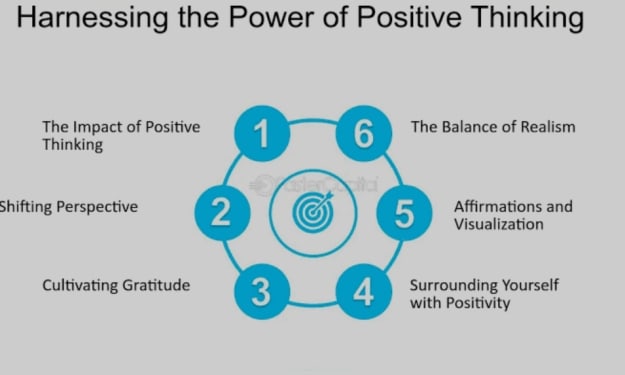
Harnessing the Power of Positive Thinking: Your Pathway to Success
# The Power of Positive Thinking for Success In today’s fast-paced and challenging world, success often feels elusive and distant. However, one crucial element that significantly contributes to achieving success is often overlooked: the power of positive thinking. Positive thinking is more than just being cheerful or ignoring life's difficulties; it's a mental attitude that focuses on possibilities, solutions, and opportunities. It empowers individuals to navigate life's challenges with resilience, confidence, and determination, ultimately leading to success. ## Understanding Positive Thinking Positive thinking is the practice of focusing on constructive thoughts and maintaining an optimistic outlook on life. It involves challenging negative thoughts, shifting your mindset toward hope and possibilities, and maintaining an attitude of gratitude regardless of circumstances. People who adopt positive thinking often experience lower stress levels, better health, stronger relationships, and greater career success. Positive thinking doesn't mean ignoring life's challenges or pretending that negative emotions don't exist. Instead, it means acknowledging obstacles and difficulties but choosing to focus on solutions and the belief that you can overcome them. This mindset creates an environment for growth and fosters success in personal and professional endeavors. --- ## How Positive Thinking Contributes to Success 1. **Enhanced Problem-Solving Skills**
By Nora Ariana2 years ago in Education