stem
The four major disciplines propelling our students and our society forward; all about education in science, technology, engineering, and mathematics.
How to Build Confidence in 30 Days
Building confidence is a transformative journey that involves self-awareness, practice, and consistency. It is often a crucial factor for success in various areas of life, from personal growth to professional achievements. Confidence enables individuals to take risks, overcome challenges, and pursue opportunities without being held back by self-doubt or fear. While building lasting confidence is a gradual process, it is possible to make significant strides in just 30 days by implementing specific strategies and habits. This article will guide you through a step-by-step process to help you build confidence within a month. Day 1-5: Self-Reflection and Goal Setting The first step in building confidence is understanding where you currently stand. Self-reflection is key to recognizing your strengths, acknowledging your weaknesses, and identifying the areas where you want to improve. Take the time to reflect on your past experiences, both successes and failures, and think about how they shaped your self-perception. Start by writing down your thoughts and feelings about your current level of confidence. What are your fears? What achievements are you proud of? By recognizing where you are, you create a foundation from which to build. Next, set clear and specific goals for the next 30 days. These goals should be measurable and realistic, such as speaking up more in meetings, approaching new people, or taking on a challenging task at work. Having a clear roadmap will help you stay focused and motivated as you work towards your confidence-building objectives. Day 6-10: Positive Self-Talk and Affirmations Confidence begins in the mind, and one of the most powerful ways to influence your mindset is through positive self-talk. The way you speak to yourself can either build or destroy your confidence. Negative self-talk, such as "I'm not good enough" or "I will fail," only reinforces feelings of insecurity and self-doubt. On the other hand, positive affirmations help reshape your mindset and encourage a more optimistic outlook on life. Over the next five days, focus on replacing negative thoughts with positive, affirming statements. For example, you can repeat to yourself, "I am capable," "I believe in my abilities," or "I am deserving of success." The more you repeat these affirmations, the more they will become ingrained in your subconscious, ultimately influencing your confidence levels. It may feel awkward at first, but over time, it will feel more natural. Day 11-15: Body Language and Posture Your body language plays a significant role in how others perceive you and, more importantly, how you perceive yourself. Adopting a confident posture can help you feel more assured and project a sense of self-belief. Simple changes in how you stand, sit, or walk can have a profound impact on your overall confidence. For the next five days, focus on improving your body language. Stand tall with your shoulders back, keep your head held high, and make eye contact when engaging with others. Avoid slouching or crossing your arms, as these can convey insecurity or discomfort. Practice this body language every day, and over time, it will become second nature. As you begin to exhibit confident body language, you'll start to feel more confident from within as well. Day 16-20: Take Action and Step Outside Your Comfort Zone Confidence is built through experience and action. One of the best ways to build confidence is to actively challenge yourself by stepping outside your comfort zone. During the next five days, commit to taking small actions that push you beyond your usual limits. Whether it's starting a conversation with a stranger, volunteering for a new project at work, or speaking in public, these experiences will help you build resilience and prove to yourself that you are capable. When you take action and face your fears, you build a track record of success that strengthens your confidence. Each time you step outside your comfort zone, you show yourself that you are more capable than you initially believed. The key is to start with small, manageable steps and gradually increase the level of challenge as your confidence grows. Day 21-25: Celebrate Small Wins Building confidence is not just about overcoming challenges; it’s also about acknowledging your progress along the way. Celebrating small wins is crucial to maintaining motivation and reinforcing positive behavior. Each time you achieve a goal, no matter how small, take a moment to appreciate your efforts. For the next five days, make it a habit to celebrate your achievements, whether it’s finishing a task at work, speaking up in a meeting, or overcoming a fear. You can reward yourself with something simple, like treating yourself to a favorite meal or taking time to relax. Recognizing your progress will help you stay motivated and reinforce the idea that you are capable of accomplishing even more. Day 26-30: Visualization and Future Planning Visualization is a powerful technique used by many successful people to build confidence and achieve their goals. It involves mentally picturing yourself succeeding in your endeavors, which helps increase your belief in your abilities. Over the final five days of your 30-day journey, practice visualization by imagining yourself confidently handling situations you typically find challenging. Take a few minutes each day to sit quietly and visualize yourself speaking confidently in a meeting, giving a presentation, or achieving a personal goal. Picture yourself feeling proud and accomplished, as if you have already succeeded. This practice will help you internalize success and increase your self-belief. In addition to visualization, take the time to plan for the future. Building confidence is an ongoing process, and it’s important to set new goals for the next phase of your journey. What do you want to achieve beyond these 30 days? By thinking ahead and creating a plan for continued growth, you can ensure that your confidence continues to flourish long after this month ends. Consistency is Key While these steps are designed to help you build confidence within 30 days, the key to lasting confidence lies in consistency. Confidence is not something that is achieved overnight, and it requires ongoing effort to maintain and strengthen it. Even after completing the 30-day process, continue practicing the habits and strategies that have worked for you. Incorporate positive self-talk, body language, and action into your daily routine. Keep challenging yourself by stepping outside your comfort zone and taking on new opportunities. Celebrate your achievements, both big and small, and continue visualizing your future success. Confidence is an evolving process that grows over time, and with dedication and practice, you will continue to build on the foundation you’ve created during these 30 days. Conclusion
By Nora Ariana2 years ago in Education
Scientists Discover Hidden Role of Ear Muscles in Hearing
For years, the small muscles around our ears were thought to be useless leftovers from our evolutionary past—something we inherited from animals that can move their ears, like cats and dogs. But a groundbreaking new study led by Andreas Schröer at Saarland University challenges this long-held belief. It turns out that these auricular muscles are still active in humans today, playing a subtle but crucial role in how we focus on sounds.
By Arisha Usman2 years ago in Education
Scientists Develop an Atomic Thermometer That Could Change Temperature Measurement Forever
Temperature measurement is something we rarely think about, yet it plays a crucial role in nearly every aspect of our lives—from cooking and healthcare to space exploration and industrial manufacturing. Now, scientists at the National Institute of Standards and Technology (NIST) have developed an atomic thermometer that could redefine how we measure temperature with astonishing accuracy.
By Arisha Usman2 years ago in Education
How Memes Are Changing Modern Communication
In recent years, memes have evolved from being humorous images or videos shared among friends on the internet to a dominant force in communication. What once started as a niche aspect of online culture has now become a global phenomenon that shapes the way we interact with each other, consume information, and even influence social and political landscapes. The simplicity, relatability, and humor embedded in memes make them an essential tool for modern communication. In this article, we’ll explore how memes are changing the way we communicate, why they are so effective, and the broader impact they have on society. The Rise of Memes in Modern Communication Memes, as we understand them today, are often visual images or videos, accompanied by text that provides context or humor. The term "meme" itself was coined by Richard Dawkins in his 1976 book *The Selfish Gene, where he referred to a meme as an idea, behavior, or style that spreads from person to person within a culture. However, in the digital age, memes have transformed into a format primarily shared and spread through social media platforms such as Instagram, Twitter, Facebook, and Reddit. The ability of memes to travel rapidly and resonate with large groups of people has played a significant role in their popularity. A single meme can go viral in a matter of hours, thanks to the interconnectedness of the online world.
By Nora Ariana2 years ago in Education
The Revival of '90s Nostalgia in Pop Culture
In recent years, there has been a resurgence of ‘90s nostalgia in pop culture, captivating a wide audience and influencing everything from fashion trends to television, music, and technology. For many, the 1990s represent a simpler time, one that is often romanticized as an era of cultural innovation, iconic television shows, and groundbreaking music. Today, this nostalgia has made its way back into mainstream media, offering a blend of old-school charm and contemporary reinterpretation that appeals to both those who lived through the decade and younger generations who are discovering it for the first time. The appeal of ‘90s nostalgia can be traced to a combination of factors, including the passage of time, the rise of digital media, and a desire for a return to a less complex world.
By Nora Ariana2 years ago in Education
The Impact of Celebrity Culture on Society
In the modern world, celebrity culture has become a pervasive and influential force that shapes the way we think, act, and interact with each other. Celebrities, once seen as rare and distant figures, have now become integral to daily life through the rise of social media, reality TV, and 24/7 news cycles.
By Nora Ariana2 years ago in Education
How Gen Z is Redefining Social Norms
Generation Z, those born between 1997 and 2012, is the first generation to grow up entirely in the digital age. As a result, they have a unique perspective on social norms, and they are not afraid to challenge the traditional expectations that have shaped previous generations. From the way they approach relationships, work, and self-expression, Gen Z is pushing boundaries and rethinking what is acceptable in society. This generation’s attitudes and behaviors are influencing everything from fashion trends to workplace culture, and they are making it clear that they won’t conform to the status quo. One of the most significant ways Gen Z is redefining social norms is through their relationship with technology and social media. Unlike previous generations, who grew up without the constant presence of the internet and smartphones, Gen Z has had these tools from an early age.
By Nora Ariana2 years ago in Education
The Changing Landscape of Movie Theaters Post-COVID
The COVID-19 pandemic dramatically disrupted industries worldwide, and the film industry was no exception. Movie theaters, which had been a staple of entertainment for over a century, faced unprecedented challenges.
By Nora Ariana2 years ago in Education
The Popularity of True Crime: Why We’re Fascinated
True crime has become a cultural phenomenon, captivating audiences through books, podcasts, television shows, and documentaries. This genre delves into the darker side of humanity, exploring cases of murder, fraud, and other criminal activities. Its popularity has surged in recent years, sparking debates about why people are so drawn to these grim narratives. To understand this fascination, we must examine psychological, social, and cultural factors that contribute to the appeal of true crime. One reason for the popularity of true crime is our innate curiosity about the human mind, particularly when it deviates from societal norms. True crime stories often delve deep into the psychology of criminals, exploring their motives, thought processes, and the factors that led them to commit heinous acts. Understanding what drives someone to commit murder or orchestrate a complex fraud scheme provides a glimpse into the complexities of human behavior. For many, this exploration satisfies a morbid curiosity about the darker aspects of life. Additionally, true crime taps into our need for storytelling. Humans have always been drawn to narratives, and true crime offers compelling plots filled with twists, turns, and mysteries to unravel. There is a certain satisfaction in piecing together clues and following investigators as they work tirelessly to solve cases. The genre often portrays a clear beginning, middle, and end, giving audiences the sense of closure that real life sometimes lacks. Another factor that contributes to the appeal of true crime is the sense of justice it often portrays. In a world where injustices frequently go unaddressed, true crime stories often highlight the pursuit of justice and the triumph of good over evil. Viewers and readers find comfort in seeing perpetrators brought to justice, even if the stories are disturbing. This sense of closure and justice provides a cathartic experience for audiences. The rise of true crime podcasts and streaming services has also played a significant role in the genre's popularity. Platforms like Netflix, Hulu, and Spotify have made it easier than ever to access true crime content. With a vast array of documentaries, series, and podcasts available at our fingertips, audiences can indulge their fascination whenever and wherever they choose. The binge-worthy nature of true crime content keeps people coming back for more, creating a loyal and dedicated fan base. Moreover, the interactive aspect of true crime content adds to its appeal. Social media allows fans to discuss cases, share theories, and engage in debates about ongoing investigations. True crime forums and communities have sprung up online, creating a sense of camaraderie among enthusiasts. This collective engagement fosters a sense of involvement and participation, making true crime feel more personal and immersive. From a psychological standpoint, consuming true crime content can serve as a coping mechanism for fear and anxiety. By confronting stories about crime and danger in a controlled environment, audiences may feel better prepared to handle real-life threats. True crime can also provide a sense of validation for people's fears, reassuring them that their caution is justified. This phenomenon, known as "vicarious preparedness," allows individuals to learn from the experiences of others and develop strategies for personal safety. Gender dynamics also play a role in the popularity of true crime. Studies have shown that women are often the primary consumers of true crime content. This may be due in part to the fact that many true crime narratives focus on cases involving violence against women. By consuming this content, women may feel empowered by gaining knowledge about potential dangers and learning how to protect themselves. True crime can serve as a source of information and awareness, providing insights into the tactics of criminals and the importance of situational awareness. Despite its widespread appeal, true crime is not without its controversies. Critics argue that the genre can be exploitative, sensationalizing tragedies and profiting from the suffering of victims and their families. There are also concerns about desensitization, as consuming large amounts of violent content may numb audiences to the gravity of real-life crimes. Ethical considerations must be taken into account when creating and consuming true crime content to ensure that it respects the dignity of those involved. In response to these criticisms, some creators have shifted their focus to more victim-centered storytelling. Instead of glorifying criminals, they highlight the lives of victims and the impact of crimes on their families and communities. This approach not only honors the memory of those affected but also fosters empathy and understanding among audiences.
By Nora Ariana2 years ago in Education
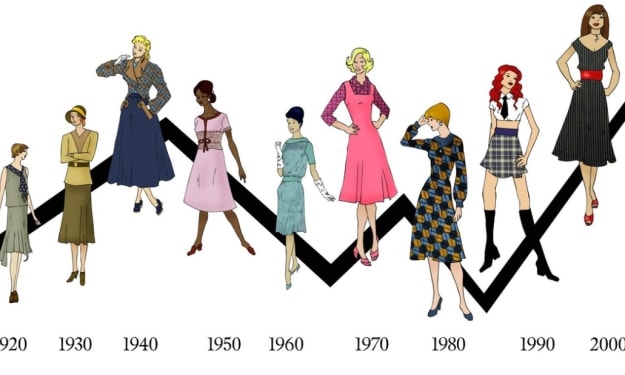
The Evolution of Fashion Trends in the 21st Century
Fashion is a reflection of society, culture, and technology, and throughout history, it has evolved to capture the spirit of each era. The 21st century has seen some of the most dramatic shifts in fashion, driven by changes in social values, the global spread of trends, technological advancements, and the growing influence of digital platforms.
By Nora Ariana2 years ago in Education
The Rise of Streaming Services and the Future of TV
The entertainment industry has undergone a massive transformation in the past decade, with the rise of streaming services dramatically reshaping the way we consume television and film. What was once a world dominated by cable TV and traditional broadcast networks has now evolved into an era of on-demand content, where viewers have more control over what, when, and how they watch.
By Nora Ariana2 years ago in Education