stem
The four major disciplines propelling our students and our society forward; all about education in science, technology, engineering, and mathematics.
Chia seeds or coriander seed waters: Which one should you drink every day?
Chia Seed Water vs. Coriander Seed Water: Which One Should You Drink Every Day? In the world of natural health remedies, chia seed water and coriander seed water are two trending drinks known for their impressive nutritional benefits. Both are steeped in tradition, praised in various cultures for their healing properties, and simple to prepare at home. But when it comes to choosing one as your daily health tonic, which is better? Let’s take a closer look.
By Abjol Hussain Laskar2 years ago in Education
Computer Jobs for Girls
Introduction The world of computers and technology has transformed the way we live, work, and communicate. From programming apps to managing digital systems and analyzing data, computer jobs are not just the future—they are the present. Traditionally seen as a male-dominated industry, the tech field is now more inclusive and diverse than ever before. Girls and women are making significant contributions in every area of computer science and information technology (IT).
By Esther Sun2 years ago in Education
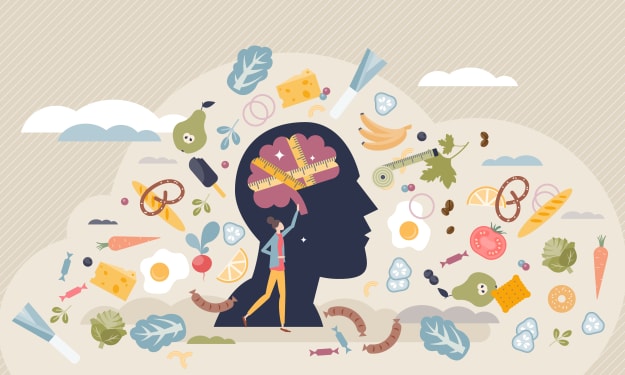
At least 500,000 lives in the UK are impacted by a hidden illness . Content Warning.
What do Princess Diana, Lady Gaga, and Elton John have in common? They each battled with bulimia, an eating disorder that has quietly affected millions of people around the world.
By Evie Clark2 years ago in Education
10 Proven Strategies to Improve Learning Outcomes in 2025: A Practical Guide for Educators and Students
Introduction In a world where technology is reshaping how we live, work, and communicate, education must evolve just as quickly. Learning outcomes are no longer about rote memorization or standardized tests—they're about preparing students with the skills, knowledge, and mindset they need to thrive in a dynamic, information-rich world. As we step into 2025, educators and learners alike face both unprecedented challenges and exciting opportunities. With access to smarter tools and more research-driven approaches, schools can now deliver education that is more personalized, effective, and equitable than ever before. This guide explores ten proven strategies that educators and students can use to significantly improve learning outcomes in today’s modern classrooms. --- 1. Personalized Learning Paths Not every student learns the same way, and one-size-fits-all approaches are becoming outdated. Personalized learning focuses on tailoring instruction to meet individual students’ needs, interests, and learning paces. Why it works: Students are more engaged when lessons match their skill level and personal goals. This approach also boosts confidence and ownership of learning. How to implement it: Use adaptive learning platforms like Khan Academy or DreamBox. Allow students to set learning goals and choose project topics. Use diagnostic assessments to group students by mastery level rather than age or grade. --- 2. Data-Driven Instruction Data has become a powerful tool in shaping effective teaching practices. When used well, it offers real-time insights into what’s working—and what isn’t. Why it works: Tracking performance data helps teachers identify gaps early and intervene before students fall behind. How to implement it: Analyze test scores, assignment performance, and engagement metrics. Use tools like Google Classroom or Edmodo for progress tracking. Have regular check-ins with students to discuss growth and feedback. --- 3. Active Learning Techniques Passive listening is out; active learning is in. Techniques like think-pair-share, problem-based learning, and classroom debates engage students at a deeper level. Why it works: Active learning builds critical thinking and helps students apply knowledge in real-world contexts. How to implement it: Use breakout groups for collaborative problem-solving. Introduce case studies or role-playing simulations. Encourage students to teach concepts to their peers. --- 4. Emphasis on Critical Thinking Over Memorization Content is important, but the ability to question, analyze, and solve problems is what truly drives success in modern education. Why it works: When students think critically, they develop skills that are transferable to any subject or career. How to implement it: Ask open-ended questions that require analysis. Encourage reflection journals or blogs. Use project-based learning where students explore topics in depth. 5. Integration of Digital Tools From virtual labs to AI-powered tutors, digital tools are transforming the learning experience. They make education more interactive, flexible, and accessible. Why it works: Technology enables differentiated instruction and offers instant feedback, both key for learning improvement. How to implement it: Use platforms like Nearpod, Quizizz, or Padlet for interactive lessons. Try virtual reality tools to simulate complex concepts in science or history. Integrate multimedia (videos, podcasts, infographics) to cater to different learning styles. 6. Continuous Assessment and Feedback Traditional exams provide a limited snapshot of what students know. Continuous assessment offers a more complete picture of learning progress. Why it works: Regular feedback helps students course-correct and fosters a growth mindset. How to implement it: Use formative assessments like quick quizzes, exit tickets, or peer reviews. Offer constructive feedback promptly and regularly. Encourage students to self-assess and reflect on their work. 7. Professional Development for Teachers The quality of teaching is one of the strongest predictors of student success. Ongoing professional learning ensures that teachers stay current and inspired. Why it works: Educators who learn and adapt are better equipped to meet diverse student needs and apply modern methods effectively. How to implement it: Attend workshops, webinars, and conferences focused on education trends. Engage in peer observations and collaborative lesson planning. Explore micro-credentials or online certifications in areas like inclusive teaching, edtech, or curriculum design. 8. Inclusive and Culturally Responsive Teaching Classrooms today are more diverse than ever. Acknowledging and valuing students’ backgrounds enhances engagement and equity. Why it works: Students perform better when they feel seen, understood, and respected. How to implement it: Include diverse voices and authors in reading materials. Encourage students to share their experiences and perspectives. Avoid stereotypes and build lessons around cultural understanding and empathy. 9. Strengthening Student Wellbeing Mental health, emotional regulation, and a sense of safety are critical components of academic success. A stressed or disengaged student cannot learn effectively. Why it works: When students feel supported, their motivation and capacity to learn increases significantly. How to implement it: Incorporate Social-Emotional Learning (SEL) into daily routines. Create a classroom culture of respect, openness, and kindness. Provide access to counselors, wellness check-ins, and peer support groups. 10. Stronger School-Home Collaboration Parents and guardians are a child’s first teachers. When schools and families work together, students benefit from a consistent and supportive learning environment. Why it works: Informed and involved families reinforce classroom learning and can address issues early. How to implement it: Communicate regularly through newsletters, portals, or apps like ClassDojo. Offer family workshops on digital tools, curriculum updates, or student support strategies. Invite parents to participate in classroom events, reading days, or career talks. Conclusion Improving learning outcomes in 2025 is not about reinventing the wheel—it’s about refining what we know works and adapting it to today’s learners. From personalized learning paths to stronger school-home collaboration, each of these strategies plays a crucial role in helping students succeed. Education is no longer confined to the walls of a classroom. It’s dynamic, digital, and deeply human. By embracing innovation while staying grounded in evidence-based practices, educators can empower students to become not just better learners, but better thinkers, problem-solvers, and citizens. The future of learning is here—and it starts with a single step toward intentional, student-centered teaching.
By The Learning Ledger2 years ago in Education
Custom Software Development Services
In today’s hyper-competitive digital landscape, generic software solutions often fall short of addressing unique business challenges. This is where custom software development services come into play offering personalized, scalable, and cost-effective solutions that align perfectly with your business goals.
By David Rodriguez2 years ago in Education
India rolls out e-passports with embedded chips, details inside
India Rolls Out e-Passports with Embedded Chips: A Leap Towards Secure and Efficient Travel In a significant stride towards modernizing travel documentation, India has commenced the issuance of chip-enabled biometric e-passports under the Passport Seva Programme Version 2.0. This initiative not only enhances the security and authenticity of passports but also aligns India with over 120 countries that have already adopted similar technology.
By Abjol Hussain Laskar2 years ago in Education
Sindhor's Last Light.
Start writing...The sky above Sindhor bled gold and crimson as the sun dipped below the jagged peaks of the Ogran Mountains. What remained of the once-proud city shimmered in the dying light, broken towers casting long shadows over cracked stone roads. Fires smoldered in distant quarters, their smoke drifting like ghosts across the ruined skyline. Captain Alen Varos stood atop the last intact battlement of Sindhor’s inner wall, his armor scorched and dented from days of relentless siege. Below him, the remnants of the city’s defenders made their final preparations. Barely two hundred souls remained — soldiers, mages, scouts, and common folk too stubborn or too loyal to flee. The enemy would come at dawn. Everyone knew it. He touched the hilt of his father’s blade — an old steel longsword inscribed with the faded crest of the city’s first kings. It was all that remained of his lineage and, perhaps, of Sindhor’s honor. Behind him, the soft sound of boots on stone interrupted the silence. It was Elira, the High Arcanist. Her robes were frayed, her face pale, but her eyes burned with the defiance of a woman who had watched her home collapse piece by piece and still refused to surrender. “The wards won’t hold past sunrise,” she said quietly. “I know,” Alen replied, not looking at her. “They broke through the lower gates. The outer city is lost.” “I know that, too.” She stepped beside him, her gaze sweeping the scarred horizon. “You could still run. There's a path through the catacombs—” “No,” he said. “We are the last light of Sindhor, Elira. If we leave now, the light dies.” A silence stretched between them. Not empty, but solemn. Then a horn sounded in the distance — low and mournful, the signal of the final watch. The shift began. Men and women emerged from the shadows, taking their positions on the walls, each of them knowing full well what the morning would bring. No reinforcements. No retreat. Only the enemy — the Black Horde — and the end. Elira turned to go. “I’ll do what I can to strengthen the final barrier.” Alen nodded. “Make it count.” She vanished down the spiral stairs. He stayed, watching the last flickers of daylight vanish. As darkness fell, torches sparked to life along the wall, casting a golden glow over the weary defenders. He could see young Leorn, barely sixteen, his hands trembling as he clutched a spear. Nearby, old Bryna, once a baker, now bore a crossbow across her back and a bundle of healing herbs at her hip. These were no longer just soldiers — they were the soul of Sindhor. Midnight came with a cold wind and a deathly silence. Then, out of the blackness beyond the wall, came the sound of drums. Slow. Steady. Inevitable. The enemy was on the move. Alen descended the wall and joined his people in the courtyard. They looked to him, not as a captain, but as the last symbol of unity. He raised his sword high. “Tonight,” he called, his voice strong despite the ache in his chest, “we do not fight for victory. We fight to hold the line, to keep the flame burning just long enough for the world to remember that Sindhor stood.” The crowd murmured, some with tears, others with grim nods. “If this is the end, then let it be a glorious one.” The cheer that followed was quiet, but fierce — like a blade drawn in darkness. As the first of the enemy war cries echoed over the hills, Alen took his place at the gate. The walls shook as monstrous siege beasts lumbered forward. Arrows screamed into the night. Fire erupted from the enemy’s ranks. And yet, the defenders of Sindhor stood firm. As the gates shattered and the horde surged forward, Alen roared and led the charge. Magic flared around him. Steel clashed. Blood soaked the earth. The final watch had begun — not to save the city, but to mark its last chapter in fire and courage. And so, beneath a sky lit by flame and death, the story of Sindhor was sealed — not with surrender, but with valor.
By Muhammad Abbas 2 years ago in Education
Genetic Study Retraces the Origins of Coronaviruses in Bats: A Deep Dive into Evolutionary History and Spillover Risks
A ground-breaking genetic study has shed light on the evolutionary history of bat coronaviruses, revealing how these viruses have evolved over millions of years and the potential dangers they could pose to humans in the future. Published in a leading scientific journal, the research traces the deep ancestral roots of coronaviruses, their adaptation to different bat species, and the mechanisms that could lead to spillover events. The findings are crucial for understanding past outbreaks—such as SARS (2002), MERS (2012), and COVID-19 (2019)—and for predicting and preventing future pandemics.
By Niranjon Chandra Roy2 years ago in Education
A Village Boy's Journey to Become an Entrepreneur
Arif was born in a small village in Bangladesh. He grew up as a farmer's son, but his dreams were limitless. Before going to bed at night, he would fly in his imagination. Sitting in a hut, he would write about his dreams in a notebook, what he wanted to be, where he wanted to go, what he wanted to achieve. His parents would bring old newspapers from the market on weekends, and Arif would look at those papers and see a new world.
By Miftaul Mueed2 years ago in Education