stem
The four major disciplines propelling our students and our society forward; all about education in science, technology, engineering, and mathematics.
High blood pressure is the number one health problem worldwide.
High Blood Pressure: Understanding, Prevention, and Management High Blood Pressure, also known as Hypertension, is a common yet serious medical condition that significantly increases the risk of heart disease, stroke, kidney disease, and other health problems. Often called the "silent killer" because it typically presents no symptoms, managing blood pressure is crucial for long-term health and well-being.
By Md Foiz Ullah2 years ago in Education
Why You Need a Custom Educational App Development Company for Next-Gen Learning Solutions
In today's rapidly evolving educational landscape, technology plays a pivotal role in shaping how we learn and teach. Generic, off-the-shelf learning management systems (LMS) and educational apps often fall short of addressing the unique needs of institutions, educators, and learners. This is where a custom educational app development company steps in, offering tailored solutions that can truly transform the learning experience.
By David Rodriguez2 years ago in Education
Wake Up Early and Take Charge of Your Day
Start writing...Wake Up Early and Take Charge of Your Day Have you ever noticed that some people always seem calm, focused, and full of energy in the morning? They’re not in a rush, they’re not forgetting things, and they always look ready to face the day. What’s their secret? It’s simple: they wake up early. Waking up early isn’t just a habit—it’s a life-changing routine. It gives you more time, more peace, and more control. If you want to feel better, do more, and live with less stress, waking up earlier might be the best place to start. Let’s explore how this small change can make a big difference. --- Why Waking Up Early Matters Getting up early gives you a head start. You don’t have to rush through brushing your teeth, getting dressed, or eating breakfast. Instead, you can take your time, plan your day, and do things that make you feel good. Most people wake up just in time to get ready and leave the house. But early risers are different. They wake up before the world gets busy. These quiet hours are perfect for thinking, reading, working on goals, or just enjoying the silence. Many successful people—like business owners, athletes, and writers—use their early mornings to do deep work or plan their day. That’s how they stay ahead and stay focused. When you wake up early, you control your day from the start. You’re not reacting to problems or rushing to catch up. You’re leading the day on your terms. --- The Benefits of Waking Up Early Let’s take a look at how waking up early can help you in simple and powerful ways: 1. More Time for You In the early morning, there are no phone calls, no messages, and no noise. It’s your time. You can read a book, stretch your body, write in a journal, or just sit quietly with a cup of tea. These quiet moments help you feel calm and balanced. 2. Clearer Thinking Your mind is fresh after sleep. This is the best time to think, plan, and make smart choices. You’ll notice it’s easier to focus and solve problems when your brain is well-rested. 3. Healthier Habits Early mornings are great for starting healthy routines. You can eat a proper breakfast, do light exercises, or go for a walk. These small actions boost your energy and make you feel good throughout the day. 4. Less Stress When you have time in the morning, you don’t feel rushed. You’re not forgetting things or running late. This calm start reduces stress and helps you stay relaxed, even when the day gets busy. --- How to Start Waking Up Earlier Changing your wake-up time doesn’t have to be hard. You can start slowly and build your new habit step by step. Here’s how: 1. Sleep a Bit Earlier Waking up early starts with sleeping early. Try going to bed 15 to 30 minutes earlier than usual. Make your room quiet, dark, and comfortable. Stay away from screens before bedtime, as they can keep you awake. 2. Have a Morning Plan Give yourself a reason to wake up. Maybe you want to read a few pages of a book, write down your thoughts, or stretch your body. A small morning goal makes getting out of bed easier and more exciting. 3. Avoid the Snooze Button Hitting snooze makes you feel more tired. Place your alarm clock or phone across the room so you have to get up to turn it off. Once you’re up, stay up! 4. Keep It Consistent Try to wake up at the same time every day—even on weekends. Your body will get used to it, and waking up early will feel natural after a while. --- My Own Early Morning Journey At first, I was not a morning person. I stayed up late and always felt rushed in the morning. One day, I decided to try waking up just 20 minutes earlier. I used that time to stretch and enjoy a peaceful cup of tea. After a few days, I noticed I felt calmer and more focused. I wasn’t rushing anymore. I had time to think and enjoy my mornings. Soon, I started waking up even earlier. I began reading, writing, and going for short walks. These small steps made my mornings feel special. I felt happier and more in control of my life. --- Final Thoughts Waking up early doesn’t mean doing more work. It means starting your day with peace, purpose, and control. It’s a small change that can lead to big results. You don’t need to wake up at 5 AM right away. Start with 10 or 20 minutes earlier than usual. Build a habit, stay consistent, and make your mornings your own. Over time, you’ll notice that your days feel smoother, your mind feels clearer, and your life feels more balanced. So take the first step. Wake up early—and win the day, your way.
By Qaseem Ahmadzai2 years ago in Education
The Science Behind Wrinkled Fingers: Why Do They Prune in Water?
For decades, people assumed that fingers wrinkle in water simply because the skin absorbs moisture and swells. However, scientific research has revealed a far more fascinating explanation—one that involves the nervous system, evolutionary biology, and even potential survival advantages.
By Niranjon Chandra Roy2 years ago in Education
Best STEM Resources for Teachers
Introduction STEM education is at the forefront of modern learning, especially for middle school students. However, it is difficult for teachers to get affordable and inspiring STEM materials. In this in-depth guide, we will review the top affordable STEM toys and learning kits to help teachers create effective STEM projects without overspending. We'll dive deeper into the benefits of STEM projects, detail how each resource complies with educational standards, and provide actionable classroom implementation tips for teachers.
By Mauro Vendemiatti2 years ago in Education
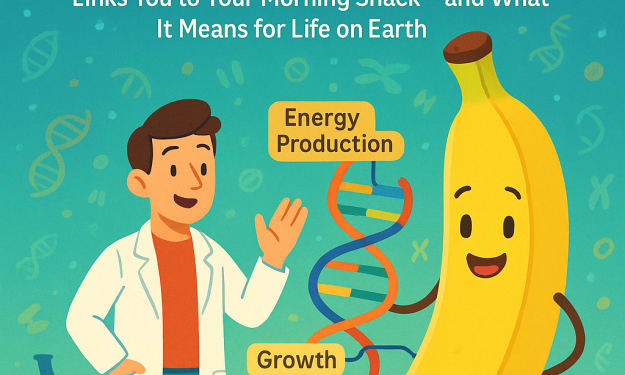
You’re Genetically Related to a Banana (No, Seriously! Here’s Why)
You walk into the kitchen, peel a banana, and take a bite. It’s sweet, a little mushy, and maybe even a bit awkwardly curved. But here’s a mind-bending twist: you share roughly 50% of your DNA with that banana. That’s right—half of the genetic recipe that makes you you is also found in the fruit you’re snacking on.
By Maaz Ahmad2 years ago in Education
the brightest lights often come from the darkest places.
Faizan came from a small town in southern Punjab, Pakistan—Bahawalnagar, a place where dreams are often buried under poverty and silence. But Faizan’s dream wasn’t ordinary. He wanted to become a doctor—not just to wear the white coat or earn a name, but to fulfill the promise his father had whispered in his ear countless times since childhood. His father worked as a compounder in a small clinic—low pay, long hours, but high hopes. He often told Faizan, “You will go far, my son. You will do what I never could.” Faizan was a bright student, topping every class. His teachers adored him, and neighbors would call him “Doctor sahab” even before he held a stethoscope. But life had other plans. In his second year of college, Faizan’s father suffered a massive heart attack. The nearest hospital was hours away, and they barely made it in time. Though his father survived, he was no longer able to work. At just 18, Faizan found himself carrying the weight of his entire family—his sick father, his mother, and a younger sister still in school. He began tutoring local children to bring in a few hundred rupees. He studied during the day, worked in the evenings, and took care of the house at night. When the electricity would cut out—as it often did—he’d light a candle and continue reading his medical books on the rooftop. The day of the national medical entrance exam—MDCAT—he barely made it to the test center. He hadn’t slept properly in days, and he sat for the paper with a splitting headache. When the results came out, he had failed. His heart broke. He thought of giving up. Everyone around him said, “People like you don’t become doctors.” But his mother looked him in the eyes and said, “My prayers are alive, Faizan. You can’t give up yet.” Determined, he took a gap year. But this time, he couldn’t afford coaching classes. He started working part-time at a local doctor’s clinic—cleaning up, assisting in small procedures, and learning everything he could while saving for books. He would come home exhausted, eat a piece of roti with tea, and dive into his textbooks. One year later, he gave the MDCAT again. This time, he topped the list. He got admission into the most prestigious medical college in Pakistan—King Edward Medical University, Lahore. When he left for Lahore, his mother packed a jar of homemade pickles and a tiffin full of love. “This is not just food,” she said. “It’s my hope that you won’t forget where you came from.” Life in Lahore was an entirely different world—fast, competitive, intimidating. He struggled to understand English lectures. Many of his classmates came from English-medium schools and wealthy backgrounds. He often felt small, like an outsider in his own dream. He’d cry in his dorm room at night, wondering if he belonged. But every time he thought of quitting, he remembered the dusty streets of Bahawalnagar, his father’s wrinkled hands, and his mother’s silent prayers. That gave him the strength to go on. In his final year, another storm hit. His father’s health worsened, and he was admitted to a hospital back home. Faizan now juggled ward rotations, assignments, and emotionally draining phone calls from his family. During the last two weeks before his final exams, he studied next to his father's hospital bed, his notes spread across the side table. His father, barely conscious, would open his eyes and weakly say, “Are you still studying, doctor sahab?” Those words stayed with him. When results were announced, Faizan had not only passed—he had ranked among the top five students in the university. Today, Faizan is a practicing surgeon in a government hospital. He lives modestly, still sends money back home, and still calls his mother every night. Whenever a poor patient comes to him and says, “Doctor sahab, I can’t afford this treatment,” Faizan smiles and says: “I was once you. I got here on prayers. Now let me help you without asking for anything in return.” His story is not just about becoming a doctor. It’s about refusing to break, even when life tries to shatter you. It’s about remembering where you came from and lifting others when you rise. Faizan’s life is a reminder that the brightest lights often come from the darkest places.
By Doctor marwan Dorani 2 years ago in Education
Mysterious Bright Spots in Jupiter’s Aurora Baffle Scientists: New Observations Reveal Unexplained Phenomena
Jupiter, the largest planet in our solar system, has long been known for its spectacular auroras—vast, glowing light displays near its poles that outshine even Earth’s most dazzling northern and southern lights. However, recent high-resolution observations from some of the world’s most advanced telescopes have revealed strange and unexplained bright patches in Jupiter’s auroras, leaving scientists puzzled. These new findings challenge existing theories about how auroras form on gas giants and may hint at previously unknown cosmic processes.
By Niranjon Chandra Roy2 years ago in Education
Thinking of Hiring a Software House? Here’s What You Need to Know First
What Is a Software House and What Do They Do? A software house is a company that specializes in designing, developing, testing, and maintaining custom software solutions. Unlike freelancers or one-person agencies, software houses provide end-to-end digital services with a team of developers, designers, analysts, and project managers.
By Abdul Alim2 years ago in Education