stem
The four major disciplines propelling our students and our society forward; all about education in science, technology, engineering, and mathematics.
A SINGLE COCONUT ON YOUR FOREHEAD CAN SET YOU FREE SPIRITUALLY.
is done to you, please, as sometimes we make mistakes.For instance,when someone says,Failure in an exam,you don't read,and you just walk into the exam hall,would you say that it is done to you?However,we are aware that there may be instances in which some people are not pleased with how you are getting good grades.You suddenly see that your grades are declining despite the fact that you work hard to learn everything you can, but there is one unique way to use them: eating coconuts for breakfast. barriers and stumbling blocks Hex a hex name it's lay of someone all you have to do is just get one coconut and hold it from your forehead.Before you do that,make sure the coconut has some water in it and try not to buy the one that is very hard because you know some coconuts when you carry them the skin will be very thick because you need to break this. As soon as you have the coconut in your hands,keep it there with your right hand while praising whatever deity you follow.I'll use my weights as an example,but you get the idea. Anyone who knows my source of joy and happiness from here onward and tries to ruin it as I break this coconut should be held accountable for whatever they did, just as nobody knows how a coconut gets water in it. each and every hair rate,every unjustified reason someone has ever given for speaking ill of me
By Nora Ariana3 years ago in Education
Rediscovering Inner Peace
In a bustling metropolis, amidst the cacophony of car horns, ringing cell phones, and the ceaseless hum of life, there lived a man named Daniel. He was a successful executive, always on the move, and seemingly in control of his life. Yet, beneath the surface, Daniel was drowning in the chaos of his own mind.
By Santigie Fofanah3 years ago in Education
Navigating the Skies
For pilots, landing an aircraft can be one of the most challenging aspects of their job, especially when they're faced with adverse weather conditions, complex terrain, or short runways. Some airports around the world have gained notoriety for being particularly difficult to land at due to their unique geographical and environmental factors. In this article, we'll explore the top five hardest airports to land an aircraft.
By Yohannes Amanuel3 years ago in Education
Birth of our Solar System
The night sky, adorned with twinkling stars, has always captivated human imagination. But beyond the distant constellations lie celestial wonders much closer to home—our very own solar system. This remarkable expanse, spanning billions of kilometers, comprises not only the Sun but also a diverse family of planets, moons, asteroids, and comets. Join us on an awe-inspiring journey as we unveil the origins, characteristics, and captivating stories of our solar system's eight planets.
By Mariam Melikidze3 years ago in Education
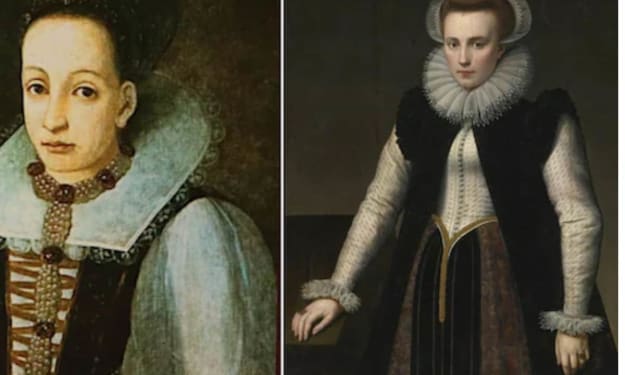
The documentary Elizabeth Bathory: The Blood Countess Part 4.
Between 1593 and 1606, Hungary was embroiled in the second phase of the **Long Turkish War**, a conflict lasting over two centuries. This war, often referred to as the **Ottoman-Habsburg War**, was part of a larger struggle between the Christian coalition, including Hungary, and the **Ottoman Empire**. At the same time, the war reflected internal struggles involving the **Habsburgs**, the Austrians, and other semi-independent territories, such as **Wallachia** (modern-day southern Romania). During this turbulent period, **Habsburg Emperor Rudolf I** sought to solidify his control over Wallachia by **Germanizing** the population and restoring **Catholicism**. His efforts were met with resistance, and **Transylvania** became the epicenter of a rebellion led by **Stephen Bocskay**, a Hungarian nobleman who opposed Habsburg dominance. This rebellion underscored the complex dynamics of the region, where religious conflicts intertwined with military and political struggles. The balance of power in Transylvania was precarious, requiring constant negotiation to maintain its semi-independence amidst the ambitions of both the **Ottoman Turks** and the **Habsburgs**. Amid this backdrop of political unrest, **Elizabeth Báthory**'s life took shape. At the age of 10, she was engaged to **Count Ferenc II Nádasdy**, a union arranged to strengthen the political power of the Báthory family. As was customary, Elizabeth was sent to live with her future husband’s family at their estate. Her early years in **Sárvár Castle**, where the Nádasdy family resided, were marked by rumors and controversy. One of the most sensational claims was that Elizabeth had an affair with a man of lower social standing, which allegedly resulted in an illegitimate child. According to the story, when Count Nádasdy discovered this, he ordered the man to be **castrated** and left to be torn apart by a pack of ravenous wolves. The child, thought to have been a girl, was rumored to have been abducted or killed on Nádasdy’s orders. However, this account is disputed. Letters from contemporaries praised Elizabeth’s **virtue**, particularly during her husband’s long absences. If the story were true, it would underscore the power and influence of the Báthory family, who could suppress such damaging scandals to protect their reputation. Elizabeth married Count Ferenc II Nádasdy on **May 8, 1575**, in **Vranov nad Topou**, a palace in present-day eastern Slovakia. The marriage was a political alliance between two powerful aristocratic families. Elizabeth’s decision to retain her maiden name, **Báthory de Ecsed**, rather than adopting her husband’s name, highlights the prestige of her lineage. The couple had several children, though most did not survive into adulthood. Only three—**Anna**, **Katalin**, and **Paul**—are known to have lived to maturity. Like Elizabeth herself, her children were raised primarily by a **governess**, reflecting the norms of noble households at the time. Elizabeth’s married life was far from traditional. While **Count Nádasdy** led Hungarian forces against the Ottomans in the **Ottoman-Habsburg Wars**, Elizabeth took full responsibility for managing their extensive estates. When her husband left in 1578 to lead troops, Elizabeth assumed control of their lands, which included properties near **Vienna**, a major Habsburg city. Despite Vienna not being the dynastic capital at the time, its proximity made managing these properties both strategically important and challenging. Historical records suggest that Elizabeth was an effective estate manager. She provided healthcare services in the region, oversaw the welfare of her tenants, and advocated for women who had lost their husbands and livelihoods due to the war. Her ability to balance these responsibilities demonstrated her competence and authority, qualities not commonly attributed to women in the male-dominated society of her time. The relationship between landlords and their tenants during this period was complex and often contentious. Surviving **letters of complaint** and **petitions** provide insight into the dynamics between Elizabeth and the local community. Despite the challenges, she maintained control over her estates and fulfilled her obligations to both her family and her tenants. This role would later stand in stark contrast to the dark rumors that surrounded her legacy. Elizabeth’s life was set against the broader context of Transylvania’s precarious position. The region’s rulers had to navigate a delicate balance between the **Ottoman Empire** and the **Habsburg monarchy**, both of which sought to dominate the territory. At times, Transylvania allied itself with the Christian coalition against the Turks, while at other times, it declared its **vassalage to the Ottomans** in an attempt to secure autonomy. These shifting alliances reflect the region’s complex political landscape and the constant pressure on its leaders to preserve their independence. Elizabeth’s tenure as the head of her household coincided with significant events in Hungarian and Transylvanian history. The Long Turkish War, the rebellion led by Stephen Bocskay, and the broader struggle between the Ottoman and Habsburg empires shaped the world in which she lived. Her ability to manage her family’s affairs and navigate the challenges of her time speaks to her strength and intelligence, qualities that have been overshadowed by the dark legends surrounding her name. In conclusion, **Elizabeth Báthory’s** life was deeply intertwined with the political, social, and military upheavals of her era. As a noblewoman, she wielded considerable power and influence, managing vast estates and providing for her tenants in the absence of her husband. However, her legacy is clouded by rumors and controversies that reflect the violence and turbulence of her time. Understanding the context of her life helps shed light on the complex figure she was—both a product of her era and a subject of enduring fascination.
By Nora Ariana3 years ago in Education
Africa's Tallest Peak. Content Warning.
Upon the continent of Africa, rising majestically from the East African plains, stands a natural wonder of unparalleled beauty: Mount Kilimanjaro. This dormant stratovolcano, with its snow-capped peaks and lush green slopes, is a living testament to the breathtaking diversity and wonder that our planet has to offer.
By Saidi Haji3 years ago in Education
Zanzibar's Climate Change. Content Warning.
Amidst the turquoise waters and swaying palms of Zanzibar, there exists a tale of unwavering resilience and hope. It's a story of a coastal community, anchored to tradition yet weathering the tempestuous tides of climate change.
By Saidi Haji3 years ago in Education
AI and the future
In the coming years, AI is expected to have a significant impact on various aspects of our lives, including the job market and society as a whole. As technology continues to advance at an unprecedented pace, AI is poised to take over many tasks that were traditionally performed by humans.
By victory madojemu3 years ago in Education
The Epic Battle Within: A Tale of the Immune Guardians
Once upon a time, in the intricate realm of the human body, there existed an extraordinary defense force—a complex army designed to shield its host from a relentless assault by billions of microscopic invaders. This incredible army was none other than the immune system, a super complex little world teeming with guards, soldiers, intelligence agents, weapons factories, and communicators. It was a defense mechanism that protected its host from the ever-present threat of invasion and, ultimately, death.
By Mason Cooper3 years ago in Education
Are Network Engineers in Demand?. Content Warning.
Are Network Engineers in Demand? Introduction In today's hyper-connected world, where digital technology plays a pivotal role in nearly every aspect of our lives, the demand for network engineers is steadily on the rise.
By Dayax writer3 years ago in Education