product review
Product reviews for those who yearn to learn; a breakdown of the best back-to-school supplies, test prep manuals, online study tools and other resources for students and teachers alike.
AI in Healthcare: Revolutionising the Industry with Promise and Challenges
Artificial Intelligence (AI) has been a transformative force across many sectors, and one of the most promising and impactful areas where AI is making significant strides is healthcare. The integration of AI technologies into healthcare systems offers groundbreaking opportunities to improve patient outcomes, streamline medical processes, and reduce costs. However, with these advances come challenges related to ethics, data privacy, bias, and the potential for job displacement. This essay will explore the positive and negative aspects of AI in healthcare, discussing its potential benefits and the ethical, practical, and regulatory concerns that must be addressed as AI continues to shape the future of medicine.
By Trina Dawes2 years ago in Education
4 Ways Long-Distance Relationships Affect Mental Health. Content Warning. AI-Generated.
4 Ways Long Distance Relationships Affect Mental Health Long-distance relationships are so rewarding yet heart-wrenching at times. They keep lovers alive over miles, but the emotional toll is momentous at times. Such relationships prove that love has true power, but they also pose unique challenges to our mental health at their best. Let's see how they impact our emotions and minds.
By Healthy Foods2 years ago in Education
5 Simple Ways to Reduce Anxiety and Regain Control
Anxiety is a common mental health challenge that many people experience at some point in their lives. Whether it’s caused by stress at work, personal challenges, or overwhelming thoughts, anxiety can interfere with daily life and overall well-being. Fortunately, there are many practical and simple strategies that can help reduce anxiety. Below are five ways that can help you regain control and reduce the effects of anxiety. ### 1. **Practice Deep Breathing** Deep breathing is one of the simplest and most effective ways to reduce anxiety in the moment. When we experience anxiety, our bodies go into a fight-or-flight mode, which causes rapid breathing, increased heart rate, and muscle tension. By practicing deep breathing, you can activate your body's relaxation response and calm the mind. To practice deep breathing: - Find a quiet place to sit or lie down comfortably. - Close your eyes and focus on your breath. - Slowly inhale through your nose for a count of four, allowing your abdomen to rise as you fill your lungs. - Hold your breath for a count of four. - Slowly exhale through your mouth for a count of six, allowing your abdomen to fall. - Repeat this process for a few minutes, focusing on the rhythm of your breath. Deep breathing helps bring your focus away from anxious thoughts and re-centers your body, promoting relaxation and a sense of control. ### 2. **Engage in Physical Activity** Exercise is a powerful tool for reducing anxiety. Physical activity helps to release endorphins, the body's natural feel-good hormones, which can lift your mood and reduce stress. Exercise also improves sleep quality and boosts overall health, which can make it easier to manage stress in the long term. You don’t have to engage in intense workouts to experience the benefits of exercise. Even a short walk, light stretching, or yoga can help alleviate anxiety. Aim for at least 30 minutes of moderate physical activity most days of the week to reap the full benefits. If you’re feeling overwhelmed, try going for a brisk walk outdoors. Fresh air and movement can help clear your mind and shift your focus from anxious thoughts. Alternatively, practicing yoga or Tai Chi offers both physical and mental relaxation, as these activities focus on gentle movement, breathing, and mindfulness. ### 3. **Limit Caffeine and Sugar Intake** Caffeine and sugar are stimulants that can increase feelings of anxiety, especially if consumed in large amounts. Caffeine is known to stimulate the central nervous system, which can cause your heart rate to rise, leading to feelings of nervousness and restlessness. Similarly, consuming too much sugar can lead to blood sugar spikes and crashes, which may exacerbate feelings of irritability and anxiety. To reduce anxiety, try limiting your intake of caffeinated beverages such as coffee, tea, and energy drinks. Instead, opt for herbal teas like chamomile or peppermint, which are naturally calming. Reducing sugar intake can also help stabilize your mood and prevent energy crashes. Focus on a balanced diet rich in whole grains, fruits, vegetables, and lean proteins to support mental clarity and overall well-being. If you feel like you need a little extra energy, consider switching to green tea or matcha, which contain lower amounts of caffeine compared to coffee but provide a more sustained energy boost without the jitters. ### 4. **Develop a Consistent Sleep Routine** Sleep plays a crucial role in managing anxiety. A lack of sleep can make you more vulnerable to stress and can heighten feelings of anxiety. When you're well-rested, you're better equipped to handle life's challenges, and your mind has a chance to recharge. To improve your sleep quality: - Stick to a regular sleep schedule. Try to go to bed and wake up at the same time each day, even on weekends. - Create a calming bedtime routine. Avoid screens for at least 30 minutes before bed, as the blue light emitted by phones and computers can interfere with your body's natural sleep cycle. - Make your bedroom a peaceful environment. Keep it dark, cool, and quiet to promote restful sleep. Consider using earplugs, an eye mask, or a white noise machine if needed. - Limit naps to 20–30 minutes during the day to avoid disrupting your nighttime sleep. Additionally, if you’re having trouble falling asleep due to anxiety, try a relaxation technique like progressive muscle relaxation or visualization. By practicing mindfulness before bed, you can reduce racing thoughts and calm your mind. ### 5. **Cultivate Mindfulness and Meditation** Mindfulness is the practice of paying attention to the present moment without judgment. By focusing on the present, mindfulness helps reduce anxiety by preventing you from becoming overwhelmed by future worries or past regrets. Meditation, on the other hand, is a technique that can help you train your mind to stay present and relaxed. You don’t need to meditate for hours to see the benefits. Even a few minutes each day can help reduce anxiety and improve emotional well-being. Start by sitting in a comfortable position and focusing on your breath. Whenever your mind wanders to anxious thoughts, gently bring your attention back to your breathing. Another form of mindfulness is body scanning, where you mentally check in with each part of your body, noticing any areas of tension or discomfort. This can help you become more aware of how stress manifests physically and allow you to consciously release that tension. Mindfulness and meditation can also help you reframe your thinking patterns. By observing your thoughts without reacting to them, you can develop a greater sense of control over your emotional responses and reduce the impact of anxiety. ### Conclusion Anxiety can be overwhelming, but there are many effective strategies to help reduce its intensity. By practicing deep breathing, engaging in physical activity, limiting caffeine and sugar, improving your sleep, and cultivating mindfulness, you can take proactive steps toward managing anxiety in your daily life. Remember that it’s important to be patient with yourself and to experiment with these techniques to see which ones work best for you. With consistent effort and the right tools, you can regain a sense of peace and control over your anxiety. If your anxiety persists or becomes more severe, it may be helpful to consult with a mental health professional who can guide you in finding additional strategies to manage your anxiety effectively.
By Nora Ariana2 years ago in Education
The Habits of Highly Successful People: Key Practices for Achieving Lasting Success
**Habits of Highly Successful People** Success is a journey, not a destination. While each person may define success differently, there are certain universal habits that highly successful people tend to cultivate. These habits not only enhance productivity but also contribute to their mental, emotional, and physical well-being. From adopting disciplined routines to maintaining a positive mindset, these practices can be the keys to achieving remarkable success in various areas of life. Below are some of the key habits that highly successful people embrace. ### 1. **Early Rising and Morning Rituals** One common trait among highly successful individuals is their tendency to wake up early. Early risers are known to have a head start on the day, utilizing the quiet morning hours to focus on activities that set a positive tone for the rest of the day. Whether it's exercising, reading, journaling, or planning, the morning hours are a powerful time for productivity. For instance, Tim Cook, the CEO of Apple, wakes up at 4:30 AM to go through emails and prepare for the day ahead. Similarly, Oprah Winfrey starts her day with meditation and exercise. This early morning routine sets them up for success by giving them time to prioritize their mental, emotional, and physical health. Establishing a morning ritual creates structure and clarity, allowing individuals to approach their work and life with purpose. Whether it's a few minutes of quiet reflection or a full exercise routine, the key is consistency. ### 2. **Continuous Learning and Self-Improvement** Successful people never stop learning. They are constantly seeking ways to expand their knowledge, improve their skills, and stay informed. This habit of continuous learning is not just confined to formal education but includes reading, attending seminars, and seeking mentorship. Warren Buffett, one of the world’s most successful investors, dedicates a significant amount of his day to reading. In fact, it is reported that he spends approximately 80% of his day reading. He believes that the more you learn, the more you earn. Other successful figures, such as Elon Musk and Bill Gates, are also avid readers. This constant pursuit of knowledge ensures that they stay ahead in their respective industries. In addition to reading, many successful people surround themselves with mentors who help guide their journey. Learning from the experiences and mistakes of others can be invaluable in avoiding pitfalls and making smarter decisions. ### 3. **Goal Setting and Planning** Highly successful individuals set clear, actionable goals and make plans to achieve them. Setting goals helps to provide direction and clarity, allowing people to stay focused and motivated. Successful people break their goals down into smaller, manageable tasks, making them more attainable and less overwhelming. Take the example of Elon Musk, the founder of Tesla and SpaceX. Musk is known for his ability to set audacious goals, such as creating a sustainable future with electric vehicles and colonizing Mars. By breaking down these grand visions into smaller, achievable tasks, Musk and his companies have seen incredible success. Goal-setting and planning are not just about big, long-term objectives; they are also about the small, daily tasks that lead to larger achievements. Successful people tend to focus on consistent progress, making sure to track their progress regularly and adjusting their plans when needed. ### 4. **Resilience and Adaptability** Success is rarely a linear path. Highly successful people understand that setbacks, challenges, and failures are part of the journey. What sets them apart is their ability to bounce back from these setbacks with resilience and adaptability. J.K. Rowling, author of the Harry Potter series, faced multiple rejections before her first book was published. Had she given up after the first few failures, the world would never have known the magic of Hogwarts. Instead, she demonstrated resilience and kept working toward her goal. Being adaptable is equally important. Successful individuals are not rigid in their ways; they are willing to pivot when necessary. They continuously assess the situation and adjust their strategies to stay relevant and successful. ### 5. **Focus and Time Management** In today’s world, distractions are everywhere. However, highly successful individuals have mastered the art of focus. They understand the importance of managing their time effectively and staying committed to tasks that align with their goals. One way successful people maintain focus is by prioritizing their tasks. The Pareto Principle, or the 80/20 rule, is often applied here—focusing on the 20% of tasks that bring in 80% of the results. Mark Zuckerberg, for example, is known for eliminating distractions and maintaining strict focus on the most important tasks at hand. Time management is also about saying no. Successful individuals are careful about what they commit to. They understand that their time is limited, and they are selective in choosing projects or activities that contribute to their long-term success. ### 6. **Networking and Building Relationships** Building meaningful relationships is another key habit of successful people. They know that success is not just about personal effort, but also about the people they surround themselves with. Successful people invest in their relationships, whether with family, friends, colleagues, or mentors, because they understand that collaboration and support are crucial to success. Networking is not about collecting as many contacts as possible but about building deep, authentic connections. Richard Branson, for example, has always emphasized the importance of connecting with others and building a strong network. He believes that his network has been integral to his success in various business ventures. ### 7. **Maintaining a Positive Mindset** A positive mindset is one of the most important habits of highly successful people. They maintain a glass-half-full attitude, which helps them face challenges with optimism and determination. A positive mindset helps them view setbacks as learning experiences rather than insurmountable obstacles. Tony Robbins, a renowned motivational speaker, teaches that success begins with the right mindset. He advocates for the power of positive thinking and how it can transform not just a person's attitude, but also their results. Having a positive mindset doesn’t mean ignoring reality; it means choosing to focus on solutions rather than problems. Successful people are solution-oriented, always looking for ways to move forward despite obstacles. ### 8. **Self-Care and Health** The importance of self-care is often overlooked in the pursuit of success, but highly successful people know that maintaining their health is crucial for sustained success. They prioritize sleep, exercise, and healthy eating to ensure they have the energy and vitality to perform at their best. Richard Branson, for instance, attributes his success to staying fit and healthy. He ensures he gets enough sleep, exercises daily, and takes breaks to recharge his mind and body. Other successful individuals, like Arianna Huffington, stress the importance of getting enough rest and avoiding burnout. Without good health, it becomes increasingly difficult to achieve long-term success. Successful people know that taking care of their bodies is as important as taking care of their careers. ### Conclusion Success is a multifaceted concept that requires a combination of habits, mindsets, and strategies. Highly successful people adopt daily practices that help them stay focused, productive, and resilient in the face of challenges. By waking up early, continuously learning, setting clear goals, maintaining a positive mindset, and taking care of their health, they lay the foundation for achieving their dreams. These habits are not always easy to develop, but with consistency and dedication, anyone can incorporate them into their lives and begin their journey toward success.
By Nora Ariana2 years ago in Education
A Budget-Friendly Guide to Exploring Europe
**A Budget-Friendly Guide to Exploring Europe** Europe is a continent brimming with rich history, diverse cultures, iconic landmarks, and natural beauty. It’s often thought of as a travel destination for those with deep pockets, but the truth is, Europe can be explored on a budget with the right planning and strategy. Whether you're a first-time traveler or a seasoned globetrotter, this guide will help you navigate Europe affordably while still experiencing its magic. ### 1. Plan Ahead: Choose Your Destinations Wisely Europe is home to many popular cities such as Paris, Rome, and London, which can be expensive to visit. However, there are plenty of hidden gems across the continent that offer just as much charm and adventure, but without the hefty price tag. Opt for cities and regions that are less tourist-heavy. Cities like Budapest, Kraków, and Porto are beautiful, full of history, and more affordable compared to their larger counterparts. Eastern European countries such as Poland, Hungary, Romania, and Bulgaria often have lower living costs, making them ideal choices for budget-conscious travelers. Additionally, consider traveling to countries that are outside of the peak tourist season. For instance, visiting Southern Europe in the spring or autumn (instead of summer) allows you to experience pleasant weather without the crowds and inflated prices. ### 2. Budget-Friendly Transportation One of the largest expenses when traveling in Europe is transportation. Luckily, there are numerous affordable options to get around the continent. #### Trains and Buses Europe has an extensive and well-connected train network. For travelers looking to explore several cities or countries, a Eurail Pass can offer great value. With the Eurail Pass, you can take unlimited train journeys across multiple countries for a fixed price. It’s perfect for those who want the flexibility of traveling at their own pace. For shorter trips, buses are an affordable and often more direct option. Companies like FlixBus and Eurolines offer routes throughout Europe at budget-friendly prices. While the journey may take longer than trains or flights, buses are an excellent way to save money while still enjoying the scenery along the way. #### Budget Airlines Europe boasts an array of budget airlines, such as Ryanair, EasyJet, and Wizz Air. These carriers offer incredibly low fares for both domestic and international flights within Europe. Be cautious of additional fees, such as luggage costs or seat reservations, but if you plan ahead and book early, budget airlines can be a great way to cover long distances quickly and cheaply. ### 3. Affordable Accommodation When it comes to finding budget-friendly places to stay, Europe offers a range of options that cater to different travel styles. #### Hostels For solo travelers or those who don’t mind sharing a room, hostels are a great and affordable option. Hostels are plentiful in major European cities, offering dormitory-style accommodations with shared bathrooms. Some hostels also provide private rooms, which are more affordable than hotels. Websites like Hostelworld can help you find the best deals. #### Airbnb and Budget Hotels Airbnb is another cost-effective way to stay in Europe. Renting a private room or even an entire apartment can save you money, especially when traveling with a group or for longer stays. Many locals offer their homes at affordable rates, allowing you to experience a destination like a local. Additionally, many budget hotel chains, such as Ibis, Premier Inn, and Motel One, offer clean, comfortable rooms at reasonable rates. Booking sites like Booking.com or Trivago often have discounts for early reservations or off-season travel. #### Couchsurfing If you’re looking for a truly budget-friendly and immersive experience, consider Couchsurfing. This platform connects travelers with locals who offer free accommodation in their homes. Not only is this option free, but it’s also a great way to meet locals and gain insider tips on exploring a city. ### 4. Save on Food Eating out in Europe can be costly, especially in major cities. However, with a little planning, you can enjoy delicious and affordable meals without breaking the bank. #### Street Food and Local Markets Europe’s street food scene is diverse and offers budget-friendly options for travelers. In cities like Berlin, Prague, and Budapest, you’ll find food stalls and food trucks selling inexpensive and delicious local dishes. Street food markets are often the perfect place to try traditional foods like bratwurst, falafel, or crepes at a fraction of the cost of dining in a restaurant. Local food markets are another great place to grab a bite to eat. In cities such as Barcelona, Rome, or Vienna, farmers’ markets offer fresh produce, cheese, bread, and deli items that you can enjoy for a low price. You can create your own picnic and enjoy it in a nearby park or along the riverbanks. #### Supermarkets and Picnics Buying groceries and cooking your own meals is one of the best ways to save money while traveling. European supermarkets like Lidl, Aldi, and Carrefour offer affordable fresh produce, snacks, and ready-made meals. Prepare your own sandwiches, salads, or pasta dishes to save money on food. Many hostels or Airbnb apartments also provide kitchens, making this a practical and budget-friendly option. Additionally, you can pack a picnic to enjoy during your sightseeing. A baguette, some cheese, and fruit can make for a lovely lunch on a budget. ### 5. Free and Low-Cost Attractions While Europe is home to many famous landmarks and attractions that require an entry fee, there are also countless free or low-cost activities that can help you make the most of your trip. #### Free Museums and Events Many European cities offer free museum days or discounted tickets during certain times of the month. For example, the Louvre in Paris has free entry on the first Saturday of every month, and the British Museum in London is free year-round. You can take advantage of these opportunities to visit world-class museums without spending a dime. Additionally, many cities host free cultural events, concerts, or festivals. Check local listings for free walking tours, outdoor movie screenings, or art exhibitions during your stay. #### Nature and Parks Europe is home to stunning natural landscapes that are free to explore. From the rugged coastlines of Ireland to the stunning Swiss Alps, there’s no shortage of outdoor activities for nature lovers. Hiking, cycling, and picnicking in national parks and scenic areas are excellent ways to spend your time without spending money. Many cities also have beautiful public parks where you can relax and people-watch, such as Hyde Park in London or Jardin des Tuileries in Paris. ### 6. Smart Money-Saving Tips Here are some additional tips to help stretch your travel budget: - **Travel Off-Peak:** Avoid traveling during peak seasons, such as summer or the Christmas holidays, when prices for flights, accommodation, and activities are higher. - **Use Public Transportation:** Many European cities offer affordable public transport systems, including buses, trams, and metro systems. Consider purchasing a multi-day travel pass for unlimited travel within the city.
By Nora Ariana2 years ago in Education
NASA's Lunar Ambitions: Building the Future of Space Exploration on the Moon
In the coming years, the Moon will once again become a focal point for humanity's space exploration efforts. For the first time in decades, NASA's Artemis program aims to send astronauts to the lunar surface, with the first mission, Artemis 3, potentially landing as early as 2025, depending on the schedule. This marks just the beginning of a more ambitious plan: establishing a base camp at the Moon's South Pole. Such a base will not only help break the record for the longest human stay on the Moon but will also serve as a launchpad for future missions to deeper space, including Mars. Initially, the base camp will be a small, temporary outpost, accommodating astronauts for one or two-week missions. However, over time, it will expand, evolving into a more permanent installation capable of supporting crews for months at a time. One key feature of this camp will be mobility: NASA plans to use both a lunar rover, reminiscent of those used during the Apollo missions, and a pressurized vehicle, similar to a mobile RV. This will provide astronauts with much-needed mobility while working on the Moon's surface, all while increasing comfort and efficiency. These innovations will be a stepping stone toward solving the challenges of long-term human space exploration. The Moon's South Pole, chosen as the location for the camp, offers two critical advantages: continuous sunlight and the potential presence of water ice. The region experiences up to two months of unbroken sunlight each year, which is perfect for powering solar arrays. NASA is developing a solar array that could remain more than 30 feet above the ground, ensuring maximum exposure to the Sun’s rays. Additionally, deep, permanently shadowed craters at the South Pole contain evidence of water ice—an invaluable resource for astronauts. If this ice can be extracted, it could be used for water, oxygen, and even rocket fuel, significantly reducing the need for supplies from Earth. To assist in this exploration, NASA plans to deploy two key technologies: Viper, a robotic rover, and the Lunar Terrain Vehicle (LTV). The Viper rover, set to arrive at the South Pole in 2024, will play a vital role in scouting and extracting water ice. The LTV, scheduled for a 2025 mission, will be remotely controlled and will allow astronauts to explore the terrain safely. While the LTV will still require astronauts to wear spacesuits for mobility, it will be a valuable tool for conducting scientific missions and enhancing astronaut safety. In addition to the rover technologies, NASA is also exploring concepts for creating a habitable, mobile environment on the Moon. The concept for a Habitable Mobility Platform (HMP), essentially a pressurized RV, would allow astronauts to work and live inside a comfortable environment without needing to wear spacesuits. This platform would significantly extend mission durations and improve the overall quality of life on the Moon, supporting teams for up to two weeks. The future lunar base will rely on modular and inflatable structures that can be easily transported and assembled on the Moon’s surface. These designs are compact and lightweight, making them ideal for a challenging, resource-limited environment. In an innovative twist, NASA is also investigating the possibility of using 3D printing to construct buildings from lunar soil and rock. This technology would enable the creation of structures directly on the Moon, using the local materials to minimize the need for Earth-based supplies. Astronauts stationed at the lunar base will face numerous challenges, such as the weaker gravity on the Moon. Although the low gravity makes it easier for astronauts to move around, it can have long-term negative effects on their health. To combat these effects, the base might incorporate artificial gravity systems to help astronauts maintain balance and prevent bone density loss. Additionally, the lack of Earth's protective atmosphere exposes astronauts to harmful radiation. NASA is investigating ways to shield crew members from radiation using lunar material, which could provide a natural barrier to cosmic rays and solar flares. Another critical resource that the Moon provides is oxygen. NASA is planning to extract oxygen from lunar rocks, which could support human life on the Moon without relying heavily on Earth-supplied resources. Other materials, such as metals like aluminum, will also be extracted, further improving the sustainability of the Moon's human presence. This self-sufficiency could pave the way for future missions to Mars and beyond, offering a staging area for interplanetary exploration. The challenges and opportunities presented by the Moon’s South Pole base will serve as a proving ground for future human exploration of deeper space, including Mars. While the cost and complexity of establishing a colony on Mars may seem daunting, the Moon offers a more manageable alternative. With a direct route to Earth taking just three days, a lunar camp can be easily maintained and resupplied. In contrast, a Mars colony would require immense resources and time to establish. As technology progresses, the Moon could evolve into a vibrant hub for space exploration, serving not just as a stepping stone to Mars, but as a thriving base in its own right. In conclusion, the next few decades will witness humanity’s return to the Moon, and NASA’s plans for a South Pole base camp represent the first step toward an exciting new era in space exploration. With cutting-edge technology and innovative solutions, the Moon could soon become a vital resource for deep space missions. This lunar outpost, designed to be self-sufficient and adaptable, will help lay the groundwork for the next great leap into space, ensuring that the Moon is no longer just a distant dream but an essential part of humanity’s exploration of the stars.
By Nora Ariana2 years ago in Education
Halloween and the Future of Vertical Cities: A Look at Traditions and Futuristic Living
In the United States, Halloween is a big deal, with the average person spending about $92 on decorations, costumes, and candy each year. The fact that it’s the second-largest commercial holiday in the country just shows how seriously it’s taken. In 2022, Americans broke the record by spending $10.6 billion on Halloween-related items. However, in the UK, Halloween doesn’t have the same level of popularity. While the holiday is thought to have origins in Celtic traditions, the celebrations there are less focused on decorations and more for kids. In the U.S., pumpkins are everywhere by early September—on porches, in store windows, and grocery stores. But in the UK, they’re mostly confined to the produce section of grocery stores. Corn mazes are another example of how Halloween traditions differ. In the U.S., corn mazes are a popular fall activity, but they’re hard to find in the UK. Also, starting in October, U.S. TV networks air Halloween movie marathons. These range from family-friendly films like *Hocus Pocus* to horror movies like *Friday the 13th* or *Scream*. While nothing stops UK residents from watching these films, it’s uncommon to find a nationwide Halloween movie marathon. When it comes to costumes, the U.S. takes things up a notch. The tradition of wearing costumes on Halloween began in 1911, and by the 1930s, mass-produced costumes were sold in stores. Today, wearing costumes, regardless of age, is a crucial part of the holiday. In 2021, Americans spent nearly $3.3 billion on costumes alone. Kids often dress in any costume they like, whether it’s Halloween-themed or not—princesses and superheroes are popular choices. In contrast, costumes in the UK are typically more horror-themed, like ghosts, vampires, and zombies. However, the U.S. isn’t without its costume restrictions. In places like Dublin, Georgia, it’s illegal for anyone over 16 to wear a costume that covers their face. If these restrictions don’t suit you, head to Derry in Northern Ireland, where Halloween is celebrated with a four-day carnival featuring haunted houses, parades, and more. Similarly, New York City's Village Halloween Parade, drawing over 2 million spectators annually, is one of the U.S.'s most iconic Halloween events. In the U.S., the Halloween spirit permeates everything, from breakfast cereals to themed snacks and drinks. In the UK, however, you’re lucky to find a few pumpkin-shaped cookies. The U.S. also has a wider variety of treats like Snickers, Reese's Pieces, peanut butter cups, Skittles, and candy corn. These aren’t readily available in the UK, where candies from local brands like Cadbury and McVitie’s dominate. In Ireland, another Halloween tradition is the baking of a special sweet bread called Barnbrack. This loaf, containing dark and golden raisins, often hides a small object, such as a ring or toy. Whoever finds it is said to be blessed with good fortune in the year ahead. When it comes to Halloween activities, trick-or-treating is the highlight in the U.S. It’s such a big deal that families prepare candy in advance, and kids can be seen knocking on doors throughout the day. In some U.S. cities like St. Louis or Des Moines, children have to perform a trick or riddle to earn their candy. Interestingly, the term "trick-or-treat" likely originated in central Canada before becoming widely used in the U.S. in the 1930s. In Scotland and Ireland, however, Halloween’s traditions remain rooted in ancient Celtic customs like “guing,” a precursor to trick-or-treating. This practice, from the Celtic festival of Samhain, involved dressing up to ward off spirits and offering food to appease otherworldly beings. By the Middle Ages, this morphed into “mumming” or “souling,” where poor people would visit wealthier homes, performing plays in exchange for food. By the 15th century, people in parts of Britain, Southern Germany, and Austria would go door-to-door asking for soul cakes, promising to pray for the souls of the homeowners’ deceased relatives. The phrase "trick-or-treat" didn’t gain widespread popularity until the 1980s, thanks in part to the release of the film *E.T.* It wasn’t even embraced in Ireland until the 2000s, where children used to say “help the Halloween party” instead. Switching gears, let’s explore the concept of "arcology"—a futuristic idea for housing cities in massive, self-sustaining skyscrapers. This vision, coined by architect Paolo Soleri in 1969, combined architecture and ecology. Arcologies would house entire communities within a single structure, with everything residents need—schools, offices, markets—located inside. No more traffic jams, and everything would be within walking distance. In these vertical cities, people would farm on rooftops and use hydroponics to grow food. These farms would also provide water vapor for residents’ use. The concept aimed to reduce the land area used for urban living by 90%, preserving natural surroundings. Soleri envisioned a future where cities would blend harmoniously with nature, providing better quality of life by promoting community interaction and collaboration. However, for those who are not fond of close contact with neighbors, the communal lifestyle in an arcology might not be appealing. After all, when you live in such proximity to others, privacy can be scarce. In Arizona, Soleri tried to put his ideas into action by creating Arcosanti, a smaller, experimental city designed for 5,000 people. Although the project hasn’t been fully realized, the community at Arcosanti continues to thrive, with about 45 people living there year-round. They work as artisans, crafting bronze and ceramics, and are committed to sustainable living practices. Arcosanti operates on a "learn by doing" model, with hands-on experiences forming the core of the community’s values. A real-life example of a vertical city exists in Whittier, Alaska, where the entire community lives in a 14-story building known as Begich Towers. The building contains everything from post offices to classrooms and grocery stores. It's a small-scale version of the arcology concept, providing residents with everything they need under one roof. However, it’s a bit more isolated, with a tunnel that closes at 10:30 p.m., contributing to a feeling of separation from the outside world. These examples of vertical cities raise the question: Can we fit entire communities into a single building? The answer seems to be yes, at least in places like Whittier, Alaska. Whether or not this is the future of urban living, the idea of arcology challenges us to think outside the box when it comes to addressing overpopulation and sustainability.
By Nora Ariana2 years ago in Education
The Third Man Syndrome: Surviving the Impossible
In August 1914, the British Imperial Trans-Antarctic Expedition set sail from England on the ship *Endurance*, led by Ernest Shackleton. Their mission was to cross the Antarctic continent and establish a base on the Weddell Sea coast. The crew, consisting of 27 men, 69 dogs, and even a tomcat, sailed through harsh pack ice. By January 18th, the ship was trapped in the ice, unable to move forward or backward. Faced with this dire situation, Shackleton and his crew set up camp, waiting for the ice to thaw. But as the days passed, they realized their predicament was worsening. The ice gradually consumed the ship, which was slowly sinking into the freezing ocean. With no other option, the crew salvaged what they could and discarded everything that weighed them down, including books, clothes, tools, and even keepsakes. Initially, they believed they could walk their way to safety, but after barely covering 7 and a half miles in seven days, it became clear that this plan wasn’t working. Shackleton made the difficult decision to remain stationary and wait for a better opportunity. On April 7th, 1916, a glimmer of hope appeared when the crew spotted the snow-capped peaks of Clarence and Elephant Islands. After six grueling days, they finally reached dry land. However, the real challenge had only just begun. They were far from civilization, and the chances of rescue were slim. Shackleton and five crew members then embarked on a perilous journey to find help. The crew made the daring decision to sail 800 miles over 16 days in a small lifeboat named *James Caird*. Battling freezing waters and treacherous waves, they finally landed on the wrong side of South Georgia Island. Three of the men climbed mountains and navigated glaciers, following a path no human had ever taken. After 36 hours of grueling hiking, they reached the whaling station at Stromness Bay. Their survival was nothing short of miraculous. In his journal, Shackleton later wrote that he felt a "guardian spirit" had been with them during the journey, guiding them through their trials. This mysterious sense of support in extreme conditions has been coined the "Third Man Syndrome." It refers to the experience of feeling an unseen presence offering comfort during intense stress or danger. Psychologist John Guyer spent five years collecting stories from adventurers, sailors, and pilots who had similar experiences of an invisible companion. In his book *The Third Man Factor*, he discusses this phenomenon, suggesting several potential explanations. One theory is that the brain, under extreme stress, creates a comforting presence to help the individual cope. Another theory involves a neural switch that activates during pivotal moments of crisis. Interestingly, this sense of an unseen presence is not just a psychological oddity. Scientists have replicated the sensation in lab settings by using neural stimulation. However, those experiences don’t quite match the depth and comfort felt during real-life encounters. The concept of the "Third Man" has also inspired literature and films. T.S. Eliot’s *The Waste Land* is often interpreted as a poetic reference to such mysterious apparitions. Even Hollywood films, like *Cast Away*, where Tom Hanks' character forms a bond with a volleyball named Wilson, depict this phenomenon. Another example of the Third Man Syndrome comes from an incident involving Frank Smith, a mountaineer who almost reached the summit of Mount Everest. Facing worsening conditions, Frank’s climbing group members gave up one by one. Despite their hardships, Frank pressed on, but at 1,000 feet from the summit, he had to turn back. On his descent, he instinctively offered a mint cake to his hiking companion—only to realize there was no one there. Frank had been alone for hours but felt an overwhelming presence of a companion by his side. The sensation was so real that it kept him from feeling any loneliness. James Svy, a mountaineer in the Canadian Rockies, had a similar experience. After being swept 2,000 feet down by an avalanche, James regained consciousness, severely injured and struggling to survive. Just when he thought all hope was lost, he felt the presence of someone urging him to live.
By Nora Ariana2 years ago in Education
Unveiling the Sun's Secrets: How Spectroscopy Reveals the Composition of Our Star
### What is the Sun Made Of? Unveiling the Secrets Through Spectroscopy We can’t travel to the Sun and grab samples like we did with the Moon, but there is a clever way to uncover its composition without having to venture out so far: **spectroscopy**. It works because of light. The rainbow we see after a rainstorm isn't the exact tool we need, but **the spectrum of light** – more precisely, the **Fraunhofer lines** – can reveal a lot. In 1802, English physicist **William Hyde Wollaston** first noticed these mysterious dark lines in a star's spectrum. However, it was German physicist **Joseph von Fraunhofer** who truly explored and mapped over 500 lines, even assigning letters (A to G) to the brightest ones. These lines still carry Fraunhofer's name today. The Sun's spectrum contains over 25,000 such lines. These dark lines occur because various gas elements in the Sun's atmosphere absorb specific wavelengths of light. The pattern created by these absorption lines provides essential clues about the Sun's composition. ### Spectra: The Three Types Before we dive deeper, it’s important to understand three types of spectra: 1. **Continuous Spectrum**: This spectrum includes all the colors of the visible light rainbow. If you spread white light through a prism, you get a smooth spectrum with no gaps. 2. **Emission Spectrum**: This occurs when atoms are excited and emit light. Each element has a unique "signature" color – like sodium glowing yellow, neon showing red and orange, or mercury emitting blue-green. 3. **Absorption Spectrum**: If light passes through a gas, some of the colors are absorbed by the gas. The result is a continuous spectrum but with dark lines where certain colors have been removed. These absorption lines correspond to the wavelengths absorbed by atoms in the gas, which is the key to identifying what those gases are. ### How Spectroscopy Unlocks the Sun's Secrets By using spectroscopy, scientists can gather information about distant objects, including stars, planets, and other celestial bodies, by analyzing their light. **Spectroscopic tools** like **spectroscopes** and **spectrographs** measure the intensity and wavelength of light, helping us understand a vast range of characteristics. The intensity of the absorption lines in the Sun’s spectrum indicates the abundance of different elements, while the specific wavelengths point to which elements are present. In 1870, scientist **Norman Lockyer** noticed a mysterious bright yellow line in the Sun's spectrum that didn’t match any known element. He proposed that it might be a new element, naming it **helium**, after the Sun god Helios. In 1895, helium was discovered on Earth, proving that spectroscopy can reveal elements beyond what we see in our daily environment. ### How Light and Matter Interact Light behaves as both a **wave** and a **particle**, which is essential for understanding how spectroscopy works. Unlike mechanical waves, such as water or sound waves, light waves consist of fluctuating **electric** and **magnetic fields** that move perpendicular to each other. These waves don’t need a medium to travel through, so they can pass through a vacuum, like outer space. **Wavelength** refers to the distance between the peaks of a light wave. The **color** of light is determined by its wavelength: shorter wavelengths appear blue, while longer wavelengths are redder. When light interacts with matter, like the gases in the Sun's atmosphere, certain wavelengths are absorbed, leaving absorption lines. ### Continuous, Emission, and Absorption Spectra Explained 1. **Continuous Spectrum**: When an object like the Sun emits light, it emits across a range of wavelengths. A **black body curve** shows this, revealing the range of colors based on the object's temperature. Hotter objects emit more blue light, and cooler ones emit redder light. The continuous spectrum is a good starting point for the other two types of spectra. 2. **Emission Spectrum**: When atoms in a hot gas emit light, they produce bright lines at specific wavelengths. These emission lines are like a fingerprint for each element. By analyzing these lines, we can identify the elements present in the gas. For example, sodium glows yellow, and neon emits red-orange light. 3. **Absorption Spectrum**: This happens when light from a star or the Sun passes through a cooler gas. The gas absorbs certain wavelengths of light, creating dark lines in the spectrum. These lines tell us what elements are present in the gas and give us insight into the temperature and density of the gas. ### Understanding the Sun’s Composition The Sun is made of many elements, primarily **hydrogen** and **helium**. The absorption spectrum we observe helps us figure out the abundance of these elements. The **Fraunhofer lines** in the Sun’s spectrum are the result of atoms in the outer layers of the Sun absorbing light at specific wavelengths. By examining these lines, we can learn about the gases present in the Sun’s atmosphere. Scientists measure the wavelengths of these absorption lines and compare them with known wavelengths from elements on Earth. This process is like assembling a cosmic puzzle, where each piece reveals a different part of the Sun's composition. ### The Power of Spectroscopy in Astronomy Thanks to **spectroscopy**, scientists can measure properties of objects that are light-years away without ever needing to touch them. Light emitted by stars and other celestial objects tells us about their temperature, chemical composition, and even their motion through space. Not only does this technique reveal the composition of the Sun, but it also allows scientists to analyze distant stars, galaxies, and even exoplanets. Spectroscopy is a powerful tool that connects us to the far reaches of the universe, helping us explore the stars and uncover their secrets. ### The Role of the Electromagnetic Spectrum The electromagnetic spectrum is a range of all the different wavelengths of light. It includes: - **Gamma rays** - **X-rays** - **Ultraviolet light** - **Visible light** - **Infrared light** - **Microwaves** - **Radio waves** These waves have various properties, but they all help in spectroscopic analysis. For example, **x-rays** reveal high-energy environments, while **radio waves** help us study cooler objects in space. By observing how light interacts with matter, we can study everything from the Sun’s composition to the farthest galaxies in the universe. **Spectroscopy** remains one of the most essential tools in astronomy, providing insights into the universe that we would otherwise never know.
By Nora Ariana2 years ago in Education
The Quest for the Theory of Everything: Uniting the Universe’s Mysteries
Understanding how everything in the universe works is one of the most profound challenges humanity faces. From the smallest ants to the largest galaxies, there’s a deep desire to uncover why things function the way they do. If we think of the universe as a massive puzzle, scientists have already discovered several important pieces—electromagnetism, gravity, subatomic particles, and more. However, despite this progress, the full picture remains elusive. What we are trying to uncover is the Theory of Everything, a comprehensive framework that could tie all aspects of our world together. The concept of a Theory of Everything is not a new one. Great minds like Isaac Newton, Albert Einstein, and Niels Bohr dedicated their lives to finding a unified theory, but this quest is no simple task. Einstein, in particular, came close to solving part of the puzzle during his lifetime. His famous equation, E=mc², illustrates the relationship between energy and mass, showing that energy can transform into matter and vice versa. But even with that understanding, the search was far from over. Einstein’s theories of relativity—special and general—revolutionized how we see the universe. His theory of special relativity proposed that nothing can travel faster than light, and that time can stretch or shrink depending on how fast something is moving. He then expanded this idea with general relativity, introducing gravity as the bending of space-time caused by mass. For Einstein, gravity wasn’t just a force but a curvature in the fabric of space and time itself. The more massive an object, the more it warps space-time, leading to the gravitational effects we observe. However, Einstein wasn't satisfied with just explaining gravity. He wanted to link gravity with electromagnetism, two of the fundamental forces of nature, into a unified theory. In the 1920s, physicists Theodor Kaluza and Oscar Klein came up with an intriguing idea—what if there were additional dimensions beyond the ones we can observe? While we typically experience three dimensions of space (length, width, and height) and one dimension of time, Kaluza and Klein proposed that the universe might have a fifth dimension, hidden from our senses. This additional dimension could help bring gravity and electromagnetism together into a single framework. The fifth dimension, though tiny and undetectable in daily life, led to a more complete understanding of the universe. This concept brought scientists closer to the Theory of Everything, and some believed that Einstein had found it. But, as is often the case in science, the story didn’t end there. The true challenge came when quantum mechanics entered the scene. Quantum mechanics, which deals with the behavior of tiny particles, introduced a whole new level of complexity. At the quantum level, particles can exist in multiple states at once, or disappear and reappear without explanation. Einstein, who preferred a universe governed by clear rules and predictability, struggled with these strange phenomena. He famously referred to the randomness of quantum mechanics as "spooky action at a distance," unable to accept that the universe could behave in such an unpredictable way. Despite this, Einstein’s work still laid the foundation for future advancements. Today, scientists are continuing his legacy, exploring ideas like String Theory. This theory emerged in the 1980s and proposed an exciting possibility: what if the smallest particles in the universe are not particles at all, but tiny, vibrating strings? These strings would be so small that they would appear as dots to us, but under a powerful microscope, they would reveal themselves as loops vibrating in different ways. String theory suggests that everything in the universe, from particles like electrons to forces like gravity, is made up of these vibrating strings. Just as different vibrations of a guitar string produce different musical notes, the various vibrations of strings could create the particles we observe in nature. But there’s more. String theory also proposes the existence of additional dimensions—more than the four we’re familiar with. Some theorists suggest there could be 10 or even 11 dimensions, which are hidden from our senses. At first, String Theory was celebrated as a potential Theory of Everything. However, just as it seemed scientists were close to an answer, new complications arose. String theory failed to reconcile with Einstein’s theory of relativity. This meant it couldn’t fully explain gravity, a fundamental force that Einstein’s general relativity had already described in detail. The puzzle was still incomplete. String theory also gave rise to the Multiverse Theory, which posits that there might be an infinite number of parallel universes. Each of these universes could have different physical laws, constants, or properties. Imagine, in one universe, you bake chocolate chip cookies, while in another, you make oatmeal raisin cookies. The Multiverse theory suggests that for every choice or action, a new universe might branch off, each with its own set of outcomes. However, the Multiverse theory is still speculative. It’s a fascinating concept, but there’s currently no way to test it with existing technology. Even if parallel universes do exist, they are far beyond our reach. Another advanced concept related to string theory is M-theory. Proposed by physicist Edward Witten in the 1990s, M-theory attempts to unify all the versions of string theory into one comprehensive framework. It also incorporates higher-dimensional objects called “branes” (short for membranes), which exist in dimensions we cannot perceive but may interact with strings in important ways. Despite these advances, we are still far from solving the ultimate mystery. The most significant challenge remains uniting quantum mechanics, which governs the smallest scales of nature, with general relativity, which explains the behavior of massive objects. So far, no theory has successfully combined both. The search for the Theory of Everything continues, and though we have made great strides in understanding the universe, many pieces of the puzzle remain missing. As technology advances and new discoveries are made, scientists are hopeful that one day, we will finally find a way to explain all the mysteries of the universe. But for now, the Theory of Everything remains just out of reach, waiting for the brilliant mind that will unlock the final piece.
By Nora Ariana2 years ago in Education
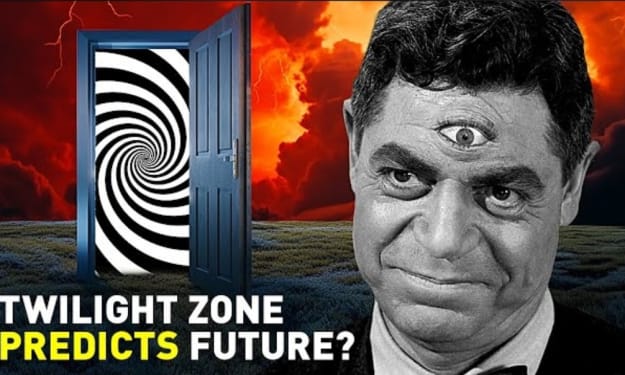
The Twilight Zone: A Timeless Legacy of Sci-Fi, Horror, and Social Commentary
There’s a TV show from the 1960s that still holds immense influence today, inspiring everything from *Final Destination* to *Black Mirror*. This show, *The Twilight Zone*, created by Rod Serling, became a cornerstone in sci-fi and horror television. Its impact is so strong that it still ranks among the TV guide’s 50 greatest TV shows, decades after its original run. *The Twilight Zone* was not just another anthology series—it became a cultural phenomenon. Each episode presented a new story where ordinary people were confronted with strange, often unsettling events, and the signature twist ending always left viewers with something to ponder. Serling, the mastermind behind it all, was the executive producer, head writer, and narrator of the show. His voice delivered the chilling intros and outros that framed the bizarre happenings, often explaining how characters ended up in “The Twilight Zone.” Interestingly, the term “Twilight Zone” entered the lexicon in the 1990s as a way to describe situations where reality seemed to blur with the unreal, a feeling of being stuck between two worlds. Over time, it even came to represent the deepest, most mysterious parts of the ocean, where no sunlight reaches. The name perfectly matched the surreal, otherworldly feel of the series. The show attracted a wide range of actors, many of whom went on to have significant careers in Hollywood. It was also a launching pad for younger stars. Icons like Buster Keaton even made appearances—Keaton starred in season 3, episode 13, an example of the kind of cross-generational appeal the show had. Though *The Twilight Zone* aired originally in the late 1950s and early 1960s, its influence stretched far beyond its time. For Halloween, it became synonymous with spooky TV marathons, with people gathering to watch the show’s eerie episodes. It also offered up plenty of costume inspiration, as characters like the frightening “Talking Tina” from season 5, episode 6, prefigured the likes of Chucky and Annabelle in later horror films. One of the most unsettling episodes is “Eye of the Beholder” from season 2, episode 6, which keeps viewers on the edge of their seats, wondering what lies beneath the bandages of Miss Janet Tyler. The darkness and suspense of the episode continue to be a classic choice for Halloween viewing. The show even inspired official holidays, such as National Twilight Zone Day on May 11th, a day to celebrate its lasting cultural influence. It’s not just TV shows that owe a debt to *The Twilight Zone*—films and other media took inspiration from its themes. For instance, *The Simpsons* often parodied the show, and George R.R. Martin, the creator of *Game of Thrones*, began his writing career by contributing to the *Twilight Zone* revival in the 1980s. While the revival didn’t have the same level of success as the original, it helped launch his career. This experience provided him with valuable lessons in TV writing. The series also influenced blockbuster films like *The Truman Show* and *Final Destination*, which built upon *The Twilight Zone’s* themes of predestination, fate, and the strange intersection between the real and the imaginary. The episode “The Monsters Are Due on Maple Street” centers around a neighborhood that falls apart after rumors of an alien presence, which directly inspired the 2007 film *The Mist*, directed by Frank Darabont. Another episode, “Mirror Image,” about a woman encountering her doppelganger at a bus station, clearly inspired Jordan Peele’s 2019 horror masterpiece *Us*. Even *The Sixth Sense* and *Jacob’s Ladder* trace their roots to *The Twilight Zone*, particularly the story “An Occurrence at Owl Creek Bridge,” which featured a twist ending that made waves in the world of psychological horror. In the episode “Five Characters in Search of an Exit,” five people find themselves in a strange room with no memory of how they got there. This premise, which plays with the concept of being trapped in an inexplicable space, shares similarities with the 2007 movie *Cube*, where strangers are confined to a deadly maze. While the director of *Cube* never confirmed the inspiration, fans have often drawn parallels between the two. Some of the *Twilight Zone’s* episodes were groundbreaking and ahead of their time. One such episode, “The Encounter,” was banned for 50 years. This episode, which tackled themes of war, hidden biases, and racial tension, made a bold statement about social issues—something that *The Twilight Zone* was known for. Interestingly, sci-fi allowed the show to address these deeper societal problems, as TV networks were more willing to air stories about extraterrestrials and the unknown than straightforward drama series. What made the show stand out was its format: each episode was a self-contained story. Unlike most TV shows of the time, which followed ongoing story arcs, *The Twilight Zone* presented a new tale each week. These stories were usually about ordinary people in extraordinary circumstances, often with a moral lesson or a twist that left viewers questioning the nature of reality. Despite its massive success, the show was canceled in 1962, just before the start of season 4. It had been facing difficulties—finding a sponsor was a struggle, and CBS changed its schedule, replacing the show with a comedy series, *Fair Exchange*. Though *Fair Exchange* failed to gain traction, and CBS sought to bring Serling back, by that point, he had burned out. The show’s move to a full hour in season 4 also didn’t sit well with audiences, and ratings began to decline. Serling’s daughter, Anne, had an interesting relationship with the show. When she was younger, she didn’t understand her father’s role in creating such strange and eerie stories. One day, a schoolmate asked her where her father got his ideas, leaving her puzzled. Years later, after her father’s death, Anne began watching the show as a way to feel closer to him. The surreal nature of *The Twilight Zone* took on new meaning for her, offering a connection to the father she had lost. Rod Serling’s role as the narrator was initially offered to Orson Welles, but the latter’s high fee made him unaffordable. Serling, however, stepped in and became synonymous with the show’s tone and atmosphere. Today, *The Twilight Zone* is available on streaming platforms, and its legacy continues to captivate new generations. If you decide to watch the series, you’re diving into one of the most influential shows in TV history—a series that blurred the lines between reality and imagination, sparking creativity in TV, film, and beyond.
By Nora Ariana2 years ago in Education
When Luck Runs Out: A Collection of Everyday Mishaps. Content Warning.
**Unlucky Days: A Series of Mishaps** Imagine waking up and glancing at the clock to see it's 9:15. You're terribly late. In a rush, you make a cup of coffee, only to realize you’ve added salt instead of sugar. As you sip the awful concoction, you try to shrug it off, thinking the day can't get worse. But life has other plans. While sprinting to catch the bus, it pulls away just as you arrive. Frustrated, you believe this is the worst day ever—but you’d be wrong. Let’s consider someone else. He wakes up in a good mood, heading to the bathroom to wash up. But to his shock, the mirror has been replaced. Worse still, the new one is crooked, making grooming a nightmare. If that's not bad enough, another individual forgets to reattach the guard on their hair trimmer, accidentally shaving off a significant chunk of hair. Moving on, imagine being locked out by your own dog. Perhaps this pet was upset because their breakfast was delayed. But even when breakfast is served, it can go awry. One person discovered their refrigerator had frozen an egg solid. Another accidentally seasoned their food with heaps of salt instead of sugar. In the workplace, disasters can strike too. Picture a coffee shop worker dealing with a burst container of beans, spilling seven pounds of coffee. Meanwhile, at home, someone's sister’s makeup bag was crushed after their father sat on it, leaving a chaotic mess. Then there’s the world of gadgets. A man trying to microwave his lunch sees the appliance burst into flames. Another breaks a knife trying to slice butter. One person even lost their phone while attempting to feed birds, accidentally tossing it into the water instead of bread. Transportation issues also top the list of unlucky events. Someone gets their bike stuck in wet cement, while another finds their car buried under snow. And yet another individual, mid-camping trip, discovers their car key won’t work, leaving them stranded miles from home. Sometimes, even celebrations go wrong. A person baking brownies ruins them by placing candles on the still-hot dessert, causing the wax to melt. Another orders a birthday cake resembling their pet, but the result looks nothing like the animal, leaving even the cat unimpressed. And then there are structural mishaps. One homeowner trying to install shelves accidentally shatters their toilet when everything falls off the wall. In another case, a man drills into a hot water pipe instead of the intended wall spot, creating a plumbing disaster. Even leisure activities aren’t immune. Someone enjoying a puzzle watches in horror as their pets knock the finished piece onto the floor, scattering 1,000 pieces everywhere. Meanwhile, another person at a trampoline park mistakenly takes someone else’s shoes home, leaving the original owner shoeless. If you thought your day was bad, consider this: a person lands a new job after months of unemployment, only to trip on a carpet and break their leg five minutes into their first day. Or the traveler who opens their luggage after a flight to find it completely destroyed. Despite all these mishaps, there’s a silver lining. Studies show that staying positive makes you more productive and happier overall. So next time something goes wrong, remember that the rest of your day can still turn around—it’s all about your perspective.
By Nora Ariana2 years ago in Education