movie review
Movie reviews for the lifelong learner; films about inspiring educators, the college experience, high school woes, education rights worldwide and more.
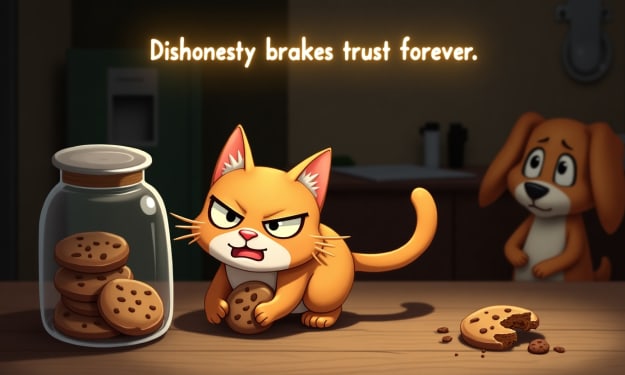
The Sneaky Cat
Once upon a time, in a peaceful little village, there lived a kind old woman named Mrs. Meera. She had a small farm where she kept chickens for their eggs. Mrs. Meera was known for her generosity—she often shared fresh eggs with her neighbors and even gave food to stray animals.
By Shahzad Khanabout a year ago in Education
"The International Space Station: A Beacon of Human Cooperation and Scientific Discovery"
The l Space Station: Humanity's Laboratory in Orbit he International Space Station (ISS) is one of humanity's most significant and ambitious achievements in space exploration. Orbiting the Earth at an average altitude of 400 kilometers (about 250 miles), the ISS is a large spacecraft and scientific laboratory that serves as a platform for international cooperation, scientific discovery, and technological innovation. With contributions from space agencies across the globe, the ISS stands as a symbol of what nations can achieve together in the pursuit of knowledge and exploration. Brief History The roots of the ISS project go back to the 1980s, when the United States and its allies envisioned a permanent space outpost in low Earth orbit. Originally planned as “Freedom,” a U.S.-led space station concept, the project evolved significantly in the 1990s. Following the end of the Cold War, a new opportunity emerged for collaboration between former rival nations. In 1998, the first module of the ISS, Zarya, was launched into orbit by Russia. Soon after, the U.S. module Unity was added, and over the following years, various other modules and components were delivered and assembled in space. This modular design allows for flexibility and expansion, and the station has continued to grow over time. ### International Cooperation The ISS is a joint project involving five main space agencies: NASA (United States), Roscosmos (Russia), ESA (European Space Agency), JAXA (Japan Aerospace Exploration Agency), and CSA (Canadian Space Agency). Altogether, more than 15 nations have participated in its construction, maintenance, and utilization. Each partner agency contributes to the station's hardware, software, operational responsibilities, and crew. For instance, Russia provides modules such as Zvezda and supplies transportation via its Soyuz spacecraft. Canada contributed the robotic Canadarm2, a vital tool for spacewalks and cargo handling. ESA’s Columbus laboratory and Japan’s Kibo module are key facilities for scientific research.
By Nasir Khanabout a year ago in Education
Trapped in the Spotlight: The Digital Illusion Shaping Our Children’s Future
"The Glitter of TikTok and the Crumbling Future of Our Children" In today’s world, where a child’s hands should be holding a pen, they are instead gripping a smartphone—performing in front of a camera. Where there should be dreams of knowledge, insight, and service in their eyes, there is now an obsession with likes, views, and followers. This generation is growing up not recognizing their inner strengths, nor realizing the value of their time. They are trapped in a digital illusion, where the only desire is: “Let people watch me, praise me, admire me.” But have we ever truly stopped to think? The same people who shower them with likes and compliments today will move on to someone else tomorrow. And these children—left behind—will find themselves drowning in purposelessness, loneliness, and low self-esteem. This isn’t just about short videos. It’s about an entire generation’s future slipping through our fingers. --- The Crisis We Cannot Ignore The rise of platforms like TikTok has revolutionized how the young perceive success. For many, it’s no longer about academic excellence, moral values, or community service—it’s about going viral. The problem isn’t technology itself; it’s how it’s shaping the minds of children who are too young to understand its long-term consequences. A teenager who once dreamt of becoming a doctor or engineer now aspires to become a content creator—not out of passion or purpose, but because they believe it’s the easiest path to fame. Creativity is not the problem. Expression is not the problem. The problem is the vacuum of values, the absence of mentorship, and the glorification of superficial fame. --- Parents and Teachers Must Wake Up This is a call to parents, teachers, and all those who care about the future of this generation: we cannot afford to stay silent anymore. Today’s children need more than gadgets and internet access. They need love, guidance, supervision, and purpose. They need to be told, over and over again, that: > “True success is not found in likes and views, but in using your abilities for the betterment of humanity.” A meaningful life is not about how many people watch your content—it’s about how many lives you touch with your character, kindness, and contributions. --- What Needs to Be Done? Here are some practical steps for how we can address this growing issue: 1. Parental Involvement Parents must take an active role in their children's digital lives. This doesn’t mean banning social media entirely—it means setting boundaries, discussing its impact, and being present. A child ignored at home will always look for attention elsewhere. 2. Education Reform Our schools must adapt. Along with academic subjects, we must introduce courses on digital literacy, mental health, and responsible online behavior. Children should be taught the difference between real achievement and online popularity. 3. Role Models Matter Influencers, celebrities, and even older students must realize the power of their example. When someone with millions of followers talks about discipline, reading, and self-improvement—it inspires. We need more role models who promote values, not just trends. 4. Promote Creativity with Purpose If a child is talented in video-making, photography, or performance arts, don’t suppress it. But channel that creativity into meaningful content—educational videos, storytelling, awareness campaigns. Teach them how to use media to build, not to distract. --- The Bigger Picture The world behind the camera is fleeting. What trends today becomes forgotten tomorrow. But the knowledge gained through books, the respect earned through character, and the satisfaction found in service—these are eternal. This is not about banning TikTok. It’s about redefining its role in our lives. It’s about asking the hard questions: What kind of adults will these children become? What values will shape their lives? What legacy will they leave behind? --- Hope for the Future It’s not too late. Children are like soft clay—easy to mold but quick to harden. If we act now, we can still shape their future. If we guide with compassion, not control, they will listen. If we inspire with vision, not fear, they will follow. They need to be told that their lives are worth more than a viral video. That their value isn’t measured by followers, but by the good they do. That real joy comes not from screens, but from learning, growing, and helping others. --- Final Words Let’s remember: every video posted today writes a line in the story of tomorrow. Let’s help our children write stories of courage, compassion, and creativity—not just clicks and comments. Because the future isn’t built on trends—it’s built on truth, talent, and timeless values. So let's stand up, speak out, and save a generation before it’s too late.
By Ikram Ullahabout a year ago in Education
The Lie That Grew Too Big
I was eleven when I told the lie. I still remember the way my heart pounded in my chest and how my tongue felt like sandpaper when I said it. It was supposed to be harmless—a quick fix to avoid a little embarrassment. But lies, as I learned, are never small. They grow, feed on fear, and eventually, they swallow you whole.
By Ahmad Malikabout a year ago in Education
Sci-Fi with Moral Dilemmas
Start writing... Sci-Fi with Moral Dilemmas When the Future Makes Us Question What’s Right Imagine a future where machines can think, space travel is common, and people live for hundreds of years. Sounds exciting, right? But what happens when those amazing things come with difficult choices? That’s where sci-fi with moral dilemmas becomes more than just entertainment—it becomes a way to ask deep questions about right and wrong. The Power of Sci-Fi Science fiction isn’t just about flying cars or aliens. It’s about ideas. Sci-fi writers often take real-world issues—like racism, war, poverty, or freedom—and place them in a future setting. That way, we can see the problems more clearly and think about them in new ways. One of the most powerful parts of sci-fi is the moral dilemma. That’s when a character must choose between two difficult options, and neither choice feels completely right. These stories make us think: What would I do in that situation? And sometimes, the answer isn’t easy. A Story: The Clone Question Let’s imagine a story. In the year 2140, a brilliant scientist named Dr. Lena creates human clones to help save the planet. These clones clean the oceans, plant trees, and work dangerous jobs. They are smart and strong, but they were designed only to serve. One day, a clone named Elan asks a question: “Do I have a soul?” Dr. Lena is shocked. She never thought the clones could wonder about life or death. Suddenly, her project doesn’t feel so simple. She created these beings—gave them life—but did she also create pain? Do they have feelings, dreams, or even rights? Now, Lena must choose: Shut down the program and protect the clones’ freedom Or continue the work to save the Earth, knowing the clones will suffer This is a classic sci-fi moral dilemma. What’s more important—saving the planet or saving individual lives? There’s no easy answer, and that’s what makes it powerful. Why We Love These Stories Sci-fi with moral dilemmas stays with us long after we finish reading or watching. It asks big questions like: Should we live forever if it means giving up love? Can a robot be punished for doing what it was programmed to do? Is it okay to erase someone’s memory to protect them? These stories show us how complicated the future could be. And they remind us that even with better technology, we still face the same basic challenge: doing the right thing. Famous Examples Some of the best sci-fi stories explore moral questions: Blade Runner (film): Are androids with emotions truly alive? Black Mirror (TV series): Should we use technology that can control our minds or memories? The Giver (book): Is a peaceful world worth it if no one feels true joy or pain? Each of these tales brings us face-to-face with difficult choices—and they don’t always give us clear answers. Writing Your Own Sci-Fi Dilemma You don’t need to be a scientist to write a great sci-fi story. Start with a question like: What if we could bring back the dead—but only for 24 hours? What if people had to pay for every memory they wanted to keep? What if an AI decided who should fall in love? Think about how your characters would react. What would they risk? What would they protect? That’s where the heart of your story lies. The Lesson Behind the Laser Guns It’s easy to get caught up in the cool stuff—robots, spaceships, lasers. But the best sci-fi is about people—their hopes, fears, and struggles. Moral dilemmas give those stories real meaning. We may not live on Mars or have robot assistants (yet), but we do face hard choices every day. Sci-fi helps us imagine how those choices might look in the future—and maybe, just maybe, it helps us make better ones now. --- In the end, science fiction with moral dilemmas isn’t just about the future. It’s about who we are, and who we want to become.
By Qaseem Ahmadzaiabout a year ago in Education
The Evolution of Hackers: When Progress Turns into a Digital Battlefield.
Cybersecurity vs. Hackers: The Global Race to Secure the Digital World. Technology has never moved faster than it does today. With each advancement in artificial intelligence, software development, and data engineering, our digital world becomes both smarter and more vulnerable. For every brilliant programmer creating secure systems, there are shadowy figures trying to break them.
By Sayed Zewayedabout a year ago in Education
"Unlock Minds, Ignite Powerful Change"
In a world driven by rapid innovation, shifting economies, and global interconnectivity, the ability to access, absorb, and apply knowledge is one of the most powerful tools for transformation. The phrase “knowledge is power” transcends time, holding true in classrooms, boardrooms, communities, and nations alike. But knowledge by itself is not enough. When knowledge is unlocked—shared freely, nurtured with curiosity, and applied with purpose—it becomes the spark that ignites powerful change.
By Mukhtiar Ahmadabout a year ago in Education
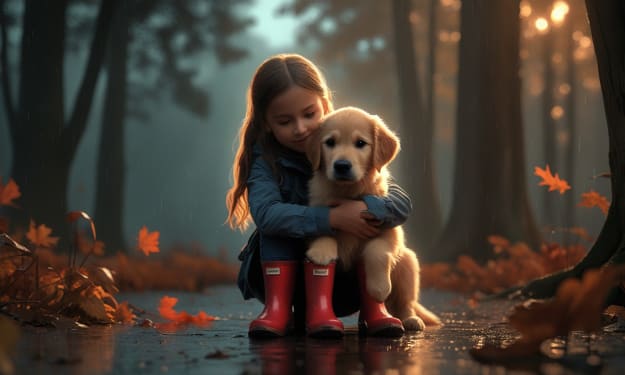
The Little Girl and the Lost Puppy – A Heartwarming Tale of Kindness
A Whimper in the Rain The storm growled like an angry beast, its thunder shaking the windows of Emma’s tiny house. Rain lashed against the glass, turning the world outside into a blur of gray and gloom. But beneath the howling wind, Emma heard something else—a sound so small and sad it made her heart squeeze tight.
By Ahmad Malikabout a year ago in Education