list
The best in education made simple and easy; lists for all things school-related, from websites that sell cheap textbooks to the 'most expensive colleges' lists that will put you in the red.
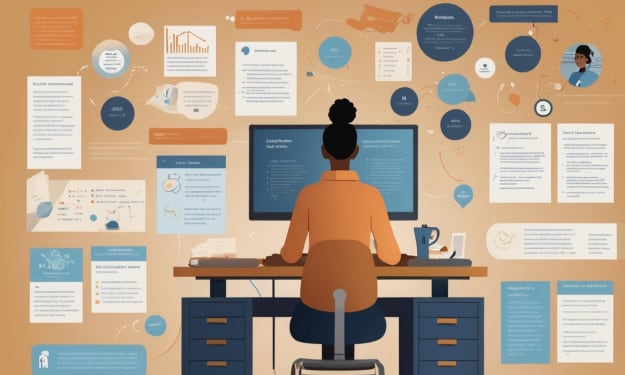
From Burnout to Freedom: Emma’s Journey to Finding the 10 Best Work-from-Home Jobs Without Investment
**The 10 Best Work-from-Home Jobs Without Investment: A Journey to Financial Freedom** In the bustling city of New York, Emma sat at her tiny kitchen table, sipping her third cup of coffee. The clock ticked past 10 a.m., and she felt the weight of her 9-to-5 job pressing down on her shoulders. The daily commute, the endless meetings, and the office politics had drained her spirit. She longed for a change—a way to earn a living without sacrificing her peace of mind. That’s when she stumbled upon an article titled *“10 Best Work-from-Home Jobs Without Investment.” * Intrigued, she began reading, and her life was never the same. --- ### 1. **Freelance Writing** Emma had always loved writing. In college, she penned short stories and essays that her professors praised. The article suggested freelance writing as a viable work-from-home option. Platforms like Upwork, Fiverr, and ProBlogger were listed as great places to start. Emma decided to give it a shot. She created a profile, showcased her writing samples, and within a week, she landed her first client—a small business owner who needed blog posts. The pay wasn’t much, but it was a start. Over time, Emma built a portfolio and increased her rates. She realized she could turn her passion into a sustainable career. --- ### 2. **Virtual Assistant** Next on the list was becoming a virtual assistant (VA). Emma had excellent organizational skills and experience managing schedules from her previous job. She signed up on platforms like Belay and Time Etc. Her first client was an entrepreneur who needed help with email management and calendar scheduling. Emma enjoyed the flexibility and the variety of tasks. She quickly learned that being a VA didn’t require any upfront investment—just a reliable internet connection and a willingness to learn. --- ### 3. **Online Tutoring** Emma had a knack for teaching. She had tutored her younger siblings in math and English, and the article mentioned that online tutoring was in high demand. She signed up on platforms like VIPKid and Chegg Tutors. After a quick application process, she began teaching English to students in China. The joy of helping others learn was immensely satisfying, and the pay was decent too. Emma realized she could make a difference while earning from the comfort of her home. --- ### 4. **Social Media Management** Emma was no stranger to social media. She had always been active on Instagram and Twitter, and the article suggested that businesses were willing to pay for someone to manage their online presence. She reached out to a few local businesses and offered her services. Soon, she was managing the social media accounts of a bakery and a fitness coach. Emma learned about scheduling tools like Hootsuite and Canva, which made her job easier. She discovered that creativity and consistency were key to succeeding in this field. --- ### 5. **Affiliate Marketing** The concept of affiliate marketing fascinated Emma. The article explained that she could earn commissions by promoting products she believed in. She started a blog about sustainable living and joined affiliate programs like Amazon Associates and ShareASale. Emma wrote honest product reviews and shared affiliate links. At first, the earnings were minimal, but as her blog gained traction, so did her income. She realized that patience and persistence were essential in affiliate marketing. --- ### 6. **Transcription** Emma had always been a fast typist, and the article mentioned transcription as a viable work-from-home job. She signed up on platforms like Rev and TranscribeMe. Her first task was transcribing interviews for a podcast. While the work was repetitive, it paid well, and Emma appreciated the flexibility. She invested in a good pair of headphones to improve her efficiency and soon became one of the top transcribers on the platform. --- ### 7. **Online Surveys and Market Research** Emma was skeptical about this one, but the article assured her that legitimate platforms like Swagbucks and Survey Junkie could provide a steady side income. She decided to give it a try during her free time. While the earnings weren’t life-changing, they were enough to cover her monthly Netflix subscription. Emma realized that every little bit helped, especially when it required minimal effort. --- ### 8. **Content Creation (YouTube/Blogging)** Emma had always dreamed of starting her own YouTube channel. The article encouraged her to take the plunge. She bought a basic camera and started creating videos about her journey to financial freedom. At first, the views were low, but Emma remained consistent. Over time, her channel grew, and she began earning through ad revenue and sponsorships. She also started a blog to complement her videos, further diversifying her income streams. --- ### 9. **Selling Digital Products** Emma had a talent for graphic design, and the article suggested creating and selling digital products like eBooks, templates, and printables. She designed a set of budget planners and listed them on Etsy. To her surprise, they sold out within weeks. Emma realized that digital products required an initial time investment but had the potential for passive income. She continued creating and selling, eventually turning it into a profitable venture. --- ### 10. **Remote Customer Service** Finally, the article mentioned remote customer service jobs. Emma applied to companies like Amazon and LiveWorld. She was hired as a customer service representative for an e-commerce platform. The job required her to handle customer inquiries via chat and email. Emma appreciated the structured hours and the steady paycheck. She realized that remote customer service was a great option for those who preferred a more traditional work setup. --- As Emma explored these work-from-home opportunities, she discovered a newfound sense of freedom and fulfillment. She no longer dreaded Mondays or felt trapped in a monotonous routine. Instead, she embraced the flexibility and creativity that came with working from home. Emma’s journey wasn’t without challenges—there were days when she doubted herself and moments when the workload felt overwhelming. But she persevered, knowing that the rewards far outweighed the struggles. By the end of the year, Emma had built a thriving freelance career. She had multiple streams of income, from writing and tutoring to affiliate marketing and content creation. She had also saved enough to take a trip to her dream destination—Bali. As she sat on the beach, watching the sunset, Emma reflected on how far she had come. That one article had changed her life, proving that with determination and the right opportunities, anyone could achieve financial freedom without a hefty investment. Emma’s story is a testament to the power of remote work. Whether you’re a writer, a teacher, or a creative soul, there’s a work-from-home job out there for you. All it takes is a willingness to take the first step. So, what are you waiting for? Your journey to financial freedom begins today.
By Abhijit Debnath2 years ago in Education
US employers added 151,000 solid jobs last month, but the unemployment rate rises to 4.1%
Despite a slight increase in unemployment, the US economy continues to show resilience. The latest job posting report includes US employers added 151,000 solid new jobs the previous month. This is a positive sign of economic growth. but, Despite this growth, the unemployment rate rose to 4.1% compared to 3.9% the previous month. This article will do so
By Sulove Nandi2 years ago in Education
William Wordsworth and his poem Daffodils
William Wordsworth, the romantic poet of nature accumulate his thought of natural beauty,aesthetic mechanism ad romanticism through his poem Daffodils. It is a marvelous masterpiece of Romantic poetry that spread an essence of love for nature.he poem was famously inspired during a walk Wordsworth took with his sister, Dorothy, around Lake Grasmere, located in the Lake District of England in April of 1802. Two years later, Wordsworth penned his lines about the vast field of daffodils the two had come across. Changes in wording and the addition of the second stanza occurred in 1815. The final incarnation is the one familiar to readers today. While the poem is sometimes considered too sentimental by critics, it is still recognized and referred to today.Wordsworth and fascination with the natural world and explores the emotional response one might have from it. His philosophy surrounds the notion that nature can be a restorative and a great source of inspiration. His writing helped propel English literature for years after his death and is widely studied and admired to this day.
By Tusher Enam2 years ago in Education
AI Take Over These Jobs in thWille Next 5 Years
AI Will Take Over These Jobs in the Next 5 Years—Are You Prepared?Artificial intelligence (AI) is evolving rapidly, transforming industries and reshaping the global workforce. While AI has created new opportunities, it is also set to replace many jobs in the near future. In the next five years, certain roles will be at high risk of automation, forcing workers to adapt or risk being left behind.If you're in one of these professions, now is the time to upskill, pivot, or embrace AI to stay relevant. Let’s explore the jobs AI is most likely to take over by 2030.1. Data Entry Clerks – Replaced by AI-Powered AutomationData entry has long been a repetitive and time-consuming task. AI-driven software, such as Optical Character Recognition (OCR) and Robotic Process Automation (RPA), can now scan, interpret, and input data with incredible accuracy. Companies are increasingly using AI to reduce errors, cut costs, and process data faster than human workers.If you’re in this field, consider learning data analytics or AI-powered tools to transition into a higher-value role.2. Customer Service Representatives – Chatbots Are Taking OverAI chatbots and virtual assistants, like ChatGPT and Google’s Bard, have drastically improved their ability to handle customer queries. They provide instant responses, 24/7 support, and can process multiple conversations simultaneously—something human representatives cannot compete with.While AI won’t completely replace human interaction in customer service, businesses are already using chatbots to handle the majority of inquiries. If you work in this field, developing skills in AI management, problem-solving, and emotional intelligence can help you stay relevant.3. Retail Cashiers – Self-Checkout Kiosks and AI-Powered StoresThe rise of self-checkout kiosks and AI-driven cashier-less stores (like Amazon Go) is eliminating the need for human cashiers. AI systems use cameras, sensors, and machine learning to track purchases and charge customers automatically, making checkout lines obsolete.For those in retail, shifting to customer engagement, inventory management, or e-commerce roles may be a smart move.4. Truck Drivers and Delivery Workers – Self-Driving Vehicles Are ComingAutonomous driving technology is progressing rapidly, with companies like Tesla, Waymo, and Uber investing billions in self-driving trucks and delivery bots. While AI-driven vehicles are not yet perfect, they are expected to disrupt the transportation industry significantly.This doesn’t mean truck drivers will disappear overnight, but long-haul and repetitive delivery routes are highly vulnerable to automation. Learning logistics management, vehicle maintenance, or AI-assisted transport coordination could help professionals in this sector stay ahead.5. Bank Tellers and Loan Officers – AI-Powered Banking Is HereWith the rise of digital banking, AI-driven financial advisors, and automated loan processing, traditional banking roles are rapidly declining. AI algorithms can analyze credit scores, approve loans, and detect fraudulent activities faster and more accurately than humans.To stay relevant, bank employees should focus on financial consulting, cybersecurity, or AI-driven financial analysis.How to Future-Proof Your CareerAI isn’t just replacing jobs—it’s creating new opportunities. Instead of fearing automation, workers should focus on upskilling and adapting. Here are some strategies:Learn AI and Data Analytics – Understanding how AI works and how to use data-driven insights will be valuable in almost every industry.Develop Soft Skills – Creativity, emotional intelligence, and critical thinking are difficult for AI to replicate.Embrace Lifelong Learning – Stay ahead by continuously improving your skills and adapting to new technologies.Final ThoughtsThe AI revolution is inevitable, but it doesn’t have to be a threat. By staying informed and adapting to new technology, workers can turn this shift into an opportunity. Instead of asking, "Will AI take my job?" the better question is, "How can I work alongside AI to enhance my career?"What are your thoughts? Do you think AI will take over more jobs than expected? Share your views in the comments below!
By Prince Emmanuel Benson O2 years ago in Education