interview
Interviews with educators, innovative graduate students and individuals who've devoted their lives to the development of the world's youth.
Why 502 Bad Gateway Happens and How to Resolve It Quickly
In the digital era, smooth and reliable website performance is a necessity for businesses, developers, and users alike. Yet, even the most optimized sites occasionally encounter errors. Among them, the 502 Bad Gateway error is one of the most common and frustrating. It disrupts user experience, causes downtime, and sometimes leaves administrators scrambling to find the root cause.
By Scott Anderyabout a year ago in Education
Money Mastery Zone – Secrets to Financial Freedom Online
Money Mastery Zone – Secrets to Financial Freedom Online In today’s fast-changing world, the internet has become more than a place to scroll, shop, or chat. It has become a gateway to financial freedom. Ordinary people—students, parents, office workers, and even retirees—are learning how to turn laptops and smartphones into tools for building real income. Welcome to the Money Mastery Zone, where you’ll discover the secrets to creating financial independence online without needing a million-dollar budget or a fancy degree.
By Sharifullah Muhammadiabout a year ago in Education
10powerfull foods to boost your brain
in this lesson I want to share with you one of the biggest questions we get with students is this gem what do I eat for high mental performance what are the best brain foods for better focus better retention and memory better thinking and also not just for me but for my friends and my family what should I start on now and really that's the best thing start now start early there's this quote that says the best time to plant a tree was 20 years ago but the second best time is today because what you eat matters especially for your gray matter so in this lesson I'm going to share with you 10 of my favorite brain foods and this is in the area of neuro nutrition neuro nutrition that your brain actually has specific nutrient requirements different than the rest of your body so you want to eat these foods and for the most part they are delicious and they're certainly very nutritious and so let's go through it I'm going to share with you my top 10 favorite brain foods and also a brain tool a memory tool on how to remember all 10 forwards and backwards have you ever gone to the grocery store to buy one thing you come back with a bag or two bags full of things except for what that one thing that you went there for so a lot of people would have to write their grocery list twice or three times in order to remember it and they forget the list you're not gonna have to do that have you ever like had to remember something when you can't write anything down I'm going to show you a tool on how to do that and it's called the location method I'm going to show you a location called your body your body it's a location you bring with you all the time you always have it with you so I want you to imagine that we are going to take 10 parts of your body starting from the top all the way to the bottom and I'm going to take each of the brain foods and put them in the corresponding place on your body so let's do that right now I want you to do this with me number one is top touch the top of your head and say top number one is what say it out loud top but you have to touch your head I know it looks a little weird if you're around people right now but just just do it people feel like you're doing some really cool they're probably thinking they probably know you're doing this brain exercise number one is what top number two going down your body is your what nose say two is your auditory memory knows good three is your mouth so three is touch your mouth and say mouth four on the side of your head are your ears good for your ears and five is your larynx your larynx this is your throat so that's one through five six are your shoulders six are what say it out loud shoulders seven is your collar seven is your collar good eight are your fingers wiggle your fingers eight of your fingers nine is your belly touch your belly and ten is your seat your seat your rear end you got it that's one through ten let's do it again one is what top two nose three mouth four ears five larynx very good six shoulders seven collar eight fingers nine belly ten seat wonderful now what we just created is a new list a filing system on your body that you could use to store more information now what information are we storing in this case the top 10 brain foods we're going to take each of these 10 foods turn into a picture which already is and put it in the corresponding place and you're going to do it with emotion and exaggeration and action are you ready you wanna make it a little silly right pretend you're eight years old if you're not sure what to do pretend you're eight what would an eight-year-old do okay let's do it the first brain food are avocados I want you to imagine avocados on the where top of your head what could you imagine maybe you're making guacamole on the top of your head avocados great source of fats very good brain fat avocado all over the top of your head maybe you're balancing a big avocado on the top of your head now it doesn't matter what you use there's no right or wrong just good better and best whatever you choose that's probably the best but make it Vivid and make it emotional you ready let's do this quicker now second place on your body is what your nose out of your nose I want you to imagine blueberries blueberries I like to call them brain berries the antioxidants very neuroprotective imagine blowing your nose and you have blueberries coming out of your nose those brain berries coming out of your nose see it feel it maybe even smell it don't don't taste it after it's been in your nose but you get the idea right blueberries nose what's the third place on your body your mouth good the third brain food broccoli broccoli good broccoli good source of vitamin K also good fiber broccoli wear in your teeth you know what but not just a little piece of broccoli in your teeth I want you to imagine like a big stalk of broccoli in your teeth good that's number three number four are your what your ears very good and I want you to remember olive oil do you love olive oil olive oil imagine you're cleaning your ears with olive oil or maybe your what else you do as a creativity test maybe you're wearing olives for earrings okay imagine that on your ears very good some people like there's been some research to suggest coconut oil is a good alternative as well MCT you know MCT oil with the Coconuts also so that's number four number five is what your larynx your larynx that's your throat area I want you to remember eggs eggs good for your brain now if your diet allows eggs neuroprotective good source of vitamin E choline eggs good that's number five I want you to imagine you're trying to swallow a hard-boiled egg not that you would do that or in seven Adam's Apple imagine you have an egg there instead that's number five now by the way what's on the top of your head avocados coming out of your nose blueberries out of your mouth what's stuck in your teeth good broccoli number four what's on your ears or clean your ears olive oil and number five your larynx eggs very good number six are your what your shoulders I want you to imagine green leafy vegetables kale spinach imagine you have shoulder pads made out of kale or spinach spinach solder pads what would that feel like what would that look like on your shoulders do you see that do you feel it it's a little silly right we do not remember the ordinary we remember what's extraordinary what rarely happens okay so shoulder pads green leafy vegetables what's the seventh place on your body collar very good seventh food superfood for the brain wild salmon wild salmon good source of Omega-3s DHA imagine a necklace made out of what wild salmon sardines are a good alternative as well if your diet allows imagine a necklace made of salmon oh that smell like exactly that's why you're gonna remember it eight are your what your fingers the eighth brain food I want to share with you is turmeric turmeric you know that golden powder it's a spice and it gets on things and it's hard for it to come off turmeric is a great anti-inflammatory it helps reduce inflammation in your body so it's a very powerful brain food and so I want to picture turmeric and it's like gets all over your fingers so your fingers are covered in that orange gold I like to in the morning usually as I make this golden milk it's turmeric and like an almond milk base and I heat it up I put a little pepper because research suggests it helps you to absorb the turmeric better and maybe a little honey and it's wonderful it's very soothing anti-inflammatory that's number eight number nine what's the Ninth Place on your body it's your belly good and nine I want you to remember walnuts a wonderful snack high in vitamin E notice also that a walnut looks like the human brain isn't that interesting that certain foods support the organ that it resembles and it's kind of like an interesting signature a sign of nature that a tomato if you cut it it has four chambers like the human heart tomatoes are good for your heart carrot you cut a carrot it looks like a human eyeball which is good for your eyes and so imagine that not that there's science behind that but those are mnemonic memory devices to help you to remember those things another trick you could use basic Association perfect example using basic Association to help you to remember something now when it comes to walnuts imagine walnuts coming out of your belly button you're eating walnuts out of your belly button and then finally what's your tenth place it's your rear end and you need to remember the next and final brain food dark chocolate what do you pick actually I don't want to know what you imagine in picture keep it to yourself but imagine dark chocolate in that area okay just imagine in dark chocolate it has to be dark chocolate not milk chocolate what tends to be good for your mood will be good for your mind dark chocolate now you are at the grocery store and you have your list you didn't have to write it down it's inside you have your notes inside and you're walking down the aisles I want you to take out a piece of paper and just write down the top 10 brain foods pause this lesson now write down the top 10 brain foods in order [Music] welcome back how many of the 10 brain foods do you remember let's go through it together number one on top of your head you have avocados number two out of your nose blueberries number three in your mouth broccoli for your ears what do you clean your ears with olive oil number five your larynx is what eggs good six shoulder what are we using shoulder pads green leafy vegetables number seven is your collar you had a necklace made out of salmon good eight are your fingers whatever what's on your fingers turmeric nine is your belly is what walnuts and rear is what dark chocolate how many did you get foreign
By Ibrahim dayyababout a year ago in Education
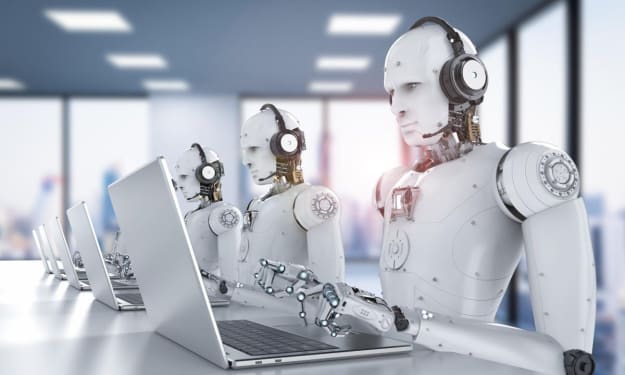
The Rise of Artificial Intelligence: Shaping Our Future
The Rise of Artificial Intelligence: Shaping Our Future In today’s fast-changing digital world, one of the most talked-about trends is Artificial Intelligence (AI). From social media platforms to healthcare systems, AI is transforming how we live, work, and communicate. What was once a futuristic idea is now a daily reality, influencing industries and shaping the future of humanity.
By Article Master about a year ago in Education
When a Cough Isn’t Just a Cough: The Silent Spread of Valley Fever and Aspergillosis
Valley Fever Cases Surge as Climate Change Fuels Spread of Coccidioidomycosis. Online Support Groups Rally to Raise Awareness of a Little-Known but Life-Altering Fungal Disease.
By Dejaye Botkinabout a year ago in Education
The Bridge Between Dreams and Reality
M Mehran Every human being is born with a spark. Some sparks are easy to see—like the child who paints beautiful pictures before even learning to write. Others are hidden, waiting for the right moment to be discovered. What decides whether these sparks fade or ignite into flames? More often than not, the answer is education. The Seed of Possibility Imagine planting a seed in the ground. Left alone, it may grow wild or not at all. But if given water, sunlight, and care, it transforms into something beautiful—a tree that offers fruit and shade. Education works the same way. Children are seeds filled with potential, and learning is the sunlight that helps them grow. But unlike nature, where rain and sun are free, education often comes with barriers—poverty, inequality, lack of access. And yet, when someone breaks through these barriers, the transformation is breathtaking. A child who once walked barefoot to school can grow up to become a doctor saving hundreds of lives. A girl who once studied by candlelight can grow into a leader who changes her community. Education is the bridge between what is and what could be. Stories That Inspire History is filled with stories that prove this truth. Take Dr. Ben Carson, who grew up in poverty in Detroit. His mother, who couldn’t read herself, insisted he spend time with books instead of television. Those books unlocked his curiosity and later carried him into the world of medicine, where he became one of the most celebrated neurosurgeons. Or think of Malala Yousafzai, who faced violence for daring to attend school. Instead of silencing her, the attack turned her into a global voice for education. She reminds us every day that education is not just about personal success—it is about the right to dream. These stories echo a simple truth: education transforms not just individuals, but entire generations. More Than Textbooks When people hear the word “education,” many think of textbooks, exams, and grades. But real education is much bigger. It is the process of learning how to think, solve problems, and connect with others. A person who memorizes every fact in a book but never learns empathy is not truly educated. Education teaches us to look beyond ourselves. It helps us understand history so we don’t repeat mistakes. It shows us science so we can improve lives. It introduces us to literature and art so we can see the beauty in human experience. It is not about filling our minds with information—it is about shaping our character, our choices, and our future. The Role of Teachers Behind every educated person, there is almost always a teacher who believed in them. Teachers are more than instructors; they are architects of the future. They build not with bricks, but with encouragement. They design not with blueprints, but with inspiration. I once met a teacher who used to say, “I don’t just teach math, I teach confidence.” For her, equations were not just numbers—they were lessons in persistence and problem-solving. Many of her students went on to careers they never imagined possible, all because she taught them to believe in themselves. That is the beauty of education: it is not just about what we learn, but about who helps us along the way. The Changing World of Learning Today, education is evolving faster than ever. Technology has turned the world into one big classroom. You no longer need to sit inside four walls to learn. With a phone in your hand, you can attend lectures from world-class universities, practice languages with people across the globe, or watch tutorials that teach you everything from coding to cooking. But this progress also comes with responsibility. We must ensure that access to technology does not deepen the divide between the privileged and the poor. True progress will only happen when every child, no matter where they live, has the same opportunity to learn. Why It Matters Education matters because it is the foundation of freedom. An educated person is harder to deceive, harder to manipulate, and more capable of standing up for justice. A nation filled with educated citizens is a nation equipped to solve problems, innovate, and grow. When we invest in schools, teachers, and learning opportunities, we are not just building classrooms—we are building stronger families, healthier communities, and brighter futures. Education is not charity; it is the smartest investment any society can make. Closing Thought At its core, education is hope. It is the hope that a child in a remote village can one day lead a company. It is the hope that a teenager who struggles today can rise tomorrow. It is the hope that every spark inside us can grow into something extraordinary. Dreams alone cannot change the world. But dreams, combined with education, can. And that is why education will always remain humanity’s greatest bridge between possibility and real
By Muhammad Mehranabout a year ago in Education
The Silent Power of Education
M Mehran There is something almost magical about the way education transforms lives. At first glance, it looks like nothing more than memorizing facts, passing exams, or earning certificates. But in reality, education is far more powerful than most people realize—it is a quiet revolution that starts in the mind and ripples outward, shaping entire societies. Think for a moment about a single classroom. A teacher stands at the front, perhaps with a chalkboard or a digital screen. Around them, rows of children listen, write, and imagine. On the surface, it may not look extraordinary. Yet in those very moments, futures are being written. The child who struggles with a math problem today might one day design a bridge that connects two cities. The girl scribbling in her notebook might become the author who inspires millions. Education is not just about what we learn—it is about who we become. Breaking Barriers One of the most powerful things education does is break barriers. For centuries, entire groups of people were denied access to learning. Women, minorities, and the poor were often told education wasn’t “meant” for them. But history has proven otherwise. The more inclusive education becomes, the more societies grow. Malala Yousafzai, a young girl from Pakistan, is a living example. She raised her voice for girls’ right to go to school and nearly paid with her life. Today, her message is louder than ever: when a girl learns, entire communities rise. Education is the ultimate equalizer—it does not care about your background, your gender, or the wealth you were born into. It only asks if you are willing to open your mind. More Than Degrees Unfortunately, too many people reduce education to grades and degrees. While those are important, they are not the full picture. Education is not just about passing tests; it’s about learning how to think, question, and create. The best classrooms don’t produce robots who can repeat information. They produce thinkers who challenge the world around them. Albert Einstein once said, “Education is not the learning of facts, but the training of the mind to think.” That is where the real power lies. When people learn to think critically, they stop accepting things at face value. They begin asking hard questions—about governments, about fairness, about the future. And it is these questions that lead to progress. Education Beyond the Classroom We often forget that education is not limited to schools and universities. Life itself is a classroom. The mechanic who teaches his apprentice how to fix an engine is educating. The grandmother who passes down family traditions is educating. Even failure has lessons to offer if we are willing to listen. In today’s world, education has expanded far beyond traditional boundaries. The internet has turned smartphones into libraries and online platforms into universities. A child in a small village can now access the same information as a student in a top-tier city school. Knowledge has never been so accessible—and that accessibility is rewriting the story of human potential. The Human Side of Learning At its heart, education is not only about knowledge—it is about connection. Think about your favorite teacher. Chances are, it wasn’t only what they taught you that mattered, but how they made you feel. Great educators inspire confidence, curiosity, and courage. They ignite sparks that often burn for a lifetime. I once knew a boy who hated reading. Books were a chore, and he struggled through every page. But then a teacher gave him a novel that matched his interests—a story about adventure and discovery. That single book turned him from a reluctant reader into someone who couldn’t stop exploring libraries. Years later, he became a journalist. All because one teacher chose to believe in him. This is the human side of education. It’s about more than syllabuses and exams. It’s about helping people discover their own strength. The Future of Education As we look ahead, education faces new challenges and opportunities. Artificial intelligence, online learning, and global connectivity are reshaping the way we learn. Some fear that technology will replace teachers, but the truth is more inspiring: technology will support teachers, making education more personalized and accessible. The real challenge is not whether technology will help us learn, but whether we will ensure equal access. Millions of children still grow up without books, schools, or teachers. If we want education to truly change the world, it must reach everyone—not just those who can afford it. A Call to Action Education is more than a personal journey; it is a collective responsibility. Every time we share knowledge, mentor someone younger, or fight for better schools, we are investing in the future. The ripple effect is endless. One educated child can lift a family. One educated family can strengthen a community. And one educated community can change a nation. The silent power of education is that it does not just teach us what to think—it teaches us how to dream. It gives us tools to shape the world into something better, kinder, and wiser. And perhaps that is the most important lesson of all: when we invest in education, we invest in hope.
By Muhammad Mehranabout a year ago in Education
The Clock That Ate Time
The Clock That Ate Time The little town of Everford was an ordinary place. People went to work, children played in the streets, and the church bells rang every Sunday morning. Yet, at the very center of the town square stood an object no one could quite explain: a clock without hands. It had been there longer than anyone could remember. Old photographs showed it standing tall even a century ago, exactly the same—black, towering, and with an empty circle where the hour and minute hands should have been. Most people ignored it. But there were always whispers: “The clock eats time,” the townsfolk would say, half-joking, half-fearful. The First Incident One autumn afternoon, a boy named Caleb leaned against the clock while waiting for his father. When his father finally arrived, everyone noticed something strange. Caleb looked different—his hair had grown longer, and there were tiny wrinkles around his eyes, as if he had aged ten years in just a few minutes. Doctors couldn’t explain it. Caleb himself swore he had only been waiting for ten minutes. The townspeople grew uneasy, but life continued. People walked past the clock carefully, but they still lived with it, like one lives with a dangerous neighbor—acknowledged but avoided. The Collector Years later, a stranger came to Everford. He wore a long gray coat and carried a suitcase filled with old watches. He called himself Mr. Veyra, a “collector of lost time.” Mr. Veyra spent hours staring at the clock. When people asked what he was doing, he smiled thinly and said, “Every town has its secrets. Yours happens to be delicious.” That night, three townsfolk disappeared. Their families searched desperately, but all that remained were their shoes, neatly placed at the base of the clock. The Experiment Terrified, the mayor ordered the clock destroyed. Workers brought hammers and drills, but no matter how hard they struck, the clock made no sound. It didn’t chip, dent, or crack. Instead, the workers themselves grew older. Their hair turned white, their backs bent, and within hours they were ancient. By morning, they had crumbled into dust. The town understood then: the clock was alive. The Choice Mr. Veyra returned, grinning. “You cannot kill it,” he said. “But you can feed it. Give it a life now and then, and it will spare the rest of you. Ignore it, and it will take what it wants.” The townspeople argued for days. Some wanted to flee, but others feared the clock would follow. In the end, desperation made them choose. Once a month, one unlucky soul was tied to the base of the clock. By dawn, only their shoes remained. And the town was safe—for a while. The Twist Years later, when a curious traveler passed through Everford, he noticed something odd. The people there all looked the same age. Children, parents, grandparents—every face appeared trapped at thirty years old. Their voices were cheerful, but their eyes were hollow, as though they had seen centuries pass. The traveler asked an old shopkeeper why. The shopkeeper only pointed to the center of town, where the handless clock still stood, dark and waiting. “Time must be eaten,” the shopkeeper whispered. “Otherwise, it eats us.” The traveler left before nightfall. No one ever stayed in Everford for long.
By Article Master about a year ago in Education
Integrating Shopify with Next.js: A Modern Approach to Storefronts
In the fast-moving world of e-commerce, building fast, scalable, and user-friendly storefronts is no longer optional—it’s a necessity. Shopify has long been a favorite for businesses looking to launch online stores quickly, while Next.js has become one of the most powerful React frameworks for building performant web applications. When you combine Shopify’s robust commerce capabilities with Next.js’s modern frontend architecture, you get a flexible and future-proof solution for headless commerce.
By Lucas Wadeabout a year ago in Education
The Girl Who Refused to Stop Learning
M Mehran In a quiet village surrounded by rice fields, there lived a girl named Lila who carried books the way other children carried toys. Every morning, she walked three miles to school with her satchel swinging against her side. She loved the sound of chalk scratching the board, the thrill of answering questions, the smell of ink on paper. Education, to her, was not just learning — it was breathing. But one day, her world shifted. --- The Day the Doors Closed At thirteen, Lila’s parents told her she would no longer attend school. “You’re old enough to help at home,” her father said. “Books don’t feed families. Education is for boys, not girls.” Her mother looked down, silent. The next morning, Lila stayed behind as her brothers left for school. She watched the dust rise behind their footsteps and felt something heavy press against her chest. It wasn’t just the loss of school — it was the loss of possibility. --- A Secret Classroom But Lila was not ready to surrender her dreams. At night, after chores were done, she lit a small oil lamp and opened her notebooks. She whispered lessons to herself, repeating multiplication tables, sketching maps, reading every word she remembered. Soon, other girls from the village joined her. They came quietly, carrying scraps of paper and borrowed pencils. In the corner of Lila’s home, under the dim light of a lamp, a secret classroom was born. There were no desks, no blackboards, no teachers. But there was hunger — hunger for knowledge, for freedom, for futures not yet imagined. --- The Unexpected Teacher One evening, a woman named Ayesha, who had once been a teacher in the city, heard about the secret class. She arrived with a bundle of old textbooks and a smile that made the girls sit up straighter. “Education is not a privilege,” she told them. “It is your right. And no one can take it from you as long as you keep learning.” With Ayesha’s guidance, the girls studied science, history, and literature. They learned not only facts but also courage. Education became their rebellion — a quiet, powerful act of resistance. --- The Village Divides News of the secret classroom spread. Some parents were furious, saying girls had no business wasting time on books. Others, however, began to notice changes. Their daughters spoke with more confidence, helped siblings with homework, and dreamed of becoming doctors, teachers, engineers. The village was divided. But the seed had already been planted. Once a child learns to read, she cannot unlearn it. Once she tastes knowledge, she cannot go back to silence. --- Lila’s Turning Point One afternoon, her father caught her teaching younger girls how to write. He demanded, “Why do you persist when I’ve forbidden it?” With trembling hands, Lila held out her notebook. On its cover she had written a single word: Future. “Because I want one,” she said. Her father stood in silence. He saw not just defiance in his daughter’s eyes but also determination, intelligence, and hope. For the first time, he realized that her education was not stealing from the family — it was investing in it. --- The First Graduation Years later, with Ayesha’s help, the girls of the secret classroom applied for scholarships to continue their studies. Against all odds, some were accepted. On the day of her own graduation, Lila walked across a small stage wearing a cap and gown. She looked out at the crowd and saw her father in the front row, clapping with tears in his eyes. That night, he told her, “I was wrong. Your education has brought more to this family than I ever imagined.” --- Why Her Story Matters Lila’s story is not unique. Around the world, millions of girls are still denied education because of poverty, tradition, or gender. Yet time and again, when girls are given the chance to learn, entire communities change. Educated girls marry later, earn more, and ensure their children go to school. Education is not just personal progress. It is generational transformation. --- The Lesson Today, Lila is a teacher. She returns to her village each week, carrying a bag filled with books. She teaches girls under the same tree where she once dreamed of returning to school. Her message is simple: “No matter who you are, or where you begin, knowledge is your power. And once you claim it, no one can take it away.” Her story reminds us that education is not fragile. It may be delayed, hidden, or resisted — but it cannot be destroyed. Because once a child dares to dream of learning, the world will never be the same.
By Muhammad Mehranabout a year ago in Education
The Night School
M Mehran By day, the city’s old community center was quiet. Dusty chairs stacked against the walls, faded posters curling at the edges, a basketball court echoing with silence. But when the sun dipped below the skyline, the lights flickered on and the doors opened to a different kind of classroom: the night school. Here, students weren’t children. They were parents, taxi drivers, factory workers, janitors—people who had once walked away from education but were now walking back. --- The Woman with the Red Notebook Among them was Maria, a mother of two who carried a small red notebook everywhere she went. She worked at a diner all day, then rushed to class in the evenings, her hands smelling faintly of coffee and soap. Maria had dropped out of high school at sixteen to help her family. For years, she told herself it was too late. But the night school gave her another chance. On the first day, the teacher asked, “Why are you here?” Maria’s voice cracked as she whispered, “I want to show my kids that it’s never too late.” She opened her red notebook, wrote the alphabet across the page, and smiled like she had discovered treasure. --- The Retired Teacher The night school was run by Mr. Singh, a retired teacher who could have enjoyed quiet evenings at home but instead chose to spend them in classrooms filled with people chasing unfinished dreams. He often said, “Education is not a clock you can run out of. It is a flame you can relight.” His students weren’t easy to teach. They came exhausted from long shifts, some embarrassed to admit how much they had forgotten. But Mr. Singh’s patience was infinite. He broke lessons into steps, celebrated small victories, and reminded them, “Every page you turn is proof that you’re moving forward.” --- The Struggles The night school wasn’t glamorous. There were no smartboards or shiny textbooks. Sometimes the heating broke. Sometimes students fell asleep at their desks, not because they didn’t care, but because their bodies had already given everything during the day. Yet they returned. The single father who balanced homework and child care. The immigrant who wanted to improve her English so she could open a small business. The teenager who had once been expelled but realized he wanted more than dead-end jobs. Each student carried a story of loss and a hope for renewal. --- Maria’s Turning Point For Maria, math was the hardest subject. Numbers slipped through her fingers like water. One night, after a long shift, she sat staring at fractions until tears blurred the page. “I can’t do this,” she muttered. Mr. Singh pulled up a chair beside her. “Maria, do you know why fractions matter?” She shook her head. “They matter because they remind us that even something broken can be whole again.” Maria looked at him, startled, then back at her notebook. Slowly, she began solving the problem. That night, she got her first answer right. --- Graduation Months turned into years. Students dropped out, new ones joined, but Maria never missed a class. Her children would wait at the diner after school, cheering her on as she finished assignments. Finally, the night came: graduation. The community center was packed, folding chairs lined in crooked rows, balloons tied to the old basketball hoops. When Maria’s name was called, her children leapt to their feet, clapping and shouting, “That’s our mom!” She walked across the stage, holding her red notebook in one hand and her diploma in the other. For her, it wasn’t just a certificate. It was proof that she had turned broken pieces into something whole. --- Beyond the Classroom Education is often seen as something that belongs to youth. We picture backpacks, playgrounds, exams, and lockers. But education belongs to everyone. It belongs to the mother who returns to school after decades, the grandfather learning to read for the first time, the refugee writing English words with trembling hands. The night school in the old community center was proof. It showed that learning doesn’t end with age, circumstance, or failure. It ends only when we stop believing in possibility. --- A Lesson for All of Us Maria now helps her children with their homework at the kitchen table, guiding them through math problems with the patience she once needed for herself. She tells them, “Dreams don’t have expiration dates. They only expire when you give up.” Her story is a reminder that education is not linear. Some journeys take detours, pauses, or years of waiting. But when given a second chance, education can transform not just individuals, but entire families. The night school is still there, its lights glowing each evening like a beacon for anyone searching for another shot. And inside, the sound of pencils scratching, pages turning, and voices reading aloud tells a simple truth: It’s never too late to learn.
By Muhammad Mehranabout a year ago in Education