how to
How tos for the learners and the learned; tips and tricks to help you study effectively, survive your school years, impress your teachers and more.
The Art of Crafting Compelling Game Narratives on a Limited Budget
Creating a game that resonates emotionally with players doesn't require millions in funding or a blockbuster-sized team. In fact, some of the most memorable stories in gaming history have come from indie developers working with tight budgets and limited resources. The secret? Mastering the art of storytelling.
By Richard Bailey2 years ago in Education
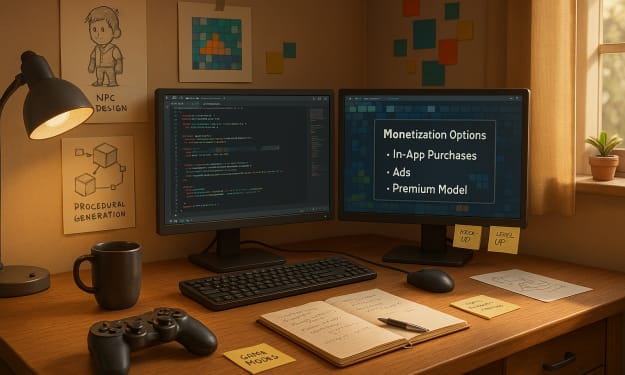
Monetization Models for Indie Games: Balancing Profit and Player Experience
Monetizing an indie game is one of the most important — and often most difficult — parts of indie game development. Striking the right balance between earning revenue and delivering a great player experience can make the difference between a game that thrives and one that fizzles out.
By Richard Bailey2 years ago in Education
Effective Treatments for Seasonal Allergies. AI-Generated.
Seasonal allergies are a common issue that many people face. When the seasons change, pollen from trees, grasses, and weeds can cause allergic reactions in sensitive individuals. These reactions can lead to sneezing, itchy eyes, runny nose, and other uncomfortable symptoms. Thankfully, there are several treatments available to manage these allergies. However, not all treatments are equally effective. This blog will look at what works and what doesn't when it comes to managing seasonal allergies.
By My Health Blog2 years ago in Education
How to Make Your Multivitamins At Home With Local, Affordable, Natural,and Ingredients. AI-Generated.
Are you tired of expensive multivitamin supplements? You’re not alone. Many families are seeking healthier, more affordable alternatives—especially in communities where commercial supplements are either costly or unavailable.
By Juliana Ndalnamu2 years ago in Education
Blue Zone Eating Habits You can Start Today
Introduction What if the secret to a longer, healthier life isn't locked in a pill or a high-tech gadget, but rather in your kitchen? All over the world, there are pockets of people living vibrant lives well into their 90s and 100s. These are the "Blue Zones" — regions known for their exceptionally high concentration of centenarians and low rates of chronic disease. Today, we're diving into their kitchens to uncover what they eat and how you can do the same.
By Juliana Ndalnamu2 years ago in Education
Walk the Plank
It had rained all night in the city of Fairview. The streets still shimmered under the morning haze, the scent of wet asphalt hanging in the air. At precisely 6:47 AM, the body of Terrence Hall—a respected community leader and activist—was discovered lying face-down near the old shipyard, a rotting plank from a cargo crate splintered beside him. His skull had been crushed. No signs of a struggle. No weapon in sight.
By Abdurrahman Abdurrahman2 years ago in Education
The inescapable request for building a sin-free society.
Responsibility implies giving an pardon, replying questions around the relegated obligation, clarifying what one's obligation was and what one did, etc. It is characteristic that individuals don't like 'accountability' from a common point of view. Since it uncovered human botches and mistakes. Individuals can never acknowledge their claim botches and mistakes being uncovered normally. Individuals are not above botches. That's why it is completely common for individuals to form mistakes.
By Kamal Hossen2 years ago in Education
Are Nicotine Pouches a Safer Alternative for Smoking Cessation?
As smoking rates continue to decline worldwide, many people are seeking effective, less harmful alternatives to help them quit. Among the latest tools in the tobacco harm-reduction toolbox are nicotine pouches—smokeless, often tobacco-free products that deliver nicotine through oral absorption. But do they truly offer a safer and more effective pathway to quitting cigarettes, or are they simply another way to stay hooked?
By Crystal Wilson2 years ago in Education
E-commerce and Its Influence on Packaging Design
The rapid rise of e-commerce has transformed the way we shop, sell, and interact with brands. From small businesses to global giants, companies are rethinking every aspect of their operations to align with the digital marketplace. One of the most visible and essential elements affected by this shift is packaging design. As online shopping continues to dominate, packaging is no longer just a means of protecting a product—it's now a powerful tool for brand storytelling, customer experience, and sustainability.
By Crystal Wilson2 years ago in Education
Google Workspace Help & Support: Everything You Should Know
In the evolving digital era, Google Workspace customer service has become a lifeline for businesses relying on Google's cloud-based ecosystem for day-to-day operations. From Gmail to Google Meet, Docs to Drive, seamless productivity tools now demand equally efficient support systems. Whether you're facing downtime, configuration errors, or security issues, knowing how to access Google support can make all the difference.
By Dare Devil2 years ago in Education
Scientists Detect Potential Signature of Life on a Distant Planet: A Breakthrough in Astrobiology
The search for extraterrestrial life has taken a thrilling leap forward, as recent studies suggest that astronomers may have detected a possible biosignature—a chemical sign of life—on a distant exoplanet. While definitive proof of alien life remains elusive, this discovery marks one of the most compelling hints yet that we may not be alone in the universe. The James Webb Space Telescope’s Groundbreaking Discovery The James Webb Space Telescope (JWST), NASA’s most powerful space observatory, has been at the forefront of exoplanet research since its launch in 2021. In 2023–2024, JWST turned its gaze toward K2-18 b, a Hycean (hydrogen-rich) exoplanet located about 120 light-years away in the constellation Leo. Key Findings from K2-18 b Detection of Dimethyl Sulfide (DMS): JWST’s spectroscopic analysis revealed traces of dimethyl sulfide (DMS), a molecule that, on Earth, is only produced by living organisms (primarily marine phytoplankton). This finding is particularly exciting because no known non-biological process can generate DMS in significant quantities. Presence of Other Key Molecules: The telescope also detected methane (CH₄) and carbon dioxide (CO₂), which, in the right ratios, could suggest biological activity. However, these gases can also be produced by geological processes, so their presence alone is not conclusive evidence of life. Why This Discovery Matters If confirmed, DMS in K2-18 b’s atmosphere would be the strongest potential biosignature ever detected outside our solar system. However, scientists remain cautious, as: Signal Strength is Weak: The detection is not yet definitive and requires follow-up observations. Alternative Explanations Exist: Unknown atmospheric chemistry or instrument errors could mimic a biosignature. Other Promising Biosignature Detections While K2-18 b is currently the most intriguing candidate, other exoplanets and even planets in our own solar system have shown potential signs of life. 1. The Controversial Case of Phosphine on Venus In 2020, researchers reported detecting phosphine (PH₃) in Venus’s clouds—a gas that, on Earth, is linked to microbial life. However, subsequent studies suggested the signal could have been sulfur dioxide (SO₂), a common volcanic gas. The debate continues, highlighting the challenges of biosignature confirmation. 2. TRAPPIST-1 e and LHS 1140 b: Earth-like Candidates - JWST has also examined TRAPPIST-1 e and LHS 1140 b, two rocky exoplanets in their stars’ habitable zones. - Scientists are searching for oxygen, methane imbalances, or other biomarkers, but no definitive results have been published yet. Challenges in Confirming Extraterrestrial Life Despite these exciting leads, proving the existence of life beyond Earth is an immensely difficult task. Key challenges include: 1. False Positives from Non-Biological Processes - Many molecules considered biosignatures (like methane or oxygen) can also be produced by geological or photochemical reactions. - For example, Mars releases methane from volcanic activity, not necessarily life. 2. Technological Limitations - Current telescopes, including JWST, can only detect strong atmospheric signals. - Earth-like biosignatures (such as those from microbial life) are much harder to identify than those from an advanced biosphere. 3. Distance and Data Interpretation - Most exoplanets are hundreds or thousands of light-years away, making detailed study difficult. - Scientists must rely on indirect methods, such as studying starlight filtered through a planet’s atmosphere. Where Does the Search for Alien Life Go From Here? The detection of potential biosignatures on K2-18 b is just the beginning. Future missions and technologies will enhance our ability to hunt for life: 1. Upcoming Space Telescopes - Habitable Worlds Observatory (HWO): Planned for the 2030s, this NASA mission will directly image Earth-like exoplanets and analyze their atmospheres with unprecedented precision. - European Extremely Large Telescope (ELT): This ground-based telescope (operational by 2028) will provide high-resolution spectra of exoplanet atmospheres. 2. Follow-Up JWST Observations - More JWST data on K2-18 b could confirm or refute the DMS detection. - Additional exoplanet surveys will expand the list of potential habitable worlds. 3. The Search for Technosignatures - Beyond biosignatures, projects like SETI (Search for Extraterrestrial Intelligence) are scanning for radio signals or laser transmissions from advanced civilizations. Conclusion: Are We on the Verge of a Historic Discovery? While the potential detection of DMS on K2-18 b is groundbreaking, scientists emphasize that extraordinary claims require extraordinary evidence. Until follow-up observations provide irrefutable proof, the discovery remains a tantalizing hint rather than confirmation of alien life. However, with JWST’s ongoing missions and next-generation telescopes on the horizon, humanity may be closer than ever to answering one of its oldest questions: Are we alone in the universe? For now, the search continues—and each new finding brings us one step closer to a possible cosmic revolution.
By Niranjon Chandra Roy2 years ago in Education