how to
How tos for the learners and the learned; tips and tricks to help you study effectively, survive your school years, impress your teachers and more.
Why Handmade Cotton Rag Paper Is the Premium Choice in 2025
In 2025, when sustainability and authenticity are shaping consumer choices, handmade cotton rag paper has emerged as a premium material for businesses, artists, and individuals alike. Unlike ordinary machine-made paper, cotton rag paper combines luxury, durability, and eco-consciousness, making it an ideal choice for those who value both quality and responsibility.
By Abdul Alimabout a year ago in Education
The Bridge Between Dreams and Reality
M Mehran Every human being is born with a spark. Some sparks are easy to see—like the child who paints beautiful pictures before even learning to write. Others are hidden, waiting for the right moment to be discovered. What decides whether these sparks fade or ignite into flames? More often than not, the answer is education. The Seed of Possibility Imagine planting a seed in the ground. Left alone, it may grow wild or not at all. But if given water, sunlight, and care, it transforms into something beautiful—a tree that offers fruit and shade. Education works the same way. Children are seeds filled with potential, and learning is the sunlight that helps them grow. But unlike nature, where rain and sun are free, education often comes with barriers—poverty, inequality, lack of access. And yet, when someone breaks through these barriers, the transformation is breathtaking. A child who once walked barefoot to school can grow up to become a doctor saving hundreds of lives. A girl who once studied by candlelight can grow into a leader who changes her community. Education is the bridge between what is and what could be. Stories That Inspire History is filled with stories that prove this truth. Take Dr. Ben Carson, who grew up in poverty in Detroit. His mother, who couldn’t read herself, insisted he spend time with books instead of television. Those books unlocked his curiosity and later carried him into the world of medicine, where he became one of the most celebrated neurosurgeons. Or think of Malala Yousafzai, who faced violence for daring to attend school. Instead of silencing her, the attack turned her into a global voice for education. She reminds us every day that education is not just about personal success—it is about the right to dream. These stories echo a simple truth: education transforms not just individuals, but entire generations. More Than Textbooks When people hear the word “education,” many think of textbooks, exams, and grades. But real education is much bigger. It is the process of learning how to think, solve problems, and connect with others. A person who memorizes every fact in a book but never learns empathy is not truly educated. Education teaches us to look beyond ourselves. It helps us understand history so we don’t repeat mistakes. It shows us science so we can improve lives. It introduces us to literature and art so we can see the beauty in human experience. It is not about filling our minds with information—it is about shaping our character, our choices, and our future. The Role of Teachers Behind every educated person, there is almost always a teacher who believed in them. Teachers are more than instructors; they are architects of the future. They build not with bricks, but with encouragement. They design not with blueprints, but with inspiration. I once met a teacher who used to say, “I don’t just teach math, I teach confidence.” For her, equations were not just numbers—they were lessons in persistence and problem-solving. Many of her students went on to careers they never imagined possible, all because she taught them to believe in themselves. That is the beauty of education: it is not just about what we learn, but about who helps us along the way. The Changing World of Learning Today, education is evolving faster than ever. Technology has turned the world into one big classroom. You no longer need to sit inside four walls to learn. With a phone in your hand, you can attend lectures from world-class universities, practice languages with people across the globe, or watch tutorials that teach you everything from coding to cooking. But this progress also comes with responsibility. We must ensure that access to technology does not deepen the divide between the privileged and the poor. True progress will only happen when every child, no matter where they live, has the same opportunity to learn. Why It Matters Education matters because it is the foundation of freedom. An educated person is harder to deceive, harder to manipulate, and more capable of standing up for justice. A nation filled with educated citizens is a nation equipped to solve problems, innovate, and grow. When we invest in schools, teachers, and learning opportunities, we are not just building classrooms—we are building stronger families, healthier communities, and brighter futures. Education is not charity; it is the smartest investment any society can make. Closing Thought At its core, education is hope. It is the hope that a child in a remote village can one day lead a company. It is the hope that a teenager who struggles today can rise tomorrow. It is the hope that every spark inside us can grow into something extraordinary. Dreams alone cannot change the world. But dreams, combined with education, can. And that is why education will always remain humanity’s greatest bridge between possibility and real
By Muhammad Mehranabout a year ago in Education
The Silent Power of Education
M Mehran There is something almost magical about the way education transforms lives. At first glance, it looks like nothing more than memorizing facts, passing exams, or earning certificates. But in reality, education is far more powerful than most people realize—it is a quiet revolution that starts in the mind and ripples outward, shaping entire societies. Think for a moment about a single classroom. A teacher stands at the front, perhaps with a chalkboard or a digital screen. Around them, rows of children listen, write, and imagine. On the surface, it may not look extraordinary. Yet in those very moments, futures are being written. The child who struggles with a math problem today might one day design a bridge that connects two cities. The girl scribbling in her notebook might become the author who inspires millions. Education is not just about what we learn—it is about who we become. Breaking Barriers One of the most powerful things education does is break barriers. For centuries, entire groups of people were denied access to learning. Women, minorities, and the poor were often told education wasn’t “meant” for them. But history has proven otherwise. The more inclusive education becomes, the more societies grow. Malala Yousafzai, a young girl from Pakistan, is a living example. She raised her voice for girls’ right to go to school and nearly paid with her life. Today, her message is louder than ever: when a girl learns, entire communities rise. Education is the ultimate equalizer—it does not care about your background, your gender, or the wealth you were born into. It only asks if you are willing to open your mind. More Than Degrees Unfortunately, too many people reduce education to grades and degrees. While those are important, they are not the full picture. Education is not just about passing tests; it’s about learning how to think, question, and create. The best classrooms don’t produce robots who can repeat information. They produce thinkers who challenge the world around them. Albert Einstein once said, “Education is not the learning of facts, but the training of the mind to think.” That is where the real power lies. When people learn to think critically, they stop accepting things at face value. They begin asking hard questions—about governments, about fairness, about the future. And it is these questions that lead to progress. Education Beyond the Classroom We often forget that education is not limited to schools and universities. Life itself is a classroom. The mechanic who teaches his apprentice how to fix an engine is educating. The grandmother who passes down family traditions is educating. Even failure has lessons to offer if we are willing to listen. In today’s world, education has expanded far beyond traditional boundaries. The internet has turned smartphones into libraries and online platforms into universities. A child in a small village can now access the same information as a student in a top-tier city school. Knowledge has never been so accessible—and that accessibility is rewriting the story of human potential. The Human Side of Learning At its heart, education is not only about knowledge—it is about connection. Think about your favorite teacher. Chances are, it wasn’t only what they taught you that mattered, but how they made you feel. Great educators inspire confidence, curiosity, and courage. They ignite sparks that often burn for a lifetime. I once knew a boy who hated reading. Books were a chore, and he struggled through every page. But then a teacher gave him a novel that matched his interests—a story about adventure and discovery. That single book turned him from a reluctant reader into someone who couldn’t stop exploring libraries. Years later, he became a journalist. All because one teacher chose to believe in him. This is the human side of education. It’s about more than syllabuses and exams. It’s about helping people discover their own strength. The Future of Education As we look ahead, education faces new challenges and opportunities. Artificial intelligence, online learning, and global connectivity are reshaping the way we learn. Some fear that technology will replace teachers, but the truth is more inspiring: technology will support teachers, making education more personalized and accessible. The real challenge is not whether technology will help us learn, but whether we will ensure equal access. Millions of children still grow up without books, schools, or teachers. If we want education to truly change the world, it must reach everyone—not just those who can afford it. A Call to Action Education is more than a personal journey; it is a collective responsibility. Every time we share knowledge, mentor someone younger, or fight for better schools, we are investing in the future. The ripple effect is endless. One educated child can lift a family. One educated family can strengthen a community. And one educated community can change a nation. The silent power of education is that it does not just teach us what to think—it teaches us how to dream. It gives us tools to shape the world into something better, kinder, and wiser. And perhaps that is the most important lesson of all: when we invest in education, we invest in hope.
By Muhammad Mehranabout a year ago in Education
What to Do if You Receive an IRS Notice: The High-Stakes Survival Guide That Could Save Your Fortune
Picture this: You're successful, wealthy, living the dream. Seven-figure business revenue, maybe eight. Then one Tuesday afternoon, you check your mail and your blood runs cold. There it is—that official government envelope with the return address that makes millionaires break out in a cold sweat.
By Nth Degree Taxabout a year ago in Education
How business intelligence improves sales forecasting accuracy
How business intelligence helps forecasting So, how does business intelligence help forecasting in real terms? The answer is in visibility. BI platforms pull data from CRMs, ERPs, marketing campaigns, and external sources into one place, where it finally starts to make sense.
By Fusion Business Solution P Limitedabout a year ago in Education
The Origins of Cricket: From Village Greens to a Global Sport
Cricket is one of the most popular sports in the world. Today, it is played across continents by millions of players and watched by billions of fans. But the game’s roots go back several centuries. In this article, we will explore where cricket began, its basic rules, how players get out, and why it has become a truly global sport. Origins of Cricket Cricket traces its beginnings to the 16th century in the southeast of England. At first, it was a children’s game, but over time, it developed into a serious sport for adults. By the 18th century, cricket had become England’s national game, and through colonial expansion, it spread worldwide. The earliest written references to cricket date back to 1598, and by the mid-1700s, matches were being played professionally. The establishment of county cricket in England laid the foundation for organized competition. Later, with the rise of the British Empire, cricket was introduced to colonies such as India, Australia, the Caribbean, and South Africa, where it became deeply embedded in culture. Today, countries like Australia, England, India, Pakistan, South Africa, New Zealand, Sri Lanka, and the West Indies are recognized as major cricketing nations. The Cricket Field Cricket is played on an oval-shaped field, but the main action happens in the center on a 22-yard-long rectangular pitch. At each end of the pitch stand wickets, consisting of three wooden stumps topped with two small bails. Most of the game revolves around this area, as bowlers aim to hit the stumps while batsmen try to defend and score runs. Teams and Players Each match involves two teams of 11 players each. One team bats while the other bowls and fields. Depending on the format, teams switch roles after completing their innings. Players take on specialized roles such as batsmen, bowlers, wicketkeepers, and all-rounders. This balance of skills makes cricket a sport of strategy as much as physical ability. Basic Rules of Cricket The official rules of cricket were first codified by the Marylebone Cricket Club (MCC) in England, and they continue to form the foundation of the game today. Some of the key rules include: 1. Match Formats: There are three main international formats—Test matches (played over 5 days), One Day Internationals (50 overs per side), and Twenty20 (20 overs per side). Each format offers a different pace and strategy. 2. Toss: Before the match begins, a coin toss decides which team bats or bowls first. 3. Scoring Runs: Batsmen score runs by hitting the ball and running between wickets or by hitting the ball to the boundary. If the ball touches the ground before crossing the boundary, the team earns 4 runs. If it crosses without touching the ground, it counts as 6 runs. 4. Overs: Each bowler delivers six legal balls in an over before another bowler takes over. Bowlers must manage stamina and accuracy, especially in long formats like Test cricket. How a Player Can Be Out There are several ways a batsman can be dismissed: 1. Bowled – When the ball hits the stumps and dislodges the bails. 2. Caught – When a fielder catches the ball before it touches the ground. 3. Leg Before Wicket (LBW) – When the ball hits the batsman’s pad and, in the umpire’s judgment, would have hit the stumps. 4. Run Out – When a batsman fails to reach the crease before the fielding side removes the bails. 5. Stumped – When the wicketkeeper removes the bails while the batsman is out of the crease. 6. Hit Wicket – When the batsman accidentally hits the stumps with the bat or body. These dismissal methods add drama and unpredictability to every game. The Global Importance of Cricket Cricket is more than just a sport—it’s a unifying passion in many countries. In South Asia, matches are followed with incredible intensity, often bringing cities to a standstill. In Australia and England, the Ashes series remains one of the most prestigious rivalries in sport. Economically, cricket has grown into a multi-billion-dollar industry, with leagues like the Indian Premier League (IPL) and Big Bash League (BBL) transforming the game into entertainment spectacles. Socially, cricket has become a platform where players inspire young generations with discipline, teamwork, and resilience. Beyond the stadiums, cricket serves as a cultural bridge between nations. Global tournaments like the Cricket World Cup, T20 World Cup, and regional events such as the Asia Cup attract massive audiences and foster goodwill between diverse communities. Conclusion Cricket’s journey from a simple children’s pastime in rural England to a global phenomenon is remarkable. Its rules ensure fairness, while the variety of ways to get out makes it both strategic and thrilling. The sport blends physical skill with mental tactics, making it a unique challenge for players and a joy for fans. That is why cricket continues to inspire generations, promote unity among nations, and remain one of the world’s most celebrated sports. From packed stadiums to village grounds, cricket is not just a game—it is a shared experience that brings people together across cultures and continents.
By Javed Khan about a year ago in Education
The Truth About Zinc Supplements: A Doctor's Guide to Choosing Right (2025)
Why choose Zinc? Zinc supplements are among the most frequently misunderstood nutritional aids, despite being crucial for over 300 bodily functions, from immune support to DNA synthesis. Although many people reach for zinc at the first sign of a cold, most don't realise they're often choosing the wrong form or dosage for their specific health needs. This article will guide you in selecting the right zinc supplement, ensuring an informed choice regarding the form and dosage tailored to your unique requirements, to help you harness zinc's full potential.
By HealthDigitalabout a year ago in Education
BIM for Renovation Projects: Challenges and Solutions
Renovating existing buildings presents unique challenges that traditional project management simply can't handle. BIM for renovation projects has emerged as the game-changing solution that architects, contractors, and project managers need to tackle these complex undertakings with confidence.
By Alishna Brownabout a year ago in Education
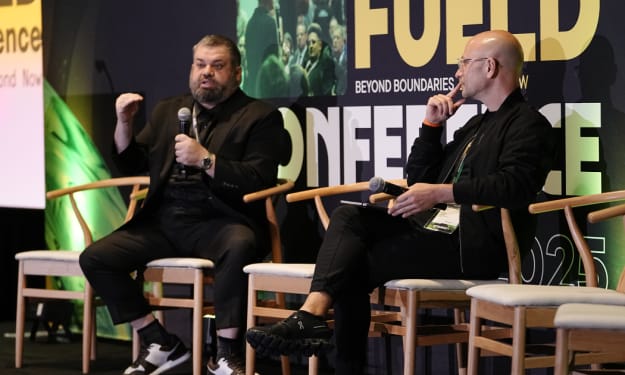
FUELD Conference To Review The Future Of Customer-Centric Marketing
What does the future of marketing look like when customers, not products, take center stage? The answer lies in creating meaningful experiences that spark loyalty, building trust that lasts, and shaping strategies around the people businesses serve. This powerful shift signals that the future of marketing is no longer about simply selling products. It is about creating meaningful experiences, building trust, and putting customers at the very center of strategy.
By FUELD Conferenceabout a year ago in Education
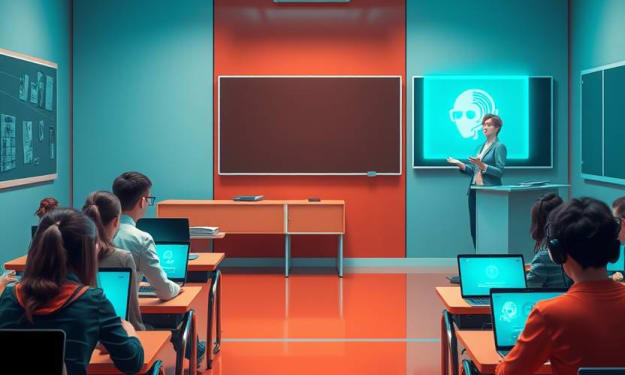
AI in Education: Will ChatGPT Replace Homework?
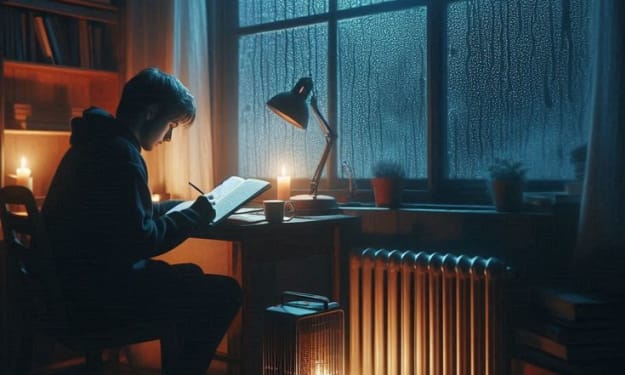
In a quiet bedroom late at night, a student opens their laptop and stares at a blank page. The essay deadline is tomorrow. Instead of panicking, they open ChatGPT, type in the prompt, and within minutes they have a draft. For some, this feels like a dream come true. For others, it feels like the end of education as we know it.
By arsalan ahmadabout a year ago in Education
How to Properly Stop Bleeding and Care for Wounds: A Practical Guide Everyone Should Know
We don't expect accidents to happen, but they often strike at the most inconvenient times. Whether it’s a kitchen cut, a scraped knee on the playground, or a more serious injury in the field, one truth remains the same: stopping bleeding quickly and caring for wounds properly can save lives. This is not just knowledge for healthcare professionals - every individual can benefit from understanding these essential steps.
By Clara Fengabout a year ago in Education