how to
How tos for the learners and the learned; tips and tricks to help you study effectively, survive your school years, impress your teachers and more.
Top Engineering Colleges in Lucknow
Introduction Engineering is a popular field of study in India, and Lucknow is home to some of the best engineering colleges in the country. Choosing the right college is crucial for a student’s career, as it can have a significant impact on their future prospects. In this article, we will take a look at the top engineering colleges in Lucknow and provide you with all the information you need to make an informed decision.
By MARIA KHAN3 years ago in Education
History of Tamil language
The history of the Tamil language is rich and diverse, spanning over several millennia. Tamil is one of the oldest living classical languages, with a literary tradition that dates back at least two thousand years. Here's a condensed overview of its historical journey: **Ancient Roots (500 BCE - 300 CE):** The roots of Tamil can be traced back to the classical period, with the Sangam literature being a cornerstone. These ancient works, divided into Sangam, Nakarattar, and post-Sangam periods, encompassed diverse subjects such as love, war, governance, and morality. The Chera, Chola, and Pandya dynasties played pivotal roles during this era, fostering the growth of Tamil literature and language. **Medieval Period (600 CE - 1200 CE):** Tamil continued to flourish during the Pallava and Chola dynasties. The Cholas, in particular, contributed significantly to the expansion of Tamil influence beyond the Indian subcontinent, reaching Southeast Asia. The spread of Saivism and Vaishnavism further influenced the language and its cultural expressions. **Influence of Islam and European Colonization (1200 CE - 1800 CE):** The arrival of Islam and later European powers had a profound impact on Tamil. The Vijayanagara Empire, Nayaks, and the Marathas played significant roles in the Deccan, while European powers like the Portuguese, Dutch, and British influenced trade and administration. The introduction of printing press by Europeans in the 16th century led to the mass production of Tamil literature. **Colonial Period and Modern Era (1800 CE - Present):** The British colonial period witnessed changes in administration and education, affecting Tamil society. The 19th century saw a cultural and linguistic revival, with the establishment of schools and literary societies. Scholars like U. V. Swaminatha Iyer contributed to the preservation of ancient Tamil texts. The struggle for independence also fueled linguistic identity movements. **Post-Independence (1947 CE - Present):** After India gained independence, the linguistic reorganization of states in 1956 recognized Tamil Nadu as a distinct state. The adoption of Tamil as the official language strengthened its position. Tamil cinema, with its global impact, became a powerful medium for cultural expression. The preservation and promotion of Tamil have been emphasized through educational initiatives and government policies. **Global Presence and Digital Era:** Tamil diaspora communities around the world have played a crucial role in preserving and promoting the language. With the advent of the digital era, Tamil has gained a global presence through online platforms, contributing to its continued evolution. **Sangam Literature and Classical Tamil:** The Sangam period, between 500 BCE and 300 CE, is often considered the golden age of Tamil literature. The Sangam texts, comprising poems and treatises, provide insights into the social, economic, and cultural aspects of ancient Tamil society. The three academies (Sangam) in Madurai played a crucial role in nurturing literary excellence. **Trade and Maritime Influence:** Tamil's influence extended beyond the Indian subcontinent through maritime trade. The Chola dynasty, in particular, established trade links with Southeast Asian countries, contributing to the spread of Tamil culture. The Tamil inscriptions found in places like Cambodia and Indonesia attest to this historical connection. **Bhakti Movement and Tamil Literature:** The Bhakti movement that swept through South India from the 6th to 9th centuries significantly impacted Tamil literature. Saints like Manickavacakar and Andal composed devotional hymns, contributing to the richness of Tamil religious literature. This period saw the emergence of the Tevaram and Divya Prabandham, revered hymns in Saivism and Vaishnavism. **Literary Renaissance and Reform Movements:** The 19th and early 20th centuries marked a literary renaissance in Tamil Nadu. Scholars and social reformers sought to revive classical Tamil literature and simultaneously address social issues. Prominent figures like Subramania Bharathi and Bharathidasan used their writings to champion social justice, women's rights, and political freedom. **Anti-Hindi Agitations and Linguistic Identity:** The mid-20th century witnessed the Anti-Hindi Agitations, where Tamils protested against the imposition of Hindi as the sole official language. This movement played a pivotal role in the linguistic reorganization of states, solidifying Tamil Nadu as a distinct linguistic region. The Dravidian movement, with leaders like Periyar and Annadurai, further emphasized linguistic and cultural pride. **Tamil in Modern Times:** In contemporary times, Tamil continues to thrive in various forms. Tamil cinema, known as Kollywood, has gained international acclaim. The works of modern writers like Jayakanthan and contemporary poets contribute to the evolving literary landscape. Tamil has also found its place in education, administration, and technology, ensuring its relevance in the global context. **Preservation and Challenges:** Efforts to preserve the classical form of the language face challenges due to the influence of modern dialects and the impact of globalization. However, initiatives by linguistic scholars, educational institutions, and cultural organizations strive to maintain the integrity and purity of the Tamil language. **Conclusion:** The history of the Tamil language is a saga of resilience, cultural vibrancy, and adaptability. From the ancient Sangam literature to the contemporary global presence, Tamil has transcended geographical boundaries, leaving an indelible mark on the world's linguistic and cultural tapestry.
By J.Balakrishnan3 years ago in Education
Circulatory Systems in the Human Body
The circulatory systems is one of the most vital system in the human body. It is responsible for the transportation of blood, oxygen, nutrients, and hormones to all the organs and tissues, while also removing waste products and carbon dioxide. The circulatory system consists of the heart, blood vessels, and blood.
By Sathishkumar3 years ago in Education
Red Blood Cells | Formation and Function:
Red Blood Cells are otherwise called erythrocytes. Erythrocyte is derived from the Greek word erythros means ‘red’ and kytos means ‘hollow vessel’. Erythrocytes are circular biconcave nonnucleated discs with a diameter is about 7 microns. RBC is red due to the presence of hemoglobin. Hemoglobin is the protein used to carry oxygen and other essential nutrients.
By Sathishkumar3 years ago in Education
The Vitality of Developing Adaptive AI: A Necessity Explored
In the ever-evolving landscape of technology, Artificial Intelligence (AI) has emerged as a transformative force, reshaping industries and challenging traditional norms. As we navigate the intricacies of this digital era, one concept gaining prominence is Adaptive AI Development.
By Amelina Mae3 years ago in Education
What is positive feedback in homeostasis
The positive feedback mechanism amplifies or enhances the response. In a positive feedback mechanism, the stimulus progressively increases the response, so as long as the stimulus is continued the response is progressively being amplified. Feedback mechanisms like positive and negative feedback play an important role in maintaining homeostasis.
By Sathishkumar3 years ago in Education
Blood: Definition, components and function:
Blood is one of the transport systems that transport essential nutrients and oxygen to various organs and eliminate carbon dioxide from the body. Blood is composed of platelets, plasma, Red Blood Cells (RBC), and White Blood Cells (WBC). Blood is pumped by the heart through the blood vessels. Blood is used to maintain homeostasis.
By Sathishkumar3 years ago in Education
The Quantum Revolution: Transforming Mobile App Development Worldwide
In the ever-evolving realm of technology, quantum computing is emerging as a groundbreaking force, particularly in the field of mobile app development. This paradigm shift, referred to as the Quantum Revolution, is set to redefine the way we interact with our mobile devices, offering unprecedented computational power and efficiency. In this blog, we delve into how the quantum app development system is not just a futuristic concept but a transformative reality reshaping the global mobile app industry.
By Rajat Nanda3 years ago in Education
What is negative feedback in homeostasis
The structure of the internal environment is kept up with narrow limits, and this genuinely steady state is called homeostasis. In a real sense, this term implies unchanging, however by and by it portrays, what is happening kept inside narrow limits. At the point when this equilibrium is undermined or lost, a serious risk to the well-is being of the person. There are many variables in the internal environment which should be kept up with in a narrow limits. Homeostasis has maintained by both negative feedback mechanism and positive feedback mechanism.
By Sathishkumar3 years ago in Education
Data Analyst vs. Data Scientist:
Introduction Introducing the dynamic pair of the digital age: data scientists and data analysts. Similar to salt and pepper, Batman and Robin, or peanut butter and jelly, these jobs work well together and are necessary for a business to succeed. The need for these specialists has gotten more urgent as all businesses become more data-driven; the cry is being heard in fields including healthcare, banking, e-commerce, and public policy.
By Roger E.Mitchell3 years ago in Education
The Fascinating Landscape of Sleep
The act of sleeping is a core element of our existence, frequently overlooked in its simplicity. For the majority, the process of settling into bed, shutting our eyes, and succumbing to sleep occurs without a second thought. Yet, for some, the act of sleeping is anything but typical. They experience a bizarre state of awareness where the line between being awake and asleep is indistinct. This state is referred to as sleep-related dissociation.
By Reinhold Lautner3 years ago in Education
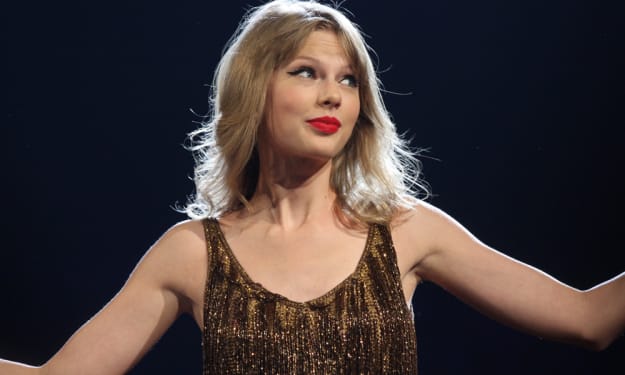
Love Story: Taylor Swift Goes to Harvard
As classes begin for the Spring Semester across the country, more and more college students are studying Taylor Swift for real college credit. This article details how the popularity of Taylor Swift might just be the ticket for colleges and universities to better cater to today’s students - and to drive enrollment and, yes, revenue!
By David Wyld3 years ago in Education