high school
High school made less stressful; a roundup of high school horror stories and tips on asking your date to prom, preparing for college and much more.
Education
"Explain the problems faced by students with improper uniforms in schools with an example." **Problems Faced by Students with Improper Uniforms in Schools** Students with improper uniforms in schools face various challenges that can impact their mental health, academic progress, and social interactions. Let's explore these issues in detail with an example. ### 1. **Impact on Students’ Mental State and Confidence:** - **Low Self-Esteem:** - Uniforms in schools symbolize unity, discipline, and cooperation among students. - Students who do not adhere to uniform rules may feel different from others, which can lead to low self-esteem. - For example, Kumar, who does not follow the uniform code, might feel embarrassed or inferior when compared to his peers, leading to a decline in self-confidence. ### 2. **Social Comparison and Exclusion:** - **Isolation from Peers:** - Uniforms help promote equality among students. Those who do not conform to the uniform policy might be excluded or might feel isolated. - As a result, they might withdraw socially and experience loneliness. - In Kumar’s case, he might feel alienated from his classmates because of his different appearance, leading to a sense of social exclusion. ### 3. **Academic Performance Impact:** - **Decreased Academic Performance:** - When students are worried about their appearance, it can create undue stress. - This stress might distract them from their studies, resulting in reduced academic performance. - For instance, if Kumar is constantly concerned about being different, this anxiety may affect his focus in class, ultimately lowering his academic achievements. ### 4. **Behavioral Issues and Rebellion:** - **Rebellious Behavior:** - Some students might view not following the uniform policy as a form of rebellion. - This behavior can extend to other rule-breaking activities, leading them down a path of more serious misconduct. - Kumar might begin to take pride in his defiance of school rules, which could lead to more significant behavioral problems. ### 5. **Differential Treatment by Teachers:** - **Less Attention from Teachers:** - Teachers might pay more attention to students who follow the rules and less to those who do not. - Students like Kumar, who do not adhere to the uniform policy, might receive less support and guidance from teachers. - This can further impact their academic progress and overall school experience. ### 6. **Reduced Self-Respect:** - **Self-Respect Issues:** - When a student compares their appearance to others, especially when they don't meet the uniform standard, it can lead to a reduction in self-respect. - This can hinder their ability to explore and develop their potential. - Kumar's embarrassment about his appearance may prevent him from participating fully in school activities, which could stifle his personal growth. ### **Solutions and Recommendations:** - **Inclusive Environment:** Schools should promote unity and discipline by reinforcing the importance of equality among all students. - **Positive Reinforcement:** Teachers and parents should educate students about the significance of following the uniform policy and its positive implications. - **Student Support:** Providing counseling and support to students who struggle with uniform policies can help them overcome related challenges. Through this analysis, it becomes clear that improper uniform compliance in schools can lead to significant issues affecting students' academic, social, and psychological well-being.
By Mohamed sha2 years ago in Education
Transform Your Connections: How to Leverage LinkedIn and Other Platforms for Powerful Networking
With the advent of the Internet, connecting the world all across, social media tools like LinkedIn have now assumed great importance for professional networking. To web developers and technical professionals, forums like LinkedIn could mean a host of opportunities to reach out and network with peers in their industry, potential employers, and thought leaders. This paper discusses how to effectively leverage your LinkedIn profile, join and engage with relevant groups, and use some additional features within LinkedIn, like InMail and endorsements, to increase your network.
By Okoye Ndidiamaka2 years ago in Education
Personal Finance for Gen Z: How to Build a Strong Financial Future
Navigating the world of money can be challenging, especially for Gen Z, a generation that’s growing up with unique financial challenges. If you were born between 1997 and 2012, you’re part of this group, and the financial rules that applied to your parents might not be the same today. Between student loans, rising living costs, and the desire for financial independence, it can feel overwhelming. But don’t worry—this guide is here to help you take control of your finances and set yourself up for a stable and successful future.
By Mustary Islam2 years ago in Education
The Bridge of Generations
In the curious town of Willowbrook, settled between moving slopes and a delicate waterway, carried on with a dad and child who were pretty much as various as constantly. Robert, the dad, was an unemotional man of the earth, a craftsman with hands as endured as the old oak trees he created into furniture. His child, Max, was a visionary, enthralled by the world past their humble community.
By Arif zaman2 years ago in Education
Exploring Quality Management Practices: A Research Paper Focused On Bien Hoa, Vietnam
The successful management and sustainability of an organization are still tied to the way it administers its quality management. Bien Hoa, Vietnam, is fast becoming an emerging economic center. For such, therefore, understanding the nuances of quality management would be paramount for local business proprietors and international investors alike. This blog explains the main elements of a research paper concerning quality management in Bien Hoa, Vietnam. A detailed description of the subject and its implications is given.
By elainpitts2 years ago in Education
How Black Holes Are Formed: Latest Theories and Evidence
Black holes have fascinated scientists and the public alike for decades. These mysterious objects, with gravitational pulls so strong that not even light can escape, challenge our understanding of the universe. But how do black holes form? And what does the latest research tell us about these enigmatic cosmic phenomena? Let’s delve into the latest theories and evidence surrounding the formation of black holes, and uncover the awe-inspiring process that gives birth to these celestial giants.
By Shahida Akter2 years ago in Education
How Are Scientists Using Space Data to Monitor and Predict Earth’s Climate Changes?
In recent years, the impact of climate change has become increasingly evident, from rising global temperatures to more frequent and severe weather events. Understanding and addressing these changes requires not only local observations but also a global perspective. This is where space data comes into play. Satellites orbiting Earth provide scientists with invaluable information about our planet’s climate, offering insights that are impossible to gain from the ground alone. But how exactly are scientists using this data to monitor and predict climate changes? Let’s explore the cutting-edge ways in which space technology is helping to safeguard our planet’s future.
By Shahida Akter2 years ago in Education
A dog history
Dogs have been companions to humans for thousands of years, and their history is as fascinating as it is long. The domestication of dogs is believed to have begun over 15,000 years ago, though some estimates suggest it may have started as far back as 30,000 years ago. This domestication process likely began when wolves, the ancestors of modern dogs, started to interact more closely with human hunter-gatherer societies.
By md sahadat2 years ago in Education
Fundamentals of Education: Foundations, Principles, and Future Directions
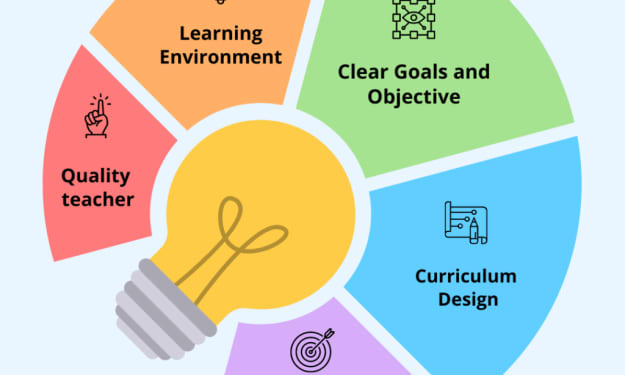
**Introduction** Education is a cornerstone of individual and societal development, serving as the primary means through which knowledge, skills, and values are transmitted across generations. This paper explores the fundamental principles of education, the core components that constitute effective educational systems, and the future directions that may shape the evolution of education. **Foundations of Education** 1. **Definition and Purpose** Education is a process of learning and teaching that aims to develop intellectual, moral, and social capabilities in individuals. Its primary purpose is to equip individuals with the necessary skills and knowledge to lead productive lives, contribute to society, and foster personal growth. Education also plays a critical role in preserving and advancing cultural heritage and societal values. 2. **Historical Perspectives** Historically, education has evolved from informal methods of knowledge transfer within families and communities to formal systems established by institutions. In ancient civilizations, education was often reserved for the elite, focusing on religious and philosophical teachings. The development of public education systems in the 19th and 20th centuries democratized access to education, emphasizing the importance of literacy and numeracy as fundamental skills. **Core Components of Effective Education** 1. **Curriculum and Instruction** The curriculum is a structured plan that outlines the content and skills to be taught. Effective curricula are designed to be comprehensive, relevant, and adaptable to the needs of students. Instructional methods, including lectures, discussions, and hands-on activities, should cater to diverse learning styles and encourage active participation. The integration of technology and multimedia tools can enhance the learning experience and facilitate better understanding. 2. **Assessment and Evaluation** Assessment is a critical component of education, providing feedback on student performance and informing instructional practices. Various assessment methods, such as formative assessments (quizzes, assignments) and summative assessments (exams, projects), help gauge student understanding and progress. Evaluation of educational outcomes ensures that teaching methods and curricula are effective and aligned with educational goals. 3. **Teacher Quality and Professional Development** Teachers are central to the educational process, and their effectiveness significantly impacts student learning. High-quality teachers possess not only subject matter expertise but also pedagogical skills and the ability to motivate and engage students. Continuous professional development is essential for teachers to stay updated with educational best practices, emerging technologies, and evolving educational standards. 4. **Learning Environment** A supportive and inclusive learning environment is crucial for effective education. This includes both physical aspects, such as well-equipped classrooms and safe facilities, and emotional aspects, such as fostering a positive classroom climate and promoting student well-being. Creating an environment that supports collaboration, respect, and a growth mindset enhances the overall learning experience. **Future Directions in Education** 1. **Technological Advancements** Technology is transforming education by offering new tools and methods for teaching and learning. Innovations such as e-learning platforms, virtual classrooms, and educational apps provide flexible and personalized learning experiences. The use of artificial intelligence and data analytics can help tailor educational content to individual student needs and improve learning outcomes. 2. **Educational Equity** Ensuring equitable access to quality education remains a significant challenge. Efforts to address disparities in educational opportunities include implementing policies that promote inclusivity, providing resources to underserved communities, and supporting initiatives that address barriers to education, such as poverty and disability. 3. **Lifelong Learning** The concept of lifelong learning emphasizes the importance of continuous education throughout an individual's life. As the job market and technological landscape evolve, individuals need to engage in ongoing learning to adapt to new skills and knowledge requirements. Educational systems are increasingly focusing on fostering skills that support lifelong learning, such as critical thinking, problem-solving, and adaptability. 4. **Global Perspectives** In an increasingly interconnected world, education systems are incorporating global perspectives to prepare students for a diverse and globalized society. This includes integrating global issues into curricula, promoting cross-cultural understanding, and preparing students to work in international contexts. **Conclusion** Education serves as a fundamental pillar of personal and societal development, with its core components including curriculum design, assessment, teacher quality, and learning environments. As education continues to evolve, embracing technological advancements, addressing equity issues, and fostering lifelong learning will be essential in shaping effective educational systems. By understanding and addressing these fundamental aspects, stakeholders can work together to create educational environments that support growth, innovation, and inclusivity.
By Habachi Habachi2 years ago in Education