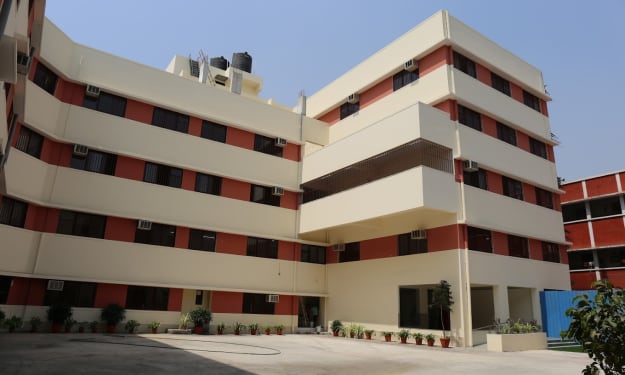
high school
High school made less stressful; a roundup of high school horror stories and tips on asking your date to prom, preparing for college and much more.
The physical architecture
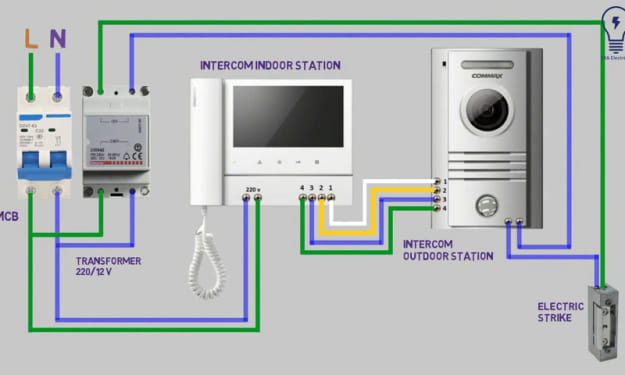
Physical Architecture The physical architecture of the TMN framework realizes functional architecture; here, concepts get actual shape. In physical architecture, functional blocks are called "physical components or building blocks, and reference points of functional architecture are realized as interfaces. TMN's physical architecture defines the following building blocks: network element (NE), mediation device (MD), Q adaptor (QA), operations system (OS), workstation (WS), and data communication network (DCN).
By Hermano Badete2 years ago in Education
Death is a train. Content Warning.
Let's say death is a train. We all know that we must board this train. Before boarding that train, everyone is preparing various kinds of good deeds. Some people have their pockets full of faith and deeds surrounded by trust. Some people have less deeds in their pockets, but they are completely pure. And some people have their pockets completely empty—they have neither deeds nor faith. Tell me the truth—in which of the three groups above do you want to see yourself? We all definitely want to be in the first group who will return from this world loaded with deeds. If we want to be passengers in the first group on that train of death, we have to make the most of the time of our lives. We have to know the religion of Allah Subhanahu Wa Ta'ala and organize our lives accordingly. There is a tendency among people to say, "When I grow old, I will start doing deeds and worship." This is nothing but a trick of Satan. Who will guarantee that you will see the time in the future when you are thinking of performing deeds and worship? How beautifully Hasan al-Basri (may Allah have mercy on him) said: ‘Son of Adam! You are only the sum of a few days. When a day passes, a part of you is lost at the same time.’ The sum of time is called life. Here, the passing of each day means losing a part of that sum forever. This saying of Imam Ibn al-Qayyim (may Allah have mercy on him) is very helpful in understanding how precious the passing times of life are. He said— ‘Wasting time is more terrible than death. Because—death separates a person from the world and its inhabitants, and wasting time separates a person from his Lord.’ If we are indifferent to the many times of life, then we will lag behind in achieving the path to the Hereafter. Carelessness, indifference and apathy towards religion may one day make us stand before a darkness where there is nothing but the destruction of the soul. Allah (swt) has also described in the Quran how terrible the consequences of not prioritizing life before death will be. Describing the endless regret of those who are intoxicated with the world but forget the life of the Hereafter, Allah (swt) says— يَقُولْلُ يٰلَيْتَنِي قَدَّمْتُ لِحَيَاتِيْ ٢٤ ‘He will say (with regret), ‘Oh! I wish I had sent something before this life.’ (Surah Al-Fajr, 24)।
By Mohammad Rofiq2 years ago in Education
Designing for Comfort: The Role of Anthropometry & Ergonomics
Maya’s Discovery: When Design Meets Daily Life Maya, a spirited 21-year-old from Bangalore, always had an eye for beautiful spaces. Her childhood was filled with sketchbooks and mood boards. But it wasn’t until she enrolled in a 1-year interior design course in Bangalore that she truly grasped how interior design was more than just colors and aesthetics.
By Designz_Amaze2 years ago in Education
Intercultural Operations Practiced in Fruits
Intercultural operations play a pivotal role in modern agriculture, especially in the cultivation of fruits and plantation crops. This abstract provides a concise overview of the significance and specific practices involved in special intercultural operations designed to enhance productivity and quality in fruit and plantation crop production.The cultivation of fruits and plantation crops demands meticulous attention to intercultural operations, which encompass a range of agronomic practices aimed at managing the crop environment, optimizing resource utilization, and mitigating potential challenges. This paper focuses on the unique set of intercultural operations tailored to the specific needs of fruits and plantation crops, taking into account the intricacies of their growth patterns, nutrient requirements, and susceptibility to pests and diseases.
By Tanvir Hosain2 years ago in Education
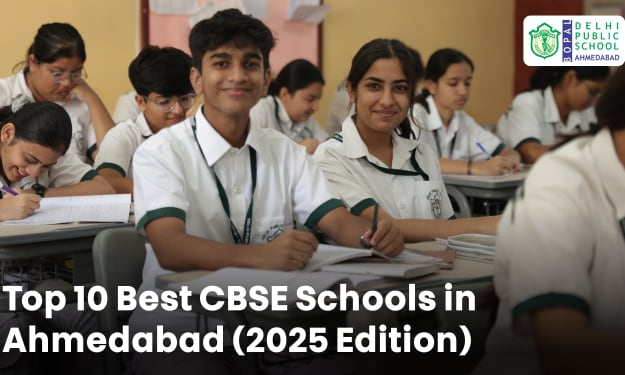
Top 10 CBSE Schools in Ahmedabad 2025
Ahmedabad, a vibrant and culturally rich city in Gujarat, is home to some of the best educational institutions in India. The city is known for its finest schools that offer the Central Board of Secondary Education (CBSE) curriculum, which is known for its comprehensive and structured approach.
By DPS Bopal Ahmedabad2 years ago in Education
Walk the Plank
It had rained all night in the city of Fairview. The streets still shimmered under the morning haze, the scent of wet asphalt hanging in the air. At precisely 6:47 AM, the body of Terrence Hall—a respected community leader and activist—was discovered lying face-down near the old shipyard, a rotting plank from a cargo crate splintered beside him. His skull had been crushed. No signs of a struggle. No weapon in sight.
By Abdurrahman Abdurrahman2 years ago in Education
Scientists Detect Potential Signature of Life on a Distant Planet: A Breakthrough in Astrobiology
The search for extraterrestrial life has taken a thrilling leap forward, as recent studies suggest that astronomers may have detected a possible biosignature—a chemical sign of life—on a distant exoplanet. While definitive proof of alien life remains elusive, this discovery marks one of the most compelling hints yet that we may not be alone in the universe. The James Webb Space Telescope’s Groundbreaking Discovery The James Webb Space Telescope (JWST), NASA’s most powerful space observatory, has been at the forefront of exoplanet research since its launch in 2021. In 2023–2024, JWST turned its gaze toward K2-18 b, a Hycean (hydrogen-rich) exoplanet located about 120 light-years away in the constellation Leo. Key Findings from K2-18 b Detection of Dimethyl Sulfide (DMS): JWST’s spectroscopic analysis revealed traces of dimethyl sulfide (DMS), a molecule that, on Earth, is only produced by living organisms (primarily marine phytoplankton). This finding is particularly exciting because no known non-biological process can generate DMS in significant quantities. Presence of Other Key Molecules: The telescope also detected methane (CH₄) and carbon dioxide (CO₂), which, in the right ratios, could suggest biological activity. However, these gases can also be produced by geological processes, so their presence alone is not conclusive evidence of life. Why This Discovery Matters If confirmed, DMS in K2-18 b’s atmosphere would be the strongest potential biosignature ever detected outside our solar system. However, scientists remain cautious, as: Signal Strength is Weak: The detection is not yet definitive and requires follow-up observations. Alternative Explanations Exist: Unknown atmospheric chemistry or instrument errors could mimic a biosignature. Other Promising Biosignature Detections While K2-18 b is currently the most intriguing candidate, other exoplanets and even planets in our own solar system have shown potential signs of life. 1. The Controversial Case of Phosphine on Venus In 2020, researchers reported detecting phosphine (PH₃) in Venus’s clouds—a gas that, on Earth, is linked to microbial life. However, subsequent studies suggested the signal could have been sulfur dioxide (SO₂), a common volcanic gas. The debate continues, highlighting the challenges of biosignature confirmation. 2. TRAPPIST-1 e and LHS 1140 b: Earth-like Candidates - JWST has also examined TRAPPIST-1 e and LHS 1140 b, two rocky exoplanets in their stars’ habitable zones. - Scientists are searching for oxygen, methane imbalances, or other biomarkers, but no definitive results have been published yet. Challenges in Confirming Extraterrestrial Life Despite these exciting leads, proving the existence of life beyond Earth is an immensely difficult task. Key challenges include: 1. False Positives from Non-Biological Processes - Many molecules considered biosignatures (like methane or oxygen) can also be produced by geological or photochemical reactions. - For example, Mars releases methane from volcanic activity, not necessarily life. 2. Technological Limitations - Current telescopes, including JWST, can only detect strong atmospheric signals. - Earth-like biosignatures (such as those from microbial life) are much harder to identify than those from an advanced biosphere. 3. Distance and Data Interpretation - Most exoplanets are hundreds or thousands of light-years away, making detailed study difficult. - Scientists must rely on indirect methods, such as studying starlight filtered through a planet’s atmosphere. Where Does the Search for Alien Life Go From Here? The detection of potential biosignatures on K2-18 b is just the beginning. Future missions and technologies will enhance our ability to hunt for life: 1. Upcoming Space Telescopes - Habitable Worlds Observatory (HWO): Planned for the 2030s, this NASA mission will directly image Earth-like exoplanets and analyze their atmospheres with unprecedented precision. - European Extremely Large Telescope (ELT): This ground-based telescope (operational by 2028) will provide high-resolution spectra of exoplanet atmospheres. 2. Follow-Up JWST Observations - More JWST data on K2-18 b could confirm or refute the DMS detection. - Additional exoplanet surveys will expand the list of potential habitable worlds. 3. The Search for Technosignatures - Beyond biosignatures, projects like SETI (Search for Extraterrestrial Intelligence) are scanning for radio signals or laser transmissions from advanced civilizations. Conclusion: Are We on the Verge of a Historic Discovery? While the potential detection of DMS on K2-18 b is groundbreaking, scientists emphasize that extraordinary claims require extraordinary evidence. Until follow-up observations provide irrefutable proof, the discovery remains a tantalizing hint rather than confirmation of alien life. However, with JWST’s ongoing missions and next-generation telescopes on the horizon, humanity may be closer than ever to answering one of its oldest questions: Are we alone in the universe? For now, the search continues—and each new finding brings us one step closer to a possible cosmic revolution.
By Niranjon Chandra Roy2 years ago in Education