degree
Degrees defined: PhD, Master, Bachelor, Associate–all about that expensive piece of paper called your degree.
Artificial inteligence
Artificial Intelligence (AI) refers to the ability of machines and computer systems to perform tasks that would normally require human intelligence, such as learning, reasoning, problem-solving, and decision making. AI technologies include machine learning, natural language processing, computer vision, and robotics.
By Tamil Paiyan3 years ago in Education
Why are we making dolphin-cow hybrids?
Why are we making dolphin-cow hybrids let that idea sit with you for a second. To save other animals from extinction, researchers are putting the sperm of a dolphin together with the egg of a cow. At least part of the goal is figuring out how to preserve the endangered animals' sperm so they stay viable as long as possible, since those sperm samples are a pretty finite resource. And if you think the sperm of endangered animals are hard to comeendangered animals are hard to come by, egg cells are even rarer, at least when it comes to mammals. Since most mammals don't lay eggs, there isn't any non-invasive way to harvest their egg cells. So we have a relatively small number of them to study. And that's why researchers are testing sperm that's closely related to their target species, and combining them with egg cells that are as easy to get as possible. That means the stakes are lower and they can run a lot more tests without worrying about wasting the eggs of endangered animals in the process. It's like your wedding rehearsal before the big event, when the endangered sperm and egg cells will be used. That way, scientists can discover what they are capable of when they approach species-saving interventions like in vitro fertilization, or IVF. So far these dress rehearsal So far, these dress rehearsal experiments have resulted in successful jaguar-domestic cats, cow-antelopes, sheep-deer, and all sorts of animals you've probably never seen before. And for clarity, you still won't see them, because all of the experiments mentioned in this video stopped after fertilization. So these hybrid animals did not develop further than embryos. But the fact that this works at all makes it worth investigating makes it worth investigating. Normally, you can't just add the sperm of one species to the egg of an unrelated species and end up with successful offspring, because some genes can have lethal effects when species mix. So to prevent fertilization by sperm from another species, mammalian egg cells have an outer coating called a zona pellucida. This layer of proteins acts as a kind of built-in bouncer,checking IDs to make sure only sperm of the same species can get inof the same species can get in. For most cross-species combinations, the zona pellucida will deny entry to the foreign sperm. So to allow entry, some researchers have to take that layer of the egg off, before their hybrid experiments could begin. But even bouncers aren't perfect, and neither is the zona pellucida. For some hybrid experiments,researchers found that it allowed sperm from a different species right sperm from a different species right in. Researchers think that could happen because the two species are related just closely enough to get a pass, even if they're pretty distant relatives. So knowing how sperm get past the zona pellucida is one of the first hurdles when it comes to making endangered animals in vitro. But if you're trying to figure out what about that sperm makes it viable, you might need to put it through some more extreme tests, like throwing it together with more distantly related animals.And that is exactly what a group of researchers described in their 2015 publication. They made dolphin-cow hybrids without altering that zona pellucida on any of the eggs. They wanted to know if this could happen in the first place and how in the world dolphin sperm would fertilize cow eggs. By pairing dolphin sperm with cow eggs, they're stretching sperm outside of their usual dolphin egg encounters to see if they have the ability to fertilize eggs from another species. And it turns out, dolphin sperm are so hearty that they're even more successful at attaching to cow eggs than bull sperm are. Which is impressive, since that's literally the one job that bull spermhave. But this does not mean that dolphin- cows are poised to take over the high seas, because attaching to the egg is only the first step of the process. Even though dolphin sperm attached to the eggs more often than bull sperm did, the dolphin sperm didn't produce as many viable offspring. Which shows that fertilization is about way more than a sperm getting to an egg. Ultimately, the experiment did produce some hybrid embryos, so it is possible for dolphin sperm to fertilize cow eggs. It just isn't as likely to do it as bull sperm is..Which is, you know, probably for the best. But they are way more successful than anticipated, and that might have been thanks to the high quality of the sperm. These experiments probably went as well as they did because dolphin sperm swim better, have stronger chromatin, and generally hold up better than cow sperm. And whether the sperm would beAnd whether the sperm would be viable at all after cryostorage wasn't actually a given,.because other types like jaguar sperm have been damaged by cold-storage in the past. But dolphin sperm are so stable that they were still viable and healthy after thawing..So all in all, dolphin sperm are pretty hearty stuff. This bodes well for future of IVF plans, but the researchers actually didn't stop there. Once they knew it was possible for distantly related animals like dolphins and cows to hybridize, they took it a step further to test and see if even more distantly related animals like dolphins and mice could hybridize. And somehow, those combos also made successful hybrids. They might have done it less frequently than the dolphin-cow hybrids, but still! Despite being less closely related, and having mismatched internal structures, dolphin sperm were able to fertilize some of the mouse eggs. And this tells us that dolphin sperm might not use those internal structures might not use those internal structures the same way every time they approach fertilization. See, for an egg and a sperm to make an animal, they need some cellular structures like the centrosome, which facilitates cell division. In mice, the centrosome comes from the egg, while in dolphins and cows it comes from the sperm. The reduced rate of dolphin-mouse fertilization might have been partially due to having too many centrosomes.So by doing all these tests and figuring out just how resilient these sperm are, researchers are working to keep endangered animals around, in ways that most of us would not have imagined. It just goes to show that when you want to save endangered species, you need to break a few eggs. But at least in this case, we can choose which eggs!. ?
By Aditi Jadhav3 years ago in Education
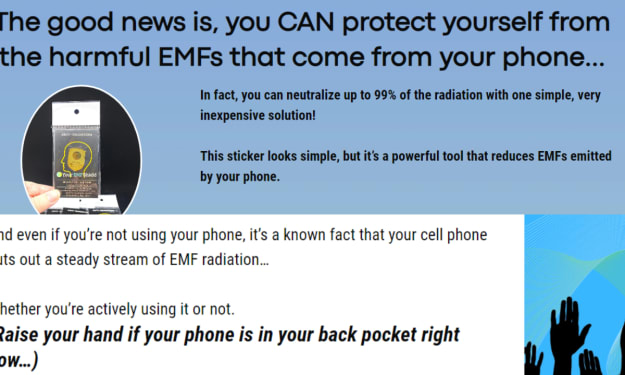
Protecting Yourself from Cell Phone Radiation: Tips to Reduce Headaches and Cancer Risk
In today's world, cell phones have become an essential part of our lives. They keep us connected with our loved ones, provide us with instant access to information, and make our lives easier in countless ways. However, there is growing concern about the potential health risks associated with prolonged cell phone use, including headaches and even cancer so this product truly made for Recover From The MOBILE ADDICTION .
By Vaishnavi tvn3 years ago in Education
An Art of Nurturing Nature
Gardening is a beautiful hobby that involves the art of nurturing nature. It involves the process of planting, growing, and nurturing plants, vegetables, or fruits. Gardening is not just a hobby; it is a way of life that teaches us the importance of patience, perseverance, and hard work. A garden not only adds beauty to your surroundings but also offers numerous benefits that can help you live a healthy and happy life.
By Vaishnavi tvn3 years ago in Education
The Future of Assessment and Qualifications: Insights from Ofqual
Assessment and qualifications play a critical role in the education system, and they are constantly evolving to meet the changing needs of learners, educators, and employers. Ofqual, the regulator of qualifications, examinations, and assessments in England, has been closely monitoring these developments and is providing insights into the future of assessment and qualifications.
By Healthcare Diploma3 years ago in Education
Transform Your Career with Our 7-Day Full-Stack Web Development Guide
Are you looking to break into the world of web development but don't know where to start? Look no further! Our 7-Day Full-Stack Web Development Guide is the perfect tool for transforming your career. Whether you are a complete beginner or already have some coding experience, our comprehensive guide covers the essentials of full-stack web development, from HTML, CSS and JavaScript to more advanced topics like databases, frameworks, and more. With easy-to-follow instructions, helpful diagrams and illustrations, this guide will have you coding in no time.
By Ahmad Muhammad Ali3 years ago in Education
Exploring the World through a Bachelor of Arts Degree
This is an undergraduate course you can pursue after the 12th through online mode, here we have talk detail about the Bachelor of Arts online course mode and how we can apply for that and what are benefits of doing a Bachelor of Arts online course.
By Sher Singh3 years ago in Education
Best Career Options for Freshers after MCA
Best Career Options for Freshers after MCA A postgraduate degree in computer applications is called a Master of Computer Applications (MCA). It is a popular course among students who wish to pursue a career in the field of information technology. MCA graduates are in high demand in various industries, including software development, IT consulting, banking, finance, and e-commerce.
By Manju Retnan3 years ago in Education
Cryptocurrencies: A Beginner's Guide
Cryptocurrencies have become a popular topic of discussion in recent years. These digital currencies are changing the way we think about money, investing, and finance. But what exactly are cryptocurrencies, and how do they work? In this beginner's guide, we will explore the basics of cryptocurrencies, including their history, technology, and potential applications. History of Cryptocurrencies The first cryptocurrency, Bitcoin, was created in 2009 by an anonymous person or group known as Satoshi Nakamoto. Bitcoin was designed to be a decentralized, peer-to-peer electronic cash system that could operate without the need for intermediaries such as banks or financial institutions. Since the launch of Bitcoin, thousands of other cryptocurrencies have been created, each with its unique features and applications. Some of the most popular cryptocurrencies include Ethereum, Litecoin, Bitcoin Cash, and Ripple. How Cryptocurrencies Work Cryptocurrencies operate using blockchain technology, which is a decentralized digital ledger that records transactions and ensures their authenticity. Each transaction is verified by a network of computers that work together to create a secure and transparent system. When someone sends a cryptocurrency, the transaction is recorded on the blockchain, and the ownership of the cryptocurrency is transferred from one person to another. Cryptocurrencies can be bought and sold on exchanges, and their value is determined by supply and demand. Unlike traditional currencies, cryptocurrencies are not backed by any physical assets or government. This makes them highly volatile and prone to fluctuations in value. The value of Bitcoin, for example, has been known to fluctuate by thousands of dollars in a single day. Potential Applications of Cryptocurrencies Cryptocurrencies have the potential to transform the way we think about finance and investing. Here are a few examples of how cryptocurrencies could be used in the future: 1. Remittances: Cryptocurrencies could be used to send money across borders quickly and inexpensively, without the need for intermediaries such as banks or money transfer companies. 2. Micropayments: Cryptocurrencies could be used to make small, instant payments for goods and services, such as digital content or online games. 3. Smart Contracts: Smart contracts are self-executing contracts with the terms of the agreement between buyer and seller being directly written into lines of code. They could be used to automate various processes, such as insurance claims or supply chain management. 4. Decentralized Finance (DeFi): DeFi refers to a new financial system that operates on a decentralized blockchain network. It offers a range of financial services such as lending, borrowing, and trading, without the need for intermediaries. 5. Asset Tokenization: Cryptocurrencies could be used to represent ownership of physical assets such as real estate or artwork, allowing investors to buy and sell fractional ownership of these assets. Risks and Challenges While cryptocurrencies offer many potential benefits, they also come with a range of risks and challenges. Here are a few examples: 1. Volatility: Cryptocurrencies are highly volatile and prone to fluctuations in value. This makes them risky investments and unsuitable for people who cannot afford to lose money. 2. Regulation: Cryptocurrencies are not currently regulated in the same way as traditional financial instruments, which makes them vulnerable to fraud and other forms of abuse. 3. Cybersecurity: Cryptocurrencies are stored in digital wallets, which can be vulnerable to hacking and other forms of cybercrime. 4. Adoption: While cryptocurrencies have gained popularity in recent years, they are still not widely accepted as a form of payment by merchants and retailers. Conclusion Cryptocurrencies are a fascinating new technology that could have a significant impact on the way we think about finance and investing. While they come with many potential benefits, they also come with a range of risks and challenges. As with any investment, it's important to do your research and understand the risks
By Balamurugan3 years ago in Education