degree
Degrees defined: PhD, Master, Bachelor, Associate–all about that expensive piece of paper called your degree.
Best States for NRI Quota MBBS Admission – Cost vs ROI. AI-Generated.
For many Non-Resident Indians (NRIs), securing an MBBS seat in India through the NRI quota is an ideal way to ensure quality education without compromising cultural values. However, the cost of NRI Quota Admission in MBBS varies significantly from state to state. Understanding which states offer the best balance of cost vs return on investment (ROI) is crucial for both students and parents.
By CareerGuideabout a year ago in Education
Warp Drive: Part 2 – The Warp Field Coil
For centuries, humanity has dreamed of reaching distant stars. But space, vast and unforgiving, hasn’t made that dream easy. Even our closest stellar neighbor, Alpha Centauri, is 4.367 light-years away. With today’s fastest spacecraft, that journey would take tens of thousands of years. Clearly, conventional propulsion just won’t cut it for interstellar travel.
By Holianyk Ihorabout a year ago in Education
Why Does Time Move Slower in Space Than on Earth?
Imagine blasting off into deep space, traveling for a few years, and then returning home—only to discover that decades have passed on Earth while you’ve barely aged. Sounds like science fiction, right? But this mind-bending effect is very real. It’s called time dilation, and it’s a consequence of Albert Einstein’s revolutionary theories of relativity.
By Holianyk Ihorabout a year ago in Education
Warp Drive: Part 1 – Sci-Fi Dream or Scientific Reality?
The idea of a warp drive isn’t just a fantasy born from science fiction. It’s a bold, theoretical technology that could completely redefine how we travel through space. If it ever becomes reality, it might allow us to reach distant stars—not by breaking the laws of physics, but by bending space and time themselves.
By Holianyk Ihorabout a year ago in Education
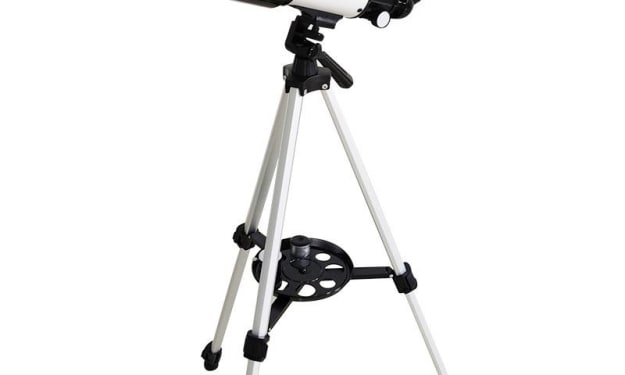
How to Build a Telescope at Home?
Building your own telescope can be a fun and rewarding way to explore the night sky — and learn a lot about optics and astronomy along the way. Whether you're a space enthusiast, a curious student, or just someone who loves hands-on projects, crafting a working telescope from scratch is a great way to dive deeper into the universe.
By Holianyk Ihorabout a year ago in Education
Peer Review: How to Cheat
The consequences of our actions Let me open today’s blog post with this quote from Haug (2015) from “Peer-review fraud — hacking the scientific publication process” and all that it means: “The problem is the perverse incentive systems in scientific publishing. As long as authors are (mostly) rewarded for publishing many articles and editors are (mostly) rewarded for publishing them rapidly, new ways of gaming the traditional publication models will be invented more quickly than new control measures can be put in place” (p. 2394).
By Minte Staraabout a year ago in Education
10 Demonstrated Ways to Realize Victory in Life
Victory could be a journey that requires cautious arranging, tireless exertion, and persistent self-improvement. Whereas the way to victory shifts for each person, certain fundamental principles remain all around pertinent. This comprehensive direct investigation of 10 effective techniques to assist you in accomplishing enduring victory in all regions of your life is complete with noteworthy steps and real-world illustrations.
By Niranjon Chandra Royabout a year ago in Education
Asteroid 2003 MH4: A Wake-Up Call for Earth's Planetary Defense
On May 24, 2025, a massive asteroid known as **2003 MH4**, which measures approximately 335 meters in diameter, is anticipated to make a close approach to Earth. This celestial body, roughly equivalent in length to three football fields, possesses an estimated destructive capability comparable to that of **1,000 nuclear bombs**. Although current data suggests that a collision is not imminent, this event underscores the vital importance of planetary defense measures and our preparedness to address potential cosmic threats. ([The Times of India][1]) --- ### **Overview of Asteroid 2003 MH4** Asteroid 2003 MH4 is classified as a **Near-Earth Object (NEO)**, a designation for celestial entities whose orbits bring them close to the vicinity of Earth. Discovered in 2003, this asteroid has been under close observation by astronomers due to its considerable size and trajectory. Its forthcoming approach, while not presenting an immediate danger, offers a significant opportunity for scientific observation and investigation. --- ### **The Possible Consequences of an Asteroid Collision** To contextualize the potential energy release, the impact of the asteroid would be akin to the explosion of 1,000 nuclear bombs. Such a collision could result in catastrophic outcomes, including widespread shockwaves, extensive fires, and climate-altering dust clouds. Historical instances, such as the asteroid impact that played a role in the extinction of the dinosaurs 66 million years ago, underscore the devastating potential of such cosmic encounters. ([The Times of India][1]) --- ### **Ongoing Monitoring and Preparedness Efforts** Space agencies around the globe, including NASA and the European Space Agency (ESA), have established programs dedicated to the detection and tracking of NEOs. These initiatives aim to identify potential threats at an early stage and devise strategies for their mitigation. Technologies such as space telescopes and ground-based observatories are instrumental in monitoring objects like 2003 MH4. ([The Times of India][1]) In addition to ongoing monitoring, research is being conducted into various deflection techniques. Proposed methods include kinetic impactors, which would collide with an asteroid to modify its trajectory, and gravity tractors, spacecraft designed to utilize gravitational attraction to gradually alter an asteroid's path. --- ### **The Significance of Global Collaboration** The potential risks posed by asteroids represent a global issue that transcends national boundaries. Effective planetary defense relies heavily on international cooperation. The sharing of data, resources, and expertise enhances our collective capacity to detect and respond to potential threats. Organizations such as the United Nations have acknowledged this necessity, fostering collaborative efforts to protect our planet. ([The Times of India][1]) --- ### **Enhancing Public Awareness and Education** Increasing public awareness regarding NEOs and planetary defense is essential. Educational initiatives can inform communities about the associated risks and the strategies in place to mitigate them. A solid understanding of the science behind asteroid detection and deflection equips individuals to support and advocate for ongoing research and funding in this critical area. --- ### **Final Thoughts** The imminent approach of Asteroid 2003 MH4 serves as a poignant reminder of the potential hazards that exist within our cosmic neighborhood. While there is no immediate cause for concern, this event emphasizes the importance of vigilance, preparedness, and international collaboration. Investing in planetary defense not only safeguards our planet but also fosters unity among humanity in a shared mission: the preservation of life on Earth. ([The Times of India][1])
By Clare Dorseyabout a year ago in Education