courses
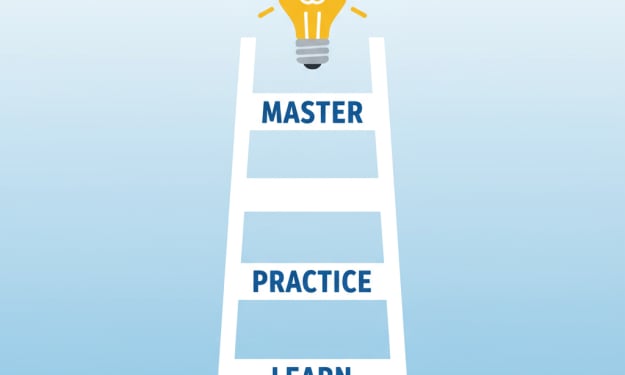
Tackle that seemingly endless selection of course offerings; a roundup of helpful resources and sound advice for selecting the best courses and acing them.
The Architect of Ability
In a world that never stops evolving, the ability to learn and improve new skills is no longer a luxury; it's a necessity. Whether you want to advance your career, pursue a passion, or simply keep your mind sharp, the process of skill improvement is a journey that follows a reliable map. It’s not about innate talent, but about strategy, consistency, and a mindset geared for growth.
By KAMRAN AHMADabout a year ago in Education
Wired for Love: The Biology Behind Deep Human Connection
Wired for Love: The Biology Behind Deep Human Connection Exploring the Science of How Our Bodies and Brains Build Lasting, Positive Bonds When Maya met Elias, there was no thunderclap or cinematic swell of music — just a quiet comfort, as if her nervous system recognized something before her mind could catch up. Their first conversation wasn’t remarkable on paper — a shared laugh over mismatched coffee orders, a few words about the weather, and an easy silence that didn’t demand filling. But inside their bodies, something ancient and profound was already beginning to stir. Unknown to them, oxytocin — often called the “bonding hormone” — was being subtly released with each moment of eye contact and touch. This neurochemical, produced in the hypothalamus, plays a crucial role in human connection. It deepens trust, fosters empathy, and reinforces social bonds. It’s the same hormone that floods a parent’s brain when holding their newborn, and it’s present when we feel safe in someone’s arms. But love isn’t just about a rush of oxytocin. In the weeks that followed, Maya noticed something strange — she slept better after seeing Elias, her heart rate slowed when he called, and she even craved less sugar. Biology had something to say about that too. Falling in love activates the parasympathetic nervous system — the “rest and digest” mode — which explains the calm many feel in the presence of someone they trust. At the same time, dopamine pathways — the same ones triggered by chocolate or music — light up in the brain’s reward center, making time together feel euphoric and addictive. Yet what made their connection special wasn’t just chemistry. It was biology in harmony with intention. They learned each other’s nervous systems, often without realizing it. Maya’s anxiety melted when Elias spoke gently and held her hand — touch that lowered her cortisol levels, the body’s primary stress hormone. Elias, whose childhood had left him wary of closeness, found his heart rate syncing with hers during quiet moments — a phenomenon researchers call physiological synchrony, where couples in healthy relationships actually mirror each other’s breathing and heartbeat patterns. Their love, it turned out, wasn’t just in their hearts. It was in their brains, their skin, their bloodstream. It was cellular. But deep connection isn’t sustained by initial chemistry alone. Real love — lasting love — requires consistency, presence, and a willingness to co-regulate. Co-regulation is a concept from neuroscience and psychology that refers to the way two people can help stabilize each other’s emotional states. When Elias had bad days at work, Maya didn’t try to fix it — she just sat with him, her presence grounding. When Maya spiraled into self-doubt, Elias reminded her of her strength, not with words alone, but with a steady presence that told her: “I’m here. You’re safe.” These weren’t grand gestures. They were small, biological acts of love. Over time, their brains adapted. Neural pathways formed and strengthened — literally rewiring how they responded to stress, to joy, to each other. Functional MRI studies have shown that couples in long-term, loving relationships have increased activity in the brain’s empathy and attachment centers. That kind of connection isn’t just emotional; it’s anatomical. They learned to pause during arguments, to breathe deeply — activating the vagus nerve, which regulates heart rate and emotional control. They built rituals that nurtured their bond: morning coffee hand-in-hand, evening walks, small acts of touch and praise that kept their nervous systems attuned and responsive. Love, science tells us, is not a static emotion. It’s a biological process — dynamic, adaptable, and deeply intertwined with our health and well-being. When Maya got sick one winter, Elias sat by her bed, her hand in his. Just that touch was enough to ease her pain — studies confirm that loving touch from a partner can reduce physical discomfort by signaling safety to the brain. They weren’t perfect. No couple is. But the foundation they built wasn’t just emotional — it was cellular, neurological, hormonal. It was biology in service of connection. Years later, they still held hands the same way. Not out of habit, but because their bodies remembered what their minds might forget in hard moments — that love, real love, isn’t a mystery. It’s measurable. It’s made. It’s maintained. And it’s wired deep within us.
By Muhammad Saad about a year ago in Education
What is Cybersecurity? Definition, Types, and Best Practices for Beginners
In today's digital world, with everything from banking to remote work being conducted online, protecting your data is crucial. If you're new, terms like "cybersecurity" can be daunting. At its core, cybersecurity is defending computers, servers, networks, and data from attacks, unauthorized access, and damage. Whether you're a business owner, student, or simply curious about online safety, this beginner's guide explains the basics in a step-by-step manner.
By Muhammad Jawadabout a year ago in Education
The Multiverse Hypothesis
The Multiverse Hypothesis: Are We Living in One of Infinite Realities? For centuries, humanity has looked up at the stars and wondered whether we are alone in the universe. But modern science has taken that curiosity to an entirely new level. Instead of asking whether life exists beyond Earth, physicists are now asking whether entire realities beyond our universe could exist. This idea, known as the Multiverse Hypothesis, suggests that our universe may be just one of countless others—each with its own laws of physics, histories, and even versions of ourselves. What Is the Multiverse Hypothesis? The multiverse is the concept that our universe is not unique but part of a much larger cosmic network of universes. These universes might exist in parallel, side by side, or even in dimensions beyond our perception. While the idea sounds like science fiction, it is rooted in real scientific theories that attempt to explain some of the biggest mysteries in physics and cosmology. One of the most popular explanations comes from the inflation theory of the early universe. According to this model, space expanded at an unimaginable speed after the Big Bang. This rapid expansion may have created multiple “bubble universes,” each evolving independently with its own set of physical constants. In other words, the very laws that govern our reality—like gravity, time, and matter—could be entirely different in another universe. Evidence and Scientific Backing Skeptics argue that the multiverse is unprovable, but there are scientific reasons to take the idea seriously. For example, the cosmic microwave background radiation—the afterglow of the Big Bang—shows strange patterns that some scientists suggest could be scars from collisions with other universes. Quantum mechanics also hints at a multiverse through the many-worlds interpretation. In quantum physics, particles can exist in multiple states at once until they are observed. Some physicists argue that instead of collapsing into one outcome, every possibility actually happens—but in separate universes. That would mean every decision we make splits reality into different branches, creating infinite versions of our lives. Philosophical and Existential Questions If the multiverse is real, it raises profound questions about identity, choice, and destiny. Could there be another version of you reading this article in a slightly different way? Is there a universe where you made different life decisions, leading to a completely different outcome? The hypothesis also touches on the age-old question of why our universe seems so perfectly suited for life. This is known as the fine-tuning problem. The multiverse offers one possible answer: if there are infinite universes, it is not surprising that at least one—ours—has the right conditions for life. Critics and Challenges Despite its appeal, the multiverse hypothesis is controversial. Critics argue that without direct evidence, it remains more of a philosophical idea than a scientific one. After all, how can we study or measure other universes if we cannot even detect them? Some scientists worry that embracing the multiverse could push physics into the realm of speculation, where theories cannot be tested or disproven. Why the Multiverse Matters Even if the multiverse cannot be proven, exploring the idea pushes the boundaries of science and philosophy. It challenges us to rethink the meaning of reality and our place within it. The hypothesis also fuels technological and theoretical advancements, as scientists strive to test the limits of physics, quantum theory, and cosmology. Conclusion The multiverse hypothesis may never be confirmed, but its power lies in expanding our imagination and curiosity. Whether or not infinite realities exist, the very possibility opens doors to new ways of thinking about life, existence, and the universe itself. We may be living in just one small corner of an endless cosmic ocean—or perhaps, the only universe there is. Either way, the search for answers continues, and with it, humanity’s eternal quest to understand the unknown.
By Muhammad Shahramabout a year ago in Education
Chasing Knowledge: A Student’s Journey
The Beginning of a Dream Every great journey begins with a single step, and for Ali, that step was taken the day he walked into his new classroom at university. His heart carried both fear and ambition. Coming from a small town where resources were limited, Ali had always believed education was the only bridge that could take him to a better future.
By Mujeeb Khanabout a year ago in Education
Legacy Letter to My Students
Throughout my elementary, high school, college, graduate school, and seminary days, I admired my teachers. I never had a teacher from whom I did not learn something. Because I learned so much during those school years, I wanted my life's work to be teaching.
By Margaret Minnicksabout a year ago in Education
Why Students Trust Online Exam Help Services for Better Results
Introduction Education online has revolutionized the ways students learn how to study, prepare, and sit for examinations. Through its accessibility and flexibility this has made it the preferred option for many around the world. But, the advent of exams online also poses new problems: time limitations and technical issues, increased stress on the academics, and also having to work with personal or work obligations. To meet these difficulties the majority of students have turned to the online help for exams for help.
By Mack Mickeyabout a year ago in Education
Wired for Wonder: The Marvel of the Human Brain
Wired for Wonder: The Marvel of the Human Brain If you held it in your hands, it wouldn’t look like much. Just three pounds of pinkish-grey tissue, soft as butter. But within this delicate structure lies the most powerful force known in the natural world: the human brain. Nestled inside your skull, this organ contains around 86 billion neurons—tiny electrical messengers that talk to each other through connections called synapses. Each neuron can connect to thousands of others, forming a mind-boggling network of trillions of connections. This biological “internet” doesn’t just power your thoughts—it is your thoughts, your memories, your emotions, your dreams. And the most amazing part? It's not finished growing. Every time you learn something new, or practice a skill, your brain rewires itself. This adaptability is called neuroplasticity, and it means that your brain is always changing—getting sharper, deeper, and more connected with each experience. Take Emma, for example. At 10 years old, Emma had trouble focusing in school. She struggled with math and often felt overwhelmed. Her teachers were kind, but the numbers just wouldn’t make sense. But one afternoon, a science lesson changed everything. They were studying the brain, and her teacher explained how each time you try to solve a problem, even if you get it wrong, your brain literally grows stronger. "Mistakes,” she said, “are like exercise for your brain.” That simple idea sparked something in Emma. For the first time, she saw her struggles not as failures, but as steps forward. Over the next few months, she began to approach math like a workout—challenging, but worth it. Slowly, numbers started to click. Behind the scenes, Emma’s brain was changing. New neural pathways were being built. Synapses fired more efficiently. Her effort was reshaping her brain’s architecture. This isn’t just a feel-good story—it’s science. Studies show that consistent effort and belief in your ability to grow can actually increase brain connectivity. It’s called a growth mindset, and it's proven to boost learning, resilience, and happiness. Your brain thrives on challenge. But the brain isn’t just a thinking machine. It’s also your emotional compass. When you feel joy, love, or awe, it’s your brain's reward centers lighting up—releasing dopamine, serotonin, and oxytocin. These aren’t just “happy chemicals.” They’re powerful biological tools that improve learning, deepen relationships, and help your body heal. That’s why connection matters. When you talk to a friend, help a stranger, or share a laugh, you’re not just being kind—you’re building a healthier brain. Studies show that people with strong social bonds have better memory, lower stress levels, and longer lives. And then there’s creativity. The brain’s default mode network—the part active during daydreaming or reflection—plays a huge role in imagination. It's what helps artists paint, writers dream up stories, and scientists think of new ideas. Far from being idle, a wandering mind is often one of the most productive. And yes, your brain even works while you sleep. During deep sleep, your brain cleans itself—flushing out toxins, organizing memories, and preparing for another day of growth. That’s why sleep isn’t laziness—it’s one of the most important things you can do for your brain. The more we learn about the brain, the more we realize how incredible it is—not just as a machine, but as a living story of your life. It remembers your first smile, your first heartbreak, the thrill of a new idea. It adapts after injury. It changes after love. It lights up when you hear your favorite song or solve a puzzle. Every thought you have reshapes it, just a little. You are, in many ways, the author of your own brain. So be kind to it. Feed it knowledge. Let it rest. Challenge it. Share it with others. Trust its ability to grow. Because this soft, silent organ inside your head isn’t just an object—it’s the wonder that makes you you. --- The human brain is not a finished product. It’s a living, changing masterpiece. And you are wired for wonder.
By Muhammad Saad about a year ago in Education
Fast Delivery & 24/7 Support – Best-Rated Assignment Help in Malaysia
Fast delivery and 24/7 support make the best-rated assignment help in Malaysia a reliable choice for students, ensuring academic success without stress. In today’s fast-paced academic environment, students are constantly juggling assignments, exams, part-time jobs, and personal commitments. Delayed submissions or lack of guidance can significantly affect grades and cause unnecessary anxiety. That’s why choosing a reliable platform for Assignment help Malaysia becomes essential.
By Shani Pandeyabout a year ago in Education
MCAT Retake Strategy: How to Raise Your Score After a 505/510
Retaking the MCAT can be one of the most stressful decisions an aspiring medical student faces. If your initial score falls around 505 or even 510, you might be wondering whether a retake will make the difference between rejection and acceptance. The good news? With the right MCAT tutoring and structured guidance, especially through MCAT prep classes in NY, students have successfully boosted their scores by several points—often enough to secure a seat in competitive programs.
By Cynthia Williamsabout a year ago in Education
Is It Fair to Use AI to Score Well in Academics?
A few years ago, we could not have predicted the extent to which artificial intelligence would permeate student life today. AI tools are used in everything from essay writing to math problem solving. They are used by many students to increase their grades or save time. The main query, though, is whether using AI to improve academic performance is reasonable. Good assignment writing service is the key to such success!
By Will Smith 01about a year ago in Education