courses
Tackle that seemingly endless selection of course offerings; a roundup of helpful resources and sound advice for selecting the best courses and acing them.
The Ultimate Guide to SSC MTS: Everything You Need to Know
What is SSC MTS? SSC MTS stands for Staff Selection Commission Multi-Tasking Staff. It is a popular competitive examination conducted by the Staff Selection Commission (SSC) to recruit candidates for various non-technical posts in government departments and offices. The exam provides an excellent opportunity for candidates to secure stable employment in various government organizations.
By Hitesh Purohit3 years ago in Education
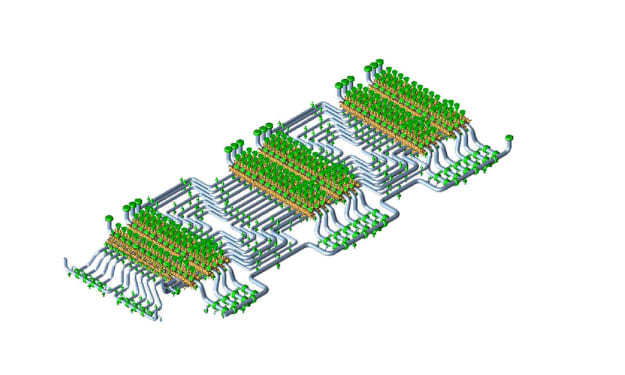
Maximizing Efficiency in piping system using Caesar II
Efficient and reliable piping systems are critical for the success of engineering projects in various industries. With the help of advanced software tools like CAESAR II, engineers can analyze and optimize piping systems to ensure their integrity, safety, and efficiency.
By Arun Kumar3 years ago in Education
Tips for a Long-Lasting and Happy Relationship.
Tips for a Long-Lasting and Happy Relationship. Introduction. In today's fast-paced and ever-changing world, building and maintaining a long-lasting and happy relationship can be a challenging endeavor. Relationships require effort, understanding, and dedication from both partners to thrive and withstand the tests of time. While no relationship is perfect, there are certain key principles and strategies that can significantly contribute to the longevity and happiness of a partnership.
By Josh Anthony3 years ago in Education
Strengthening Cybersecurity and Privacy
Introduction Cybersecurity and privacy are becoming top concerns in today's connected world. The risks presented by cybercriminals, state-sponsored attacks, and data breaches grow as technology develops. This expert paper examines the changing environment of privacy and cybersecurity, emphasizing the significance of strong security measures in protecting people, businesses, and society at large. We explore into important topics including threat landscape analysis, proactive defense techniques, privacy-enhancing technologies, and the collaborative efforts necessary to combat cyber threats with a focus on new trends and creative solutions.
By Abbilaash A T3 years ago in Education
Hyperbolic Stretching 3.0 Program: Unlock Your Flexibility and Mobility Potential
Are you ready to unlock your body’s full potential in terms of flexibility, mobility, posture, and reduction of chronic pain? The Hyperbolic Stretching 3.0 program presents users with a comprehensive and science-based approach to achieving all of these goals and more. Boasting over 1 million users worldwide, this program offers 8-minute stretching and mobility routines designed to gradually unlock flexibility and increase range of motion. Touted as suitable for a wide range of body types, ages, and stiffness levels, it’s worth a closer look.
By Anthony Rico3 years ago in Education
Extinct species
Start writing...When a species becomes extinct, all its genetic heritage is lost. The species evolve into new species in order to adapt to the environmental changes or changes in the genetic heritage. Over 99% of all the species that once lived on the Earth, amounting to over five billion species, are estimated to be extinct. As per the estimations on the number of current species, a range from 10 -14 million, of which more than 1.2 million have been studied and more than 86% have not yet been discovered. This could happen naturally due to a change in the climate or because of human activities like overhunting or the destruction of habitat. Causes of Extinction The important causes of extinction include: Asteroid Strikes A meteor strike on the Yucatan peninsula in Mexico led to the disappearance of dinosaurs millions of years ago. Most of the mass extinctions, such as KT extinction or Permian-Triassic extinction, were caused due to such events. Astronomers constantly keep an eye on comets or meteors that could lead to the end of human civilization. Climate Change Climate change is yet another factor that could destroy terrestrial organisms. During the end of the last ice age, most of the megafauna were unable to adapt to the changing warm temperatures. They died due to a lack of food and hunting by early humans. Even modern civilization is stepping towards the threat of extinction due to global warming. Disease Various epidemics had been the cause of the epidemic of a large population of humans and animals on earth. The Black Death wiped out one-third of the European population in the Middle Ages. Loss of habitat Every animal has its own comfort zone where it can breed and raise its young ones. For e.g., a bird is comfortable only on the branch of a tree. Due to the expansion of human civilization and industrialization, the forests have been destroyed, which are an abode to most animals. Due to lack of space and eventually food, the populations of many organisms have been minimised. Lack of Genetic Diversity Once the number of species starts decreasing, the gene pool of that species grows smaller. Eventually, there is a lack of genetic diversity. For eg., due to habitat loss, the African cheetahs have a considerably low genetic diversity. Better Adapted Competition The better-adapted populations win over the ones that lag behind. For eg., the pre-historic mammals were better adapted than the dinosaurs. The ones which are well-adapted survive, while the others become extinct. Pollution The pollution from industries and vehicles has led to a drastic change in the oxygen levels in the atmosphere as well as water. This has led to the extinction of most of the aquatic as well as terrestrial species. An endangered species is a type of organism that is threatened by extinction. Species become endangered for two main reasons: loss of habitat and loss of genetic variation Loss of Genetic Variation Genetic variation is the diversity found within a species. It’s why human beings may have blond, red, brown, or black hair. Genetic variation allows species to adapt to changes in the environment. Usually, the greater the population of a species, the greater its genetic variation. Inbreeding is reproduction with close family members. Groups of species that have a tendency to inbreed usually have little genetic variation, because no new genetic information is introduced to the group. Disease is much more common, and much more deadly, among inbred groups. Inbred species do not have the genetic variation to develop resistance to the disease. For this reason, fewer offspring of inbred groups survive to maturity. The Red List The International Union for Conservation of Nature (IUCN) keeps a “Red List of Threatened Species.” The Red List defines the severity and specific causes of a species’ threat of extinction. The Red List has seven levels of conservation: least concern, near threatened, vulnerable, endangered, critically endangered, extinct in the wild, and extinct. Each category represents a different threat level. Near Threatened A near threatened species is one that is likely to qualify for a threatened category in the near future. Many species of violets, native to tropical jungles in South America and Africa, are near threatened, for instance. They have healthy populations, but their rain forest habitat is disappearing at a fast pace. People are cutting down huge areas of rain forest for development and timber.
By Sakshi Verma3 years ago in Education