courses
Tackle that seemingly endless selection of course offerings; a roundup of helpful resources and sound advice for selecting the best courses and acing them.
Jellyfish in the Sky
INTRODUCTION The night sky has always been a canvas of celestial wonders, captivating humanity with its twinkling stars and mystical phenomena. Among these enigmatic occurrences, sprites stand out as a captivating and elusive spectacle. Often referred to as "jellyfish in the sky," sprites are atmospheric phenomena that occur high above thunderstorms. In this exploration, we delve into the captivating world of sprites, unraveling their mysteries and understanding the science behind these ethereal manifestations.
By DIKHYA MISHRA3 years ago in Education
How to Meditate
Everyone can benefit from the easy practice of meditation, which can lower stress, improve clarity and relaxation, and foster happiness. The benefits of meditation can be felt right away, and learning to meditate is simple. Here, we provide some fundamental advice to set you on the path to increased joy, acceptance, and equanimity. Inhale deeply and prepare to unwind.
By Younes Elaasri3 years ago in Education
How to Meditate
Everyone can benefit from the easy practice of meditation, which can lower stress, improve clarity and relaxation, and foster happiness. The benefits of meditation can be felt right away, and learning to meditate is simple. Here, we provide some fundamental advice to set you on the path to increased joy, acceptance, and equanimity. Inhale deeply and prepare to unwind.
By Younes Elaasri3 years ago in Education
How the water you flush becomes the water you drink
In 2003, the National Water Authority of Singapore launched an unprecedented project. They plan to use the two new facilities to provide more than 50% of the country's water supply through wastewater recycling. Yes, we mean wastewater. Although this may seem like a foolish decision, the project has been in the works for ten years to ensure that the island does not run out of fresh water. Today, as the frequency and duration of droughts increase around the world, more and more regions are affected by this problem. But is it worth reusing the things you flush down the toilet? To answer this question, we need to know exactly what is in this alcoholic drink. There are many types of wastewater, but the three main types are: gray water, used for sinks, showers, and laundry; yellow fluid, containing only urine; and black water, affected by the tide. Globally, we produce enough wastewater every day to fill 400,000 Olympic-sized swimming pools. In cities and towns that have sewer systems, this wastewater flows into underground pipes that are not filled with sewage.
By Rowan Sharkawy3 years ago in Education
Confused about recycling?
If you've ever looked at the bottom of a delivery bottle or cup, you've probably seen this symbol. Seeing this, many people think that they should throw the items they have in the recycling bin. However, many of these plastics cannot be recycled in most processing centers. In fact, only 9% of the 360 million tons of plastic produced annually is recycled. So why is recycled plastic so cheap? What do these codes mean? Our recycling problem has many layers, starting with construction. About 18% of plastic is made from thermosetting polymers. These plastics are made permanent by curing, a process that hardens the material by continuously linking its molecular chains. What makes thermosets so useful is that they retain shape and integrity under extreme conditions, meaning they cannot be broken down and remade by most recycling plants. Fortunately, most plastics are thermoplastic and can be melted and reshaped. But this category includes a variety of materials with unique chemical compositions, weights and properties, and different recycling methods. Therefore, most recycling centers only accept a portion of these definitions. This brings us to the next problem: ambiguous coding systems. This code was developed and launched by the plastics industry in 1988 to help consumers and facilities manage waste. Each number represents a plastic composition, called resin. Some resins are recyclable at most centers, while others are not. However, in this system, all numbers are surrounded by a universally recognized recycling symbol, so consumers are misled into thinking that many non-recyclable plastics have opportunities to be reused. Just because a recycled technical resin ends up in the trash doesn't mean it's going to keep going. Plastics contain various types of resins, mixed with dyes and additives, have additives and labels that are difficult to remove, all of which lead to plastic being thrown into incinerators or landfills. Simply put, many companies do not design their packaging with recycling in mind. Even in its pure form, it can only be melted down and remade a few times because the polymer degrades with each use. If all these problems make you think that plastic is impossible, you are not the first person. This fact has been known to the plastics industry since the 1970s. The industry poured millions of dollars into advertising despite doubting that recycling could be economically viable. In the United States, the plastics industry has quietly lobbied state governments, so many states have passed laws requiring plastics to carry plastic labels. As a result, the burden of "solving" the growing plastic waste problem has shifted from industry to consumers. Nowadays, the situation is getting worse. Due to the rising costs of proper waste disposal, and fewer buyers of used recyclables worldwide, many cities have been forced to ban recycling programs altogether. side. So how do we fix the ever-increasing plastic waste system? What is clear is that plastic consumption should be reduced. More than a quarter of our plastic waste comes from packaging. Many manufacturers have taken the right steps by eliminating unnecessary plastic films and replacing plastic buckets and cartons with items that are more easily recycled or composted. For plastic waste, one solution is to advocate for a circular economy for plastic. This means reducing the production of new plastic, eliminating single-use plastic, and ensuring that the remaining plastic can still be recycled through recycling. This system relies on policies that regulate plastics from the start of production, ensuring that all plastics produced are free of contaminants that compromise their ability to be recycled. At the same time, many experts believe that the current adhesive coding system should be scrapped and replaced with clear and simple labels for both recyclable and non-recyclable items. This will help consumers to organize their waste, but more importantly, it will allow them to make decisions when buying, ultimately forcing manufacturers to prepare when can be recycled.
By Rowan Sharkawy3 years ago in Education
What’s the smartest age?
At what age did you know best? Maybe a friendly competition day will help us understand. Tomorrow is the annual clash of brains - ten teams of two compete in ten hours of brain teasers, trivia and puzzles. I train all year round. I have to choose the most intelligent and powerful friends. I have narrowed down the list. First we have Gabriella. Even though he is only 8 years old, don't underestimate him! He is bilingual and an out-of-the-box thinker. So Amma. He can count bees to 100 digits, design satellites for a living, and make the perfect soufflé. Or I can go with Teira. He is the most competitive gamer, and it goes without saying that he has participated in over 20 Brain Clash tournaments and is a five-time winner! I don't know who to choose! Who knows best? Which teammate should Amir choose for tomorrow's match? Why? Of course it depends on the situation. Although intelligence is often associated with things like IQ tests, these assessments do not capture the range and depth of a person's various abilities.
By Rowan Sharkawy3 years ago in Education
Food expiration dates don’t mean what you think
How much of the food in the refrigerator gets thrown away before it gets to the table? Burgers from last summer's picnic? Is milk past its shelf life? Do carrots lose their elasticity? Countries around the world throw away a lot of food every year, and America is one of the most wasteful countries. 37% of food waste in America comes from households. About 20% of food is thrown away because consumers are not sure how to interpret the date on the label. However, most foods are still safe to eat. So, if the dates in the food do not show us that something is bad, what do they tell us? Before the 20th century, there was a more direct line between where the food was made and where it was eaten, and most people knew how to judge freshness by sight, smell and taste.
By Rowan Sharkawy3 years ago in Education
PTE Speaking: Fluency vs. Pronunciation – What Matters More?
Within the realm of PTE Speaking, an enduring debate revolves around the comparative importance of fluency and pronunciation. Test-takers frequently grapple with the question of whether superior fluency or impeccable pronunciation holds more sway over their overall performance. In this blog post, we will delve into this dichotomy, scrutinizing the distinct roles of fluency and pronunciation and illuminating which aspect carries more weight in the eyes of PTE evaluators. Get the best PTE coaching from the finest institute of Australia
By Lakshya Bhagnani3 years ago in Education
Embracing Diversity: The Imperative of Inclusive Education
In latest years, the thought of inclusive schooling has received enormous traction globally, shaping the discourse on how societies strategy learning. Inclusive training goes beyond the conventional lecture room model, advocating for an academic environment the place each and every student, regardless of their competencies or background, has the opportunity to examine and thrive. This transformative approach to education is not in basic terms a trend but a indispensable shift towards creating a more equitable and compassionate society.
By Moharif Yulianto3 years ago in Education
different blood types
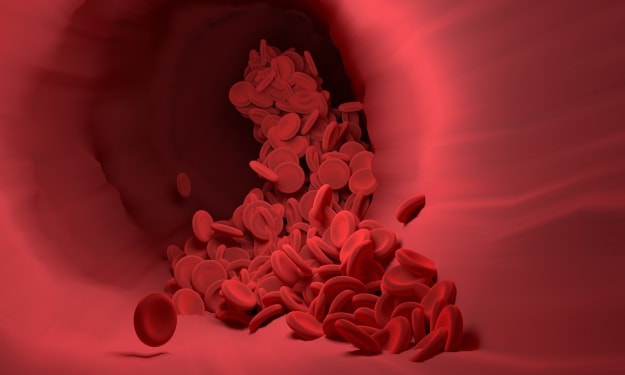
It's often said that despite humanity's many conflicts, we all bleed the same blood. It's a nice thought but not quite accurate. In fact, our blood comes in a few different varieties. Our red blood cells contain a protein called hemoglobin that binds to oxygen, allowing the cells to transport it throughout the body. But they also have another kind of complex protein on the outside of the cell membrane. These proteins, known as antigens, communicate with white blood cells, immune cells that protect against infection. Antigens serve as identifying markers, allowing the immune system to recognize your body's own cells without attacking them as foreign bodies. The two main kinds of antigens, A and B, determine your blood type. But how do we get four blood types from only two antigens? Well, the antigens are coded for by three different alleles, varieties of a particular gene. While the A and B alleles code for A and B antigens, the O allele codes for neither, and because we inherit one copy of each gene from each parent, every individual has two alleles determining blood type. When these happen to be different, one overrides the other depending on their relative dominance. For blood types, the A and B alleles are both dominant, while O is recessive. So A and A gives you type A blood, while B and B gives you type B. If you inherit one of each, the resulting codominance will produce both A and B antigens, which is type AB. The O allele is recessive, so either of the others will override it when they're paired, resulting in either type A or type B. But if you happen to inherit two Os, instructions will be expressed that make blood cells without the A or the B antigen. Because of these interactions, knowing both parents' blood types lets us predict the relative probability of their children's blood types. Why do blood types matter? For blood transfusions, finding the correct one is a matter of life and death. If someone with type A blood is given type B blood, or vice versa, their antibodies will reject the foreign antigens and attack them, potentially causing the transfused blood to clot. But because people with type AB blood produce both A and B antigens, they don't make antibodies against them, so they will recognize either as safe, making them universal recipients. On the other hand, people with blood type O do not produce either antigen, which makes them universal donors, but will cause their immune system to make antibodies that reject any other blood type. Unfortunately, matching donors and recipients is a bit more complicated due to additional antigen systems, particular the Rh factor, named after the Rhesus monkeys in which it was first isolated. Rh+ or Rh- refers to the presence or absence of the D antigen of the Rh blood group system. And in addition to impeding some blood transfusions, it can cause severe complications in pregnancy. If an Rh- mother is carrying an Rh+ child, her body will produce Rh antibodies that may cross the placenta and attack the fetus, a condition known as hemolytic disease of the newborn. Some cultures believe blood type to be associated with personality, though this is not supported by science. And though the proportions of different blood types vary between human populations, scientists aren't sure why they evolved; perhaps as protection against blood born diseases, or due to random genetic drift. Finally, different species have different sets of antigens. In fact, the four main blood types shared by us apes seem paltry in comparison to the thirteen types found in dogs.
By Rowan Sharkawy3 years ago in Education