college
Maximize your university experience with these tips for all things collegiate–how to achieve a perfect GPA, select the right major, finance your college education and more.
How to Choose the Best 24/7 Assignment Helper for Academic Success
In today’s fast-paced academic environment, students are expected to juggle lectures, assignments, part-time jobs, and sometimes even family responsibilities. When deadlines are tight and topics are overwhelming, seeking support from a reliable assignment helper becomes a smart strategy. But with so many services claiming to be the best, how do you really choose the one that will deliver top-quality work, 24/7 assistance, and ensure academic success?
By Shani Pandeyabout a year ago in Education
Breathing the Unseen Enemy: Smog’s Worldwide Impact
Smog Around the World: A Global Crisis We Can’t Ignore Step outside on what should be a bright sunny day, and instead of being greeted by blue skies, there’s a thick, grayish haze hanging low in the air. You squint, cough, and maybe even check your phone to see if it's safe to breathe. This isn’t an isolated scene from a dystopian movie—it’s a daily reality for millions of people around the world dealing with smog.
By Aamir Rehmanabout a year ago in Education
Unlocking Potential: The Power of Education
Education is more than just books and classrooms. It’s the bridge between dreams and reality, the spark that ignites curiosity, and the tool that empowers individuals to shape their future. Around the world, access to quality education has proven to be one of the most powerful forces for positive change—not only for individuals but for entire communities. Take the story of Amina, a young girl from a small rural village. For years, education in her community was seen as a luxury, especially for girls. Most families prioritized early marriage and household responsibilities over schooling. But Amina had a different vision for her life. She dreamed of becoming a doctor to help the sick in her village who often lacked access to healthcare. Thanks to a community education initiative, Amina was given the opportunity to attend school. The road wasn’t easy—she walked several kilometers each day and often studied by candlelight—but her determination never faded. Years later, Amina graduated from medical school and returned to her village, where she opened a small clinic. Today, she not only provides healthcare but also mentors young girls, encouraging them to pursue their own dreams through education. Amina’s story is just one example of how education changes lives. Education Opens Doors Across the globe, research consistently shows that higher levels of education are linked with better job opportunities, higher incomes, and improved health. But the benefits go far beyond personal gain. When people are educated, they are more likely to engage in their communities, vote, start businesses, and help others rise with them. Education fosters critical thinking, empathy, and innovation—qualities that every thriving society needs. For children, the early years of education build the foundation for lifelong learning. As they progress through school, they gain not just knowledge but also confidence and communication skills. For adults, continuing education opens doors to new careers, better financial security, and personal growth. The Ripple Effect Education doesn’t just affect the learner—it creates a ripple effect. Studies show that when women are educated, their children are more likely to survive infancy, attend school themselves, and grow up healthier. Educated parents are better equipped to support their children's learning, manage their family’s health, and contribute to their local economies. In communities where education levels rise, poverty often decreases. Local businesses grow, crime rates fall, and innovation flourishes. Education is like planting a seed—it takes time to grow, but when nurtured, it transforms entire landscapes. Barriers Still Remain Despite the progress made globally, millions of people still lack access to quality education due to poverty, conflict, gender inequality, and lack of resources. For many, even basic education remains out of reach. In some parts of the world, children walk miles to reach the nearest school. In others, they face overcrowded classrooms, untrained teachers, or outdated materials. Girls, in particular, face additional challenges such as early marriage, cultural bias, or safety concerns that prevent them from completing their studies. However, positive change is possible—and happening every day. Governments, non-profits, and community leaders are working together to break down barriers, build schools, train teachers, and provide scholarships to those who need them most. Technology as a Gateway In recent years, technology has become a powerful tool in expanding access to education. Online classes, mobile learning apps, and virtual classrooms have brought learning to remote villages, refugee camps, and busy city neighborhoods. Even during times of crisis—like the COVID-19 pandemic—technology enabled millions to continue learning from home. With the right investment and planning, digital education can bridge the gap for students who would otherwise be left behind. Investing in the Future Education is not just an expense—it’s an investment. For every dollar spent on education, societies see multiple dollars returned in the form of economic growth, public health, and civic engagement. By ensuring that every child, teen, and adult has the opportunity to learn, we build stronger economies and more peaceful societies. We unlock the potential of inventors, teachers, artists, entrepreneurs, and leaders who will shape the future. A Call to Action As Amina’s story shows, the impact of education goes far beyond the classroom. It’s about empowerment, opportunity, and transformation. It’s about planting seeds today that will bloom into a better tomorrow. Whether you’re a student, parent, teacher, or policymaker, there’s a role to play in supporting education. Advocate for equal access, donate to educational programs, mentor a young learner, or simply encourage those around you to keep learning. In a world facing so many challenges, education is one of our most hopeful solutions. It equips us to solve problems, understand each other better, and dream bigger. Let’s invest in learning. Let’s unlock potential. Let’s build a brighter future—one educated mind at a time.
By Muhammad Saad about a year ago in Education
Unlocking Potential: The Power of Education
At 42 years old, Carmen Alvarez never imagined she'd find herself back in a classroom. A single mother of two and a night-shift janitor at a local hospital, her days were already full—of responsibility, fatigue, and routine. But something had shifted inside her the day her son Mateo asked, “Mom, did you go to college?” She had smiled and answered honestly. “No, mijo. I had to start working when I was your age.” Mateo had simply nodded, but his question lingered. Not as judgment, but as possibility. The next week, Carmen enrolled in a GED prep course at the community center. Her hands trembled when she signed the registration form. It had been over two decades since she’d last held a pencil for anything other than jotting down grocery lists. But that night, as she sat at the kitchen table with a used algebra textbook and a lukewarm cup of coffee, something stirred inside her: hope. Carmen’s story is not unique. Across cities and small towns, in libraries, online classrooms, and late-night study groups, adults are rediscovering the transformative power of education. Not just as a stepping stone to a better job, but as a key to unlocking self-worth, community change, and lifelong growth. Learning Beyond Limits When Carmen passed her GED exam nine months later, she cried in the testing center bathroom. It wasn’t just a piece of paper. It was a symbol of everything she had overcome—poverty, doubt, time. Her confidence grew. She enrolled in a community college part-time, studying health sciences with the hope of becoming a certified nursing assistant. Her classmates came from all walks of life: a retired mechanic learning computer programming, a young mother studying early childhood education, an immigrant working toward his business degree. They were bound by a shared belief—that it was never too late to learn. One of her professors, Dr. Lillian Reeves, often said, “Education isn’t just about degrees—it’s about dignity. It’s about giving people the tools to contribute meaningfully to their world.” That philosophy rang true in the community. The Ripple Effect As Carmen progressed in her studies, she noticed a shift at home. Mateo and his younger sister began doing homework more diligently. “If Mom can do it, I can too,” Mateo said one evening, grinning across the table. Carmen wasn’t just learning for herself—she was modeling resilience for her children. At the hospital where she still cleaned during the night shift, her coworkers started asking her about school. A few of them, inspired by her courage, signed up for adult education courses. The break room began buzzing with talk of class schedules and future plans. A community that learns together, grows together. Building a Brighter Future Education, especially lifelong learning, has a multiplier effect. It doesn’t stop with individual achievement—it builds stronger families, healthier communities, and more adaptable economies. Carmen’s journey eventually led her to a full-time position as a CNA. The financial stability allowed her to move her family into a safer neighborhood and reduce her hours at the hospital. But she didn’t stop there. With encouragement from her instructors, she began mentoring new students, helping others overcome the fear she once knew so well. At a local education summit two years after earning her GED, Carmen stood on stage and shared her story. “I used to think education was something I missed out on,” she said to the audience. “Now I realize it’s something I’m always a part of—as a student, a mother, a mentor. Learning never ends.” Education as Empowerment In today’s fast-changing world, where technology reshapes industries and global challenges demand adaptable minds, lifelong learning is more important than ever. It equips people not just to survive, but to thrive—to pivot careers, engage in civic life, and build a future rooted in equity and innovation. But access remains a challenge. Carmen was fortunate to live in a district with funded adult programs. For millions, barriers like cost, transportation, and childcare remain daunting. That’s why communities, governments, and organizations must invest in making education accessible at every age. Conclusion Carmen’s story is a testament to the power of education—not just formal schooling, but the broader, ongoing journey of learning that fuels personal transformation and community uplift. It’s a reminder that the classroom can be anywhere: a kitchen table, a public library, a late-night break room. What matters is the spark inside—the belief that learning can unlock a better version of ourselves. Education isn’t a finish line; it’s a lifelong passport to possibility. And when one person learns, we all grow.
By Muhammad Saad about a year ago in Education
What Are the Different Types of Assignments That a Student Has to Write?
You can be a student at a school or college, and you will get many assignments to do. Assignments can assess your understanding of the theories you learn from your teachers. Also, it shows your ability to apply that learning in the practical field. Each type of assignment has a different purpose, and the organisational style also varies from one to another. So, if you are getting assignments nowadays, you must be prepared to get more in the coming time, especially in your higher studies. You can take assignment help Liverpool, but knowing the different types can help you to be prepared to handle them with ease.
By Danny Scottabout a year ago in Education
What are the psychological consequences of having a chronic disease, and how can one stay sane?
Living with a chronic condition is not only a physical challenge but also comes with serious psychological and emotional demands. Chronic diseases like diabetes, arthritis, asthma, multiple sclerosis, cardiovascular conditions, and autoimmune diseases can affect virtually every aspect of life. The ongoing deal with symptoms, treatment regimens, and unpredictability of flare-ups can be a complicated emotional odyssey that necessitates both medical and psychological care.
By Naveen Gargabout a year ago in Education
Best Things You Can Do While Writing College Assignments!
When students come to college, they think everything will work smoothly. But they come up with more difficulties and challenges. The most complex issue for them is assignment writing. It requires a lot knowledge, dedication and concentration. Furthermore, this post has discussed seven interesting methods that can make college tasks fun. So, let's not waste time, dive straight into the post for in-depth knowledge.
By George Ellisonabout a year ago in Education
How does grief affect mental health, and how is it managed in healthy manners?
How does grief affect mental health, and how is it managed in healthy manners? Grief is arguably the most profound and personal emotional encounter one can experience. It comes in the wake of the loss of a person or thing very dear to them—be it a dying loved one, the ending of a relationship, the loss of a job, or a significant event in life. Though grief is the expected reaction to loss, it has the potential to significantly impact a person's mental health and overall well-being. Grief and learning how to grieve healthy can be crucial to the healing process.
By Naveen Gargabout a year ago in Education
How does trauma affect the brain and behavior?
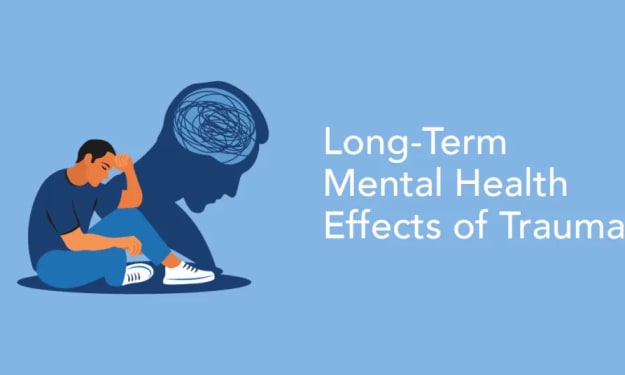
Trauma is not just an emotion or a psychological experience—it's a highly physiological one. When an individual experiences a traumatic event, the effect reverberates far in excess of the event itself, and the consequences have a tendency to leave permanent imprints on the brain, nervous system, and behavior. Regardless of whether it's a single traumatic event such as a car accident or repeated trauma such as abuse or neglect, the impact can be dramatic and enduring. Understanding how trauma alters the brain and behavior gives us permission to heal with compassion, patience, and science-informed care.
By Naveen Gargabout a year ago in Education