college
Maximize your university experience with these tips for all things collegiate–how to achieve a perfect GPA, select the right major, finance your college education and more.
How to Get Rid of Emotional Attachments: A Comprehensive Guide
Emotional attachments are a natural part of life—whether to people, places, memories, or possessions. Healthy attachments foster connection and growth; unhealthy ones, however, can hold us back, cause pain, or keep us from moving forward. Letting go is often easier said than done, but learning how to release emotional attachments is a vital skill for personal growth, emotional well-being, and leading a more liberated, fulfilled life. This article explores why emotional attachments happen, why they may become unhealthy, and how to free yourself when it's time to let go.
By Reframerootsabout a year ago in Education
UC San Diego Applicant Portal
A Helpful Guide to the UC San Diego Applicant Portal: For Students Planning Their Study Abroad Journey Applying to a university like UC San Diego is exciting—but also a bit overwhelming. There’s the paperwork, the deadlines, the constant checking of your email for updates. For many Indian students navigating the U.S. admissions process for the first time, all of this can feel unfamiliar.
By Unirely Study Abroadabout a year ago in Education
How to Find and Use Reliable sources for Your Assignment
Do you know what reliable sources are? They are the places from which you collect data for your project. Additionally, in today's generation, balancing work and tasks is very challenging. Therefore, some students seek assistance from the available sources that can help them manage their workload. The best and most reliable source is assignment writing services. Experts in these services possess extensive education and training. Do you even know if your sources are trustworthy? If not, dive into this post to learn how to find reliable sources and utilise them effectively.
By Will Smithabout a year ago in Education
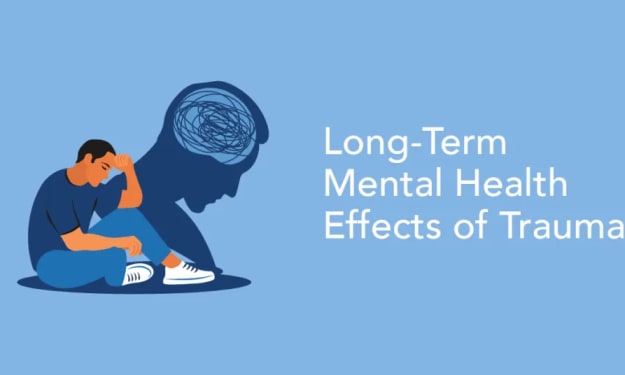
How does trauma affect the brain, and what are the pathways to healing?
Trauma can have a hidden but powerful impact on a person's mind, body, and nervous system. It does not just reside in memories—in the body and brain, it also affects how we think, feel, behave, and relate to other humans. Understanding how trauma affects the brain permits us to understand why healing does not occur by merely "thinking positively" or "moving on," but rather is a gradual, loving process involving safety, connection, and often professional support.
By Naveen Gargabout a year ago in Education
How does the brain handle trauma, and what are the paths to healing?
How does the brain handle trauma, and what are the paths to healing? Trauma has an unseen but profound impact on the nervous system, body, and mind of an individual. It doesn't only live in memories—it lives in the body and brain, shaping how we behave, interact with others, feel, and think. Once we know how trauma affects the brain, we realize why healing isn't a matter of "thinking positive" or "moving on," but a compassionate, gentle process that encompasses safety, connection, and perhaps professional support.
By Naveen Gargabout a year ago in Education
How does journaling support recovery of mental health and regulation of emotions?
Journaling, often considered to be a simple task of recording feelings and thoughts, can be a useful tool in mental health recovery and emotional adaptation. For decades, human beings have used diaries and reflective writing as a tool of experiencing things, comprehending oneself, and finding meaning from life's challenges. Today, journaling is an established therapeutic technique with well-documented psychological benefits in the field of contemporary mental health practice.
By Naveen Gargabout a year ago in Education
Empowering Minds: The Transformative Power of Education
Empowering Minds: The Transformative Power of Education How Learning Shapes Brighter Futures and Builds Stronger Communities In a small village nestled between rolling hills and golden fields, lived a curious 10-year-old girl named Amina. Her eyes sparkled with questions about the world — why the stars twinkled, how birds knew where to fly, and what lay beyond the horizon. But for a long time, her questions had no place to land. Her family, like many others in the village, struggled to make ends meet, and school was a distant dream. That changed when a local non-profit partnered with government educators to open a school in the village. It wasn’t grand — just a few classrooms, wooden benches, and a chalkboard — but for Amina and dozens of other children, it was a gateway to a new world. From the moment she stepped into the classroom, Amina’s life began to change. She learned to read, write, and count. She discovered the stories of faraway lands, the mysteries of science, and the beauty of her own culture’s history. Most importantly, she discovered her own voice. Education gave Amina something she had never felt before: hope. It gave her the confidence to dream beyond her circumstances and the tools to one day make those dreams real. --- Amina’s story is just one of millions around the globe — a testament to the power of education. Beyond just reading and writing, education builds critical thinking, empathy, confidence, and a sense of belonging. It’s one of the most powerful tools we have to fight poverty, inequality, and injustice. Why is education so important? Education doesn’t only shape individuals — it strengthens families and transforms communities. When children go to school, they grow up to make better choices, access better job opportunities, and contribute positively to society. Educated individuals are more likely to support democratic values, care for their environment, and raise healthier children. According to UNESCO, each additional year of schooling can increase a person’s income by up to 10%. Girls who complete secondary education are far less likely to marry early and more likely to become leaders and entrepreneurs. In fact, when you educate a girl, you educate an entire generation. In communities where education is prioritized, there are lower crime rates, better health outcomes, and stronger economies. Simply put, education plants the seeds for long-term, sustainable growth. --- But despite the proven benefits, millions of children worldwide still lack access to quality education due to poverty, conflict, discrimination, or lack of resources. For many, the nearest school is hours away, the teachers are undertrained, or families can't afford the supplies. That’s why organizations, governments, and individuals around the world are working together to break these barriers — by building schools in rural areas, training passionate educators, providing scholarships, and advocating for policies that protect every child’s right to learn. In one rural region of South America, for example, a mobile classroom project brings education to children who live in remote mountain communities. Teachers travel by donkey or boat, carrying books and supplies to ensure no child is left behind. In cities, mentorship programs help young students from low-income families stay in school and believe in their potential. These are more than just feel-good stories — they are real-life examples of how education changes lives. --- Back in Amina’s village, years have passed. She is now a confident teenager, teaching her younger siblings how to read and write under the same tree where she once asked about the stars. Her school helped her gain a scholarship to attend secondary school in the nearby town. She dreams of becoming a doctor, not just to treat people but to teach others how to care for their health. Her journey is a reminder that the gift of education is never just for one person — it spreads. When we educate one child, we invest in a ripple effect of growth, change, and possibility. --- Conclusion: Education is more than just learning facts — it's about unlocking potential. It gives people the tools to build a better life, to understand the world, and to shape the future. Amina’s story, like many others, shows us that when we invest in education, we are building a brighter, more just world for all. It reminds us that no matter where a child is born — whether in a big city or a quiet village — every mind deserves the chance to shine. Because when we empower minds, we empower humanity.
By Muhammad Saad about a year ago in Education
2025 Remote Career Pivot Without a Degree: The 90-Day 95K Blueprint. Content Warning. AI-Generated.
2025 Remote Career Pivot Without a Degree: The 90-Day 95K Blueprint ––––––––––––––––––––––––––––––––––– INTRODUCTION – 42,700 SEARCHES, ONE MISSING BLUEPRINT
By youssef mohammedabout a year ago in Education
Empowering Minds, Changing the World
In the quiet hills of northern Kenya, the sun was just beginning to rise over the village of Laretu. A soft, golden light filtered through the acacia trees, warming the red earth and stirring life into a place that, for generations, had been forgotten by progress. But something was changing. Twelve-year-old Amina sat under a tree, her well-worn notebook balanced on her knees. Her eyes scanned the pages with a mixture of determination and wonder. Only a few years earlier, books were foreign objects in her home—luxuries reserved for cities and for boys. But now, every morning before tending to her family’s goats, Amina read. And every night before sleep, she dreamed—not of marriage or chores, but of chemistry labs, stethoscopes, and faraway universities. What had happened in Laretu was not magic. It was education. A small, solar-powered school had been built just three years ago, through a collaboration between a global nonprofit and local leaders. At first, only a few families were willing to send their children—especially girls. But over time, change began to ripple. Amina's older brother, once resistant to her learning, watched her explain the water cycle better than any adult in the village. Her father, who had never learned to read himself, began to ask her to read letters for him. The village began to see knowledge not as a threat to tradition, but as a bridge to a better life. Across the globe, similar ripples were forming. In a refugee camp in Jordan, Syrian children who had lost their homes and families were rebuilding their identities through classrooms filled with stories, science, and hope. In the favelas of Brazil, coding programs were turning at-risk youth into software developers, some of whom would go on to launch startups tackling real-world problems in healthcare and finance. In rural Bangladesh, mobile classrooms on boats were reaching flood-prone communities, ensuring that even climate change could not interrupt a child’s right to learn. Education was proving to be the great equalizer—not instantly, and not perfectly—but undeniably. What made education so powerful was not just the transfer of knowledge, but the transformation of the self. When people learned, they began to question. They asked why things were the way they were, and whether they had to remain that way. Amina began to ask why her village lacked clean water, and what she could do to fix it. Others asked why women weren’t allowed to own land, or why corruption was accepted as normal. Education planted the seeds of critical thinking, and critical thinking sparked action. By the time Amina was sixteen, she had started a girls’ science club. By nineteen, she had received a scholarship to study environmental engineering abroad. And by twenty-five, she returned—not to escape her past, but to rebuild it. With help from university contacts and local government grants, Amina led a project to design and install a low-cost water purification system in Laretu, using solar distillation methods adapted from her studies. Illnesses dropped, children missed fewer school days, and mothers had more time for community enterprises. But perhaps the most transformative part was what she inspired. Younger girls began to follow in her footsteps. Boys, too, started to see education not as a threat to their identity, but as an expansion of it. The idea that power came through violence or wealth began to shift—now, the most respected people in the village were teachers, scientists, and community organizers. On a global scale, stories like Amina’s were multiplying. Educated populations were driving democratic reforms, innovating climate solutions, and demanding accountability from their leaders. Education wasn’t merely preparing people for jobs—it was preparing them to reshape the world. The United Nations’ reports confirmed what many already believed: no other single factor had as wide-reaching an impact on global well-being as education. It reduced poverty, improved health outcomes, promoted gender equality, and strengthened economies. In every corner of the world, empowered minds were rewriting futures. Standing on a small hill overlooking her village, Amina once said to a group of visiting students, “We used to think change had to come from outside—from governments, from donors, from heroes. But real change starts when one person learns something new, and decides not to keep it to themselves.” In a world facing crises of inequality, climate, and conflict, it was not weapons, wealth, or even technology that promised the greatest hope. It was education—humble, patient, and persistent—that lit the way forward. Empowering minds, changing the world. The transformation had already begun.
By Muhammad Saad about a year ago in Education
What’s the Smartest Way to Do My Finance Exam Successfully?
Introduction: The Pressure of Online Finance Exams Finance is a crucial subject, especially for students pursuing business, accounting, economics, and professional certifications. Online finance exams can be demanding because they require analytical skills, numerical accuracy, time management, and theoretical knowledge—all under the pressure of a timed and sometimes proctored environment.
By Lucas Lednerabout a year ago in Education
Artificial Intelligence: Origins, Benefits, Challenges, and the Future
1. Introduction Artificial Intelligence (AI) is no longer just a concept from science fiction or academic speculation. It is woven deeply into the technological and social fabric of the 21st century. Whether assisting doctors, optimizing logistics, parsing language, or generating art—AI permeates every domain of contemporary life. Its rise both excites and unsettles, promising accelerated innovation while raising profound ethical, legal, and social questions.
By Stefano D'angelloabout a year ago in Education