book reviews
Book reviews for scholastic growth; read material from the world's top educators with our collection of novels, memoirs, biographies, philosophical texts and textbooks.
Mobile Apps Development
In today’s fast-paced digital world, mobile applications have become a cornerstone of communication, business, entertainment, and productivity. From ordering food and booking a cab to managing finances and staying connected with loved ones, mobile apps touch nearly every aspect of our daily lives. As smartphone usage continues to rise globally, mobile app development has emerged as one of the most dynamic and innovative fields in the tech industry.
By Mayank Parmarabout a year ago in Education
"Unlock Minds, Ignite Powerful Change"
In a world driven by rapid innovation, shifting economies, and global interconnectivity, the ability to access, absorb, and apply knowledge is one of the most powerful tools for transformation. The phrase “knowledge is power” transcends time, holding true in classrooms, boardrooms, communities, and nations alike. But knowledge by itself is not enough. When knowledge is unlocked—shared freely, nurtured with curiosity, and applied with purpose—it becomes the spark that ignites powerful change.
By Mukhtiar Ahmadabout a year ago in Education
How Speeding Particles Froze Into Darkness: A Cosmic Plot Twist That Could Explain Dark Matter
The Enigma of Dark Matter For nearly a century, astronomers have been puzzled by a cosmic mystery: galaxies spin too fast to be held together by the gravity of their visible stars and gas alone. The only explanation is that some unseen form of matter—dark matter—must be exerting an invisible gravitational pull.
By Niranjon Chandra Royabout a year ago in Education
A Natural Language Processing-Based Framework for Autism Insights and Support Systems.
Autism or Autism Spectrum Disorder (ASD) is a neurodevelopmental disorder that impacts the way a person communicates, acts, and relates to others. It is also referred to as a "spectrum" since it represents a broad range of symptoms, abilities, and disability levels. Some might be very capable in some areas but have problems with social interaction, while others will have severe developmental delays. Autism tends to emerge in early childhood, most often before the age of three, and is a lifelong illness, with the severity and extent of the symptoms potentially changing throughout life. Individuals with autism often exhibit challenges with social communication, for instance, eye contact, understanding non-verbal hints, or two-way conversation. They can also show repetitive behaviors such as hand-flapping, arranging objects, or demanding strict routines. Individuals have strong interests in certain subjects and can be abnormally sensitive to sensory stimuli such as sounds, lights, or textures. The variety of symptoms differs greatly between individuals, making early diagnosis and tailored intervention essential. Genetic considerations are among the strongest causes of autism. Studies have pinpointed hundreds of genes that are linked to the condition. In a few instances, de novo mutations—random DNA alterations that arise in the egg or sperm—are responsible for autism but are not inherited. In others, people inherit gene variants that make them susceptible. Copy number variations (CNVs)—large chunks of DNA copied or deleted—can interfere with brain development and have been detected in many individuals with autism. Twin research has revealed that if one identical twin has autism, the other also has a 60–90% probability of developing the same condition, highlighting the genetic factor.
By Koustav Biswasabout a year ago in Education
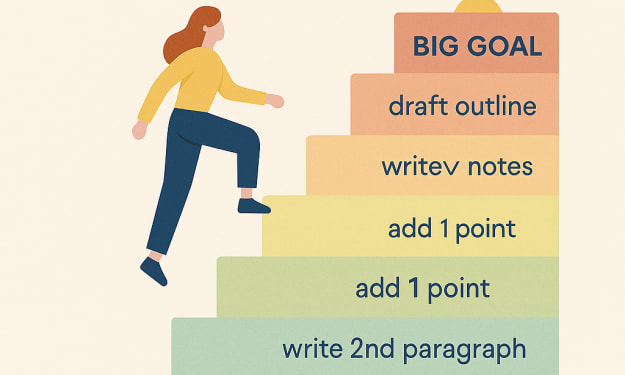
Overcoming Procrastination: A Step-by-Step Guide to Finally Moving Forward
I remember the night all too well. It was 1:47 AM. A cold cup of coffee sat on my desk. The glow of the laptop screen bathed my room in a ghostly blue light. My deadline was at 9:00 AM. The project was important. The topic? Familiar. The task? Doable. But somehow, I hadn’t written a single word.
By Natik Ahsanabout a year ago in Education
Overcoming Adversity
Silent Power: A Story of Overcoming Adversity Arjun, a boy, lived in a peaceful town nestled between forests, hills, and winding rivers. Despite being only ten years old, Arjun had already experienced more adversity than anyone he knew.
By Sabina Islamabout a year ago in Education
Top AI Tools to Use in 2025
AI moved from a term of the distant future to a tool we rely on for our work today. In ten years, AI will have a major influence on productivity, creativity and the progress of business. For solopreneurs, content developers, marketers or makers, AI services can give a significant boost to your accomplishments and workflow.
By Kazi mayaz ishfiabout a year ago in Education
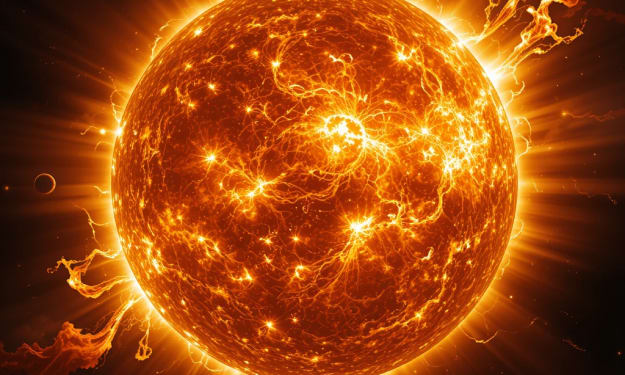
The Fiery Heart of Our Solar System: Mysteries of the Sun
Every morning, the Sun rises with timeless grace, bathing the world in golden light. Yet behind its calm appearance lies a raging inferno, a cosmic engine that has burned for over 4.6 billion years. The Sun is not just a glowing ball in the sky—it is the center of our solar system, the giver of life, and a symbol of divine power across countless civilizations. But how much do we truly understand about this blinding, burning giant? A Star is Born The Sun formed from a giant cloud of gas and dust that collapsed under its own gravity. As the material compressed, it began to heat up, igniting nuclear fusion at its core. This process continues to this day, converting hydrogen into helium and releasing immense energy in the form of heat and light. This light takes eight minutes to reach Earth, but its journey begins in the Sun's core, where temperatures exceed 15 million degrees Celsius. Layers of Light and Fire The Sun is composed of several layers, each with unique properties. At the center lies the core, where fusion happens. Surrounding that is the radiative zone, followed by the convective zone, where hot gases churn like boiling water. The photosphere is the visible surface, giving us sunlight. Above it, the chromosphere and the corona extend outward, visible only during solar eclipses. The corona, surprisingly, is hotter than the surface and remains one of astronomy’s greatest puzzles. Solar Storms and Flares The Sun is far from calm. It constantly ejects particles and energy in the form of solar flares and coronal mass ejections (CMEs). These powerful storms can affect satellites, communication systems, and even electrical grids on Earth. In 1859, a massive solar storm—known as the Carrington Event—disrupted telegraph lines worldwide. Scientists warn that a similar event today could paralyze modern technology. The Sun’s Role in Life and Death Without the Sun, life as we know it would not exist. It drives our climate, powers photosynthesis in plants, and provides energy that fuels all ecosystems. But the Sun is not eternal. In about 5 billion years, it will exhaust its hydrogen fuel and expand into a red giant, possibly engulfing Mercury, Venus, and even Earth. Eventually, it will shed its outer layers and become a white dwarf—a quiet end to a blazing life. A Cultural and Spiritual Icon Since the dawn of time, humanity has worshipped the Sun. Ancient Egyptians revered Ra, the sun god. The Aztecs offered sacrifices to please their solar deity, Huitzilopochtli. In Hinduism, Surya is honored with daily prayers. Even modern culture embraces the Sun through art, poetry, and symbolism—as a force of truth, hope, and rebirth. Scientific Exploration: Watching the Sun Closely Modern science has allowed us to study the Sun in unprecedented detail. NASA's Parker Solar Probe is the closest any spacecraft has ever come to the Sun, diving through the corona to collect data about solar wind and magnetic fields. These missions are helping us understand how the Sun affects space weather and how to protect Earth from future solar threats. A Reminder of Our Fragility and Wonder The Sun reminds us of both our power and our vulnerability. It nurtures life, yet it can also destroy. It is constant, yet ever-changing. The more we study it, the more we realize how little we know. And as we look up at the golden horizon, we are reminded that even the most familiar things hold untold mysteries. The Sun is not just a star. It is our beginning, our sustenance, and one day, it may mark our end.
By Noman Afridiabout a year ago in Education