book reviews
Book reviews for scholastic growth; read material from the world's top educators with our collection of novels, memoirs, biographies, philosophical texts and textbooks.
Best Hybrid Publisher: Finding the Right Partner for Your Book
The publishing industry has changed more in the past two decades than it did in the entire century before. Authors who once had only two choices—pursuing a traditional publishing deal or managing everything themselves through self-publishing—now have a third, increasingly popular option: hybrid publishing. For many writers, the search for the best hybrid publisher is the key to producing a professional book without losing creative control.
By Noreanopenabout a year ago in Education
Suwar min Hayat al-Tabiin (Arabic Only)
Suwar min Hayat al-Tābi‘īn is a timeless Arabic classic that highlights real stories from the lives of the Tābi‘īn the generation that followed the Sahabah (companions of the Prophet ﷺ). These were men and women who learned Islam directly from those who lived with the Prophet ﷺ, and their lives reflect a deep understanding of faith, character, sincerity, and sacrifice.
By Islamic booksabout a year ago in Education
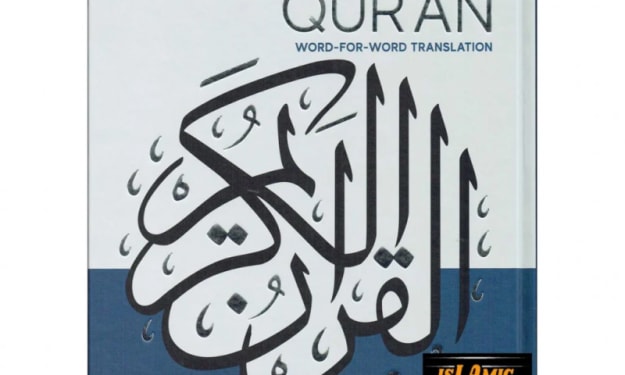
The Tracing Quran (The Blessed Chapters) Word
” Tracing Quran “Learning and knowing the Quran is an aspiration every Muslim keeps close to their heart. However, for most, going through the learning process of reading the Quran word for word proves to be too daunting, particularly for non-Arabic readers. That’s where The Tracing Quran (The Blessed Chapters) enters a beautifully crafted, hardcover volume that makes Quranic learning a hands-on, interactive process.
By Islamic booksabout a year ago in Education
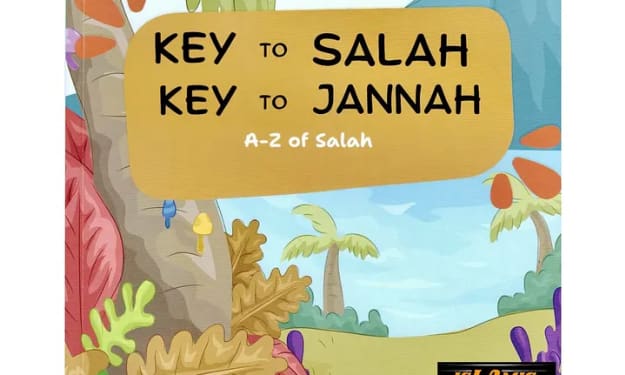
KEY TO SALAH KEY TO JANNAH by Fawziyyah Adunola-Emiabata
Key to Salah Key to Jannah by Fawziyyah Adunola-Emiabata is a well-considered and easy-to-read book that acquaints youngsters. Young readers with one of the most important deeds in Islam: Salah (the five obligatory prayers). The title itself holds a strong reality salah is not merely a ritual, it is a direct link to Allah. For the believer, it is the key to entering Jannah (Paradise).
By Islamic booksabout a year ago in Education
Engineering Materials in Saudi Pipeline Projects Explained
Engineering Materials in Saudi Pipeline Projects Saudi Arabia’s pipeline networks are among the most extensive and demanding in the world. These systems transport oil, gas, and water across thousands of kilometers, cutting through deserts, mountains, and coastal zones. To ensure performance and reliability, engineers must select materials that can withstand extreme pressures, high temperatures, salinity, and soil aggressiveness. The choice of materials is not just a technical decision—it directly affects pipeline lifespan, safety, and overall project economics.
By Sayed Zewayedabout a year ago in Education
How Branded Packaging Boosts Customer Loyalty in Retail
One of the best assets of any retail or e-commerce company is customer loyalty. Your sales and reputation build up when buyers go back to your brand again and again. Branded packaging is one of the most efficient, but least used, methods of establishing this loyalty.
By William Billabout a year ago in Education
Automate Your Savings: The Easiest Way to Build Wealth Without Thinking About It. AI-Generated.
The Power of Automating Your Savings: A Simple Habit That Builds Wealth When it comes to personal finance, most people want to save more money but struggle to stick with it. Life is full of expenses, temptations, and unexpected costs, which makes it easy to push saving off until “next month.” But here’s the truth: building wealth doesn’t always come from giant windfalls or dramatic sacrifices. More often, it comes from consistent, almost invisible habits.
By MoneyOrbitabout a year ago in Education
Organic Clothing.
Introduction Organic clothing has emerged as a beacon of sustainable fashion, offering an eco-friendly alternative to conventionally made garments. It refers to apparel made from organically grown fibers (such as cotton, hemp, or wool) produced without synthetic pesticides, fertilizers, or genetically modified seeds. Over the past few decades, this niche has grown from a grassroots idea to a global market segment. Major brands – from boutique eco-labels to retail giants – now tout “organic” lines as part of their environmental responsibility pledges. Although organic textiles still account for only around 1% of worldwide fiber production, production has risen for consecutive years to meet increasing demand. In the 2020/21 season alone, farmers grew about 342,000 tons of certified organic cotton fiber – roughly 1.4% of global cotton output – a 37% jump from the prior year. This growth reflects a broader shift in consumer values toward sustainability and health. Shoppers are drawn to organic clothes as a way to avoid harmful chemicals and reduce their wardrobe’s environmental footprint. At the same time, companies see organic fiber as a key part of their sustainability strategies, responding to calls for greener, more ethically made products.
By Sayed Zewayedabout a year ago in Education
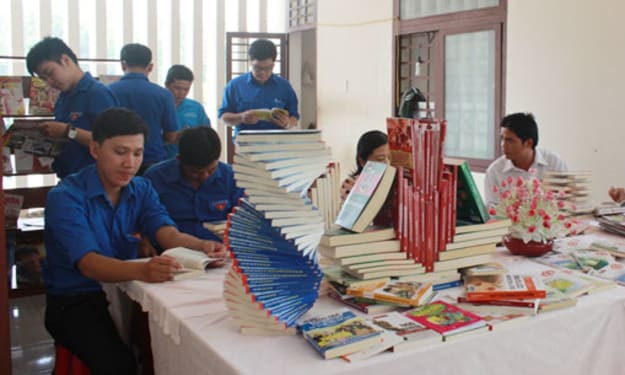
Reading culture organized to help spread good habits
On the afternoon of May 16, 2025, TDTU INSPiRE Library held the Award Ceremony for contests under the program series celebrating Vietnam Book and Reading Culture Day 2025. The event took place in a warm, solemn, and emotional atmosphere. It was also a special occasion to honor the outstanding efforts and achievements of TDTU students in two contests: the Online Contest with the theme "Kindling the Flame of Knowledge" and the Book Cover Design Contest with the theme "The Future Era."
By Sách Hay Mỗi Ngàyabout a year ago in Education
Best Free Backlink Analysis Tool: Check, Monitor & Optimize Your Backlinks 2025
Backlinks are one of the most powerful signals Google uses to determine your website’s authority, trust, and ranking potential. With a free backlink analysis tool, you can gain full visibility into your backlink profile, monitor link quality, and take control of your off-page SEO strategy.
By oneseotoolsabout a year ago in Education
Building a Brighter Future: How Education Is Transforming Our Community
M Mehran Education has long been called the backbone of society, but in our community, this saying is proving truer than ever. In classrooms, libraries, and even online platforms, students and educators are shaping a new future—one where knowledge is not just memorized but lived, shared, and applied. The Changing Face of Learning For generations, schools in our area followed traditional methods: chalkboards, textbooks, and rote learning. While effective in their time, those methods often left little room for creativity or critical thinking. But in recent years, a quiet revolution has been taking place. Teachers are experimenting with interactive lessons, parents are more engaged than ever, and technology is opening doors once thought closed. “Education today is not about memorizing facts,” explains Professor Aslam, an education expert at the local university. “It’s about developing skills that will prepare students for a fast-changing world. Critical thinking, collaboration, and adaptability are just as important as reading and mathematics.” This shift is visible in classrooms across the city. In a government high school on the outskirts, students no longer just recite multiplication tables; they use tablets to solve real-world problems, like calculating the cost of running a small business. Meanwhile, younger children are learning through play-based methods that encourage imagination and teamwork. Community Efforts Fueling Change Education is not just the responsibility of schools—it’s a community effort. Over the past two years, several local organizations have stepped up to bridge the gap for underprivileged families. Book drives, free tutoring programs, and scholarship funds are giving students the support they need to stay in school and thrive. One such initiative is Bright Minds Foundation, which has provided more than 500 children in low-income neighborhoods with free after-school lessons. Their volunteers, many of them college students, dedicate their evenings to helping children with homework and basic literacy. “We believe no child should be left behind because of financial struggles,” says Sana Ali, the program coordinator. “When a child learns, an entire family benefits. Parents feel pride, siblings are inspired, and the cycle of opportunity begins.” The results are already evident. Several students who once struggled to read are now excelling in their studies. One ninth-grader, Bilal, recently shared that he dreams of becoming a doctor—a goal he never imagined before joining the program. The Role of Technology While community support has been essential, technology has also become a powerful ally in the education sector. During the pandemic, online learning platforms kept education alive when classrooms were shut. What started as a necessity has now become a long-term tool for learning. Local schools are increasingly blending traditional teaching with digital resources. Platforms like Google Classroom and Zoom are being used for lectures, while educational apps are helping students practice languages, mathematics, and science at their own pace. “Technology has expanded access,” says Farah Khan, a primary school teacher. “A child in a remote village can now attend the same online lecture as one in the city. Of course, challenges remain with internet access, but progress is happening step by step.” Still, teachers emphasize that technology is not a replacement for human connection. Education, at its heart, remains about relationships—between teacher and student, parent and child, and peers working together. Parents as Partners Another encouraging trend has been the growing involvement of parents in education. Where once schooling was left entirely to teachers, today many parents are taking an active role. From attending parent-teacher meetings to helping with online assignments, families are realizing that their involvement can make all the difference. Nasir Mahmood, a father of three, says he tries to create a “study-friendly” environment at home. “We don’t just tell our children to study—we study with them. Sometimes I sit with my daughter and help her read. It shows her that learning matters to us as a family.” Experts say this attitude fosters motivation and confidence in children. When education is valued at home, it naturally becomes a priority for the child as well. Challenges That Remain Despite the progress, challenges persist. Many rural schools face shortages of qualified teachers, infrastructure problems, and lack of basic facilities. Some children still walk miles each day just to attend class. In urban areas, the rising cost of private education puts pressure on families, while public schools struggle with overcrowding. “There is no one-size-fits-all solution,” notes Professor Aslam. “But what we see is resilience. Communities are finding innovative ways to keep children in school, whether through community classes, vocational training, or partnerships with NGOs.” Education as Empowerment At its core, education is about empowerment. It equips individuals with the ability to make informed decisions, secure better livelihoods, and contribute meaningfully to society. A well-educated community is one that can tackle challenges—economic, social, or environmental—with wisdom and confidence. In our own community, the stories are countless. A young girl who once doubted her abilities is now preparing for engineering school. A group of boys who once considered dropping out now run a small coding club, teaching each other digital skills. Parents who once had little exposure to formal education are proudly attending school events, celebrating their children’s achievements. Looking Ahead As we look to the future, one thing is clear: education will remain the most powerful tool for transformation. It is the key to reducing poverty, improving health, and building a society where every individual can reach their potential. Change will not happen overnight, but with committed teachers, engaged parents, and determined students, progress is inevitable. And in our community, the seeds of that progress are already visible—sprouting in classrooms, blossoming in libraries, and spreading hope far beyond school walls. “Education is not just about preparing for the future,” says Farah Khan. “It’s about shaping the present. Every lesson learned today is a step toward a better tomorrow.” As children pack their bags each morning and teachers prepare their lessons, the message resonates: knowledge is power, and education is the path to a brighter, more inclusive, and more promising future for all.
By Muhammad Mehranabout a year ago in Education