book reviews
Book reviews for scholastic growth; read material from the world's top educators with our collection of novels, memoirs, biographies, philosophical texts and textbooks.
The Future is Now: The Future Within the Present
In an age defined by rapid technological advancement and social evolution, the line between the present and the future is becoming increasingly blurred. The phrase “The Future is Now” is more than a slogan—it is a reflection of how the seeds of tomorrow are already germinating in today’s soil. Our actions, choices, and innovations in the present are the very elements that are shaping and defining what we call the future. This interconnectedness between now and next reveals a powerful truth: the future does not arrive suddenly—it emerges from within the present moment. The Acceleration of Change One of the most significant markers of our time is the accelerated pace of change. In the past, generational gaps spanned decades, but now, technological shifts happen within years or even months. Artificial intelligence, renewable energy, biotechnology, and space exploration—concepts that once belonged in science fiction—are now part of our daily discourse and reality. When we use AI to assist with work, or when electric cars silently glide through our streets, we are not peeking into the future; we are living it. This acceleration compels us to reconsider our perception of time. The future is no longer some distant, abstract realm. It is embedded in our daily experiences. Our smartphones, smart homes, and even our digital identities are all evidence that the future has arrived ahead of schedule. Innovation as a Bridge Innovation is the bridge that connects the present with the future. Every new idea, invention, or policy that addresses a modern challenge serves as a blueprint for the future. When scientists create lab-grown meat to combat climate change or when educators integrate virtual reality into classrooms to enhance learning, they are actively sculpting the shape of things to come. Take, for instance, the global movement toward sustainability. The decisions being made now about energy, food systems, and urban design will determine the health of our planet for future generations. In this way, the future is not waiting for us—it is already being decided by the choices we make today. Human Consciousness and the Power of Now The future is not just a technological or external concept; it is also psychological. Human beings are future-oriented by nature. We imagine, plan, worry, and dream—activities that place the mind in a constant state of projection. However, it is within the present moment that all transformation truly begins. This is why mindfulness and present-awareness have gained popularity: because they anchor us in the now, the only time from which change can be initiated. The paradox is profound yet simple: while we live in a world driven by anticipation, the only place we can ever truly act is here and now. The future exists within this very breath, this decision, this innovation. It is born from our current mindset, intentions, and behaviors. Youth and the Future Within Nowhere is the concept of “the future within the present” more vividly visible than in the younger generation. Today’s youth are growing up with tools and knowledge unimaginable just a generation ago. They are coding apps in high school, launching social movements from smartphones, and questioning outdated systems with a clarity and courage that inspire hope. The ideas and identities young people are forming today are not only shaping their own futures but also redefining entire societies. They are the living proof that the future doesn’t begin at some distant date—it is already alive and evolving through the young minds and hearts of today. Technology and Timelessness While technology often symbolizes the future, it also reveals something timeless: our unchanging desire to improve, connect, and transcend limitations. From the invention of the wheel to the development of the internet, our tools have always reflected our inner aspirations. Artificial intelligence, for example, might feel futuristic, but at its core, it reflects a deeply human desire—to extend our capacities, to think faster, to solve problems more efficiently. What we call “futuristic” is often just a mirror held up to our oldest dreams. Challenges as Catalysts Interestingly, the challenges we face today—climate change, inequality, political unrest—may feel overwhelming, but they are also opportunities in disguise. They force us to rethink, restructure, and rebuild. They remind us that the future is not just something we enter passively; it is something we must actively shape. The COVID-19 pandemic was a striking example. Overnight, the world had to adapt. Work, education, healthcare, and even social interaction transformed. These adaptations didn’t belong to some far-off future—they were immediate, present, and necessary. Out of crisis, the future was fast-tracked. Conclusion: Living the Future To say “the future is now” is not merely to highlight the marvels of technology or the urgency of our challenges. It is to recognize the incredible power of the present. Every choice we make, every innovation we support, and every value we uphold is part of the blueprint for tomorrow. Rather than waiting for the future to arrive, we must understand that we are already its architects. The future is not a destination but a direction—a path we are carving with every present moment. In this light, “The Future Within the Present” becomes not just a philosophical idea, but a call to action. We are not waiting for a better world—we are building it, moment by moment, word by word, dream by dream.
By Niranjon Chandra Royabout a year ago in Education
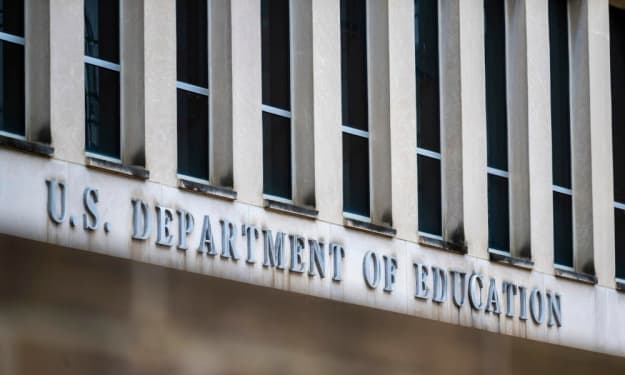
NAACP Sues U.S. Education Department Over DEI School Funding Cuts
NAACP Sues U.S. Education Department Over DEI School Funding Cuts Civil Rights Group Alleges Discrimination, Threat to Black Students’ Equality --- The Core Allegations On April 15, 2025, the NAACP filed a federal lawsuit against the U.S. Department of Education, claiming that the Trump administration has been targeting schools that use diversity, equity, and inclusion (DEI) programs in an illegal manner. The lawsuit, *NAACP v. U.S. The Department of Education* contends that the administration's actions constitute a violation of civil rights laws and pose a threat to Black students' access to equal educational opportunities. The Education Department's two major actions are the focus of the complaint: 1. **The February 14 “Dear Colleague” Letter**: This warned schools that federal funding could be revoked if they consider race in admissions, hiring, scholarships, or other policies—a move the NAACP calls a “misinterpretation” of civil rights laws . 2. **April 3 Compliance Demands**: Schools were required to certify their adherence to anti-DEI policies by April 24, with threats of defunding for noncompliance. Institutions like Brown University and Harvard faced immediate financial repercussions, including frozen grants . --- Context: Trump’s Anti-DEI Agenda The lawsuit was filed in the context of President Donald Trump's larger campaign to eliminate DEI initiatives and racial preferences. The administration has framed these programs as discriminatory, leveraging Title VI of the Civil Rights Act of 1964 and a 2023 Supreme Court decision that struck down race-conscious college admissions . Critics argue this reinterpretation flips the intent of civil rights laws, prioritizing “anti-white racism” over systemic inequities . --- Effect on Students and Schools The NAACP highlighted tangible consequences of the funding threats: - Cancelled Programs The Waterloo, Iowa, school district withdrew first-grade students from the University of Northern Iowa’s annual African American Read-In, which had engaged 3,500 students across 73 schools . - Financial Pressure Brown University faced a $510 million funding freeze, while Harvard saw $2.2 billion withheld after refusing to comply . -Chilling Effect Educators fear DEI cuts will exacerbate racial disparities in underfunded, segregated schools. Black students already attend schools with declining white populations (24.5% in 2021 vs. 34.7% in 1990) and rising segregation . --- Legal and Moral Arguments The NAACP’s 52-page complaint alleges: -Constitutional Violations The policies infringe on equal protection rights and enable “viewpoint discrimination” against inclusive curricula . Misuse of Title VIThe administration weaponized anti-discrimination laws to justify defunding DEI programs, despite their role in closing opportunity gaps . -Factual Inaccuracies The Education Department’s guidelines were criticized as “broad, vague, and difficult to understand,” creating confusion among schools . NAACP President Derrick Johnson condemned the administration for “deepening harm” by denying systemic racism: > “Children of color consistently attend segregated, chronically underfunded schools where they receive less educational opportunities and more discipline. These truths will not vanish if you deny them. --- Broader Implications The lawsuit reflects a growing battle over racial equity in education: -EU Parallels Similar tensions between nationalist policies and multilateral cooperation have arisen globally, as seen in recent U.S.-EU trade conflicts [contextual link to prior analysis*]. - Political Divide The case underscores ideological clashes between Trump’s populist base—which views DEI as “woke” overreach—and civil rights advocates fighting for historical accountability . - Legal Precedent A ruling could redefine how civil rights laws are applied, potentially affecting K-12 and higher education nationwide.
By Rabbi Ahmadabout a year ago in Education
Simple Manager Transfer Protocol
Voice Over Internet Protocol (VoIP) Voice over Internet Protocol (VoIP) is a technology that allows you to make voice calls using a broadband Internet connection instead of a regular (or analog) phone line. Some VoIP services may only allow you to call other people using the same service, but others may allow you to call anyone who has a telephone number - including local, long distance, mobile, and international numbers. Also, while some VoIP services only work over your computer or a special VoIP phone, they allow you to use a traditional phone connected to a VoIP adapter.
By Hermano Badeteabout a year ago in Education
Apple’s iPhone 17 Pro: New Renders Reveal Sleek Camera Bar Design and Unified Rear Panel. Content Warning. AI-Generated.
As the tech world looks ahead to the future of Apple’s iconic smartphone lineup, the iPhone 17 Pro is already stirring excitement thanks to new renders that offer an early glimpse of what could be one of the most refined designs yet. According to a recent leak, Apple appears to be making some noteworthy design adjustments that will not only affect the phone’s aesthetics but could also influence how users perceive the device’s quality and style.
By Tech Horizonsabout a year ago in Education
How to Earn Money Online for Students in 2025: Practical & Proven Methods
In today’s digital age, earning money online has become more accessible than ever—especially for students. Whether you want to cover your tuition fees, fund your hobbies, or gain financial independence, there are multiple legitimate ways to make money online without compromising your studies.
By rewardbloggers seositeabout a year ago in Education
Health Goals? Don’t Skip STD Test in Dubai
When considering overall wellness, many people focus on fitness routines, balanced diets, and mental well-being. However, sexual health is an essential part of holistic wellness, and often the most overlooked. If you’re living in or visiting the UAE, including regular Std Test Dubai as part of your health goals can make a world of difference. Sexual health screening is more than just a precaution—it's a vital step toward a healthy lifestyle and peace of mind.
By Anousha syedabout a year ago in Education
Cryptocurrency
The term "cryptocurrency" refers to a digital or virtual form of currency that is protected by "cryptography." It is decentralized, meaning it operates without a central authority like a bank or government. Let's go over each of your questions in detail:
By S.M.Alam Rashid about a year ago in Education
Benefits of Meditation
A Guide to Mindful Living: The Positive Effects of Meditation on Your Life In an increasingly fast-paced and chaotic world, finding moments of stillness has become more essential than ever. A powerful tool for cultivating inner peace, clarity, and emotional resilience is meditation, a practice that has been around for thousands of years. Whether you're a professional with a lot on your plate, a student dealing with academic stress, or just someone looking for more balance, meditation can help your mind and body in a variety of ways.
By RAJ ADHIKARI about a year ago in Education
How Daily Intentions Lead to Lasting Transformation
We’re conditioned to look for big wins, loud results, and fast growth. But the truth is, most powerful transformations don’t happen all at once, they unfold gently, quietly, through consistent effort and aligned energy.
By Netta Readsabout a year ago in Education