
Spring in Japan Is Beautiful, But Its Real Meaning Is Deeper Than Most People Realize
What cherry blossoms teach about time, change, and the beauty of things that do not stay

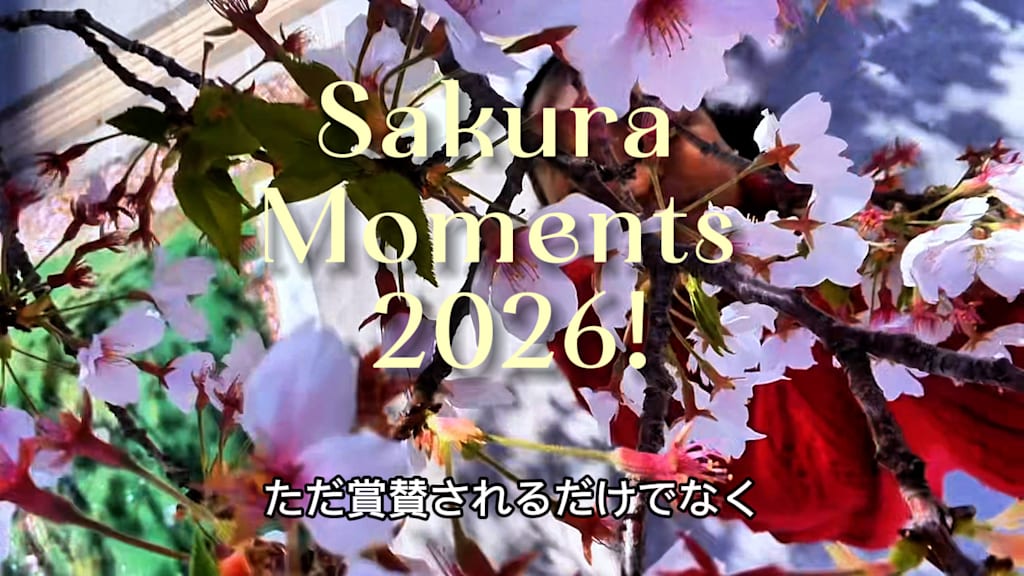
Spring in Japan is often introduced to the world through photographs.
Pink-lined streets.
Petals floating through the air.
Couples walking beneath blooming trees.
Parks filled with picnic blankets and laughter.
It looks soft. Dreamlike, almost cinematic, and it is.
But beneath that beauty lies something deeper; something almost philosophical that many people never notice.
In Japan, cherry blossoms are not only admired, they are felt.
They are woven into memory, into transition, into the emotional rhythm of life itself.
What looks like a flower season from the outside is, for many people here, a quiet annual reminder about time, impermanence, and what it means to live fully while something is here.
(my video on youtube!)
Most people know cherry blossoms by their Japanese name:
Sakura (桜).
They are famous for their beauty, but beauty is only the surface.
There is a Japanese concept often connected to sakura:
Mono no aware
It is difficult to translate perfectly, but one of the closest meanings is:
The gentle sadness of things because they do not last.
That feeling lives inside cherry blossom season.
The trees bloom brilliantly but only for a short time. Often just one to two weeks.
Then, almost suddenly, the petals begin to fall.
And strangely, that short life is not a flaw, it is the point.
The blossoms are beautiful because they are temporary.
They remind us that life’s most meaningful moments are often the ones we cannot keep.
A childhood memory.
A season of love.
A conversation with someone who is no longer here.
A version of ourselves we once were.
Sakura does not ask us to hold on forever.
It asks us to notice what is here now.
(watch the snowstorm!)
There is another detail many people outside Japan do not realize:
Cherry blossom season is deeply tied to life transitions.
In many countries, spring simply means warmer weather and flowers returning.
In Japan, spring often means beginnings.
- The school year starts in April.
- Many companies welcome new employees in spring.
- Students graduate and move into new chapters.
- Families relocate.
- People begin new lives in new cities.
That means sakura trees quietly witness some of life’s biggest moments such as;
- A child walking to school for the first time.
- A graduate stepping into adulthood.
- Someone arriving in a new city with hope and fear mixed together.
- Someone saying goodbye before starting over.
This is one reason hanami (flower viewing) is so meaningful in Japan
Yes, people gather to eat, laugh, and celebrate under the blossoms.
But many are also reflecting.
Thinking about the year behind them.
Thinking about what lies ahead.
Thinking about people who once sat beside them and no longer do.
Under the trees, joy and nostalgia often exist together.
Not all cherry blossoms are the same though.
Japan has hundreds of sakura varieties, each with different colors, shapes, and bloom times.
But the most common and iconic variety is:
Somei Yoshino

This is the tree responsible for that famous “pink cloud” look seen across parks, rivers, streets, and postcards.
What makes it so special?, you may ask.
Well, the flowers bloom before the leaves appear.
That means when the tree reaches full bloom, it looks almost entirely covered in blossoms as if it exists only to become beauty for a brief moment.

And there is another surprising truth:
Most Somei Yoshino trees are genetically identical clones.
They were propagated from cuttings over generations, which means trees across the country often bloom in near synchrony.
Think about that for a moment.
Millions of blossoms opening around the same time across an entire nation.
It feels less like botany and more like a shared heartbeat.
Tourists often rush to catch the “full bloom.”
They want the perfect photo while every branch is packed with flowers.
But ask many locals, and some will tell you the most beautiful moment comes later.
There is a word for it:
Hanafubuki (花吹雪)
It means: flower snowstorm.
This is the moment when petals fall all at once and swirl through the air like snow.
Sidewalks turn pink.
Rivers carry petals downstream.
Wind becomes visible (please, watch my video of the hanafubuki above).
And suddenly, the season feels even more moving than it did at its peak.
Why?
Because hanafubuki reminds us of something we spend much of life resisting:
Beauty is not only in arrival.
It is also in letting go.
We live in a world obsessed with permanence.
We want guarantees.
Long-term plans.
Forever relationships.
Stable identities.
Proof that what we love will remain unchanged.
But life rarely offers that.
People change.
Careers change.
Bodies change.
Dreams change.
Seasons change.
Right?
Sakura does not fight this truth.
It embodies it.
The blossoms bloom fully.
They do not hold back because their season is short.
They do not become less beautiful because they will soon fall.
They simply arrive completely.
Then they leave gracefully.
There is wisdom in that.
How often do we hesitate to love because it may end?
How often do we avoid beginning because we fear loss?
How often do we fail to appreciate a moment because we are already grieving its future disappearance?
Cherry blossoms offer another way.
Be here now.
Bloom while it is time.
Release when the season changes.
Living in Japan, I have come to understand that sakura is not just scenery.
It is atmosphere.
It is memory.
It is emotion carried by the wind.
You can feel it in the silence of people staring upward beneath a tree.
You can feel it in a parent taking a first-day-of-school photo.
You can feel it in the older couple sitting quietly on a bench, saying little, but sharing everything.
You can feel it when petals land on your coat and disappear before you can brush them away.
Some lessons are not taught in classrooms.
Some are scattered from branches.
If you ever visit Japan during cherry blossom season, of course, take your photos and capture the beauty.

But after that, put the phone away.
Sit down.
Watch the branches move.
Listen to the laughter nearby.
Notice the wind.
Feel the passing of time without trying to stop it.
Because spring in Japan is not just something to see.
It is something to understand.
A yearly whisper that says:
Everything passes, and that's what makes it precious.
Let’s talk:
Have you ever experienced a moment that felt more beautiful because you knew it would not last?
Sometimes the fleeting things leave the deepest mark.
About the Creator
Ajan Lori A.
My mind screams, I write!
(Author exploring education, identity, human behavior, life between cultures, business and entrepreneurship)
Find my writing on Medium: https://medium.com/@loriaa
My books on amazon: amazon.com/author/loriaa
Enjoyed the story? Support the Creator.
Subscribe for free to receive all their stories in your feed.
Comments
There are no comments for this story
Be the first to respond and start the conversation.