
Reflections on Beijing+30: Nigerian Women’s Progress, Gender Equality, and the Barriers That Remain
What progress have Nigerian women made since the 1995 Beijing Conference, and what barriers to equality remain?

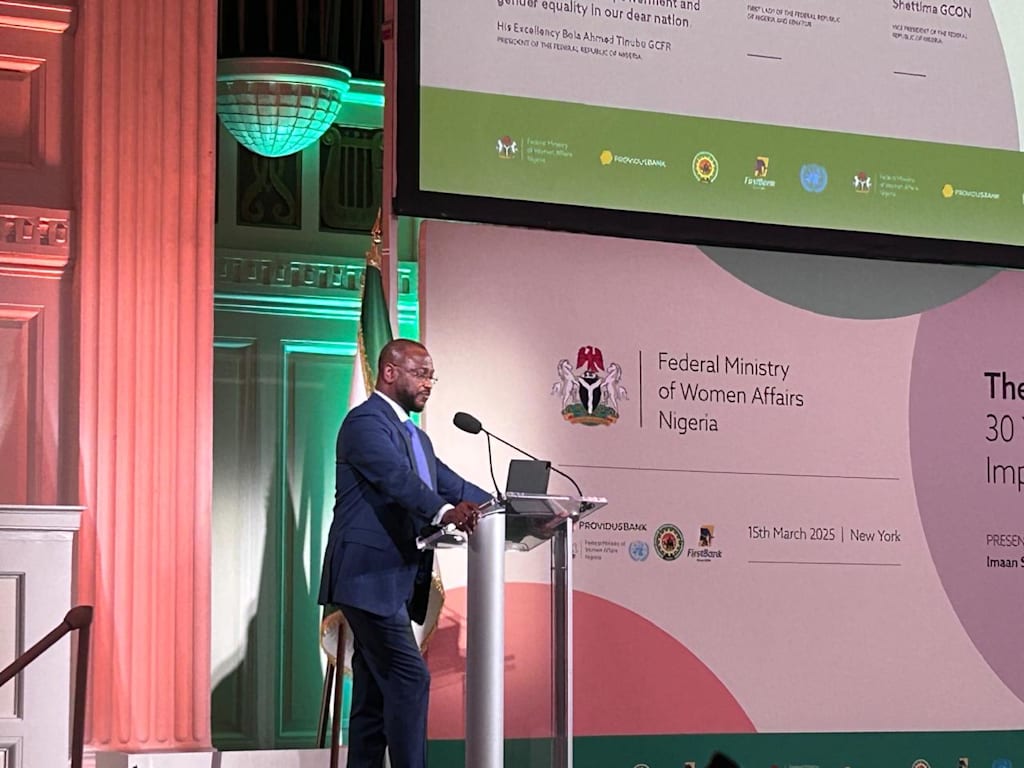
In early last year, it was the 1995 Fourth World Conference on Women in Beijing, Nigerian women’s progress in education, politics, agriculture, and entrepreneurship remains paired with persistent barriers. Dauda Lawal, Governor of Zamfara State, in 2025 reflects on resilience, historical women leaders, expanded opportunities, and continuing inequalities, urging renewed attention to gender equality, economic inclusion, education, and women’s empowerment across Nigeria today nationwide.
I took part in Nigerian Women’s Day on March 15, 2025, as part of the side events of the 69th session of the United Nations Commission on the Status of Women (CSW69) in New York. One of the distinctive speeches was by Governor Dauda Lawal of Zamfara State, who I did interview at the time. He framed the speech around equality, empowerment, and critical aspects of women’s inclusion.
The event was convened by Nigeria’s Federal Ministry of Women Affairs and included most of the important voices for women’s political participation on that day. Mr. Lawal noted on their “collective commitment to advancing gender equality and empowerment in Nigeria… As we gather here in New York, a city renowned for its diversity and its role as a global platform for dialogue and advocacy… We are reminded of the strength and resilience of Nigerian women who have stood firm in the face of numerous challenges.”
Some may baulk or even dismiss such statements from a man, from a conservative state leader in Nigeria. What would you rather, the opposite? Action must follow statements, but communication sets a public precedent and expectations, at a minimum. Therefore, this seems good.
Lawal continued, “Today, we celebrate not only their achievement, but also their hard work and commitment, which has continued to inspire us and shape the future of our great country, Nigeria.”
He was looking forward to an expansion and rapid progression of equality from current standards within the country.
“It calls upon us to reflect on the strides we have made, acknowledge the gaps that still exist, and chart a pathway forward… These women in northern Nigeria have made substantial progress across various fields, which demonstrate their resilience and determination despite numerous challenges.”
Lawal noted education as a key arena of improvement with the gradual increase of female enrollment and improvement in academic achievement of women and girls as important for advancement of these equality aims.
He remarked, “Women have also played a role in politics and advocacy.”
He recalled historical women’s rights advocate Hajiya Gambo Sawaba, who he saw as fighting inequalities and forced labour while advancing Western education in northern Nigeria. To him, she was “a key voice for the marginalized women.”
He recalled Chief Funmilayo Ransome-Kuti based on her work for the independence movement and women's political leadership.
Lawal stated, “Their contribution contributed to the recognition of women leaders… We have all the beautiful women as ministers, and they are truly, truly representing us very, very well.”
He then shifted focus to agriculture. Noting how in northern Nigeria, women farmers show innovation in spite of formidable challenges. He noted various and relevant support from 2025 forward would be “training programs, improved farming techniques, and financial literacy skills,” including various savings and loans arrangements.
He asserted, when listening to community on business development, that the emphasis is on women’s participation and their vital sector portfolios. Business development is also discussed, including participation by industries and organizations working with women.
He did acknowledge, “Many women still face limited access to education, economic opportunities.”
What happens from then and from now? I don’t know.
Scott Douglas Jacobsen is founder and publisher of In-Sight Publishing and editor-in-chief of In-Sight: Interviews. His work appears in International Policy Digest, The Humanist, and The Good Men Project. With over 200 Vocal publications, he brings extensive interviewing and editorial experience to coverage of science, human rights, secularism, and politics.
Image Credit: Scott Douglas Jacobsen.
About the Creator
Scott Douglas Jacobsen
Scott Douglas Jacobsen is the publisher of In-Sight Publishing (ISBN: 978-1-0692343) and Editor-in-Chief of In-Sight: Interviews (ISSN: 2369-6885). He is a member in good standing of numerous media organizations.
Enjoyed the story? Support the Creator.
Subscribe for free to receive all their stories in your feed.
Comments
There are no comments for this story
Be the first to respond and start the conversation.