

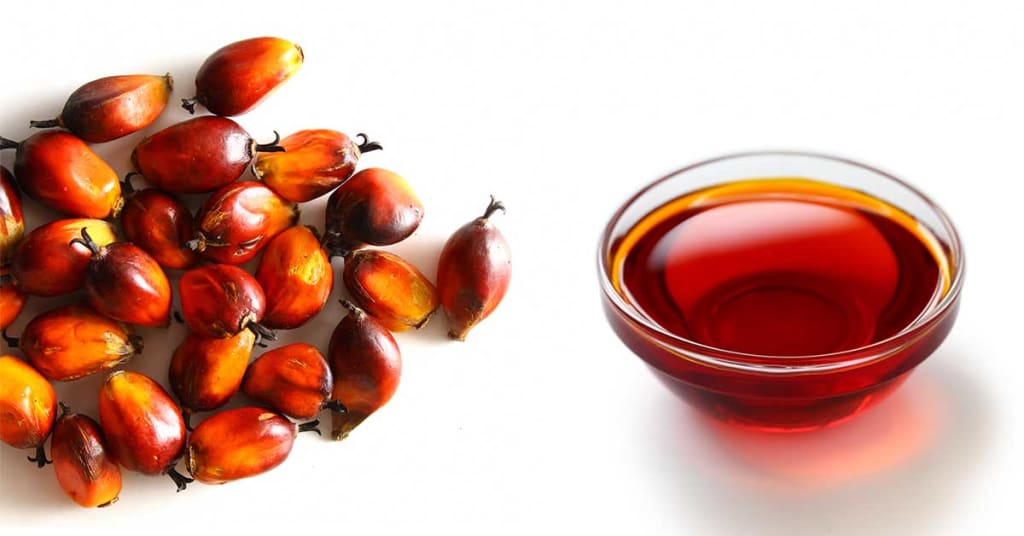
RED PALM OIL
Alex is currently climbing trees that are up to 40 feet high. He is using a homemade ax, a rope, and his own bare feet to reach something very valuable - the fruits that will be turned into red palm oil. Standard palm oil or palm kernel oil is known for being quite cheap, but red palm oil can cost up to four times as much. When it's shipped to the US or the UK, it can sell for even more - up to twenty dollars for a single liter. Workers like Alex face snakes and the risk of falling just to harvest the fruit. What makes red palm oil different from palm oil and what exactly makes it so expensive?
Red palm oil has a mildly floral flavor and a buttery texture that is preferred by locals for cooking. It's generally used for local food all the time.
In Ondo State, Nigeria, locals make a labor-intensive and artisanal favorite using thousands of fleshy palm fruits. This process produces yellow-brown sludge and then red-orange oil over a week. The process starts on oil palm plantations, like the one in the village of Aye, where expert climbers are called in to harvest the palm husks. The trees can be as high as 60 feet, and climbers like Alex don't wear any protective gear. They rely on handmade harnesses and axes to help them climb the trees. Alex makes new ropes with fresh palm fibers whenever he feels his current one isn't strong enough. Old ropes can become brittle and snap, which is dangerous. Once oil palm trees bear fruit, they can be harvested year-round, but it takes three years for them to do so. The biggest obstacle Alex faces once he's climbing is snakes. Some workers prefer collecting palm husks from the ground to avoid the risk of falling.
Separating fresh fruit from the thick, spiky palm husks is a challenging task. Therefore, the fruits are left to dry, which takes several days and allows for fermentation, enhancing the oil's flavor. To dehusk the fruits, workers such as Randy use axes and sift them to remove any dirt. After collecting the fruits in large sacks, they transport them to a nearby processing site in the village of Ileze.
Randy delivers the palm fruits to his wife, Deborah, who is among the many workers laboring to turn the fruits into red hormones. The sax fruits are emptied into buckets and large drums, and water is added to boil them. After an hour, the fruit is drained and taken to the mill, where it undergoes a manual loading and emptying process.
First, the oil is extracted from the fruit pulp using a hydraulic press. However, kernel oil is not produced in this process as it requires special machinery to dry and crack the seeds. Although some locals produce kernel oil, it is less commonly produced due to the added difficulty.
Oil Palms originated in West Africa, but colonization led to the rapid expansion of oil palm plantations throughout Southeast Asia. Eventually, Southeast Asia took over the global palm oil industry and, as other oils also gained popularity, West Africa never quite caught up. West Africa's rainy season, which typically lasts from May to October, is also an ongoing issue. During the rainy season, climbing the trees becomes difficult, which means the fruit often goes rotten. Thanks to climate change, the rainy season has been lasting longer, causing more damage. As a result, there is a decrease in the already low supply of palm fruits, which raises the price of red palm oil.
In contrast, Palm kernel oil plantations harvest on a massive scale and rely on heavy machinery for the bulk of their production.
After enough oil has been collected in the large bowls underneath the press, workers carefully scoop the orange-red liquid into other bowls and buckets. The oil is poured into drums for a final boil. After one hour, the fire is put out, and the oil is left to cool off. The finished oil is moved into buckets and then funneled into Jerry cans.
Deborah says some customers travel all the way from Lagos state, which is about five hours away by car, to buy her red palm oil. Some people think if we do more than 15 cakes, 30-liter kegs sell for 30 each. Although the price can change depending on the supply of palm fruits, there are plenty of customers.
The price of red palm oil can also vary depending on location. A four-liter bottle in a supermarket in a bigger city like Lagos can cost around 18, making it the same price or even cheaper than some imported vegetable oils thanks to Nigeria's volatile exchange rates. Meanwhile, the red palm oil that is exported outside of West Africa is exponentially more expensive, ranging from 15 to 20 for one liter in the US.
The cost may only be getting higher as cooking oil prices have been on the rise thanks to weather-related supply shortages in countries like Argentina and Canada. The Russian invasion of Ukraine also cut the world off from the region's supply of sunflower oil and led Indonesia to ban some exports of its palm oil. All this raised the global price of cooking oils even higher. As a result, the local cost of red palm oil in Nigeria has also increased. But for many people, the price is worth the taste.
About the Creator
Enjoyed the story? Support the Creator.
Subscribe for free to receive all their stories in your feed.
Comments
There are no comments for this story
Be the first to respond and start the conversation.