
Platinum vs. Silver Prices: What Long-Term Buyers Need to Know Before Choosing
Price Is Only the Beginning. Learn How Scarcity, Industrial Demand, Liquidity, and Accessibility Shape Long-Term Investment Value.

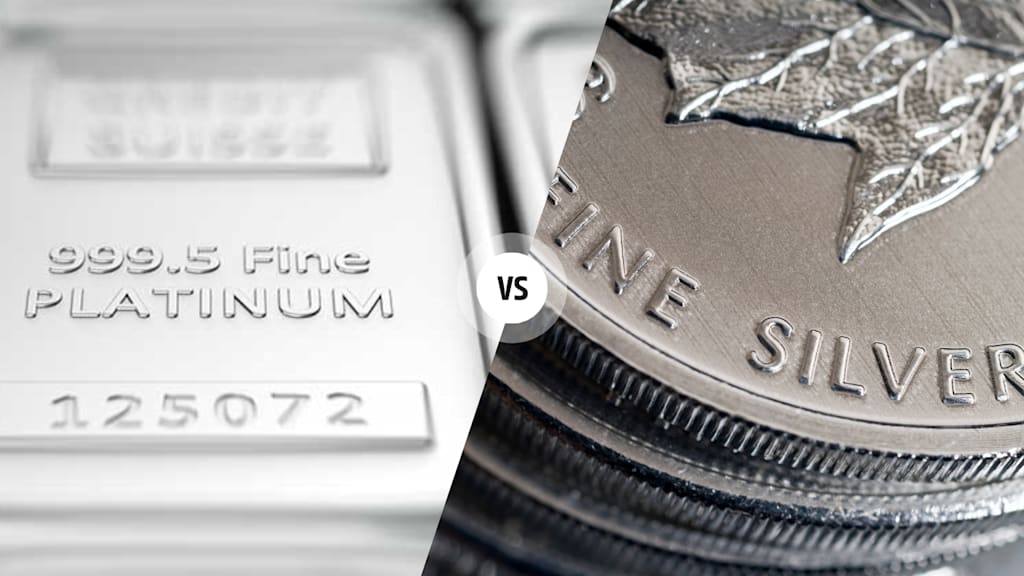
Investors often assume platinum must be the better buy because it costs more than silver.
That's an easy conclusion to reach. It's also an oversimplification.
A higher price doesn't automatically mean a better investment. If it did, everyone would abandon silver and buy platinum instead.
The reality is that platinum and silver serve different purposes. They trade in different markets. They respond to different supply and demand forces. And they appeal to different types of buyers.
The more useful question isn't which metal has the higher price today.
It's why the prices are different in the first place.
For investors focused on protecting purchasing power and building wealth outside the financial system, that distinction matters a great deal.
Someone buying physical bullion shouldn't approach the decision the same way a trader approaches a stock chart.
Bullion ownership is about much more than price.
It's about liquidity. Storage. Accessibility. Diversification. And perhaps most importantly, reducing exposure to a financial system built on debt and currency creation.
Viewed through that lens, the platinum-versus-silver debate becomes much more interesting.
The Bigger Economic Story Behind Platinum and Silver Demand
Americans are becoming increasingly skeptical of the promises coming from Washington and Wall Street.
That's not difficult to understand.
Federal debt continues moving higher. Government deficits show little sign of restraint. The purchasing power of the dollar continues its long-term decline.
Yet investors are constantly encouraged to place nearly all of their savings into paper assets.
Stocks.
Bonds.
Mutual funds.
ETFs.
Retirement accounts.
Most of those assets depend on a stable financial system and competent management from institutions that haven't exactly earned widespread trust in recent years.
Physical precious metals offer something different.
They don't depend on a bank balance sheet.
They don't depend on a brokerage account.
They don't depend on a politician keeping a promise.
That's why more investors continue turning toward tangible assets.
Once they do, they quickly discover that silver and platinum are very different markets.
Silver tends to be the first metal many investors buy because it remains affordable. Someone can build a position gradually without making a major financial commitment.
Platinum appeals to a different audience. Its scarcity attracts attention. So does its unique industrial demand profile.
Understanding how those differences affect price is far more useful than trying to predict where either metal will trade next month.
Why Platinum Usually Costs More Than Silver
Many investors stop their analysis after learning that platinum is rarer than silver.
That's only part of the story.
Scarcity matters.
Supply matters.
Production costs matter.
Demand matters.
The interaction between all of those factors is what ultimately determines price.
Platinum Is Much Rarer
There is no debate here.
Platinum is substantially rarer than silver.
Global platinum production represents only a small fraction of annual silver output. Even more important, production is concentrated in a handful of locations.
That concentration creates vulnerabilities.
When a labor dispute, power shortage, political disruption, or regulatory issue affects a major platinum-producing region, global supply can feel the impact.
Silver production is more diversified.
The market still faces supply challenges, but those challenges tend to be spread across a much broader mining base.
Investors should appreciate platinum's rarity without assuming rarity alone guarantees future performance.
Markets don't work that way.
If they did, every rare asset would be expensive and every abundant asset would be cheap.
History shows otherwise.
Platinum Production Is More Complex
Mining platinum isn't simple.
The extraction and refining process can be costly and technically demanding. Bringing platinum to market often requires substantial investment long before an ounce reaches a buyer.
Those realities contribute to platinum's higher valuation.
Silver production involves its own challenges, but larger supply volumes and broader production tend to keep prices lower on a per-ounce basis.
The key takeaway is that price reflects more than scarcity alone.
Production economics matter too.
Industrial Demand Influences Both Metals
Both platinum and silver owe part of their value to industrial demand.
The difference is where that demand comes from.
Silver is deeply embedded throughout the economy. Electronics, electrical systems, medical equipment, solar technology, and manufacturing all consume silver.
Platinum demand is more concentrated.
Automotive catalysts remain important. Chemical processing, petroleum refining, and emerging hydrogen applications also contribute.
That concentration can create larger swings in sentiment.
Changes in expectations for a few industries can affect platinum demand more dramatically than silver demand.
For investors, this is neither good nor bad.
It's simply part of understanding the market you're entering.
Why Spot Price Doesn't Tell the Whole Story
One of the biggest mistakes new precious metals buyers make is focusing exclusively on spot price.
Spot price matters. It's the benchmark.
But it isn't what you'll actually pay when purchasing physical bullion.
Nor is it necessarily what you'll receive when selling.
The real-world precious metals market operates differently than the simplified version many people see on financial websites.
Physical metals come with fabrication costs. Distribution costs. Dealer margins. Market-driven premiums.
Those factors can have a meaningful impact on the actual cost of ownership.
This is especially true during periods of strong retail demand.
When investors rush into precious metals markets, premiums often expand. We've seen it happen repeatedly.
The investor who focuses only on spot price may believe silver is cheap or platinum is expensive without understanding the full picture.
The better approach is to evaluate total acquisition cost.
What matters is the amount you're paying to acquire physical metal and the amount you can reasonably expect to recover when you eventually sell.
That's the real calculation.
Silver's Affordability Advantage
This is where silver has a clear edge.
Most investors don't begin their precious metals journey by writing a five-figure check.
They start small.
A few coins.
A roll of rounds.
A modest monthly purchase.
Silver makes that possible.
Someone can convert a portion of their income into tangible assets without disrupting their household finances. Over time, those incremental purchases can become a substantial holding.
That's one reason silver remains so popular among ordinary investors.
It is accessible.
You don't need to be wealthy to own it.
You don't need to wait until conditions are perfect.
You can start where you are.
That flexibility also reduces the pressure associated with market timing.
Investors who buy silver regularly tend to spend less time worrying about whether they purchased at the exact bottom.
They focus on accumulation.
That mindset often produces better long-term results than constantly chasing the perfect entry point.
Silver's affordability creates another advantage.
It offers flexibility when circumstances change.
If an investor needs liquidity, selling a few silver coins is straightforward. There's no need to liquidate a large portion of the position all at once.
For many buyers, that practicality matters more than theoretical upside.
Platinum's Value Density Advantage
Platinum offers something silver cannot.
A tremendous amount of value can be stored in a relatively small space.
For investors who prioritize storage efficiency, that matters.
A modest platinum position can represent substantial purchasing power without requiring large safes, storage boxes, or extensive vault space.
Of course, storage efficiency alone isn't a reason to buy a metal.
But it is a legitimate consideration.
Platinum also gives investors exposure to a market that behaves differently than silver.
Many precious metals buyers eventually reach a point where they want additional diversification within the sector itself.
They already own silver.
They already own gold.
They begin looking for assets that respond to different supply-and-demand dynamics.
That's often where platinum enters the conversation.
Its smaller market size and concentrated supply base create a different set of risks and opportunities.
Whether those characteristics are attractive depends on the individual investor.
The point is that platinum's higher price isn't simply a disadvantage.
It comes with certain benefits that some investors find appealing.
A Simple Decision Framework
Investors sometimes overcomplicate this decision.
The choice doesn't need to be difficult.
If you're building a foundational precious metals position, silver will make sense for most people.
It's affordable.
It's liquid.
It's widely recognized.
It's easy to accumulate over time.
If you're already comfortable with your exposure to silver and gold, platinum may deserve consideration.
Its rarity and unique market characteristics offer a different form of diversification.
Neither approach is inherently right or wrong.
The mistake is assuming one metal must completely replace the other.
Many experienced precious metals investors own multiple metals because they recognize each serves a different purpose.
Markets change.
Supply conditions change.
Demand patterns change.
Diversification exists for a reason.
Common Concerns About Platinum and Silver Prices
"What If Prices Fall After I Buy?"
They probably will.
At some point.
That's simply the nature of markets.
Every precious metals investor eventually experiences the frustration of watching prices decline after making a purchase.
The question is whether that matters.
For short-term traders, it matters a great deal.
For long-term owners focused on preserving purchasing power, temporary price fluctuations are often less important.
The investor who buys physical bullion as financial insurance shouldn't expect a perfectly smooth ride.
Insurance isn't purchased because it rises in value every month.
It's purchased because of what it protects against.
"Are Premiums Too High Right Now?"
This question comes up constantly.
The answer depends on perspective.
Premiums expand when demand increases. That's normal.
Investors concerned about premiums can often reduce costs by comparing different products, sizes, and formats.
But there is another side to this issue.
Some investors become so focused on premiums that they never actually buy anything.
They spend years waiting for a slightly better deal while inflation quietly erodes purchasing power.
At some point, acquiring tangible assets becomes more important than endlessly searching for perfection.
"Is Platinum Overpriced Compared to Silver?"
No one knows.
Anyone claiming certainty is guessing.
Markets can remain overvalued longer than expected.
Markets can remain undervalued longer than expected.
The relationship between platinum and silver prices has shifted dramatically throughout history and will likely continue doing so.
The more useful question isn't whether one metal is temporarily expensive or cheap.
It's whether the metal fits your objectives.
That's the question investors should focus on answering.
Looking Beyond Price Alone
Price is important.
It just isn't everything.
A serious precious metals investor should consider several factors simultaneously.
Liquidity.
Storage.
Recognizability.
Market size.
Supply fundamentals.
Long-term ownership goals.
These considerations often prove more important than attempting to forecast next year's price.
Financial television spends enormous amounts of time discussing where assets might trade next month.
Far less attention is given to why investors own those assets in the first place.
That's unfortunate.
Because purpose should come before price.
An investor who understands why they own precious metals is far less likely to make emotional decisions during periods of market volatility.
Final Thoughts
Platinum costs more than silver.
That much is obvious.
The more important question is what that difference means.
Platinum's higher price reflects scarcity, concentrated supply, production challenges, and specialized industrial demand.
Silver's lower price reflects greater availability, broader ownership, and accessibility to everyday investors.
Neither metal should be evaluated solely by its price tag.
Investors who focus only on which metal costs more often miss the bigger picture.
Physical precious metals are not status symbols.
They are tools for protecting wealth.
Silver remains one of the most practical forms of monetary insurance available to ordinary Americans. It is affordable, liquid, and widely recognized throughout the bullion market.
Platinum offers a different set of characteristics. Its rarity and unique supply dynamics make it appealing to investors looking for additional diversification within precious metals.
The goal shouldn't be finding the perfect metal.
The goal should be building a sound strategy.
That's where successful precious metals investing begins.
And it's usually where it ends as well.
About the Creator
Stefan Gleason
Stefan Gleason is President and CEO of Money Metals, the company recently named "Best Overall Online Precious Metals Dealer" by Investopedia. A graduate of the University of Florida, Gleason is a seasoned business leader and investor.
Enjoyed the story? Support the Creator.
Subscribe for free to receive all their stories in your feed.
Comments
There are no comments for this story
Be the first to respond and start the conversation.